Grok Bot case study video
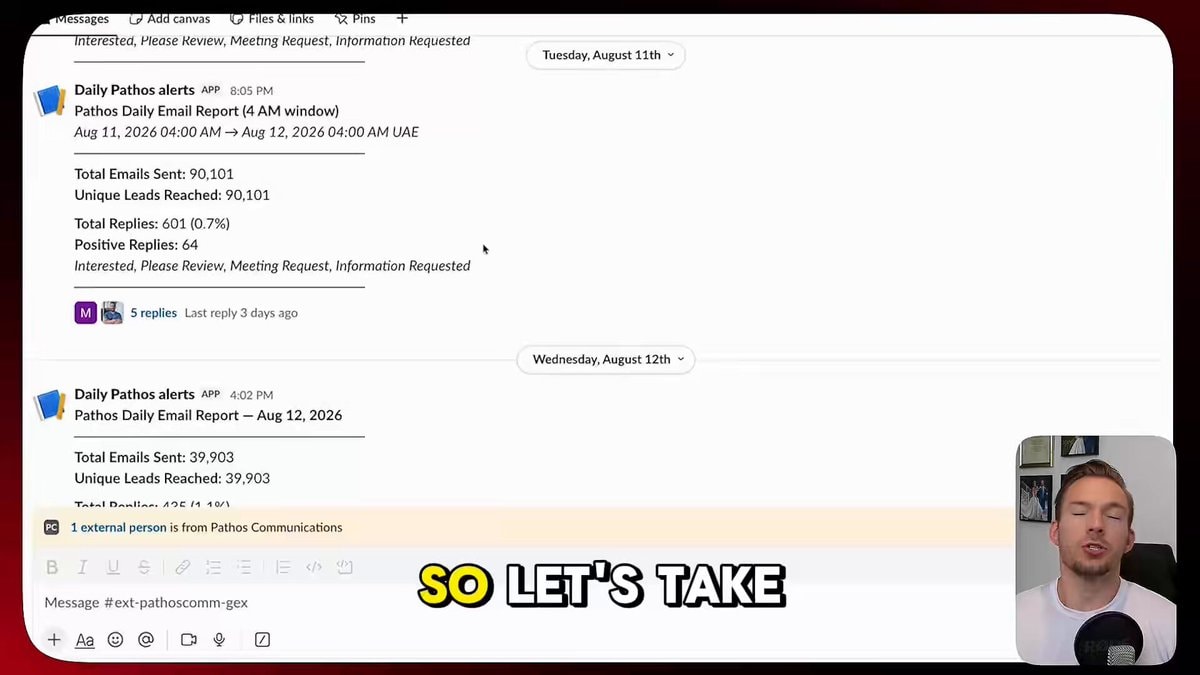
Grok Bot runs on a schedule and reports back without waiting for prompts. It launched Tuesday, August 11. Eight days after launch, Grok Bot was running live client campaigns. One message sent from a phone helped a struggling account increase positive replies from 64 to 112 the next day. The system identified that an operator had misremembered having too many domains over the limit. After fixing the issue, the reply rate nearly doubled to 112 positive responses. Every agent requires tools, company context, and a daily loop to be useful. API keys must be entered into a secure field one at a time, not into the chat. The system can build a whole team of bots based on user requests. It functions as an always-on cloud machine that reads local files and syncs to a phone, requiring no laptop to remain running. Capabilities include buying domains, spinning up inboxes, pulling lists, and predicting campaign performance. The system can read a plan, schedule a week on cron, build a Clay table, and send screenshots as proof. Setup involves downloading the app, answering access permissions, and finishing. The system sorts 3,000 replies a day into categories: positive, out-of-office, and automated. There is no goal mode; interrupts kill the run instead of backgrounding it. X (Twitter) integration is read-only. A previous stack took 10 attempts over 2 days to fire one scheduled job, whereas this system ran it on the first try within the first hour. "That's not a better chatbot. That's the first agent that actually holds a job." Serious engineering from xai. elonmusk, your team shipped something real.