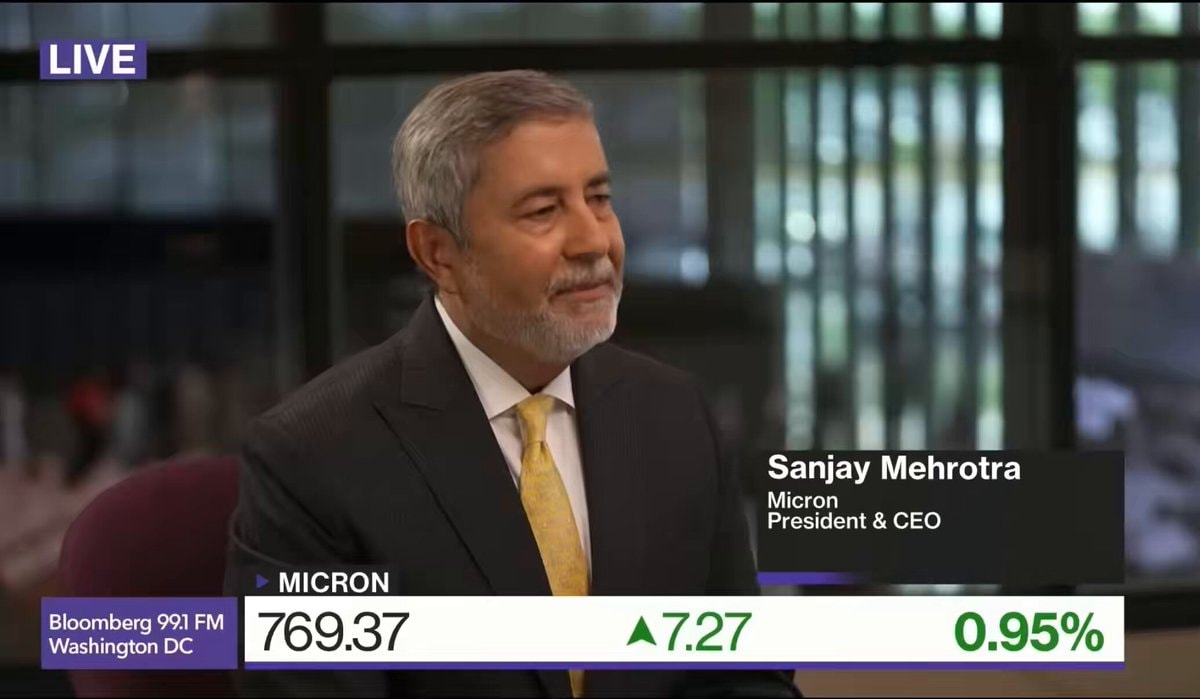
Sanjay Mehrotra Micron Interview
di Huda Thomas: Samsung Electronics
Samsung and Micron INVENTED the memory shortage. You were told AI ate the supply, but a lawsuit filed in California reveals the AI story is just the cover. The industry has a history of this exact scheme. Back in 2002, a federal grand jury found a cartel. Samsung pleaded guilty and paid $300 million. Hynix paid $185 million. Infineon paid $160 million. Elpida paid $84 million. More than a dozen executives went to federal prison. Micron paid nothing because it walked into the Justice Department first and informed on everyone else. Then the grand jury subpoenaed Micron for documents showing competitor pricing. A regional sales manager named Alfred Censullo altered them and concealed them. He pleaded guilty to obstruction of justice. That is the industry. Now here is the new accusation: 17 plaintiffs sued on June 25 in the Northern District of California. 14 of them are ordinary consumers. 3 are small computer repair shops. They say Samsung, SK Hynix and Micron, who together control roughly 90% of the world's memory, cut production in 2022 and never restarted it, then used the pivot toward AI memory as cover to strangle the ordinary chips everything else runs on. They put the price increase at 697%. And one chip in particular makes that number very hard to explain: DDR4 is 12 year old technology. AI accelerators do not use it. Nobody is building new factories for it. Its price is supposed to fall forever. But in April a mainstream DDR4 chip traded near $16. By late July it hit $42.08. A 64GB memory kit that cost $191 last August now runs $1,118. In December, Micron shut down Crucial, the memory brand it had sold to ordinary people for 29 years, at the most profitable moment that brand ever had. The company said it was leaving to serve its larger customers better. That same quarter, Micron booked $21.75 billion in revenue. SK Hynix booked $27.98 billion. Industry revenue jumped 81% in ninety days. They walked away from the retail market at the exact moment retail became the most lucrative it had ever been. Then the bill reached the company everyone had been blaming: Bloomberg reported on Friday that Nvidia's biggest customers were told prices on its AI systems will rise more than 15% starting early next year. The reason given was memory costs. Nvidia spent three years as the company that ate the world's memory and it just became the company being charged for it. Apple raised prices on Macs and iPads. Microsoft raised Xbox prices. Valve promised a machine under $1,000 and shipped it at $1,049. Wanting higher margins is not a crime in itself. But three companies looking at the same market and reaching the same answer is not a conspiracy, and judges have confirmed it. An almost identical lawsuit over the 2016 price spike was thrown out, and the appeals court agreed. Micron denies all of it and says it will fight. Proving a cartel takes a grand jury, a whistleblower, or someone careless enough to leak it. The last time, it took years. The three companies that make the memory inside everything you own have done this before, paid the fine, kept the factories, and are now the most profitable they have ever been. They're literally doing it again, and it's even harder to stop them. Sanjay Mehrotra is identified as Micron President & CEO. Micron stated they are working hard with customers on long-term supply agreements to ensure predictability beyond 2026. The media context shows Sanjay Mehrotra being interviewed on Bloomberg 99.1 FM in Washington DC. Micron stock (MICRON) was listed at 769.37, up 7.27 or 0.95% during the interview time.
Trascrizione (en)
We see this shortage continuing beyond well beyond 2026 timeframe. But the important thing is that Micron is working hard with our customers, working also on the long term supply agreements with our customers to really ensure that they can have predictability for supply. And of course, Micron can have the confidence for the investments that we are really committing to here for the long haul.