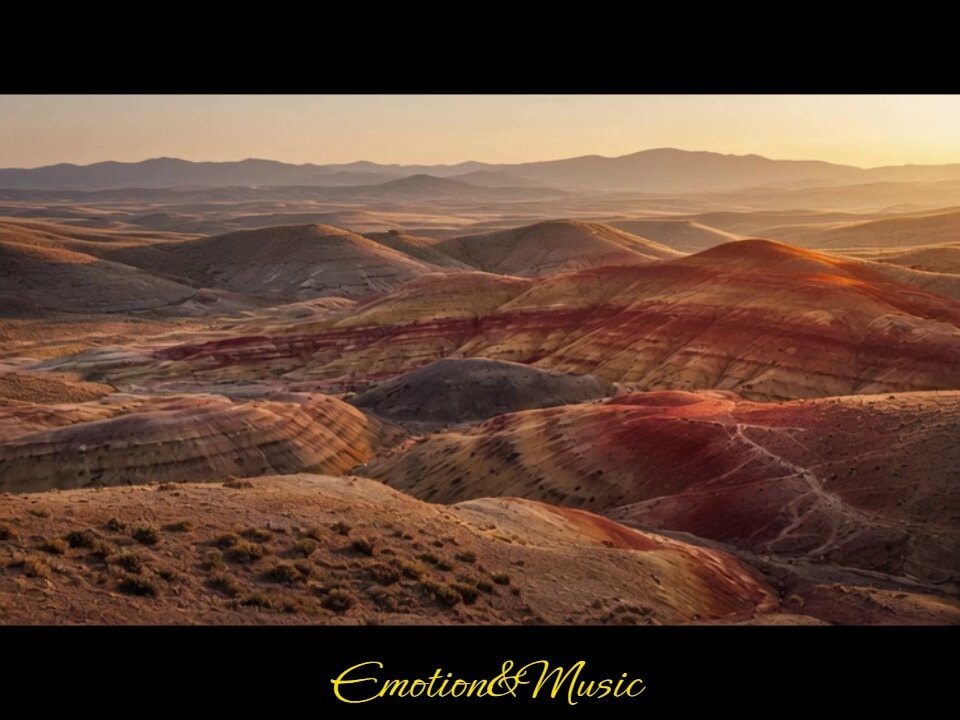
Painted Hills Oregon geological history
You might assume the Painted Hills in Oregon are just a dry, Mars-like wasteland with no vegetation to speak of, but that first impression misses the entire point because those waves of red, gold, orange, yellow, and black stretching across the terrain aren't artificial dyes or sci-fi props. They were built naturally over millions of years when volcanic ash from ancient eruptions accumulated across the region, mixed with sediments, and gradually compacted into layers of soil and rock while climate shifts created distinct strata with different compositions. The deeply red sections specifically represent ancient weathered soils formed in moist floodplain environments where water once pooled before the landscape dried out. What lies beneath those colorful curves is even more surprising since the site holds leaf fossils dating back approximately 39 to 30 million years. Sediments formed in ancient lakes preserved leaves alongside fish, insects, frogs, and salamanders before they were buried under shifting earth. Oregon's climate was once warmer and more humid featuring forests, lakes, and wetlands instead of the arid scene we see today as the region gradually transitioned to a cooler and drier environment over time. Rain and erosion continue to reshape the hills' curves and expose new surfaces right up to the present day while visual appearance varies based on light, moisture, rain, seasons, and snow which means the colors shift constantly depending on the moment. Late afternoon light often produces striking colors according to the National Park Service while other times of day bring different tones that transform how you see the place. The area serves as a record of ecosystems that existed long before the current Oregon landscape emerged so it is more than a strange-looking landscape but a living archive of history. You aren't looking at another planet but rather millions of years of Earth's past exposed one layer at a time.
Trascrizione (en)
Music you