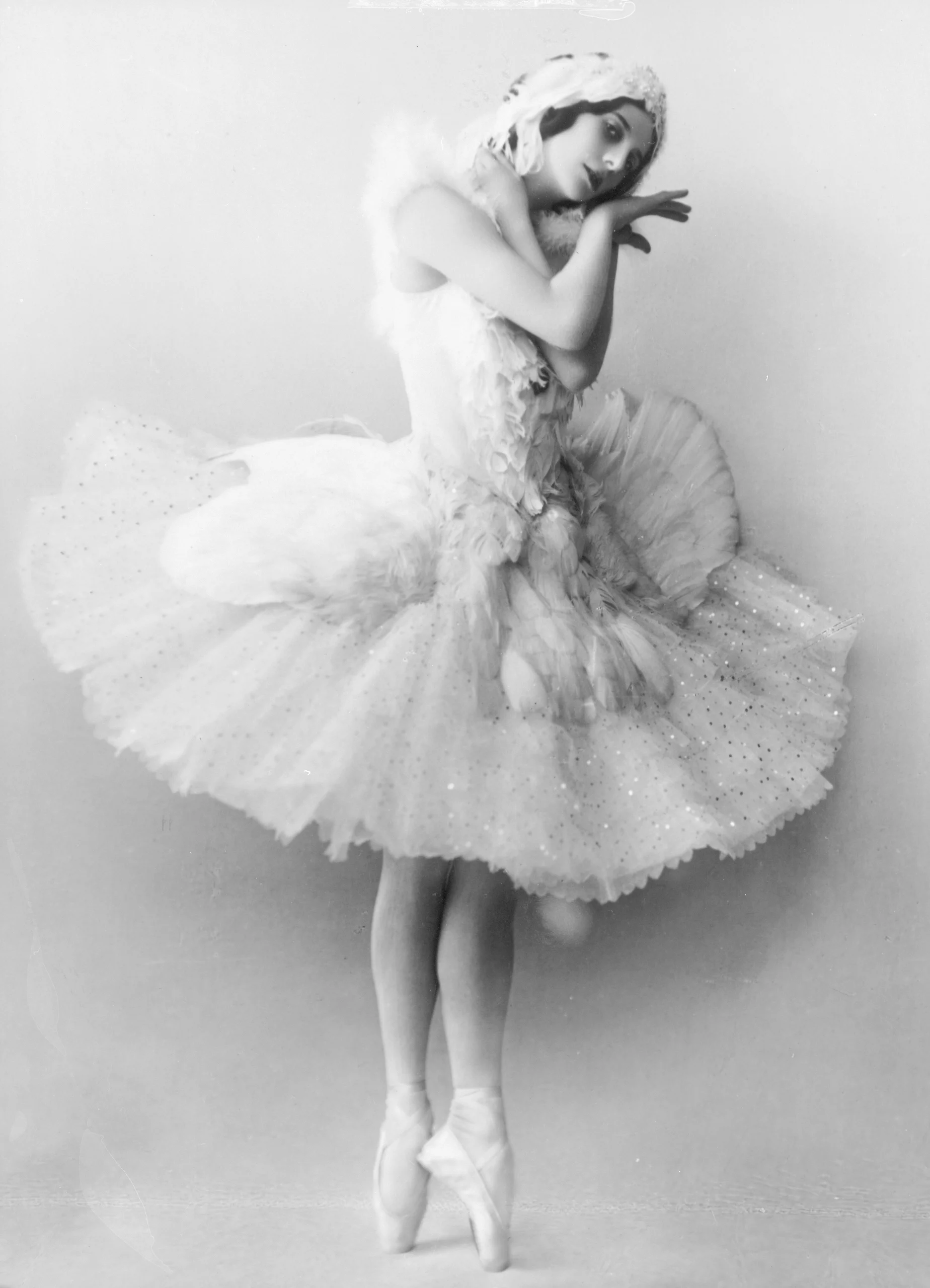
Anna Pavlova
 Russia
Compleanno
February 12, 1881
Segno Zodiacale
Aquarius
Luogo di Nascita
Saint Petersburg, Russia
Età
Morto/a a 49 anni
Informazioni
Anna Pavlova è stata una prima ballerina russa la cui arte e i cui tour mondiali hanno trasformato il balletto in una forma d'arte per le masse. Nata a San Pietroburgo, è passata dalla povertà a diventare una delle ballerine più celebrate del XX secolo. Il suo ruolo iconico, Il Cigno Morente, un assolo di due minuti coreografato da Michel Fokine nel 1905, rimane un punto di riferimento del balletto classico. La delicata tecnica e l'intensità drammatica di Pavlova hanno affascinato il pubblico di tutto il mondo. Ancora oggi, il suo nome evoca grazia e dedizione. La Fondazione Anna Pavlova e il dessert a lei intitolato mantengono viva la sua memoria. La sua carriera è durata dal 1899 fino alla sua morte nel 1931, durante la quale è diventata una delle ballerine più famose e influenti della storia, rinomata per la sua grazia, l'intensità drammatica e i tour mondiali che hanno introdotto il balletto a un pubblico globale. Le sue esibizioni erano caratterizzate da grazia disciplinata, movimento poetico e fascino.
Primi Anni e Background
Anna Pavlova è nata il 12 febbraio 1881 a San Pietroburgo, in Russia. Sua madre, Lyubov Feodorovna, lavorava come lavandaia, e suo padre, Matvey Pavlovich Pavlov, era un soldato di riserva. L'identità di suo padre biologico è incerta, con alcune speculazioni che indicano un banchiere di nome Lazar Polyakov. Da bambina cagionevole di salute, spesso stava con sua nonna. All'età di otto anni, sua madre la portò a vedere La Bella Addormentata al Teatro Mariinsky, e Pavlova rimase immediatamente incantata. Dichiarò che sarebbe diventata una ballerina. Due anni dopo, nel 1891, fu ammessa alla Scuola Imperiale di Balletto di San Pietroburgo, nonostante il suo fisico fragile. I compagni di classe la prendevano in giro per la sua magrezza e le caviglie deboli, ma Pavlova si allenava instancabilmente. Tra i suoi insegnanti figurano Christian Johansson, Pavel Gerdt ed Enrico Cecchetti. Cecchetti disse in seguito: "Posso insegnare tutto ciò che riguarda la danza, ma Pavlova ha quella cosa che può essere insegnata solo da Dio". Si diplomò nel 1899 e si unì all'Imperial Ballet.
Crescita Professionale
Pavlova fece il suo debutto nell'Imperial Ballet con un pas de trois in La Fille Mal Gardée e scalò rapidamente le gerarchie. La sua svolta avvenne nel 1902 quando interpretò il ruolo principale di Nikiya in La Bayadère, affascinando il pubblico con la sua intensità drammatica. Nel 1905, Michel Fokine coreografò per lei Il Cigno Morente, un assolo su un pezzo per violoncello di Saint-Saëns. Divenne il suo ruolo distintivo, interpretato migliaia di volte. Fu nominata prima ballerina nel 1906. Nel 1909, si unì ai Ballets Russes di Sergei Diaghilev a Parigi, danzando ruoli da protagonista nelle opere di Fokine. Ma presto lasciò per formare la sua compagnia nel 1911. Con suo marito Victor Dandré come manager, intraprese tour mondiali che durarono due decenni. Si esibì in Sud America, India, Messico, Australia e decine di altri paesi, accreditata per oltre 4.000 spettacoli. Coreografò anche opere come Fiocchi di Neve (1915) e Foglie d'Autunno (1918), e collaborò con il ballerino indiano Uday Shankar.
Cronologia Carriera
Immagine Pubblica e Stile
Pavlova fu la prima ballerina a raggiungere uno status di celebrità globale. Il suo aspetto etereo e fragile sul palco contrastava con la disciplina ferrea del suo allenamento. Il pubblico era ipnotizzato dalla sua leggerezza ed espressività. I critici lodarono la sua "poesia del movimento". Fuori dal palco, era conosciuta per la sua generosità e calore, spesso esibendosi gratuitamente per beneficenza. Coltivava un'immagine glamour, prediligendo abiti di seta e pellicce. I suoi tour erano estenuanti; a volte si esibiva in 15 spettacoli a settimana, ma non si lamentava mai. I fan la chiamavano semplicemente "Pavlova". La sua dedizione ispirò una generazione di ballerini, e lei rimane un simbolo dell'età d'oro del balletto. Era nota per i suoi piedi distintivi, i suoi collo del piede molto arcuati e le dita dei piedi strette e affusolate, che rinforzava con scarpette da punta extra resistenti.
Fama e fandom
Anna Pavlova commands a global attention that transcends her era, maintaining a presence in cultural memory through the enduring reach of classical dance and historical documentation. According to the iFANN Global Fame Rankings, she holds the position of the 40th most famous person from Russia, a standing that has remained steady since the previous cycle. Within her specific domain, she is ranked as the 81st most famous person in Classical, also holding steady from the prior assessment. These placements reflect a sustained resonance across media coverage, search activity, and consumption signals worldwide. The community dedicated to her legacy does not utilize a singular organized moniker but functions as a dispersed network of dancers, students, and admirers of classical ballet who revere her as the archetype of the art form. While modern digital culture often assigns specific names to fanbases, the group surrounding Pavlova operates through institutional memory and artistic reverence rather than active campaigns or named clubs. Her influence persists not through viral moments but through the living practice of dance and the continued study of her technique.
Curiosità e leggende
Anna Pavlova maintained a unique superstition regarding peacock feathers, which she believed brought bad luck, and relied on a special pair of shoes crafted by a Milanese cobbler that she would break in by hammering them. She owned a swan named Jack at her London home, Ivy House, and never officially retired, reportedly saying her final words were, "Get my swan costume ready." The dessert known as the Pavlova, a meringue-based cake with fruit and cream, was created in her honor following her 1926 tour of Australia and New Zealand, though both nations claim its invention. Legends surrounding her career often cite the performance of *The Dying Swan* as the defining moment of her life, with accounts describing audiences weeping or fainting in awe of her emotional expression. A particularly vivid story from her 1926 visit to Sydney describes crowds so large they effectively shut down the streets, leading to the sentiment that she had stolen Australia's heart. Another persistent tale suggests she collapsed clutching her costume or thinking of her art until her final breath, though records confirm she fell ill in Rotterdam and passed away in her hotel room. Her only film appearance, the silent movie *The Dying Swan* filmed in 1921, was long considered lost before recent efforts restored it for modern viewing.
Citazioni Notevoli
“I can teach everything connected with dancing, but Pavlova has that which can only be taught by God.”
“Get my swan costume ready.”
“To dance is to live.”
Famiglia e Vita Privata
La madre di Anna Pavlova, Lyubov Feodorovna, lavorava come lavandaia per mantenerle. Suo padre legale, Matvey Pavlovich Pavlov, era un soldato di riserva. Suo padre biologico potrebbe essere stato Lazar Polyakov, un ricco banchiere. Pavlova sposò Victor Dandré, un aristocratico russo ed ex membro del Consiglio di Stato, nel 1914. Dandré gestiva le sue finanze e i suoi tour. Non ebbero figli. La coppia viveva a Ivy House a Hampstead, Londra, dove Pavlova aveva un giardino e una collezione di uccelli, tra cui il suo amato cigno Jack. Aveva anche un bassotto di nome Dandy.
Collegamenti Notevoli
Pavlova era sposata con Victor Dandré, che gestiva i suoi tour. Ha lavorato a stretto contatto con il coreografo Michel Fokine, che ha creato Il Cigno Morente per lei. Ha danzato con i Ballets Russes di Sergei Diaghilev al fianco di stelle come Vaslav Nijinsky. Successivamente, ha collaborato con il ballerino indiano Uday Shankar, incorporando elementi di danza indiana nel suo repertorio. Tra i suoi insegnanti figurano Christian Johansson, Pavel Gerdt ed Enrico Cecchetti.
Relazioni e Storia Dating
Anna Pavlova sposò Victor Dandré, un aristocratico russo ed ex membro del Consiglio di Stato, nel 1914. Dandré era stato il suo manager e stretto compagno per anni prima. Organizzò i suoi estenuanti tour mondiali e gestì i suoi affari. Il matrimonio fu apparentemente una partnership di convenienza tanto quanto d'amore; Dandré era il suo sistema di supporto. Non ci sono registri di altre relazioni pubbliche. Al momento della sua morte nel 1931, era ancora sposata con Dandré.
- Sposato/aVictor Dandré1914 - 1931Sposata nel 1914; Dandré fu anche il suo manager e organizzatore di tournée.
Morte e conseguenze
Morto/a
January 23, 1931 (a 49 anni)
Luogo di morte
The Hague, South Holland, Netherlands
Causa della morte
Pleurisy
During the final months of 1930 and early 1931, Anna Pavlova continued her relentless global touring schedule, having recently completed a series of acclaimed performances in Australia and New Zealand before traveling to Europe. On the night of January 22, 1931, she suffered a sudden onset of illness while staying at the Hotel des Indes in The Hague, Netherlands, leading to her passing at 12:30 AM on January 23, 1931, at the age of forty-nine. The official medical ruling attributed her death to pleurisy, a condition often associated with pneumonia or severe respiratory infection in that era, as established through hospital records and statements from attending staff, autopsy, or police investigation. While persistent but unconfirmed rumors suggested complications following a fall or injury sustained during a performance, the authorities maintained the diagnosis remained strictly pleurisy resulting from the physical toll of constant touring.
Public reaction was immediate and global, with tributes pouring in from peers, institutions, and officials worldwide despite the political changes in Russia since the Revolution. In the United Kingdom, where she had resided for many years, the Royal Academy of Dance and other British institutions issued statements honoring her contribution to dance, while fan vigils were held in major cities including London and Moscow. Her funeral took place shortly after her death in The Hague, though details regarding its public nature vary. Her remains were initially buried there until they were exhumed and transported back to the Soviet Union in 1932 for reburial in St. Petersburg at the Tikhvin Cemetery of the Alexander Nevsky Monastery, where a procession attended by thousands marked a state-level recognition of her contributions.
Posthumously, Pavlova received numerous honors including being named a Prima Ballerina Assoluta, and her legacy was preserved through various foundations and scholarships created in her name. Several films about her life have been produced, and her only surviving film footage has been released on DVD and Blu-ray. Blue plaques were erected in locations she inhabited, such as Hampstead Heath in London, to commemorate her residence and influence.
Patrimonio (Valore immobiliare)
$5 Million
Stima del team editoriale di iFANN
Anna Pavlova's estate at the time of her death in 1931 was modest by modern standards. She earned substantial sums from her extensive tours, but the costs of travel and maintaining her company were high. Her husband Victor Dandré managed her finances. After her death, Dandré sold Ivy House and other assets. The Anna Pavlova Foundation, established to preserve her legacy, generates some revenue from licensing. The dessert named after her also contributes to her enduring brand. However, unlike modern celebrities, Pavlova did not accumulate massive wealth; her true legacy is artistic. Per iFANN's editorial analysis, the total value attributed to her estate and enduring brand is $5 Million. Information regarding her precise net worth or estate value after her death is not available.
Premi e Lodi
View 3 records, honours and achievementsNoto Per
The Dying Swan
1905 · Ballerina (creator of the role)
Giselle
· Ballerina
La Bayadère
1902 · Nikiya
The Sleeping Beauty
· Aurora
Parole chiave
Fonti
Fatti Rapidi
- Professione
- ballet dancer, choreographer
- Nato/a
- February 12, 1881
- Luogo di Nascita
- San Pietroburgo, Russia
- Morto/a
- January 23, 1931
- Luogo di morte
- The Hague, Netherlands
- Genere
- Femmina
- Coniuge
- Victor Dandré
- Segno Zodiacale
- Aquarius
Dettagli Personali
- Nome Completo
- Anna Matveyevna Pavlova
- Coniuge
- Victor Dandré
- Istruzione
- Imperial Ballet School of Saint Petersburg
Domande Frequenti
Chi era Anna Pavlova?
Qual è il patrimonio di Anna Pavlova nel 2026?
Come è morta Anna Pavlova?
Per cosa è conosciuta principalmente Anna Pavlova?
Anna Pavlova era sposata?
Persone Simili
Unisciti alla community
fan che discutono