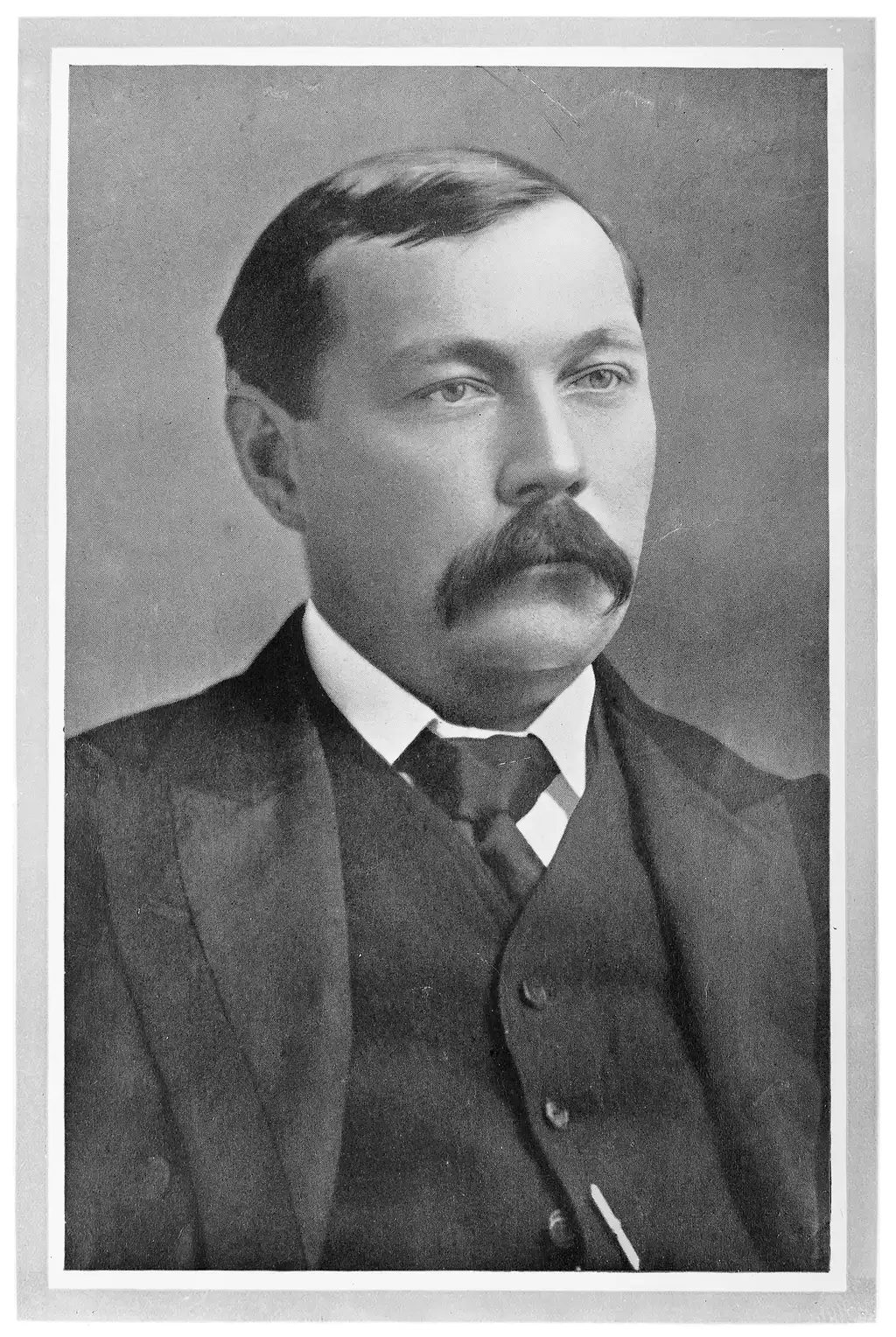
Arthur Conan Doyle
 United Kingdom
Also known as: Sir Arthur Conan Doyle
Compleanno
May 22, 1859
Segno Zodiacale
Gemini
Luogo di Nascita
Edinburgh, Scotland
Età
Morto/a a 71 anni
Informazioni
Sir Arthur Conan Doyle è stato un medico e scrittore scozzese che ha creato uno dei personaggi più duraturi della letteratura: Sherlock Holmes. In quattro decenni ha scritto quattro romanzi e 56 racconti con il detective, rendendolo un'icona globale. Doyle ha anche scritto romanzi storici come The White Company, la serie del Professor Challenger e le storie comiche del Brigadiere Gerard. Nominato cavaliere nel 1902 per il suo servizio nella guerra boera, è stato un autore prolifico le cui opere continuano a essere ampiamente lette e adattate, con Holmes che detiene il record di personaggio letterario più interpretato nella storia del cinema e della televisione.
Doyle era un uomo di contraddizioni. Ha fatto campagne per la giustizia, indagando personalmente su condanne ingiuste, ma in seguito ha abbracciato lo spiritismo, difendendo la bufala delle fate di Cottingley. La sua eredità rimane inseparabile da Holmes, nonostante la sua occasionale ambivalenza verso il personaggio. A partire dal 2026, la Conan Doyle Estate continua a gestire il suo patrimonio letterario, con Sherlock Holmes che ispira nuovi adattamenti e merchandising a livello globale.
Primi Anni e Background
Arthur Conan Doyle è cresciuto a Edimburgo in una famiglia con difficoltà finanziarie. Suo padre, Charles Altamont Doyle, era un funzionario pubblico e illustratore il cui alcolismo portò al ricovero in istituto, lasciando la famiglia in povertà. Doyle fu mandato allo Stonyhurst College, un collegio gesuita, dove sviluppò l'amore per la letteratura e il cricket. In seguito studiò medicina all'Università di Edimburgo dal 1876 al 1881, mantenendosi con lavori saltuari.
Durante gli studi, Doyle iniziò a scrivere racconti, pubblicando il suo primo, 'The Mystery of Sasassa Valley', nel 1879. Dopo la laurea, prestò servizio come medico di bordo su una nave baleniera diretta nell'Artico e successivamente su un piroscafo per l'Africa occidentale. Nel 1882 aprì uno studio medico a Portsmouth, ma faticava, lasciandogli molto tempo per scrivere. I suoi primi romanzi, tra cui The Firm of Girdlestone, non riuscirono a ottenere successo. La svolta arrivò nel 1887 quando A Study in Scarlet introdusse Sherlock Holmes e il dottor Watson, pubblicato su Beeton's Christmas Annual. La storia attirò un'attenzione modesta, ma un secondo romanzo di Holmes, The Sign of the Four, e la serializzazione su The Strand Magazine proiettarono il detective verso la fama.
Crescita Professionale
Sherlock Holmes divenne un fenomeno negli anni '90 del XIX secolo grazie a The Strand Magazine. Le storie di Doyle, con le loro deduzioni logiche e l'atmosfera londinese vittoriana, affascinavano i lettori. Nel 1893, stanco di Holmes, lo uccise in 'The Final Problem', facendolo precipitare dalle cascate di Reichenbach. L'indignazione pubblica fu immensa; 20.000 lettori cancellarono gli abbonamenti. Otto anni dopo, Doyle resuscitò Holmes in The Hound of the Baskervilles (1901), ambientato prima della sua morte, e successivamente lo riportò completamente in vita in 'The Adventure of the Empty House' (1903).
Oltre a Holmes, Doyle scrisse The Lost World (1912), introducendo il Professor Challenger, un'avventura pionieristica di fantascienza. Scrisse anche romanzi storici come The White Company (1891) e la serie del Brigadiere Gerard. Durante la guerra boera, prestò servizio come medico in un ospedale da campo e scrisse The War in South Africa, difendendo la politica britannica, cosa che portò al suo titolo di cavaliere. In seguito, indagò sui casi Edalji e Slater, scagionando i condannati ingiustamente e contribuendo all'istituzione della Corte d'Appello Penale.
Cronologia Carriera
Immagine Pubblica e Stile
Arthur Conan Doyle è ricordato come un gentiluomo delle lettere vittoriane ed edoardiane, un uomo di integrità e curiosità. La sua immagine pubblica era quella di un medico razionale che sosteneva la giustizia, ma la sua successiva adesione allo spiritismo sconcertò e talvolta alienò gli ammiratori. Le storie di Sherlock Holmes, tuttavia, oscurano tutto il resto. L'immagine di Doyle è inseparabile dal cappello deerstalker e dalla pipa di schiuma del suo detective, anche se raramente descrisse Holmes che indossava quegli oggetti.
I fan moderni celebrano Doyle come pioniere del giallo e della narrativa speculativa. Il personaggio di Holmes è diventato un'abbreviazione culturale per il genio deduttivo, e Doyle stesso è spesso ritratto nei media come un creatore conflittuale, alle prese con la sua invenzione più famosa. La Conan Doyle Estate gestisce attivamente l'eredità letteraria, concedendo in licenza Holmes per film, programmi TV e merchandising, assicurando che Doyle rimanga un nome familiare più di un secolo dopo la sua morte.
Fama e fandom
When Arthur Conan Doyle killed off his detective in 1893, the reaction was visceral enough to be recorded as a national tragedy. Newspapers reported thousands of cancellations, and mourners wore black armbands in grief over a fictional character. That moment cemented a unique symbiosis where the author and his creation became inseparable, driving a fanbase that operates through prestigious organizations like the Baker Street Irregulars and the Sherlock Holmes Society of London. These groups maintain rigorous standards of historical accuracy while orchestrating global rituals such as leaving flowers at the statue outside Baker Street station or celebrating May 22nd as Sherlock Holmes Day with coordinated billboard campaigns in New York and London. The fandom's influence extends far beyond literature, fueling modern cultural phenomena including the massive success of the BBC's Sherlock and various charity drives. Despite this organized devotion, the collective does not possess a formal name distinct from the character itself; admirers are simply known by their dedication to the universe Doyle built. iFANN has evaluated this legacy, but the Global Fame Engine currently places him outside the published rankings for the top 1,000 most famous people globally. He holds no specific placement in any scope list at this time. This absence of a numeric rank reflects the nature of his fame: he is an icon whose presence permeates culture so deeply that standard metrics struggle to isolate him against living contemporaries. Yet his status remains undeniable, evidenced by the enduring adaptations and the sheer volume of scholarly work dedicated to his life and works.
Curiosità e leggende
Doyle was an avid sportsman who played cricket for the Marylebone Cricket Club and took a wicket bowling against W.G. Grace. He also served as goalkeeper for Portsmouth Association Football Club under the pseudonym A.C. Smith. Although he coined the phrase 'elementary, my dear Watson', he never wrote it in any story; the line first appeared in a 1929 film adaptation. His later years were marked by a deep embrace of spiritualism, during which he spent over £250,000 supporting causes related to fairies, telepathy, and séances. He even defended the Cottingley Fairies photographs and challenged the magician Harry Houdini to produce a genuine psychic phenomenon, leading to a public rivalry between the two men. Doyle credited his mother, Mary Foley Doyle, with inspiring the character of Mrs. Hudson. Fans still retell the legend of the 'death' of Sherlock Holmes in 1893, where the outcry was so intense that some readers wore black armbands in mourning. When Doyle resurrected the detective in 1903, it was celebrated as a literary miracle rather than a simple plot twist. The annual celebration of Sherlock Holmes Day on May 22nd has evolved into an institutionalized ritual, featuring viral moments and new app features that reinforce his timeless status.
Citazioni Notevoli
“Once you eliminate the impossible, whatever remains, no matter how improbable, must be the truth.”
“It is a capital mistake to theorize before one has data.”
“I have never loved. I have never been loved. I have never known what it is to be loved.”
“The world is full of obvious things which nobody by any chance ever observes.”
Famiglia e Vita Privata
Il padre di Doyle, Charles Altamont Doyle, era un funzionario pubblico e illustratore che lottava contro l'alcolismo e fu ricoverato in istituto nel 1885. Sua madre, Mary Foley Doyle, era una donna colta che alimentò il suo amore per la letteratura. Aveva nove fratelli, anche se molti morirono nell'infanzia.
Doyle sposò Louisa Hawkins nel 1885. Ebbero due figli: Mary Louise (nata nel 1889) e Kingsley (nato nel 1892). Louisa soffrì di tubercolosi per molti anni e morì nel 1906. Nel 1907, Doyle sposò Jean Elizabeth Leckie, con cui ebbe tre figli: Denis (nato nel 1909), Adrian (nato nel 1910) e Jean Lena Annette (nata nel 1912). La famiglia viveva a Crowborough, nel Sussex, dove Doyle allevava api e scriveva.
Collegamenti Notevoli
Relazioni e Storia Dating
Doyle sposò Louisa Hawkins nel 1885; ebbero due figli. Louisa soffrì di tubercolosi per molti anni, e durante la sua malattia, Doyle si innamorò di Jean Elizabeth Leckie. Mantenne una relazione platonica con Leckie per rispetto della moglie. Dopo la morte di Louisa nel 1906, Doyle sposò Leckie nel 1907. Ebbero tre figli e rimasero insieme fino alla morte di Doyle nel 1930. Al momento della sua morte, era sposato con Jean.
- Sposato/aLouisa Hawkins1885 - 1906Prima moglie di Doyle; ebbero due figli. Morì di tubercolosi nel 1906.
- Sposato/aJean Elizabeth Leckie1907 - 1930CorrenteSeconda moglie di Doyle; ebbero tre figli. Era con lui al momento della sua morte.
Morte e conseguenze
Morto/a
July 7, 1930 (a 71 anni)
Luogo di morte
Crowborough, Sussex, England
Causa della morte
Insufficienza cardiaca
The family announced that Sir Arthur Conan Doyle had passed away at his residence, Windlesham, in Crowborough, Sussex. The official finding attributed the end to heart failure, a condition stemming from years of physical strain and illness rather than a sudden event or specific medical mystery. His final days were marked by declining health as he remained active in writing and spiritualist causes until shortly before his passing on July 7, 1930. Public reaction was one of widespread mourning among peers, institutions, and fans globally. Tributes appeared in major publications, marking the loss of a literary giant whose work ensured his legacy was immediately cemented in popular culture.
The funeral service took place shortly after his death at St. Peter's Churchyard in Windlesham, Surrey, where he was buried near his home. The site remains a point of interest for historians and admirers. Posthumously, his estate has been actively managed to preserve intellectual property, with descendants maintaining strict control over licensing rights. A recent victory in 2026 saw the estate defend its rights against unauthorized use of the name Dr Watson, securing control over the character's likeness.
Patrimonio (Valore immobiliare)
$20 Million
Stima del team editoriale di iFANN
At the time of his death in 1930, Arthur Conan Doyle's estate was valued at approximately £400,000 (equivalent to about $20 million today, adjusted for inflation). The bulk of his wealth came from royalties from Sherlock Holmes stories, which were serialized in The Strand Magazine and later published in collections. He was one of the highest-paid authors of his era, earning up to £5,000 per story at his peak. After his death, the estate continued to generate income through book sales, film and TV adaptations, and merchandise. In 2026, the Conan Doyle Estate, managed by his descendants, licenses the Sherlock Holmes intellectual property globally. The estate appointed Big Picture Licensing in 2025 to expand brand partnerships. While exact current figures are private, research by the iFANN Editorial Team puts the estate value at around $20 Million, driven by steady royalties from adaptations and new projects, including a 2025 film titled 'The Strange Case of Sherlock Holmes & Arthur Conan Doyle.'
Premi vinti (2)
Arthur Conan Doyle fu nominato cavaliere da re Edoardo VII nel 1902 per i suoi servizi durante la guerra boera, diventando Sir Arthur Conan Doyle. Non ricevette grandi premi letterari, poiché i sistemi di riconoscimento del settore odierni non esistevano nella sua epoca, ma le sue opere sono state onorate postume attraverso numerosi adattamenti e inserimenti in hall of fame, tra cui la Science Fiction and Fantasy Hall of Fame nel 2004.
1902 · Servizio
Boer War service
2004 · Premio alla Carriera
The Lost World
Noto Per
Sherlock Holmes series
1887 · Creatore
The Lost World
1912 · Autore
The White Company
1891 · Autore
Parole chiave
Fonti
Fatti Rapidi
- Professione
- Writer, Physician
- Nato/a
- May 22, 1859
- Luogo di Nascita
- Edinburgh, Scotland
- Morto/a
- July 7, 1930
- Luogo di morte
- Crowborough, England
- Genere
- Maschio
- Coniuge
- Louisa Hawkins, Jean Elizabeth Leckie
- Segno Zodiacale
- Gemini
Dettagli Personali
- Nome Completo
- Arthur Ignatius Conan Doyle
- Coniuge
- Louisa Hawkins (1885–1906), Jean Elizabeth Leckie (1907–1930)
- Figli
- Mary Louise, Kingsley, Denis, Adrian, Jean Lena Annette
- Istruzione
- University of Edinburgh (Medicine)
Domande Frequenti
Chi era Arthur Conan Doyle?
Qual era il patrimonio di Arthur Conan Doyle nel 2026?
Arthur Conan Doyle credeva nelle fate?
Perché Arthur Conan Doyle uccise Sherlock Holmes?
Qual è il libro più famoso di Arthur Conan Doyle?

Unisciti alla community
fan che discutono