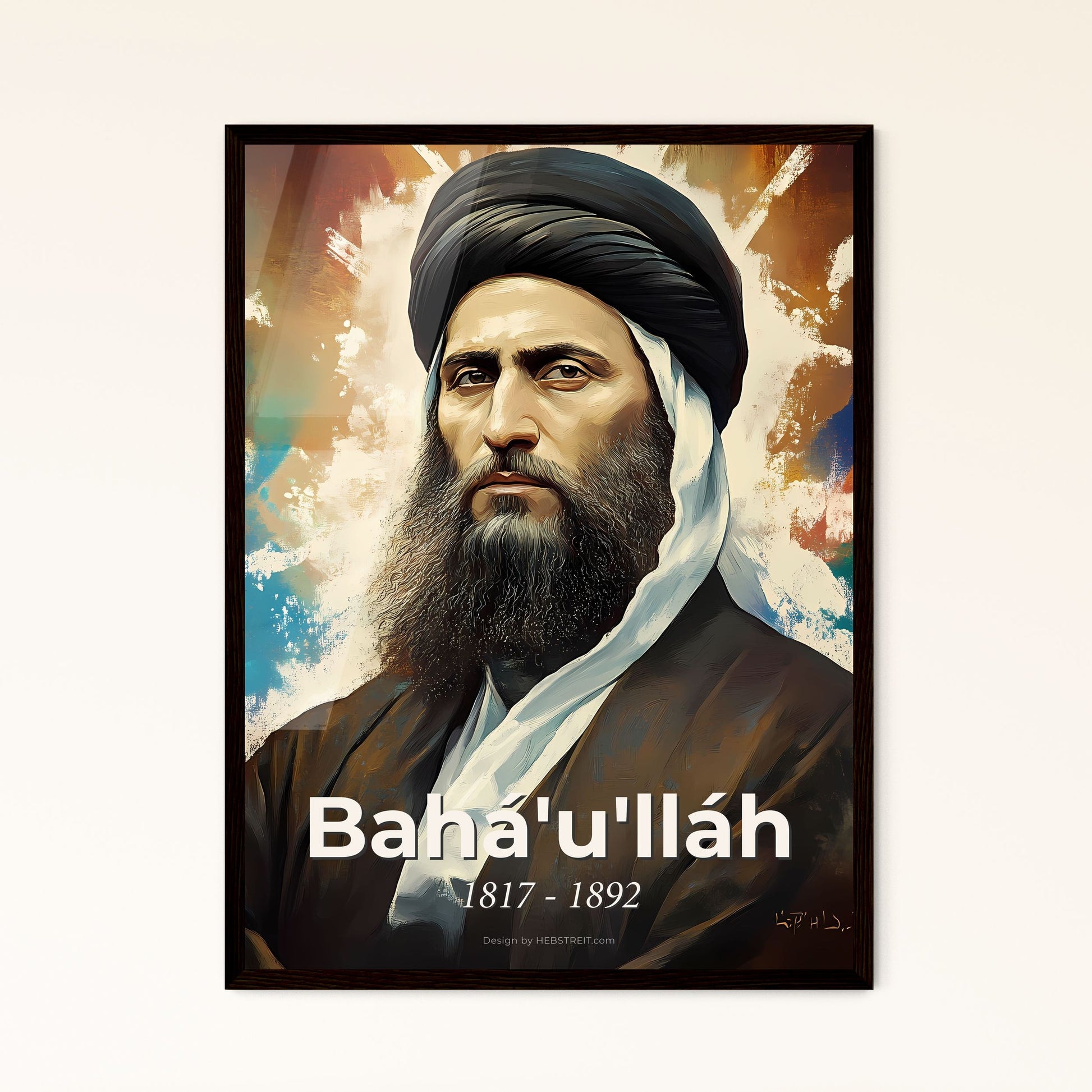
Baháʼu'lláh
 Iran
IranAlso known as: Mírzá Ḥusayn-ʻAlí Núrí, Baháʼu'lláh, The Blessed Beauty
Compleanno
November 12, 1817
Segno Zodiacale
Scorpio
Luogo di Nascita
Tehran, Persia (now Iran)
Età
Morto/a a 74 anni
Informazioni
Baháʼu'lláh, born Mírzá Ḥusayn-ʻAlí Núrí in 1817, was the founder of the Baháʼí Faith, a global religion with 5 to 8 million adherents. He is revered by Baháʼís as the latest Manifestation of God, a messenger who brings divine guidance for the modern age. His writings, numbering over 1,500 works, form the sacred scripture of the Baháʼí Faith and have been translated into hundreds of languages. Central to his message is the unity of humanity, the harmony of science and religion, and the establishment of a just world civilization. Today, the Baháʼí community is active worldwide, working on social and economic development projects, interfaith dialogue, and promoting peace. Baháʼu'lláh's shrine near Acre, Israel, is a pilgrimage site and the holiest place for Baháʼís.
Primi Anni e Background
Baháʼu'lláh nacque in un'importante famiglia aristocratica a Teheran. Suo padre, Mírzá ʻAbbás Núrí, era un visir dello Scià, il che conferiva alla famiglia considerevole ricchezza e influenza. Fin da giovane, Baháʼu'lláh mostrò una notevole compassione per i poveri e una profonda inclinazione spirituale. Rifiutò l'istruzione tradizionale offerta ai figli nobili, preferendo studiare da solo, ma divenne esperto in letteratura persiana e araba, filosofia e misticismo islamico.
A 22 anni, suo padre morì e il governo gli offrì un'alta carica ministeriale. Rifiutò, scegliendo invece di gestire le proprietà di famiglia e dedicarsi ad opere di beneficenza. Divenne noto per la sua generosità, spesso donando denaro e cibo ai bisognosi. Nel 1844, a 27 anni, incontrò il movimento bábí, un movimento religioso riformista che proclamava l'imminente arrivo di un nuovo messaggero divino. Baháʼu'lláh abbracciò gli insegnamenti del Báb e divenne rapidamente un leader di spicco, usando la sua ricchezza per proteggere e sostenere i compagni bábí. Ciò attirò l'attenzione delle autorità e, dopo l'esecuzione del Báb nel 1850, Baháʼu'lláh fu arrestato e imprigionato nel famigerato dungeon Síyáh-Chál di Teheran. Fu lì, in catene e nell'oscurità, che sperimentò i primi indizi della sua missione divina.
Crescita Professionale
Il punto di svolta arrivò nel 1853 quando Baháʼu'lláh fu rilasciato dal Síyáh-Chál ed esiliato a Baghdad. Nel decennio successivo guidò la comunità bábí, che era in disordine dopo la morte del Báb. Nel 1863, durante un ritiro in un giardino vicino a Baghdad, dichiarò pubblicamente ai suoi compagni di essere colui che il Báb aveva promesso. Questa dichiarazione, nota come periodo di Ridván, segna l'inizio formale della Fede Baháʼí.
Le autorità ottomane e persiane, allarmate dalla sua crescente influenza, lo esiliarono a Costantinopoli (Istanbul), poi a Edirne e infine nel 1868 nella colonia penale di Acri nella Palestina ottomana. Nonostante la dura prigionia e molteplici tentativi di ucciderlo, Baháʼu'lláh continuò a scrivere prolificamente. Scrisse il Kitáb-i-Aqdas, il suo libro di leggi, e il Kitáb-i-Íqán, un'opera teologica fondamentale. Ad Acri ricevette visitatori e scrisse lettere ai sovrani del mondo, tra cui la regina Vittoria e Napoleone III, chiedendo il disarmo e la sicurezza collettiva. I suoi ultimi anni furono trascorsi in relativa libertà nella magione di Bahjí, dove morì nel 1892.
Cronologia Carriera
Immagine Pubblica e Stile
Per i baháʼí, Baháʼu'lláh è la manifestazione di Dio per questa era, una figura di suprema autorità spirituale e compassione. La sua immagine è quella di un padre amorevole e di un riformatore impavido che sopportò immense sofferenze per l'umanità. È spesso raffigurato nella letteratura baháʼí come la 'Bellezza Benedetta', un titolo che riflette la sua percepita radiosità spirituale. Al di fuori della fede, è riconosciuto come un importante leader religioso che introdusse principi sociali progressisti, come l'uguaglianza di genere e l'istruzione universale, molto prima che diventassero mainstream. Storici e studiosi studiano i suoi scritti per la loro profondità letteraria e filosofica. La comunità baháʼí, diversificata e globale, è unita nella venerazione per lui, celebrando la sua vita e i suoi insegnamenti attraverso la preghiera, lo studio e il servizio. Non esiste un fandom in senso secolare, ma una devota comunità globale che conta milioni di persone.
Fama e fandom
The community surrounding Baháʼu'lláh operates not as a fandom in the modern pop-culture sense, but as a global religious movement with deep historical roots and structured spiritual practices. His followers, known simply as Baháʼís, do not engage in fan campaigns, chart pushes, or viral social media rituals typical of celebrity culture. Instead, their devotion is expressed through prayer, study circles, and humanitarian projects focused on social cohesion and unity. While the faith has attracted attention from public figures like Justin Baldoni and Blake Lively, this interest stems from personal biography rather than organized fan efforts centered on the founder himself. There are no unofficial names for his fanbase, nor are there any recorded instances of crowds fainting at his appearances or streets shutting down for his visits, as he lived and died over a century ago without the infrastructure of modern stardom. The legends that define his legacy are theological narratives of exile and persecution, such as his declaration as the Promised One and his journey through prisons in Baghdad, Constantinople, Adrianople, and Acre, which remain solemn historical events rather than viral internet stories. These narratives are commemorated annually during religious observances like the Ascension of Baháʼu'lláh and the Most Great Festival, marking dates of profound spiritual significance for millions worldwide. Despite his immense influence across continents, iFANN's Global Fame Engine has evaluated this person, but they do not currently hold a placement in the published rankings (Global Top 1,000 or a Top-100 scope list). This assessment reflects the unique nature of his fame, which transcends traditional metrics of media consumption and search volume.
Curiosità e leggende
Born Mírzá Ḥusayn-ʻAlí Núrí in 1817, Baháʼu'lláh carried the honorific 'Mírzá' to denote his noble lineage. Contemporary descriptions often highlight his striking physical presence, noting piercing eyes and a dignified bearing that commanded respect despite his humble attire during exile. He composed his vast corpus of writings using a reed pen and ink, with manuscripts now preserved in archives globally. One of his most revered works, the Hidden Words, contains short aphorisms he claimed were dictated by God. Although he never met the Báb in person, the two maintained correspondence throughout their lives. Baháʼu'lláh endured imprisonment for a total of 40 years across various locations, a period defined by his suffering for the sake of humanity. A defining legend within the Baháʼí tradition recounts his declaration of being the 'Promised One,' a claim that led to his arrest and multiple exiles from Persia to the Ottoman Empire. Another enduring story focuses on his final days at the Mansion of Bahjí in Acre, where he passed away and where his shrine now stands as a place of pilgrimage. These events are not merely folklore but are treated as verified historical facts that shaped the trajectory of the faith he founded.
Citazioni Notevoli
“The earth is but one country, and mankind its citizens.”
“My purpose is none other than the education of all men.”
“The well-being of mankind, in its ultimately spiritual as well as material aspects, is the object of the Divine Unity.”
“Let your vision be world-embracing, rather than confined to your own self.”
Famiglia e Vita Privata
Baháʼu'lláh sposò tre mogli, come era consuetudine nella Persia del XIX secolo. La sua prima e principale moglie fu Ásíyih Khánum, una nobildonna nota per la sua devozione e forza. Lo accompagnò in tutti i suoi esili ed è considerata un modello di fermezza. Ebbero sette figli, ma solo tre sopravvissero fino all'età adulta: ʻAbdu'l-Bahá, che in seguito guidò la Fede Baháʼí; Bahíyyih Khánum, una figura di spicco; e Mírzá Mihdí, che morì in un incidente a 22 anni. Baháʼu'lláh sposò anche Fatimih Khánum e Gawhar Khánum, con le quali ebbe altri figli. La famiglia sopportò enormi difficoltà, tra cui la perdita di proprietà, la separazione e la morte di Mírzá Mihdí, che cadde attraverso un lucernario mentre pregava. La famiglia di Baháʼu'lláh ad Acri includeva molti dei suoi figli e nipoti, creando una comunità affiatata che formò il nucleo della prima amministrazione baháʼí.
Collegamenti Notevoli
La missione di Baháʼu'lláh fu annunciata dal Báb, che fondò il movimento bábí. Dopo la morte di Baháʼu'lláh, suo figlio ʻAbdu'l-Bahá divenne l'interprete autorizzato dei suoi scritti e guidò la comunità baháʼí. Sua moglie Ásíyih Khánum è venerata come modello di fedeltà. Altre figure chiave includono sua figlia Bahíyyih Khánum e suo figlio Mírzá Mihdí.
Relazioni e Storia Dating
Baháʼu'lláh sposò la sua prima moglie, Ásíyih Khánum, intorno al 1835. Era figlia di un nobile e rimase la sua principale compagna per tutta la vita. Ebbero sette figli, di cui tre sopravvissero all'infanzia. Intorno al 1849, sposò Fatimih Khánum, e successivamente Gawhar Khánum. Tutte e tre le mogli lo accompagnarono durante i suoi esili. Ásíyih Khánum morì nel 1886, e Baháʼu'lláh la pianse profondamente. I suoi matrimoni erano conformi ai costumi dell'epoca, e la sua vita familiare fu segnata da devozione e difficoltà condivise.
- Sposato/aÁsíyih Khánum1835 - 1886Moglie principale, madre di ʻAbdu'l-Bahá e Bahíyyih Khánum.
- Sposato/aFatimih Khánum1849 - 1892Seconda moglie, conosciuta come Mahd-i-ʻUlyá.
- Sposato/aGawhar Khánum1849 - 1892Terza moglie.
Morte e conseguenze
Morto/a
May 29, 1892 (a 74 anni)
Luogo di morte
Akká, Ottoman Empire (present-day Israel)
Causa della morte
Prolonged illness and fever
Baháʼu'lláh passed away on the evening of May 29, 1892, in the Mansion of Bahjí just outside Akká, bringing an end to a life defined by exile and spiritual revelation. Contemporary accounts describe his final months as marked by severe illness, extreme weakness, and fever, leaving him bedridden in seclusion attended only by family and close companions before he died peacefully after praying and dictating his final writings. Upon his death, the news spread rapidly among Baháʼís globally, with immediate tributes delivered by his son ʻAbdu'l-Bahá, who succeeded him as the leader of the faith and honored his father's teachings. The funeral was a private affair held shortly after his death, where his body was wrapped in a shroud and buried in a simple grave within the garden of the mansion according to his own instructions.
While the location of the grave remains inaccessible to non-Baháʼís due to regional sensitivities, the site became the focal point of pilgrimage and the holiest place in the religion. Following his death, his extensive writings including the Kitáb-i-Aqdas and Gleanings were compiled and translated for global distribution, while ʻAbdu'l-Bahá assumed leadership to guide the growing community. Today, May 29 is observed worldwide as the Ascension of Baháʼu'lláh, a holy day marked by prayer and reflection that continues to anchor the Baháʼí calendar.
Patrimonio (Valore immobiliare)
Not Publicly Available
Stima del team editoriale di iFANN
As a 19th-century religious leader rather than a commercial figure, Baháʼu'lláh never accumulated personal wealth in the modern sense. Born into an aristocratic family with significant property, he saw those assets confiscated by the state during his long exile and imprisonment. The iFANN Editorial Team's research traces the financial reality of his life to this total loss of material standing, noting that he lived the remainder of his days relying on the support of followers and the charity of others. Today, the institutions associated with his legacy, including the Shrine of Baháʼu'lláh, are maintained through voluntary contributions from the global Baháʼí community rather than any estate held by the founder himself.
Premi e Lodi
View 2 records, honours and achievementsNoto Per
Founding the Baháʼí Faith
1863 · Founder and Manifestation of God
Kitáb-i-Aqdas
1873 · Autore
Hidden Words
1858 · Autore
Kitáb-i-Íqán
1862 · Autore
Parole chiave
Fatti Rapidi
- Professione
- writer, poet, religious leader
- Nato/a
- +1817-11-12
- Luogo di Nascita
- Tehran, Persia
- Morto/a
- +1892-05-29
- Luogo di morte
- Acre, Ottoman Palestine
- Genere
- Maschio
- Coniuge
- Ásíyih Khánum, Fatimih Khánum, Gawhar Khanum
- Segno Zodiacale
- Scorpio
Dettagli Personali
- Nome Completo
- Mírzá Ḥusayn-ʻAlí Núrí
- Coniuge
- Ásíyih Khánum, Fatimih Khánum, Gawhar Khanum
- Figli
- Several, including ʻAbdu'l-Bahá, Bahíyyih Khánum, and Mírzá Mihdí
Domande Frequenti
Chi era Baháʼu'lláh e cosa fece?
Quando e dove nacque Baháʼu'lláh?
Quali sono i principali insegnamenti di Baháʼu'lláh?
Qual è il libro più importante di Baháʼu'lláh?
Dove è sepolto Baháʼu'lláh?
Persone Simili
Unisciti alla community
fan che discutono