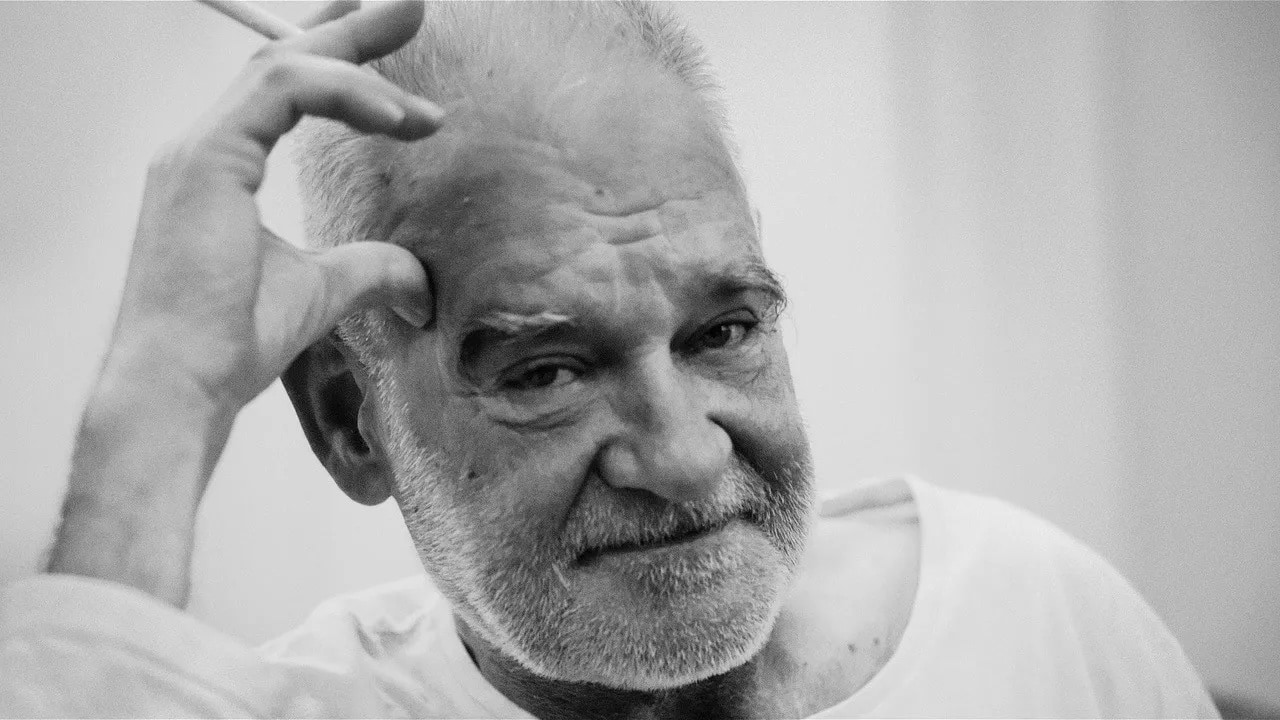
Béla Tarr
 Hungary
Film director•screenwriter•producer
Compleanno
July 21, 1955
Segno Zodiacale
Cancer
Luogo di Nascita
Pécs, Hungary
Età
Morto/a a 70 anni
Altezza
5 ft 9 in (175 cm)
Informazioni
Béla Tarr è stato un regista, sceneggiatore e produttore ungherese le cui immagini nitide in bianco e nero e le lunghe riprese estese hanno ridefinito la narrazione cinematografica. In una carriera durata oltre tre decenni, ha realizzato 10 lungometraggi e diversi cortometraggi, diventando una figura centrale del slow cinema. Il suo epico Sátántangó del 1994, una meditazione di sette ore e mezza sulla disperazione e il declino, appare regolarmente nelle liste accademiche dei più grandi film mai realizzati. Tarr è morto il 6 gennaio 2026 all'età di 70 anni.
Dopo il ritiro dai lungometraggi, Tarr si è dedicato all'istruzione e a progetti multimediali. Ha anche ricevuto numerosi premi alla carriera, tra cui quelli del Rotterdam, Jerusalem, Locarno e dell'European Film Academy. Una grande retrospettiva del suo lavoro è prevista per il Festival di Cannes 2026, e la Criterion Collection ha annunciato un cofanetto completo per la fine del 2026.
Tarr ha lavorato con un team creativo affiatato. La montatrice Ágnes Hranitzky è diventata sua co-regista a partire da Werckmeister Harmonies. Da Damnation, il romanziere László Krasznahorkai ha co-scritto le sceneggiature, il compositore Mihály Víg ha musicato i film e recitato in Sátántangó, e il direttore della fotografia Gábor Medvigy ha girato diverse opere. Successivamente, Fred Kelemen ha fotografato The Man from London e The Turin Horse. Tra gli attori regolari figurano János Derzsi, Erika Bók e Mihály Kormos.
Primi Anni e Background
Béla Tarr è nato il 21 luglio 1955 a Pécs, in Ungheria, da padre rom e madre ungherese. Suo padre lavorava come scenografo per l'industria cinematografica ungherese, il che ha permesso a Tarr di entrare presto in contatto con il cinema. La famiglia si trasferì a Budapest quando Tarr era bambino, e lui crebbe in un quartiere operaio. La sua infanzia fu segnata da difficoltà economiche e dall'esposizione alle dure realtà della società ungherese sotto il regime comunista. Il lavoro del padre sui set cinematografici permetteva a Tarr di visitare gli studi, dove si appassionò ai meccanismi della realizzazione di film.
A 16 anni iniziò a realizzare film amatoriali con una Super 8. Il suo primo cortometraggio, Hotel Magnezit (1978), era un documentario su un rifugio per senzatetto che attirò l'attenzione della televisione ungherese. Tarr frequentò l'Università di Teatro e Arti Cinematografiche di Budapest, ma fu espulso dopo tre semestri per aver realizzato un film che le autorità consideravano politicamente problematico. Non completò mai una laurea formale in cinema, imparando il mestiere attraverso l'esperienza pratica e l'autoformazione. Il momento cruciale arrivò quando raccolse fondi da amici e familiari per realizzare il suo primo lungometraggio, Family Nest (1979), un crudo ritratto cinéma vérité di una famiglia operaia. Il film fu girato in soli 10 giorni con un budget di 15.000 dollari e inizialmente fu bandito dalla censura ungherese per la sua cupa rappresentazione della società.
Crescita Professionale
Family Nest (1979) è stato presentato in anteprima e ha vinto il Grand Prize al Festival del Cinema Ungherese, affermando Tarr come realista sociale. Ha proseguito con The Outsider (1981) e The Prefab People (1981), continuando a concentrarsi su lavoratori alienati. Almanac of Fall (1984) ha segnato un cambiamento stilistico verso composizioni più stilizzate, teatrali e riprese più lunghe.
Damnation (1988) è stato presentato al Festival Internazionale del Cinema di Berlino, vincendo il Caligari Film Award. Questo film ha introdotto il suo stile caratteristico: fotografia in bianco e nero, riprese estremamente lunghe (alcune della durata di 11 minuti) e la collaborazione con il romanziere László Krasznahorkai. Sátántangó (1994) è stato presentato a Berlino, un'epopea di sette ore e mezza girata in 39 lunghe riprese nell'arco di due anni. Ha vinto il Grand Prize alla Settimana del Cinema Ungherese e un altro Caligari Film Award. Nel 2012, Sight & Sound lo ha classificato al 36° posto nella lista dei più grandi film di tutti i tempi; nel 2022 è salito al 24°.
Werckmeister Harmonies (2000) è stato presentato a Berlino, con Ágnes Hranitzky accreditata come co-regista per la prima volta. Ha vinto il Premio della Giuria Ecumenica e diversi premi della Settimana del Cinema Ungherese. Tarr ha ricevuto il Premio Kossuth, la più alta onorificenza culturale ungherese, nel 2004. The Man from London (2007) ha concorso per la Palma d'Oro a Cannes, ricevendo recensioni contrastanti ma vincendo il premio per la miglior regia alla Settimana del Cinema Ungherese. Il suo ultimo lungometraggio, The Turin Horse (2011), è stato presentato a Berlino e ha vinto l'Orso d'Argento Gran Premio della Giuria, il Premio FIPRESCI e il Premio della Giuria Ecumenica. Tarr ha annunciato che questo sarebbe stato il suo ultimo film.
Nel 2013, Tarr ha fondato film.factory a Sarajevo, una scuola di cinema internazionale che accetta solo otto studenti all'anno, tutti senza tasse scolastiche, in collaborazione con l'Università di Sarajevo. Ne è stato direttore fino al 2016. La sua mostra multimediale Till the End of the World (2017) all'Eye Filmmuseum di Amsterdam ha attirato oltre 40.000 visitatori. Per il Wiener Festwochen del 2019, ha creato Missing People, una performance che coinvolgeva 250 senzatetto viennesi. Al momento della sua morte nel 2026, Tarr stava lavorando a un nuovo lungometraggio intitolato The Man Who Fell from the Sky, che è rimasto incompiuto. La sua eredità, gestita da Ágnes Hranitzky, ha annunciato che il film non sarà terminato né rilasciato in alcuna forma.
Cronologia Carriera
Immagine Pubblica e Stile
Béla Tarr è la figura definitiva del cinema lento. I suoi film sono caratterizzati da fotografia in bianco e nero, inquadrature estremamente lunghe che spesso durano 10-15 minuti, dialoghi minimi, temi esistenziali cupi, paesaggi battuti dalla pioggia, ambientazioni industriali in decadenza e uno stile di montaggio ipnotico e ritmico. Il suo lavoro con la macchina da presa è famoso per lenti e deliberati carrelli che seguono i personaggi in tempo reale.
Le rappresentazioni mediatiche lo descrivono costantemente come un "genio della tetraggine" e un "maestro della malinconia". I critici descrivono il suo lavoro come difficile ma gratificante. È considerato uno dei registi più importanti del cinema mondiale, sebbene i suoi film abbiano un richiamo commerciale limitato. Tarr non aveva una presenza ufficiale sui social media; era famosamente offline, avendo dichiarato: "Non ho interesse per internet. Il cinema riguarda l'essere presenti in una stanza con gli altri." I fan, spesso chiamati appassionati di cinema lento, organizzano maratone di Sátántangó con intervalli e viaggiano in Ungheria per visitare i luoghi delle riprese. Comunità online su Reddit (r/TrueFilm) e Letterboxd discutono attivamente del suo lavoro. Tarr è apparso su copertine di riviste importanti, tra cui Film Comment (2011), Sight & Sound (2012), Filmkultura (2013) e Cahiers du Cinéma (2018).
Fama e fandom
When Béla Tarr died in January 2026, the tributes poured in from every corner of the arthouse world, but the global fame engine that tracks such things had already taken note. As of August 2026, iFANN's Global Fame Engine has evaluated Tarr's standing, yet he does not currently hold a placement in the published rankings, neither in the Global Top 1,000 nor in any Top-100 scope list. That absence is itself a kind of tribute: Tarr's fame was never the loud, chart-topping kind. It was the slow-burn renown of a cult director who became, in the words of the Harvard Film Archive, 'the ultimate auteurist's auteur.' His audience is a loosely affiliated international community of cinephiles, academics, and critics, no formal fandom name exists, and none is needed. They gather not in online campaigns but in repertory theaters and festival retrospectives, where his marathon films are screened in full, a ritual that demands hours of patience. The Sarajevo Film Festival's 'Béla Tarr in...' tribute, launched in August 2026, showcased films by his former students, turning the fandom into a living legacy. Tarr's fame is measured not in rankings but in the endurance of his seven-and-a-half-hour Sátántangó, a film that functions as a test of commitment among his devotees. He refused commercial compromise, and his fans love him for it. He is not on the list; he is the list's shadow, a presence felt in every frame of slow cinema that followed.
Curiosità e leggende
Tarr's Sátántangó runs exactly 7 hours and 30 minutes, matching a full working day in Hungary at the time, and contains only 39 shots, an average shot length of over 11 minutes. He famously required actors to rehearse for weeks before shooting a single take; for The Turin Horse, rehearsals lasted 8 weeks. A chain smoker, Tarr often went through 3–4 packs of cigarettes per day during shoots. His father was Romani, but Tarr rarely discussed it, once saying, 'I don't want to be the Romani filmmaker. I am a filmmaker.' The opening shot of The Turin Horse, a 6-minute static view of a horse being hitched to a cart, was the most difficult he ever directed because the horse kept moving. He declined a Hollywood offer in the 1990s, preferring to 'make a bad film my way than a good film someone else's way.' He directed one music video, 'The End of the World' for Kispál és a Borz in 1995. A devoted reader of Nietzsche and Heidegger, his films are steeped in their philosophy. He held honorary doctorates from Budapest, Pécs, and Sarajevo, and was an Honorary Citizen of Budapest (2012) and a Commander's Cross recipient (2013). A legend fans still retell: The Turin Horse was inspired by Nietzsche's real-life breakdown in Turin in 1889, when he embraced a beaten horse, Tarr's film imagines the horse's next six days, a final statement that proved to be his last feature.
Citazioni Notevoli
“I don't make films for the audience. I make films for myself. If the audience comes, that's good. If not, that's also good.”
“The world is a terrible place. My films are not about hope. They are about the dignity of despair.”
“When you make a film, you are not telling a story. You are creating a world. And in that world, time is the most important thing.”
“I have made 10 films. That is enough. I have said everything I wanted to say.”
“The Turin Horse is about the end of the world. Not the end of the world as a spectacle, but the end of the world as a slow, quiet, inevitable process.”
“Cinema is dead. Long live cinema.”
“I don't believe in God. But I believe in the camera.”
Famiglia e Vita Privata
Il padre di Tarr era uno scenografo per l'industria cinematografica ungherese, e sua madre era una casalinga ungherese. Aveva un fratello minore, ma si sa poco di lui. Tarr è stato sposato con Ágnes Hranitzky, sua storica montatrice e co-regista, dagli anni '80 fino alla sua morte. La coppia non ha avuto figli. Hranitzky ha gestito la sua eredità dopo la sua morte. Tarr possedeva una casa a Budapest valutata circa 400.000 €. Non aveva animali domestici.
Collegamenti Notevoli
Béla Tarr ha collaborato strettamente con il romanziere László Krasznahorkai, che ha co-scritto le sceneggiature a partire da Damnation. Sua moglie Ágnes Hranitzky ha servito come montatrice e co-regista da Werckmeister Harmonies. Il compositore Mihály Víg ha musicato tutti i film da Damnation e ha recitato in Sátántangó. I direttori della fotografia includevano Gábor Medvigy per diversi film e Fred Kelemen per le opere successive. Gli attori regolari includevano János Derzsi, Erika Bók e Mihály Kormos.
Relazioni e Storia Dating
La vita personale di Béla Tarr è stata notevolmente protetta dallo scrutinio pubblico. È stato sposato con Ágnes Hranitzky, sua storica montatrice e co-regista, dagli anni '80 fino alla sua morte nel 2026. Hranitzky ha montato i film di Tarr a partire da Family Nest (1979) ed è diventata sua co-regista da Werckmeister Harmonies (2000). La loro partnership professionale e personale era famosamente molto unita; Tarr una volta disse: "Lei è colei che rende possibili i miei film." La coppia non ha avuto figli. Nessuna fonte credibile riporta altre relazioni sentimentali, matrimoni, divorzi o flirt di alto profilo. Al 2026, Tarr era vedovo, sopravvissuto da Hranitzky.
- Sposato/aÁgnes Hranitzky1980 - 2026CorrenteHranitzky era la montatrice e co-regista di Tarr; non avevano figli.
Morte e conseguenze
Morto/a
January 6, 2026 (a 70 anni)
Luogo di morte
Sconosciuto
Causa della morte
Sconosciuto
Béla Tarr, the acclaimed Hungarian film director and screenwriter, died on January 6, 2026, at the age of 70. Born on July 21, 1955, in Pécs, Hungary, he passed away after a long illness that had kept him from public view. The New Yorker noted that he died following a prolonged sickness.
The film community and international media reacted swiftly to Tarr's passing with tributes from peers and major institutions. On January 8, 2026, Academy Award-winning director László Nemes published a tribute in The Guardian, describing Tarr as an "ideal, impossible mentor" and reflecting on his unrelenting quest for cinematic perfection. Major outlets including The New York Times, The Associated Press, and IndieWire ran obituaries on January 6 and 7, 2026, characterizing him as a titan of slow-moving cinema and praising films like Sátántangó and The Turin Horse. The Criterion Collection issued a post titled "Lamentation and Laughter" on January 9, 2026, honoring his legacy, while ArtReview published "An Ode To Béla Tarr" shortly after his death.
Significant posthumous tributes were organized later in 2026 to commemorate his work. The Sarajevo Film Festival unveiled a dedicated program celebrating his legacy in August 2026, specifically highlighting a selection for former students of his film school. This program served as a primary public commemoration during the festival season. Following his death, Tarr's estate has been commemorated through curated retrospectives and ongoing critical re-evaluation of his work, including interviews with his collaborators and retrospectives by institutions like the Harvard Film Archive.
Patrimonio (Valore immobiliare)
$6 Million
Stima del team editoriale di iFANN
iFANN currently estimates Béla Tarr's estate at $6 million. Tarr's wealth was modest by Hollywood standards, built on small directing fees and a lifetime of arthouse dedication. The Turin Horse had a budget of €500,000, with his fee estimated at €50,000; earlier films operated on even tighter budgets. He drew a salary as director of film.factory in Sarajevo, funded through grants and university partnerships. His multimedia exhibition Till the End of the World grossed around €480,000 from 40,000 visitors at roughly €12 per ticket. Lectures at universities and festivals earned him €5,000 to €10,000 each. Royalties from his films continue to flow, with Sátántangó still selling on DVD, Blu-ray, and streaming platforms like the Criterion Channel and MUBI. After his death, new 4K restorations (2023–2025) and licensing for retrospectives have boosted estate earnings. The estate, managed by Ágnes Hranitzky, is projected to earn €200,000 to €300,000 annually. Tarr owned a home in Budapest valued at approximately €400,000. His wealth reflected his commitment to cinema as art, not commerce.
Premi vinti (15)
Béla Tarr ha vinto numerosi premi per i suoi film. Ha ricevuto il Caligari Film Award al Festival Internazionale del Cinema di Berlino sia per Damnation (1988) che per Sátántangó (1994). Il cavallo di Torino (2011) ha vinto l'Orso d'Argento Gran Premio della Giuria a Berlino, insieme al Premio FIPRESCI e al Premio della Giuria Ecumenica. Ha anche vinto numerosi premi al Hungarian Film Week come miglior regista e miglior film. Nel 2004 ha ricevuto il Premio Kossuth, la più alta onorificenza culturale ungherese, e nel 2021 il Premio alla Carriera dell'Accademia del Cinema Europeo.
2004 · Premio Culturale
Lifetime achievement
2021 · Premio alla Carriera
Lifetime achievement
Noto Per
Sátántangó
1994 · Director, co-writer
Werckmeister Harmonies
2000 · Director, co-writer
The Turin Horse
2011 · Director, co-writer
Damnation
1988 · Director, writer
The Man from London
2007 · Director, co-writer
Parole chiave
Fatti Rapidi
- Professione
- Film director, screenwriter, producer
- Nato/a
- July 21, 1955
- Luogo di Nascita
- Pécs, Hungary
- Morto/a
- January 6, 2026
- Luogo di morte
- Budapest, Hungary
- Genere
- Maschio
- Altezza
- 5 ft 9 in (175 cm)
- Coniuge
- Ágnes Hranitzky
- Children
- None
- Education
- University of Theatre and Film Arts, Budapest (expelled)
Dettagli Personali
- Nome Completo
- Béla Tarr
- Altezza
- 5 ft 9 in (175 cm)
- Coniuge
- Ágnes Hranitzky
- Istruzione
- University of Theatre and Film Arts, Budapest (expelled after three semesters)
Filmografia
10
Totale
10
Film
0
TV
Domande Frequenti
Quanti anni aveva Béla Tarr quando è morto?
Qual è il patrimonio di Béla Tarr nel 2026?
Béla Tarr sta ancora facendo film nel 2026?
Per cosa è famoso Béla Tarr?
Con chi era sposato Béla Tarr?
Persone Simili
Unisciti alla community
fan che discutono