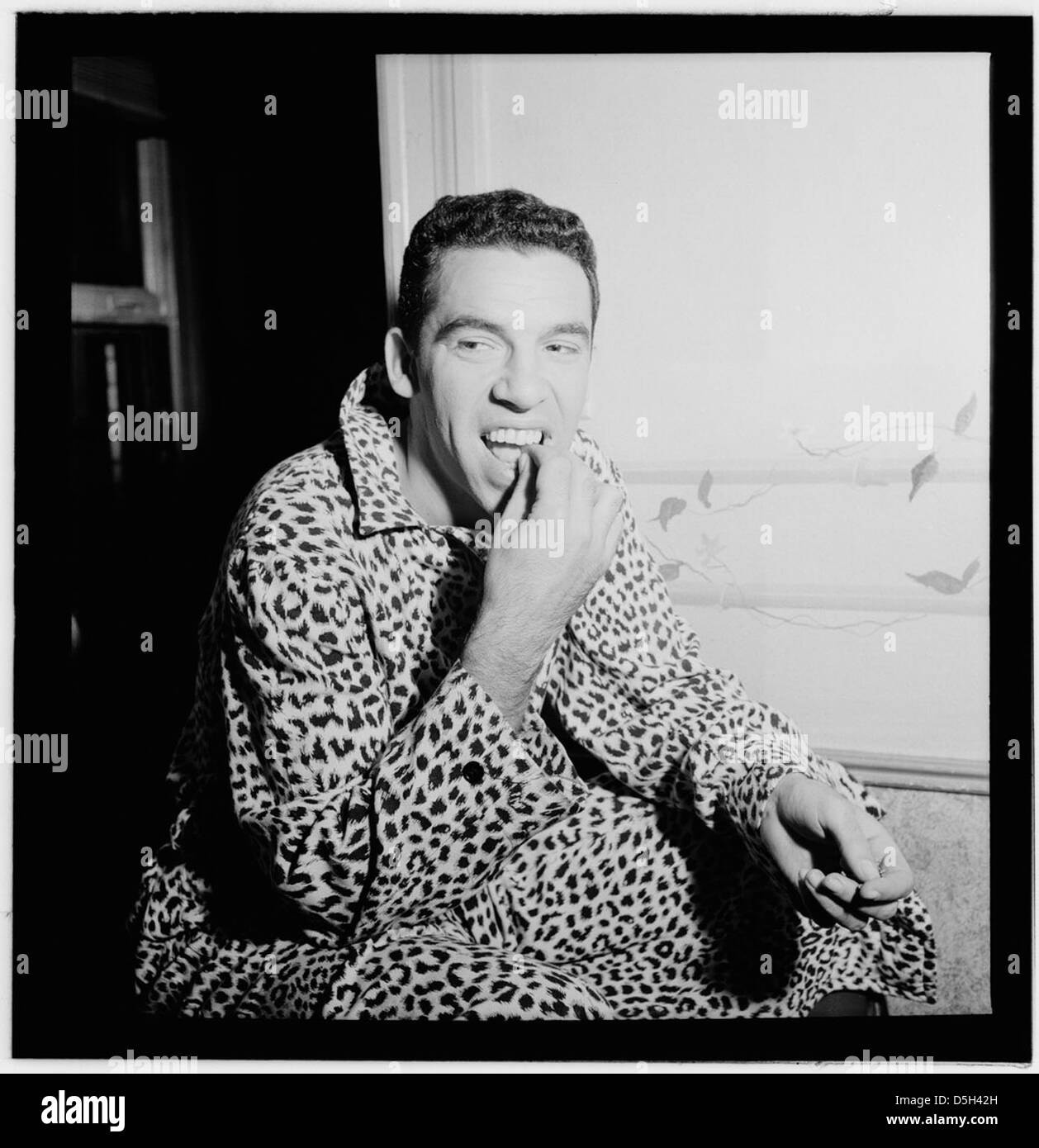
Buddy Rich
 United States
jazz drummer•bandleader•musician
Also known as: Traps, the Drum Wonder
Compleanno
September 30, 1917
Segno Zodiacale
Libra
Luogo di Nascita
Brooklyn, New York, USA
Età
Morto/a a 69 anni
Altezza
5 ft 7 in (1.70 m)
Informazioni
Buddy Rich è stato un batterista jazz e direttore d'orchestra statunitense la cui velocità, precisione e abilità scenica hanno stabilito uno standard che rimane il punto di riferimento per i batteristi di tutti i generi. Nato a Brooklyn nel 1917, è stato un bambino prodigio del vaudeville pubblicizzato come "Traps, the Drum Wonder". Il suo periodo con l'orchestra di Tommy Dorsey dal 1939 al 1942 lo rese una star nazionale, e la sua big band del 1966, la Buddy Rich Big Band, divenne il suo veicolo più famoso. L'arrangiamento di Rich del 1966 di West Side Story è un punto di riferimento del jazz. Non imparò mai a leggere la musica, memorizzando le parti a orecchio, un'impresa che stupiva gli altri musicisti. A partire da 2026, le sue registrazioni continuano a vendere, e la sua eredità, gestita da sua figlia Cathy Rich, mantiene la sua big band in tournée. Rich morì nel 1987, ma la sua eredità come il batterista definitivo perdura.
Primi Anni e Background
Buddy Rich nacque nel vaudeville. I suoi genitori, Robert e Bess Rich, erano artisti, suo padre un batterista, sua madre una ballerina. A 18 mesi, Buddy tamburellava ritmi su pentole e padelle. A quattro anni, era sul palco, pubblicizzato come "Traps, the Drum Wonder", eseguendo un assolo di batteria completo nel numero di suo padre. Non frequentò mai regolarmente la scuola; la sua educazione fu la strada, il teatro e la fatica delle serate in trasferta. Da adolescente, era un artista consumato, a suo agio davanti a qualsiasi pubblico. La sua transizione dal vaudeville al jazz avvenne nel 1937 quando si unì alla band di Bunny Berigan. Quel lavoro lo inserì nel mondo delle big band, ma la vera svolta arrivò nel 1939 quando Tommy Dorsey lo assunse. Rich entrò nell'orchestra di Dorsey a 21 anni con poca formazione formale ma un istinto per lo swing che lasciò senza parole i musicisti esperti.
Crescita Professionale
Il periodo di Rich con Tommy Dorsey dal 1939 al 1942 lo trasformò in un nome familiare. I suoi assoli di batteria, specialmente su "Quiet Please" e "The One I Love", erano eventi imperdibili. Dopo aver prestato servizio come istruttore dei Marines durante la seconda guerra mondiale, formò la propria orchestra nel 1945, ma fallì nel 1948 a causa di difficoltà finanziarie. Per quasi due decenni, lavorò come sideman e guidò piccoli gruppi. Il punto di svolta arrivò nel 1966 quando formò la Buddy Rich Big Band. Quello stesso anno, il suo arrangiamento di West Side Story divenne un successo, mostrando la potenza esplosiva della sua band. La band fece tournée instancabilmente negli anni '70 e '80, apparendo al The Tonight Show e al The Muppet Show (la sua battaglia di batteria del 1981 con Animal è leggendaria). Gli album successivi di Rich, come Mercy, Mercy (1968) e Channel One Suite (1973), sono considerati classici. Non vinse mai un Grammy, ma la sua influenza sulla batteria è incommensurabile.
Cronologia Carriera
Immagine Pubblica e Stile
La figura pubblica di Buddy Rich era quella di un genio vulcanico. Sul palco, era tutta velocità e potenza, i suoi assoli un turbine di bacchette e piatti. Fuori dal palco, era noto per il suo perfezionismo e il carattere irascibile, spesso scontrandosi con i membri della band. I media lo ritraevano come il "batterista dei batteristi", un tecnico il cui unico rivale era se stesso. I fan, per lo più batteristi e appassionati di jazz, dibattono i suoi assoli con fervore religioso. I suoi account ufficiali sui social media pubblicano esibizioni d'archivio, mantenendo viva la sua eredità per le nuove generazioni. L'immagine di Rich è di eccellenza senza compromessi, esigeva il meglio dalla sua band e da se stesso.
Fama e fandom
Buddy Rich's name still rings out in drumming circles and beyond, decades after his final bow. The iFANN Global Fame Engine has evaluated his enduring footprint, but as of August 2026, he does not hold a placement in the published rankings, neither the Global Top 1,000 nor any Top-100 scope list. That absence, though, says more about the engine's methodology than his cultural weight; it measures current media churn, search volume, and consumption signals worldwide, and Rich's legacy thrives in archives, tribute stages, and the practice rooms of every serious drummer.
His fanbase, built on reverence for sheer technical terror, has no formal name, no 'Buddy Heads' or 'Richards.' They are simply drummers, jazz purists, and historians who pass down his solos like scripture. The Buddy Rich Band, steered by his daughter Cathy, keeps the live flame alive, and institutional efforts like the Northup Drums Museum's memorabilia collection preserve his sticks and stories. A 2026 archival release, 'Just in Time: The Final Recording,' gave fans a last, previously unheard glimpse of his studio genius, and tribute concerts still draw crowds who want to witness the legend's echo.
Rich's mythology thrives on the impossible. The Concert of the Americas solo, circulated on YouTube under titles like 'BUDDY RICH IMPOSSIBLE DRUM SOLO,' is treated with near-religious awe, a blur of sticks that seems to defy physics. Tony Levin, a bassist who worked with Peter Gabriel and Robert Fripp, called Rich the most difficult person he ever worked with, an 'evil' bandleader, a reputation that has become part of the lore fans share with newcomers. That mix of awe and fear, of genius and abrasiveness, is precisely why Buddy Rich remains a permanent fixture in the drumming pantheon.
Curiosità e leggende
Rich never learned to read sheet music; he memorized every part by having a roadie play it on piano. He was also a gifted tap dancer and could have pursued musical theater. During World War II, he served as a Marine drill instructor, not a musician. He hated the word 'jazz' and called himself simply a drummer. He was a heavy smoker and loved fast cars, especially his Ferrari. His temper was legendary, he once fired an entire band mid-show. Despite his fierce reputation, he was close friends with his rival Gene Krupa, and the two often traded solos.
A story fans still retell: at the Concert of the Americas, his solo was so fast and clean that it seemed impossible, footage of that performance still circulates online, with titles calling it 'the impossible drum solo.' Another legend, confirmed by bassist Tony Levin, casts Rich as the most difficult bandleader he ever worked with, a man whose onstage fury was as legendary as his technique. And his vaudeville origin as 'Traps, the Drum Wonder' remains the foundational tale, a child prodigy who became one of the highest-paid performers of his era, a billing that followed him for life.
Citazioni Notevoli
“I don't practice. I play.”
“The only thing that matters is the music. If you can't play, get off the bandstand.”
“I've never been a fan of the word 'jazz'. I'm a drummer. I play music.”
Famiglia e Vita Privata
Buddy Rich sposò Marie Allison, una ex showgirl, nel 1953. Ebbero una figlia, Cathy Rich, che in seguito gestì la sua eredità e la Buddy Rich Big Band. Marie e Buddy rimasero sposati fino alla morte di lui nel 1987. Cathy ha mantenuto la band in tournée con batteristi ospiti. I genitori di Rich, Robert e Bess, erano artisti di vaudeville che lo introdussero al palcoscenico. Non aveva fratelli.
Collegamenti Notevoli
Buddy Rich è strettamente associato a Tommy Dorsey, la cui orchestra lo rese una star. Suonò anche con Artie Shaw, Count Basie, Harry James e Frank Sinatra. Il suo principale rivale e amico fu Gene Krupa, con cui si scambiava famosamente assoli. L'arrangiatore Quincy Jones collaborò con Rich a diversi progetti.
Relazioni e Storia Dating
Buddy Rich sposò Marie Allison nel 1953. Marie era una ex showgirl di New York. Si incontrarono all'inizio degli anni '50 e si sposarono rapidamente. La coppia ebbe una figlia, Cathy Rich, nel 1954. Il loro matrimonio fu stabile e durò fino alla morte di Rich nel 1987. Non ci sono casi ampiamente segnalati di altre relazioni sentimentali. Rich era intensamente concentrato sulla sua musica, e Marie sostenne la sua carriera. Al momento della sua morte, era sposato con Marie.
- Sposato/aMarie Allison1953 - 1987Sposato nel 1953; rimase sposato fino alla sua morte. Ebbe una figlia, Cathy.
Morte e conseguenze
Morto/a
April 2, 1987 (a 69 anni)
Luogo di morte
Los Angeles, California, USA
Causa della morte
Congestive heart failure
On the morning of April 2, 1987, Buddy Rich passed away in his sleep at his home in Los Angeles, California. The legendary drummer had spent his final days managing declining health stemming from a long-standing heart condition, specifically congestive heart failure and an enlarged heart, though he remained active enough to perform with his big band earlier that year. His passing was treated as a natural occurrence by family and medical authorities. The jazz community reacted immediately with profound tributes, holding moments of silence at clubs worldwide while peers and institutions cemented his status as one of history's greatest drummers. A private funeral service followed his death, after which his ashes were interred at Hillside Memorial Park Cemetery in Culver City., the reverence for his craft spread rapidly through the genre.
Posthumous releases soon honored his final artistic output, most notably the album Just In Time: The Final Recording, which captured his last studio sessions and later garnered critical acclaim. He has since been inducted into the Modern Drummer Hall of Fame, and a documentary titled Unbeatable: The Life and Drumming of Buddy Rich documented his contributions to the art form. His widow, Cathy Rich, established the Buddy Rich Foundation and Scholarship Fund to support young drummers, ensuring his educational impact endures alongside the ongoing management of his estate.
Patrimonio (Valore immobiliare)
$5 Million
Stima del team editoriale di iFANN
iFANN currently estimates Buddy Rich's estate at $5 million. At the time of his death in 1987, his net worth was estimated at $1 million, but the value has grown through careful management by his daughter Cathy Rich. Revenue comes from posthumous album reissues, licensing of his recordings for film and TV, merchandise sales, and royalties from his publishing catalog. The Buddy Rich Big Band continues to tour, generating income. His name and likeness are licensed for drum clinics and tribute events. The estate has also benefited from the discovery and release of previously unheard live recordings.
Premi vinti (5)
Buddy Rich non vinse premi importanti come i Grammy o gli Emmy durante la sua vita. Il suo riconoscimento proveniva dalla comunità jazz e da onorificenze postume. Fu inserito nella Modern Drummer Hall of Fame nel 1984, nella DownBeat Jazz Hall of Fame nel 1987 e nella Big Band and Jazz Hall of Fame. Il suo album del 1966 Swingin' New Big Band fu inserito nella Grammy Hall of Fame nel 2000. Ricevette anche un dottorato onorario dal Berklee College of Music nel 1986.
2000 · Hall of Fame
Swingin' New Big Band
1984 · Hall of Fame
Noto Per
Buddy Rich Big Band
1966 · Founder and Leader
West Side Story Medley
1966 · Arranger and Performer
Tommy Dorsey Orchestra
1939 · Drummer
Parole chiave
Fatti Rapidi
- Professione
- jazz drummer, bandleader, musician
- Nato/a
- 1917-09-30
- Luogo di Nascita
- Brooklyn, New York, USA
- Morto/a
- 1987-04-02
- Luogo di morte
- Los Angeles, California, USA
- Genere
- Maschio
- Segno Zodiacale
- Libra
Dettagli Personali
- Nome Completo
- Bernard Rich
- Altezza
- 5 ft 7 in (1.70 m)
- Figli
- Cathy Rich
Domande Frequenti
Come è morto Buddy Rich?
Buddy Rich sapeva leggere la musica?
Chi era più veloce, Buddy Rich o Animal?
Qual è il patrimonio di Buddy Rich nel 2026?
Buddy Rich ha avuto figli?
Persone Simili
Unisciti alla community
fan che discutono