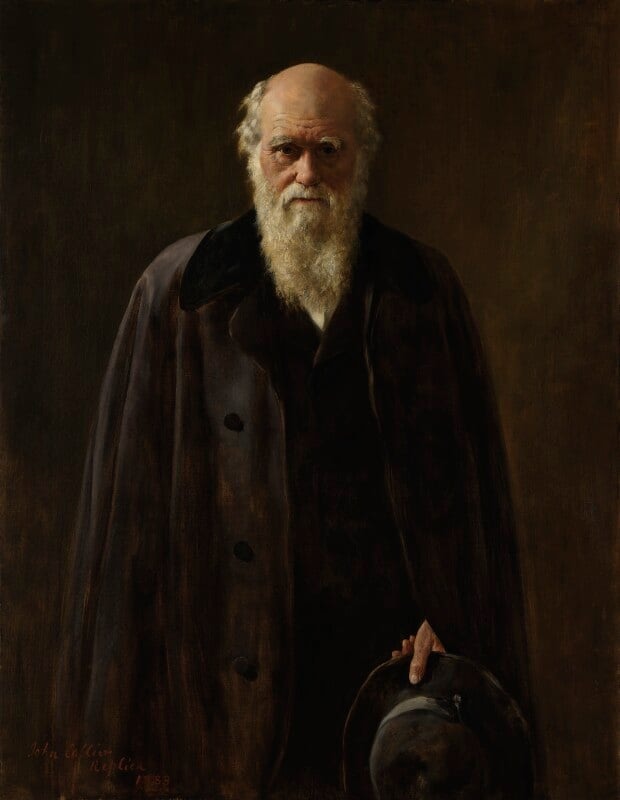
Charles Darwin
 United Kingdom
naturalist•geologist•biologist
Also known as: Charles Robert Darwin
Compleanno
February 12, 1809
Segno Zodiacale
Aquarius
Luogo di Nascita
Shrewsbury, England
Età
Morto/a a 73 anni
Altezza
5 ft 9 in (1.75 m)
Informazioni
Charles Darwin was the English naturalist whose theory of evolution by natural selection transformed biology. His 1859 book On the Origin of Species laid out a mechanism for how species change over time, supported by decades of careful observation and analysis. Darwin's work remains the cornerstone of modern evolutionary biology, influencing genetics, ecology, and paleontology. He is widely regarded as one of the most influential scientists in history, with his ideas permeating both science and popular culture.
Darwin's approach was methodical and evidence-driven. He spent over twenty years developing his theory before publishing, amassing data from his famous voyage on HMS Beagle, experiments with plants and animals, and correspondence with fellow naturalists. His later works, including The Descent of Man (1871) and The Expression of the Emotions in Man and Animals (1872), extended his ideas to human evolution and psychology. Today, his legacy endures through ongoing research, museum exhibits, and public debate about science and religion.
Primi Anni e Background
Darwin nacque in una famiglia benestante a Shrewsbury, in Inghilterra. Suo padre Robert era un medico di successo, e sua madre Susannah era la figlia di Josiah Wedgwood, fondatore dell'impero della ceramica Wedgwood. Da ragazzo, Darwin mostrò un vivo interesse per la natura, collezionando coleotteri ed esplorando la campagna, ma era uno studente mediocre alla Shrewsbury School, un collegio che enfatizzava gli studi classici.
Nel 1825, all'età di sedici anni, Darwin si iscrisse all'Università di Edimburgo per studiare medicina, seguendo i desideri del padre. Trovò le lezioni noiose e la chirurgia angosciante, ma prosperò fuori dall'aula, imparando la tassidermia da uno schiavo liberato di nome John Edmonstone e partecipando alle riunioni della Plinian Society, dove discuteva di storia naturale. Studiò anche invertebrati marini lungo il Firth of Forth.
Rendendosi conto che Darwin non sarebbe diventato un medico, suo padre lo mandò al Christ's College di Cambridge nel 1827 per studiare per un Bachelor of Arts con l'obiettivo di diventare un chierico. A Cambridge, Darwin trovò la sua vera vocazione. Fece amicizia con il professore di botanica John Stevens Henslow, che divenne un mentore e gli aprì le porte all'élite scientifica. Darwin si laureò nel 1831, ma la sua passione per la storia naturale aveva preso pienamente piede. Quello stesso anno, Henslow lo raccomandò come naturalista gentiluomo sull'HMS Beagle, una nave in procinto di partire per un rilevamento quinquennale del Sud America. Il padre di Darwin inizialmente si oppose, ma suo zio Josiah Wedgwood II lo convinse a lasciar partire Charles.
Crescita Professionale
Darwin tornò dal viaggio del Beagle nel 1836 con migliaia di esemplari e taccuini pieni di osservazioni. Si affermò rapidamente come geologo, pubblicando La struttura e distribuzione delle barriere coralline nel 1842, che proponeva una teoria sulla formazione degli atolli ancora accettata. Iniziò anche uno studio dettagliato dei cirripedi, trascorrendo otto anni a classificarli e producendo quattro monografie.
Alla fine degli anni '30 dell'Ottocento, Darwin iniziò a sviluppare segretamente la sua teoria della selezione naturale. Lesse il Saggio sul principio della popolazione di Thomas Malthus nel 1838, che gli diede l'idea che la competizione per le risorse avrebbe favorito certe variazioni. Trascorse anni a testare le sue idee attraverso esperimenti di allevamento con piccioni e studiando la variazione di piante e animali sotto domesticazione. Nel 1858, ricevette una lettera da Alfred Russel Wallace che delineava una teoria molto simile. I loro articoli furono letti congiuntamente alla Linnean Society nel luglio 1858.
Darwin si affrettò quindi a completare L'origine delle specie, pubblicato nel novembre 1859. La prima edizione di 1.250 copie fu esaurita immediatamente. Il libro suscitò un intenso dibattito, con Thomas Henry Huxley che lo difese famosamente contro il vescovo Samuel Wilberforce. Darwin continuò a pubblicare per tutti gli anni '60 e '70 dell'Ottocento, coprendo argomenti dall'impollinazione delle orchidee al comportamento dei lombrichi. Al momento della sua morte nel 1882, la sua teoria aveva ottenuto un'ampia accettazione scientifica, sebbene la selezione naturale come meccanismo primario non fu pienamente stabilita fino alla sintesi moderna degli anni '30 e '40 del Novecento.
Cronologia Carriera
Immagine Pubblica e Stile
Darwin è universalmente riconosciuto come un simbolo di indagine scientifica e coraggio intellettuale. È spesso raffigurato come un pensoso gentiluomo vittoriano barbuto, un'immagine consolidata dai suoi ritratti successivi. Nella cultura popolare, rappresenta il trionfo dell'evidenza sul dogma, e il suo volto appare su qualsiasi cosa, dalle magliette alle banconote. I Darwin Awards, un riconoscimento ironico per persone che muoiono in modi sciocchi, riflettono la sua associazione con la selezione naturale. Non esiste un fandom ufficiale, ma la sua eredità è celebrata da scienziati, educatori e organizzazioni laiche in tutto il mondo. Il suo compleanno, il 12 febbraio, è celebrato come Darwin Day in molti paesi.
Fama e fandom
Charles Darwin stands as the 39th most famous person in United Kingdom, a position he holds steady according to the iFANN Global Fame Rankings. His global influence extends across the continent where he ranks as the 58th most famous person in Europe, a standing confirmed by the same rankings. Within the realm of intellectual and creative history, he is recognized as the 1st most famous person in Art & Design, a title anchored by the rankings. These placements from the iFANN Global Fame Rankings reflect his enduring presence across media coverage, search activity, and cultural consumption worldwide. While modern celebrities often cultivate organized followings, Darwin does not have a formal fandom name; his admirers are scientists, historians, and students rather than a fan club with a specific collective title. Engagement with his legacy takes the form of academic discourse, museum visits, and the study of his works like On the Origin of Species. There are no fan-funded projects or social media campaigns centered on his personal life, as he passed away long before the era of mass celebrity worship. Instead, his "followers" dedicate themselves to understanding his theories and validating his predictions through rigorous research.
Curiosità e leggende
Charles Darwin suffered from chronic health problems throughout his adult life, including bouts of nausea, vomiting, heart palpitations, and fatigue. The exact cause remains unknown, with theories ranging from Chagas disease to panic disorder or lactose intolerance. He spent much of his time at home, working in his study or greenhouse, and relied on an extensive network of correspondents for information. He was an avid pigeon fancier and bred hundreds of varieties to study variation. He also experimented with carnivorous plants, measuring how much nitrogen they absorbed. Darwin was known for his patience: one experiment on seed germination in saltwater lasted over 40 years. He never used the word "evolution" in the first edition of Origin of Species, preferring "descent with modification." A legendary aspect of his daily routine involved the "Thinking Path" at Down House, where he paced back and forth for hours to work through complex ideas; recent studies in August 2026 validated that this walking habit boosted divergent thinking and creativity. Another enduring story from his life is the voyage on the HMS Beagle, which served as the origin story for his theory of natural selection, though biographers note his path to publication was fraught with hesitation. In August 2026, news broke confirming his 150-year-old prediction that certain alpine plants were carnivorous, cementing his status as a visionary who anticipated scientific discoveries decades ahead of their time.
Citazioni Notevoli
“There is grandeur in this view of life, with its several powers, having been originally breathed into a few forms or into one.”
“A man who dares to waste one hour of time has not discovered the value of life.”
“The love for all living creatures is the most noble attribute of man.”
“Ignorance more frequently begets confidence than does knowledge.”
“I have called this principle, by which each slight variation, if useful, is preserved, by the term Natural Selection.”
Famiglia e Vita Privata
Darwin sposò sua cugina di primo grado Emma Wedgwood il 29 gennaio 1839. Ebbero dieci figli insieme, ma tre morirono in tenera età: Mary Eleanor (1842), Charles Waring (1856) e un altro bambino. I figli sopravvissuti includevano George (astronomo), Francis (botanico), Horace (ingegnere), Leonard (soldato e politico) e Henrietta (che aiutò a editare le opere di Darwin). Darwin era un padre devoto, spesso giocava con i suoi figli e li coinvolgeva in osservazioni scientifiche. La famiglia viveva a Down House nel Kent, dove Darwin condusse gran parte delle sue ricerche. Emma era una devota unitariana, e mentre Darwin divenne scettico riguardo alla religione, il loro matrimonio rimase affettuoso e di supporto nonostante queste differenze.
Collegamenti Notevoli
Il lavoro di Darwin fu profondamente intrecciato con figure chiave della sua epoca. Il mentore John Stevens Henslow lo raccomandò per il viaggio del Beagle. Il geologo Charles Lyell fornì il quadro uniformitarista che influenzò il pensiero di Darwin. Il botanico Joseph Hooker fu un amico intimo e confidente. Alfred Russel Wallace concepì indipendentemente la selezione naturale, spingendo Darwin a pubblicare. Thomas Henry Huxley, noto come "il bulldog di Darwin", difese vigorosamente la teoria nei dibattiti pubblici. A casa, sua moglie Emma Wedgwood e i suoi figli, in particolare Francis Darwin, sostennero le sue ricerche.
Relazioni e Storia Dating
Charles Darwin sposò sua cugina di primo grado Emma Wedgwood il 29 gennaio 1839. La coppia ebbe una relazione stretta e affettuosa, sebbene le loro opinioni religiose differissero: Emma era una devota unitariana, mentre Darwin divenne sempre più agnostico. Ebbero dieci figli insieme, tre dei quali morirono in tenera età. Emma sostenne il lavoro di Darwin, spesso aiutandolo negli esperimenti e prendendosi cura di lui durante le sue frequenti malattie. Il loro matrimonio durò fino alla morte di Darwin nel 1882. Non ci sono prove di altre relazioni romantiche nella vita di Darwin.
- Sposato/aEmma Wedgwood1839 - 1882Cugini di primo grado; sposati per 43 anni fino alla morte di Darwin; ebbero dieci figli insieme.
Morte e conseguenze
Morto/a
April 19, 1882 (a 73 anni)
Luogo di morte
Downe, Kent, England
Causa della morte
Heart failure
The death of Charles Darwin sent a profound ripple through the British establishment and the global scientific community, transforming a private passing into a national moment of reflection. Queen Victoria and the Prince of Wales immediately sent messages of condolence, while the Royal Society convened special memorial services to honor the man whose work had reshaped biology. Prominent peers like Thomas Huxley, Joseph Hooker, and Alfred Russel Wallace delivered eulogies that celebrated his contributions, and large gatherings of intellectuals attended events across London and Cambridge. This outpouring of respect solidified his status as a national hero despite lingering religious controversy.
Darwin passed away on April 19, 1882, at Down House in Downe, Kent, at the age of 73. His family physician and personal friend, Dr. William Gull, recorded the cause as heart failure after observing a rapid deterioration marked by acute pain and weakness. For decades, Darwin had suffered from chronic health issues, including symptoms consistent with Chagas disease acquired during his voyage on the HMS Beagle, which caused severe digestive distress and palpitations. He remained conscious until shortly before his final moments. His funeral took place on April 26, 1882, in Westminster Abbey, a rare distinction for a scientist.
The service, organized by the Royal Society, featured Mendelssohn's Elijah and was led by Dean Arthur Penrhyn Stanley, who framed Darwin's theories as compatible with Christian faith. He was buried in the north transept near Isaac Newton rather than his local parish church. Posthumously, his son Francis published his autobiography and extensive correspondence to preserve his intellectual legacy, while the Charles Darwin Foundation and Charles Darwin University later emerged to carry forward his name.
Patrimonio (Valore immobiliare)
$15 Million
Stima del team editoriale di iFANN
Charles Darwin died in 1882 with an estate valued at about £150,000, equivalent to roughly $15 million today when adjusted for inflation. The bulk of his wealth came from inheritance and his wife's family money, rather than book sales. On the Origin of Species sold well but Darwin never became rich from it. His estate has continued to earn modest revenue from ongoing sales of his works, which remain in print and are widely studied. The rights to his writings are managed by his descendants and academic institutions. Per iFANN's editorial analysis, the estate's value is estimated at $15 Million as of 2026, primarily consisting of intellectual property and historical artifacts.
Premi vinti (2)
Darwin ricevette la Royal Medal dalla Royal Society nel 1853 per il suo lavoro geologico, in particolare la sua teoria delle barriere coralline. Questo fu il più alto onore che ricevette in vita. Gli fu anche assegnata la Wollaston Medal dalla Geological Society of London nel 1859. Postumo, la sua eredità è stata onorata attraverso numerose istituzioni e premi a lui intitolati, ma non vinse altri premi competitivi.
1853 · Geologia
The Structure and Distribution of Coral Reefs
1859 · Geologia
Geological contributions
Noto Per
On the Origin of Species
1859 · Autore
Theory of Evolution by Natural Selection
1858 · Co-discoverer
The Descent of Man
1871 · Autore
HMS Beagle Voyage
1831 · Naturalist
Parole chiave
Fatti Rapidi
- Professione
- naturalist, geologist, biologist
- Nato/a
- +1809-02-12
- Luogo di Nascita
- Shrewsbury, England
- Morto/a
- +1882-04-19
- Luogo di morte
- Down House, Kent, England
- Genere
- Maschio
- Coniuge
- Emma Darwin
- Segno Zodiacale
- Aquarius
Dettagli Personali
- Nome Completo
- Charles Robert Darwin
- Altezza
- 5 ft 9 in (1.75 m)
- Coniuge
- Emma Darwin
- Figli
- 10 (3 died in infancy)
- Istruzione
- University of Edinburgh, Christ's College, Cambridge
Domande Frequenti
Per cosa è famoso Charles Darwin?
Quanti anni aveva Charles Darwin quando morì?
Qual è stato il viaggio dell'HMS Beagle?
Charles Darwin ha sposato sua cugina?
Cos'è la selezione naturale?
Persone Simili
Unisciti alla community
fan che discutono