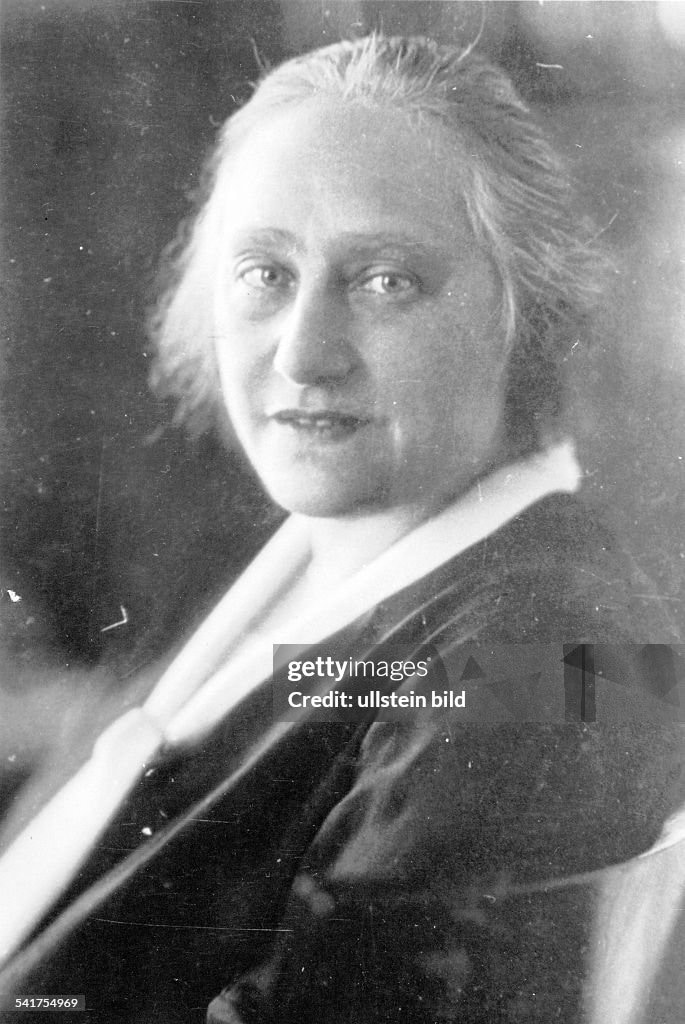
Elsa Einstein
 Germany
Compleanno
January 18, 1876
Segno Zodiacale
Capricorn
Luogo di Nascita
Hechingen, Germany
Età
Morto/a a 60 anni
Informazioni
Elsa Einstein fu la seconda moglie e cugina di primo grado per via materna del fisico Albert Einstein, al quale fece da devota compagna durante gli anni più celebri della sua carriera. Pur non essendo una scienziata, gestì la casa, protesse la sua salute e lo schermò dalle richieste pubbliche, permettendogli di concentrarsi sul suo lavoro rivoluzionario. La sua presenza costante fu particolarmente vitale durante il periodo del Premio Nobel nel 1921 e durante l'emigrazione dalla Germania nazista a Princeton, nel New Jersey, nel 1933.
Oggi, Elsa è ricordata come l'ancora silenziosa dietro una delle più grandi menti della storia. La sua vita riflette i sacrifici personali e i legami familiari che sostennero la scienza rivoluzionaria, offrendo un contrappunto umano alla maestosa eredità di Albert Einstein.
Primi Anni e Background
Elsa Einstein nacque il 18 gennaio 1876 a Hechingen, una piccola città nel Regno del Württemberg, in Germania. Crebbe all'interno della famiglia Einstein molto unita; sua madre Fanny Koch era la sorella della madre di Albert, Pauline, e suo padre Rudolf Einstein era cugino di primo grado del padre di Albert, Hermann. Questo doppio legame familiare significava che lei e Albert erano imparentati da entrambi i lati.
A 20 anni, Elsa sposò Max Löwenthal, un mercante di tessuti, nel 1896. La coppia ebbe due figlie, Ilse e Margot. Il matrimonio finì con un divorzio nel 1908, dopo il quale Elsa e le sue figlie ripresero il cognome Einstein. Durante questi anni, visse a Berlino e mantenne stretti legami con la sua famiglia allargata, incluso suo cugino Albert, che allora era un fisico emergente all'Ufficio Brevetti Svizzero e successivamente all'Università di Berlino.
Crescita Professionale
Il ruolo più importante di Elsa Einstein iniziò con il suo matrimonio con Albert Einstein il 2 giugno 1919. Divenne la sua principale badante, gestendo la casa, la dieta e la corrispondenza, e accompagnandolo in tour di conferenze in Europa, Asia e Americhe. Le sue capacità organizzative permisero ad Albert di dedicarsi alla fisica teorica durante il suo periodo più produttivo, che culminò con il Premio Nobel per la Fisica nel 1921.
Nel 1933, mentre i nazisti salivano al potere, Elsa aiutò a organizzare la fuga della famiglia dalla Germania, stabilendosi a Princeton, nel New Jersey. Lì continuò a sostenere Albert all'Institute for Advanced Study fino alla sua morte nel 1936. Sebbene non abbia mai avuto una carriera formale, la sua gestione dietro le quinte fu ampiamente considerata essenziale per la produzione sostenuta e l'impegno pubblico di Albert.
Cronologia Carriera
Immagine Pubblica e Stile
Elsa Einstein è ricordata principalmente come la moglie pratica e di supporto che stette accanto a uno degli scienziati più famosi della storia. I resoconti contemporanei la descrivono come calorosa, socievole e con i piedi per terra, spesso deviando l'attenzione da sé e indirizzandola verso il lavoro di Albert.
Nella cultura popolare, è talvolta ritratta come una forza stabilizzatrice che schermò Albert dalle pressioni della fama. Non cercò mai il riconoscimento pubblico e non lasciò una personalità pubblica distinta separata da suo marito. La sua immagine è quella di una badante devota, un ruolo che abbracciò pienamente, ed è spesso citata come modello del partenariato silenzioso dietro un grande risultato intellettuale.
Fama e fandom
Elsa Einstein's fame is inseparable from her husband's, yet her own story has a quiet, persistent pull. The iFANN Global Fame Engine has evaluated her, but she does not currently hold a placement in the published rankings, neither the Global Top 1,000 nor any Top-100 scope list. That absence speaks to the nature of her renown: it is historical and biographical, not the stuff of modern celebrity metrics. There is no formal fandom name for her; no conventions, no fan clubs, no coordinated campaigns. Her audience is the community of Einstein enthusiasts, who encounter her as a key figure in his life story, and the broader public that meets her through dramatizations like National Geographic's "Genius" (2017), where Emily Watson portrayed her.
What Elsa lacks in ranking, she makes up for in iconic moments that have become part of the cultural record. The 1921 photograph of her and Albert sailing home on the SS Celtic, following his first American tour, is a visual staple. The 1931 premiere of Charlie Chaplin's "City Lights," where Chaplin delivered his famous line about the crowd cheering Einstein because no one understands him, is retold wherever Einstein's fame is discussed. These moments, documented and verified, anchor her in the public imagination as the steadfast companion at the center of history's greatest scientific celebrity.
Her legacy is one of devotion and management, shielding Albert from the world, tolerating his infidelities, and orchestrating their escape from Nazi Germany. That story, told in biographies and articles, ensures her place in the narrative of Einstein's life, even if the fame engine's rankings do not yet reflect it.
Curiosità e leggende
Elsa and Albert Einstein were doubly related: their mothers were sisters, and their fathers were first cousins. She was also a first cousin once removed to Albert through another line. After her divorce from Max Löwenthal, Elsa and her daughters took back the Einstein surname, which was already well-known due to her cousin's growing fame. Elsa was known for her practical nature and once remarked that she married Albert because he was a good man, not because she understood his theories. She suffered from kidney and heart disease in her final years, and Albert personally helped care for her during her illness.
A story fans still retell involves the 1931 premiere of Charlie Chaplin's "City Lights," where Chaplin allegedly told Einstein, "They're cheering me because they all understand me, and cheering you because none of them understand you." The event is verified, though the exact wording is part of the lore. Another recurring tale is that Elsa tolerated Albert's numerous affairs, a fact confirmed by historians, though interpretations of her motives vary. Her death in 1936 was followed by reports of Albert's genuine grief, a detail that adds a poignant layer to their complex marriage. One piece of internet folklore claims Albert never met Elsa, a confusion with another person, as they were married for nearly two decades.
Citazioni Notevoli
“I am proud of my husband and of the way he is using his great mind for the benefit of humanity.”
“I don't understand his theories, but I understand him.”
“He is a good man, and that is enough for me.”
Famiglia e Vita Privata
I genitori di Elsa erano Fanny Koch e Rudolf Einstein. Sua madre era la sorella della madre di Albert Einstein, Pauline Koch, e suo padre era cugino di primo grado del padre di Albert, Hermann Einstein. Aveva due fratelli: un fratello di nome Hermann e una sorella di nome Paula.
Dal suo primo matrimonio con Max Löwenthal, Elsa ebbe due figlie: Ilse (nata nel 1897) e Margot (nata nel 1899). Entrambe furono adottate da Albert Einstein dopo il suo matrimonio con Elsa. Ilse lavorò come segretaria e traduttrice di Albert, mentre Margot divenne una scultrice. Nessuna delle due figlie si sposò o ebbe figli.
Elsa e Albert non ebbero figli insieme. La loro casa a Princeton includeva le due figlie e, per un periodo, la figliastra di Albert dal suo primo matrimonio.
Collegamenti Notevoli
Elsa Einstein è più strettamente associata a suo marito, il fisico Albert Einstein, la cui carriera sostenne per 17 anni. Fu anche legata al suo primo marito, Max Löwenthal, e alle sue figlie Ilse e Margot, che rimasero centrali nella sua vita. Attraverso il suo matrimonio con Albert, interagì con molti scienziati e intellettuali di spicco dell'inizio del XX secolo, tra cui Niels Bohr e Max Planck.
Relazioni e Storia Dating
Il primo matrimonio di Elsa Einstein fu con Max Löwenthal, un mercante di tessuti, nel 1896. La coppia ebbe due figlie, Ilse e Margot, prima di divorziare nel 1908. Dopo il divorzio, Elsa e le sue figlie ripresero il cognome Einstein.
Sposò suo cugino di primo grado per via materna, Albert Einstein, il 2 giugno 1919. La loro relazione fu caratterizzata dal ruolo di supporto di Elsa: gestiva la casa, si prendeva cura della sua salute e lo proteggeva dall'attenzione pubblica. Non ebbero figli insieme. Il matrimonio durò fino alla morte di Elsa nel 1936.
Al 2026, Elsa Einstein è deceduta e non è più in alcuna relazione.
- Sposato/aMax Löwenthal1896 - 1908Ebbero due figlie, Ilse e Margot, prima di divorziare.
- Sposato/aAlbert Einstein1919 - 1936Elsa fu la seconda moglie di Albert e sua cugina di primo grado per via materna; lo sostenne nella sua carriera fino alla morte.
Morte e conseguenze
Morto/a
December 20, 1936 (a 60 anni)
Luogo di morte
Princeton, New Jersey
Causa della morte
Heart failure
Public reaction to Elsa Einstein's passing was characterized by deep personal mourning among her peers and the scientific community rather than large-scale vigils or commercial surges. Albert Einstein was devastated, reportedly stating that he felt a profound loss of his "guardian angel," while tributes emerged from prominent colleagues who recognized her role as a stabilizing force in his life. Elsa Einstein died on December 20, 1936, at the age of 60 at their residence in Princeton, New Jersey. She had been suffering from chronic heart and kidney issues for several years, with her health deteriorating significantly in late 1936 until she was confined to bed.
Her attending physician ruled the cause of death as heart failure following a period of declining health. The funeral was held privately shortly after her death in Princeton, attended by Albert Einstein, her stepchildren Hans Albert and Eduard, and close friends including Marcel Grossmann. She was interred at the Cemetery of the Hebrew Congregation of Princeton alongside other family members in a low-key affair consistent with Einstein's wishes for simplicity. Posthumously, Elsa has been honored through various academic works and documentaries like Genius, which featured Emily Watson portraying her, ensuring her legacy as Albert's caregiver and protector is preserved in biographies and archival materials.
Patrimonio (Valore immobiliare)
Poiché Elsa Einstein morì nel 1936, non accumulò ricchezza personale indipendente da suo marito. Il patrimonio di Albert Einstein fu valutato circa 1,1 milioni di dollari al momento della sua morte nel 1955, ma Elsa lo precedette. Nessun valore patrimoniale le è attribuito separatamente.
Premi e Lodi
Noto Per
Wife of Albert Einstein
1919 · Spouse and caregiver
Parole chiave
Fatti Rapidi
- Professione
- Homemaker, Caregiver
- Nato/a
- +1876-01-18
- Luogo di Nascita
- Hechingen, Germany
- Morto/a
- +1936-12-20
- Luogo di morte
- Princeton, New Jersey
- Genere
- Femmina
- Coniuge
- Albert Einstein
- Segno Zodiacale
- Capricorn
Dettagli Personali
- Nome Completo
- Elsa Einstein
- Coniuge
- Albert Einstein
- Figli
- Ilse Löwenthal Einstein, Margot Löwenthal Einstein
Domande Frequenti
Chi era Elsa Einstein?
Qual era il rapporto di parentela tra Elsa Einstein e Albert Einstein?
Elsa Einstein aveva figli?
Quando morì Elsa Einstein e qual fu la causa della sua morte?
Quale fu il ruolo di Elsa Einstein nella carriera di Albert Einstein?
Persone Simili
Unisciti alla community
fan che discutono