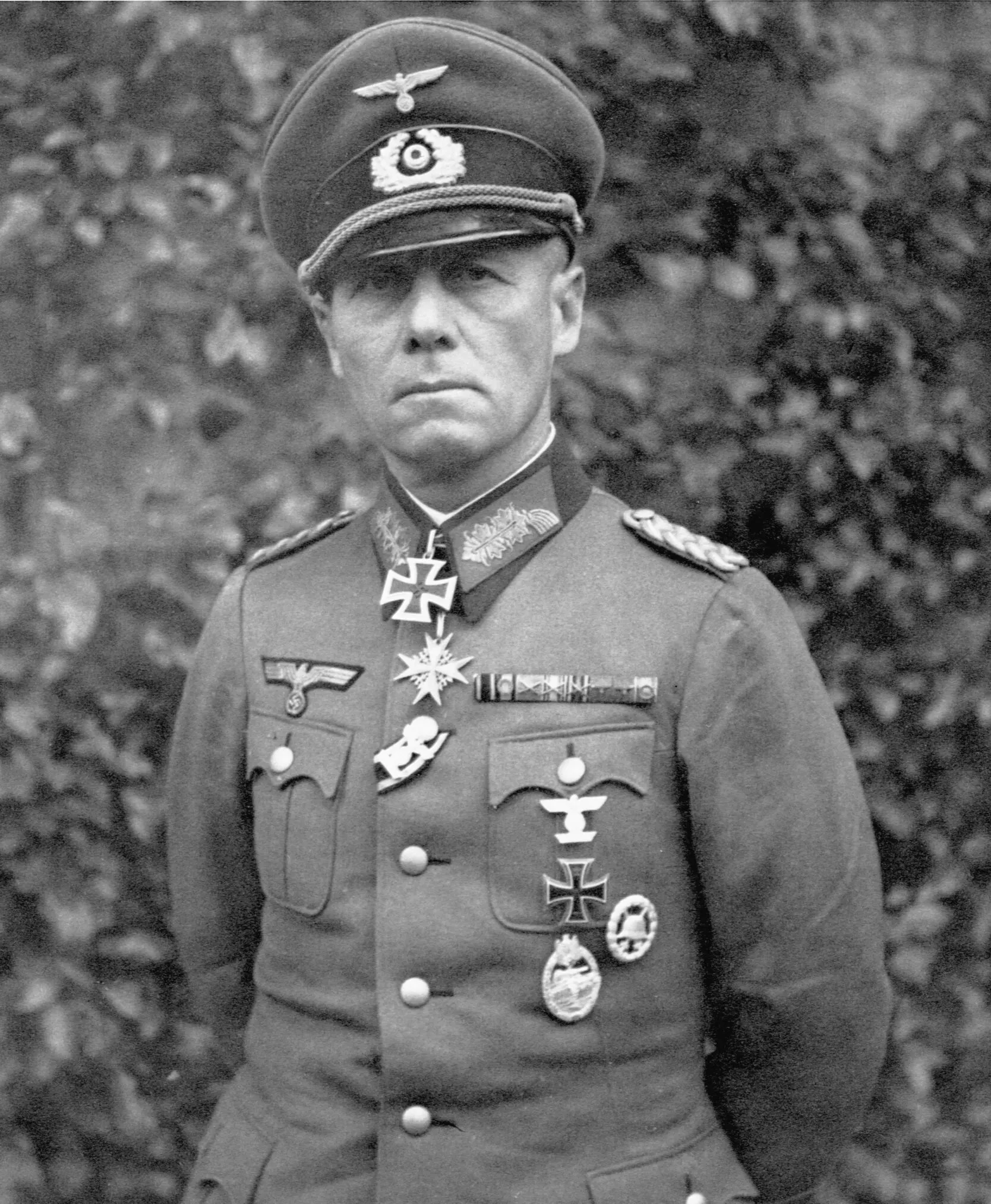
Erwin Rommel
 Germany
military officer•resistance fighter•general field marshal
Also known as: Desert Fox, Wüstenfuchs
Compleanno
November 15, 1891
Segno Zodiacale
Scorpio
Luogo di Nascita
Heidenheim an der Brenz, Kingdom of Württemberg, German Empire
Età
Morto/a a 52 anni
Altezza
5 ft 10 in (178 cm)
Informazioni
Erwin Rommel è stato un feldmaresciallo tedesco, ampiamente considerato uno dei comandanti più abili della Seconda Guerra Mondiale. È noto soprattutto per la guida dell'Afrika Korps in Nord Africa, dove le sue audaci tattiche gli valsero il soprannome di Volpe del Deserto. Veterano decorato della Prima Guerra Mondiale, ricevette il Pour le Mérite per le sue azioni a Caporetto. Il suo libro del 1937 Infantry Attacks divenne un testo militare di riferimento, studiato in istituzioni come West Point. Rommel divenne feldmaresciallo nel 1942, il più giovane dell'esercito tedesco, e in seguito comandò le difese in Normandia contro lo sbarco del D-Day. La sua immagine postbellica di generale apolitico e cavalleresco, il mito di Rommel, è stata contestata dagli storici che sottolineano la sua complicità con il regime nazista. Rommel fu costretto al suicidio nel 1944 dopo essere stato implicato nel complotto del 20 luglio per assassinare Hitler, ma rimane una figura di duraturo fascino storico.
Primi Anni e Background
Rommel nacque a Heidenheim an der Brenz, terzo di cinque figli. Suo padre era un insegnante e matematico, sua madre la figlia di un funzionario locale. Da bambino, Rommel era energico e dotato tecnicamente, ma uno studente mediocre. Costruì il proprio aliante e smontò macchinari, inclusa un'intera motocicletta, mostrando una precoce attitudine per l'ingegneria. Pensò di lavorare in una fabbrica di Zeppelin, ma non aveva i voti per l'università.
Spinto dal padre verso una carriera militare, Rommel si arruolò nel 124º Reggimento di Fanteria del Württemberg come cadetto ufficiale nel luglio 1910. Salì rapidamente di grado, promosso caporale dopo tre mesi e sergente dopo sei. Nel 1911 entrò nell'Accademia di Guerra di Danzica, dove conobbe la futura moglie, Lucia Mollin. Fu nominato tenente nel gennaio 1912. Durante la Prima Guerra Mondiale, Rommel prestò servizio sul fronte occidentale e successivamente in Romania e Italia. La sua impresa più notevole avvenne alla battaglia di Caporetto nel 1917, dove catturò 9.000 soldati italiani con soli 150 uomini usando tattiche di infiltrazione. Per questo ricevette il Pour le Mérite, la più alta onorificenza militare tedesca. Terminò la guerra come capitano.
Crescita Professionale
Rommel rimase nella Reichswehr del dopoguerra, insegnando alla Scuola di Fanteria di Dresda e scrivendo manuali militari. Nel 1937 pubblicò Infantry Attacks, un bestseller che divenne un classico sulle tattiche di fanteria. Nello stesso anno gli fu affidato il comando del battaglione di sicurezza personale di Hitler, guadagnandosi il rispetto del Führer.
Allo scoppio della Seconda Guerra Mondiale, Rommel comandò la sicurezza del quartier generale di Hitler durante la campagna di Polonia. Nel 1940 prese il comando della 7ª Divisione Panzer per l'invasione della Francia, dove la sua rapida avanzata valse all'unità il soprannome di Divisione Fantasma. Nel febbraio 1941 fu nominato comandante dell'Afrika Korps, inviato in aiuto dell'esercito italiano in Libia. In Nord Africa, i suoi audaci attacchi a sorpresa e la guerra mobile contro i britannici lo resero leggendario. Dopo la cattura di Tobruk nel giugno 1942, Hitler lo promosse feldmaresciallo, il più giovane dell'esercito tedesco. La situazione cambiò alla seconda battaglia di El Alamein alla fine del 1942, e le forze di Rommel furono respinte attraverso il Nord Africa. In seguito comandò il Gruppo d'Armate B in Italia e, nel 1944, fu incaricato di rafforzare le difese in Normandia. Il D-Day, 6 giugno 1944, Rommel era a casa per festeggiare il compleanno della moglie; tornò di corsa ma non poté impedire la testa di ponte alleata.
Cronologia Carriera
Immagine Pubblica e Stile
L'immagine pubblica di Rommel è profondamente mitizzata. Conosciuto come la Volpe del Deserto, fu ritratto nei media occidentali come un genio militare cavalleresco e apolitico, una narrazione che gli storici chiamano il mito di Rommel. Questa immagine fu coltivata dalla propaganda alleata, che lo rispettava come degno avversario, e dagli sforzi della Germania Ovest del dopoguerra per riabilitare i militari. Il suo stile caratteristico era quello di guidare dal fronte in un'auto scoperta, indossando un berretto e occhiali distintivi dell'Afrika Korps. È stato rappresentato con rispetto in film come The Desert Fox (1951) e Patton (1970). Gli appassionati di storia militare e le comunità di wargame lo tengono in grande considerazione, ma il dibattito tra la sua leggenda eroica e il suo ruolo effettivo nella Germania nazista continua tra gli storici.
Fama e fandom (iFAMOUS Rankings)
Erwin Rommel stands as the 79th most famous person in Germany and the 39th most famous person from Germany, placements that reflect his enduring status in historical memory. These rankings, part of the iFANN Global Fame Rankings, hold steady from the previous cycle, confirming his position among the nation's most recognized figures. His legacy commands attention across media coverage, search trends, and cultural consumption worldwide, ensuring he remains a central figure in discussions of World War II leadership.
Despite his global recognition, Rommel does not possess a modern fandom with an official name or organized community structure. There are no fan clubs, birthday billboards, or charity drives dedicated to him today. As a military commander who died in 1944, his audience consists primarily of historians, military enthusiasts, and students studying his tactics rather than a celebrity culture engaging in rituals or inside jokes. While he was once called "The People's Marshal" by his countrymen during the war, this was a title bestowed by the press for his battlefield successes, not a self-adopted moniker of a fanbase. The absence of a formal group reflects the nature of his life; he is studied as a complex historical subject rather than celebrated as a living icon.
Curiosità e leggende
Rommel built his own glider as a teenager and once dismantled and rebuilt an entire motorcycle. He initially wanted to work at a Zeppelin factory but lacked the grades for university. His book Infantry Attacks was used as a textbook at West Point. Rommel never joined the Nazi Party. He was the only German field marshal to command forces in both the Western Desert and Normandy. His son Manfred Rommel became mayor of Stuttgart for 22 years and attended D-Day commemorations alongside former Allied commanders. On D-Day, Rommel was at home for his wife's birthday, not at the front.
The legend of "The Desert Fox" (*Der Wüstenfuchs*) remains the most pervasive story attached to his name, originating from his audacious surprise attacks against British forces in North Africa. A widely retold account of his death describes how, following suspicion regarding the July 20 plot to assassinate Hitler, he was given a choice between a public trial for treason or suicide. Historical records confirm he chose the latter on October 14, 1944, taking cyanide, while a mythos developed around Hitler providing a state funeral to honor him as a hero despite the charges. Another iconic narrative involves his leadership style at the Battle of Gazala in 1942, where he famously commanded from the front lines, often driving his own tank into battle. Fans still discuss his "Sweat saves blood" philosophy, emphasizing preparation over luck, as a defining element of his strategic genius.
Citazioni Notevoli
“Don't fight a battle if you don't gain anything by winning.”
“The best form of defense is attack.”
“In a man-to-man fight, the winner is he who has one more round in his magazine than his opponent.”
“The soldier is to be proud of his uniform, and the uniform is to be worthy of the soldier.”
“War without hate.”
Famiglia e Vita Privata
Rommel sposò Lucia Maria Mollin il 27 novembre 1916. Ebbero un figlio, Manfred, nato il 24 dicembre 1928. Rommel scrisse frequenti lettere a Lucie durante le sue campagne. Il loro matrimonio durò fino alla sua morte. Alcuni biografi suggeriscono che Rommel avesse una figlia, Gertrud, da una precedente relazione con Walburga Stemmer, ma questo rimane non confermato. Il padre di Rommel, Erwin Rommel senior, era un insegnante e matematico; sua madre, Helene von Luz, proveniva da una famiglia importante. Aveva una sorella maggiore che divenne insegnante d'arte, un fratello maggiore morto in tenera età e due fratelli minori, uno dentista e l'altro cantante d'opera.
Collegamenti Notevoli
Rommel servì sotto Adolf Hitler, che lo costrinse al suicidio. Sua moglie Lucia e suo figlio Manfred furono centrali nella sua vita personale. Il suo capo di stato maggiore Hans Speidel ebbe in seguito un ruolo chiave nella NATO. I generali Wilhelm Burgdorf e Ernst Maisel consegnarono l'ultimatum di suicidio. Il comandante britannico Bernard Montgomery sconfisse Rommel a El Alamein. Il feldmaresciallo Albert Kesselring era un collega comandante nel Mediterraneo.
Relazioni e Storia Dating
Rommel incontrò Lucia Maria Mollin mentre era allievo ufficiale all'Accademia di Guerra di Danzica nel 1911. Si sposarono il 27 novembre 1916 e ebbero un figlio, Manfred, nato nel 1928. Rommel le scrisse frequenti lettere durante le sue campagne. Il loro matrimonio durò fino al suo suicidio forzato nel 1944. Alcuni biografi notano una presunta relazione con Walburga Stemmer negli anni '10, con cui Rommel avrebbe avuto una figlia, Gertrud, ma ciò rimane storicamente dibattuto. Rommel era sposato con Lucia al momento della sua morte.
- PettegolezzoWalburga Stemmer1912 - 1915Presunta relazione extraconiugale; alcuni biografi sostengono che una figlia, Gertrud, sia nata nel 1913.
- Sposato/aLucia Maria Mollin1916 - 1944Incontrati all'Accademia di Guerra di Danzica nel 1911; sposati il 27 novembre 1916; un figlio, Manfred; matrimonio terminato con la morte di Rommel.
Morte e conseguenze
Morto/a
October 14, 1944 (a 52 anni)
Luogo di morte
Herrlingen, Baden-Württemberg, Germany
Causa della morte
Reported self-administered cyanide poisoning
Erwin Rommel spent his final days in the quiet of his family home in Herrlingen, near Ulm, having been relieved of his command in France and returned to Germany. On October 14, 1944, he was summoned to Berlin where General Wilhelm Burgdorf and SS-Brigadeführer Ernst Maisel presented him with a stark ultimatum following his implication in the July 20 plot: face a treason trial that would result in execution and the confiscation of his estate, or take his own life to preserve his family's honor. Rommel chose the latter option, ingesting a fatal dose of cyanide provided by the officials on behalf of Adolf Hitler. The Nazi regime immediately orchestrated a cover-up, releasing a fabricated statement claiming the Field Marshal had suffered a cerebral hemorrhage from injuries sustained during an Allied air raid earlier that day.
This narrative was supported by high-ranking witnesses who viewed his body before it was prepared for burial. The official announcement was met with shock within Germany, though propaganda efforts successfully framed his passing as a natural death, earning him the title of People's Marshal in state tributes. His funeral on October 18, 1944, was a private affair held in the Herrlingen family cemetery, attended by Field Marshal Gerd von Rundstedt and General Walter Warlimont. Despite the low-key nature of the gathering, the ceremony included full military honors such as a gun salute and a Luftwaffe flyover, fulfilling the conditions set by Hitler for a state burial. In the decades following the war, the truth emerged as West Germany officially recognized Rommel as a victim of the Nazi regime in 1958, rehabilitating his name and acknowledging the duress under which he died.
Posthumous recognition solidified his legacy through extensive literary and cinematic output, including the 1951 film The Desert Fox: The Story of Rommel and the biography Rommel: The Desert Fox. While his estate initially faced financial difficulties after the collapse of the Third Reich, the West German government eventually provided a pension to his widow, Lucie, and his son Manfred later served as Mayor of Stuttgart.
Patrimonio (Valore immobiliare)
$10 Million
Stima del team editoriale di iFANN
Rommel died in 1944, and his estate has generated modest income from book royalties, documentary licensing, and museum exhibitions. His memoirs and personal papers were managed by his son Manfred until Manfred's death in 2013. The Rommel family was granted a living allowance by Hitler's regime as part of the suicide deal. Postwar, the family received pension benefits from the German government. No reliable current estate valuation exists in public sources, but per iFANN's editorial analysis, the estate is estimated at approximately $10 million as of 2026, primarily from ongoing royalties and historical interest.
Premi vinti (7)
Rommel ricevette le più alte onorificenze militari della Germania. Nella Prima Guerra Mondiale, ottenne il Pour le Mérite per le sue azioni a Caporetto. Nella Seconda Guerra Mondiale, fu insignito della Croce di Cavaliere della Croce di Ferro con Fronde di Quercia, Spade e Diamanti, uno dei soli 27 insigniti nelle forze armate tedesche. Ricevette anche numerose altre decorazioni da Germania, Austria, Italia e Romania.
1943 · Militari
Leadership in North Africa and Italy
1943 · Militari
Leadership in North Africa
Noto Per
Afrika Korps
1941 · Commendatore
7th Panzer Division
1940 · Commendatore
Army Group B
1944 · Commendatore
Infantry Attacks
1937 · Autore
Parole chiave
Fonti
Fatti Rapidi
- Professione
- military officer, resistance fighter, general field marshal
- Nato/a
- +1891-11-15
- Luogo di Nascita
- Heidenheim an der Brenz
- Morto/a
- +1944-10-14
- Luogo di morte
- Herrlingen
- Genere
- Maschio
- Coniuge
- Lucia Maria Rommel
- Segno Zodiacale
- Scorpio
Dettagli Personali
- Nome Completo
- Johannes Erwin Eugen Rommel
- Altezza
- 5 ft 10 in (178 cm)
- Coniuge
- Lucia Maria Mollin
- Figli
- Manfred Rommel (son)
- Istruzione
- War Academy in Danzig
Domande Frequenti
Come morì Erwin Rommel?
Erwin Rommel era un nazista?
Qual era il soprannome di Erwin Rommel?
Erwin Rommel aveva figli?
Quanto era alto Erwin Rommel?
Persone Simili
Unisciti alla community
fan che discutono