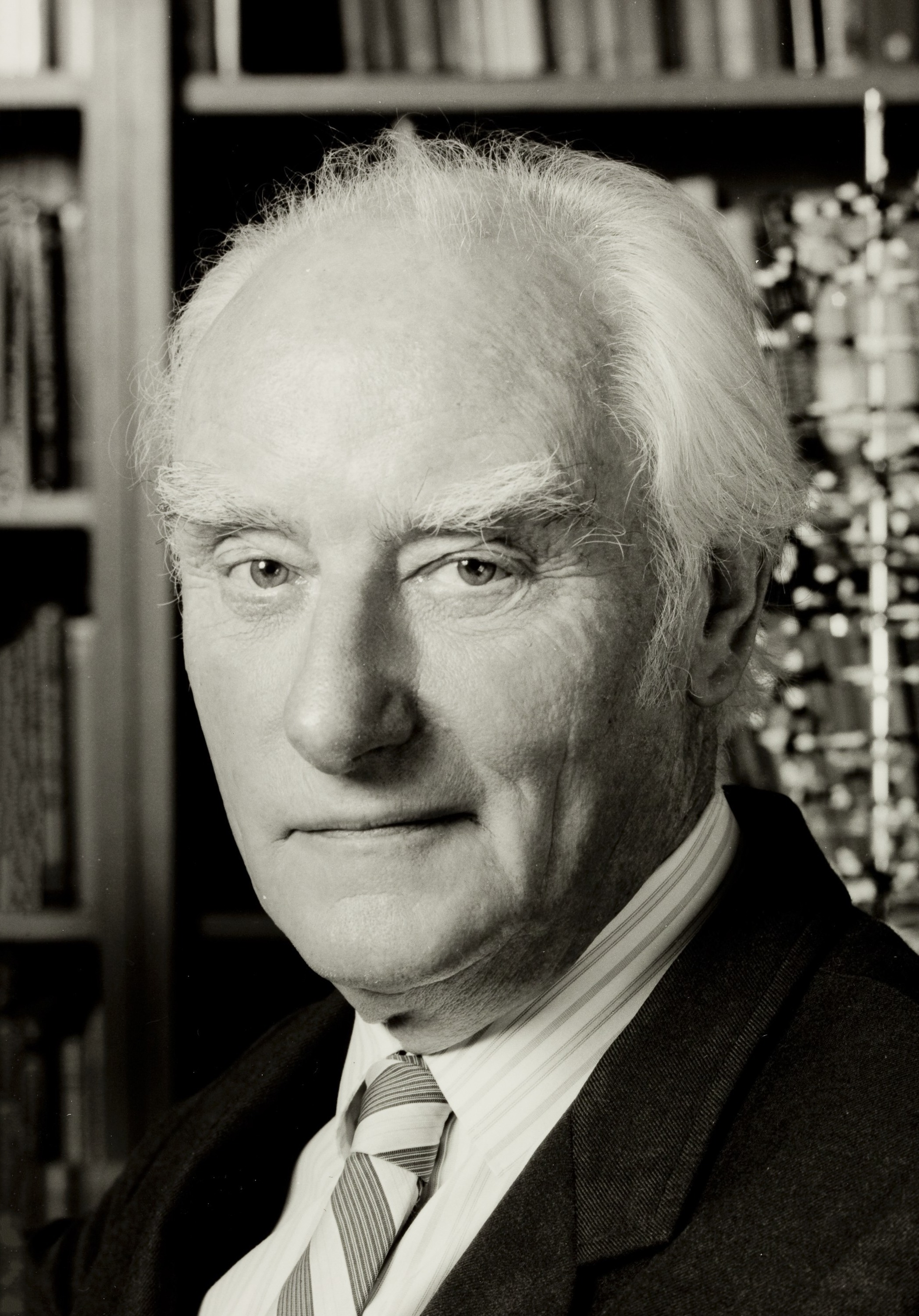
Francis Crick
 United Kingdom
molecular biologist•biophysicist•neuroscientist
Compleanno
June 8, 1916
Segno Zodiacale
Gemini
Luogo di Nascita
Northampton, England
Età
Morto/a a 88 anni
Altezza
6 ft (183 cm)
Informazioni
Francis Harry Compton Crick è stato un biologo molecolare, biofisico e neuroscienziato inglese, noto soprattutto per aver co-scoperto la struttura a doppia elica del DNA insieme a James Watson nel 1953. Questa scoperta, basata sui dati di diffrazione ai raggi X di Rosalind Franklin e Maurice Wilkins, valse a Crick, Watson e Wilkins il Premio Nobel per la Fisiologia o la Medicina nel 1962 e cambiò radicalmente la biologia. Crick è anche ricordato per aver coniato il termine dogma centrale per descrivere il flusso unidirezionale dell'informazione genetica dal DNA all'RNA alle proteine.
Dopo il lavoro sul DNA, Crick spostò la sua attenzione sulle neuroscienze. Nel 1976 si trasferì al Salk Institute for Biological Studies di La Jolla, in California, dove trascorse il resto della sua carriera esplorando i correlati neurali della coscienza. Scrisse The Astonishing Hypothesis (1994), sostenendo che la coscienza deriva interamente da processi cerebrali fisici. Crick rimase attivo nella ricerca fino alla morte per cancro al colon nel 2004, curando un manoscritto sul letto di morte. La sua eredità va oltre il laboratorio: il Francis Crick Institute di Londra, un centro di ricerca biomedica da 700 milioni di sterline, aperto nel 2016, continua la sua tradizione di scienza audace e interdisciplinare.
Primi Anni e Background
Crick crebbe a Northampton, in Inghilterra, dove suo padre gestiva una fabbrica di scarpe. Da bambino divorò la Children's Encyclopedia, in particolare le sezioni di scienze e chimica, e condusse esperimenti casalinghi, incluso un tentativo fallito di produrre seta artificiale. Frequentò la Northampton Grammar School e a 14 anni vinse una borsa di studio per la Mill Hill School di Londra, dove studiò autonomamente la genetica mendeliana perché non veniva insegnata. Conseguì una laurea con lode di seconda classe in fisica all'University College London nel 1937 e iniziò una ricerca di dottorato sulla viscosità dell'acqua ad alte temperature, un problema che in seguito definì il più noioso immaginabile. Il suo dottorato fu interrotto quando una bomba distrusse la sua attrezzatura durante la Battaglia d'Inghilterra. Durante la Seconda Guerra Mondiale lavorò per l'Ammiragliato britannico progettando mine acustiche e magnetiche. Dopo la guerra, determinato ad abbandonare il lavoro sulle armi, entrò in biologia, dicendo: «Ciò che ti interessa veramente è ciò di cui spettegoli». Nel 1947 si unì allo Strangeways Research Laboratory di Cambridge, studiando gli effetti del magnetismo sulle cellule di pollo, e nel 1949 si trasferì all'unità del Medical Research Council presso il Cavendish Laboratory sotto Max Perutz per lavorare sulla cristallografia a raggi X delle proteine.
Crescita Professionale
Il momento cruciale per Crick arrivò nel 1951 quando incontrò James Watson al Cavendish Laboratory. Condividendo un ardente interesse per le basi molecolari dell'ereditarietà, usarono le immagini di diffrazione ai raggi X di Rosalind Franklin e i dati di Maurice Wilkins per costruire un modello del DNA. Il 28 febbraio 1953 dedussero la struttura a doppia elica; il loro articolo apparve su Nature il 25 aprile 1953. Per questa scoperta Crick, Watson e Wilkins condivisero il Premio Nobel per la Fisiologia o la Medicina nel 1962. Crick conseguì il dottorato a Cambridge nel 1954 con una tesi sulla diffrazione ai raggi X da parte delle eliche. Nel 1961, con Sydney Brenner, dimostrò che il codice genetico viene letto in triplette. Formulò anche il dogma centrale della biologia molecolare. Nel 1976 Crick si trasferì al Salk Institute di La Jolla, dove si dedicò alla neurobiologia teorica e alla ricerca sulla coscienza, co-autore di The Astonishing Hypothesis (1994) con Christof Koch. Rimase al Salk fino alla morte, curando un manoscritto sul letto di morte.
Cronologia Carriera
Immagine Pubblica e Stile
Crick è ampiamente descritto come uno scienziato brillante, intenso e talvolta arrogante, focalizzato unicamente sulla risoluzione dei più grandi problemi della biologia. Affrontava la scienza con un pensiero acuto, analitico e spesso provocatorio. Nella cultura popolare è una figura centrale nella storia del DNA, presente in libri, documentari e film. La comunità scientifica lo venera, e il Francis Crick Institute porta il suo nome. Non esiste un fandom ufficiale, ma il suo lavoro è celebrato nell'educazione scientifica e in eventi come il DNA Day. La sua presenza sui social media è postuma, gestita attraverso gli account del Crick Institute.
Fama e fandom (iFAMOUS Rankings)
Francis Crick never had a fandom in the pop-culture sense, no fan club, no hashtag campaigns, no formal name for the enthusiasts who revere him. Instead, his most devoted followers are the thousands of scientists who work in his shadow, and the institution that bears his name, the Francis Crick Institute in London, serves as a living monument to his legacy. A niche but passionate community of science historians and biographers has recently rallied around his story, sparked by Matthew Cobb's 2025 biography, which drew reviews in The Economist, The New York Times, and Science, the closest thing to fan-driven media attention Crick has ever received.
As of August 2026, iFANN's Global Fame Engine has evaluated Francis Crick but he does not currently hold a placement in the published rankings, neither in the Global Top 1,000 nor in any Top-100 scope list. His fame, though immense within the scientific community, does not translate to the mass cultural metrics that drive modern celebrity rankings. His iconic moments, the 1953 double-helix model, the 1962 Nobel Prize, are documented history, not folklore, and his legend is being actively rewritten by scholars correcting the myth that he and Watson stole Rosalind Franklin's data. Crick's true fanbase is the global scientific research community, and his legacy continues to grow through the work of the institute that carries his name.
Curiosità e leggende
Crick once said he was born again when he switched from physics to biology at age 31. He was an outspoken atheist and humanist. In the 1960s he privately speculated about directed panspermia, the idea that life on Earth might have been deliberately seeded by an advanced alien civilization. He collaborated with neuroscientist Christof Koch for over a decade on the neural correlates of consciousness. Crick's PhD was awarded in 1954, after his Nobel Prize-winning discovery. He was appointed to the Order of Merit in 1991, a British honour limited to 24 living members.
One of the most enduring legends of Crick's career is the moment he and James Watson announced their discovery of the double helix in the Eagle pub in Cambridge, with Crick declaring they had found 'the secret of life', a story still retold by scientists and historians. Another iconic moment is his later shift to neuroscience in the 1970s, a move that puzzled some colleagues but is now seen as visionary. Recent scholarship has also revisited the long-held accusation that Crick and Watson stole Rosalind Franklin's data, with a 2025 Nautilus article arguing the 'theft' narrative is a distortion of what actually happened, a piece of cultural mythology that continues to evolve.
Citazioni Notevoli
“You, your joys and your sorrows, your memories and your ambitions, your sense of personal identity and free will, are in fact no more than the behavior of a vast assembly of nerve cells and their associated molecules.”
“What you are really interested in is what you gossip about.”
“The difference between my lecture and your book is that my lecture had a lot more intellectual content and nothing like so much gossip.”
“We have discovered the secret of life.”
Famiglia e Vita Privata
Crick si sposò due volte. La sua prima moglie fu Ruth Doreen Dodd; si sposarono nel 1940 e divorziarono nel 1947. Ebbero un figlio, Michael Francis Compton Crick, nato nel 1940. Nel 1949 Crick sposò Odile Speed, una studentessa d'arte che conobbe mentre lavorava allo Strangeways Laboratory. Ebbero due figlie, Gabrielle e Jacqueline. Odile fu una compagna di supporto per tutta la sua carriera, e rimasero insieme fino alla morte di Crick nel 2004. La famiglia visse a Cambridge e successivamente a La Jolla, in California. Il padre di Crick, Harry, gestiva una fabbrica di scarpe; sua madre, Annie Elizabeth Wilkins, era un'ex insegnante.
Collegamenti Notevoli
James Watson fu il principale collaboratore di Crick per la struttura del DNA. Maurice Wilkins condivise con loro il Premio Nobel. I dati di diffrazione ai raggi X di Rosalind Franklin (Foto 51) furono essenziali per la scoperta. Sydney Brenner lavorò con Crick sul codice a triplette. Christof Koch collaborò con Crick sulla ricerca sulla coscienza. Max Perutz dirigeva l'unità MRC al Cavendish dove lavorava Crick.
Relazioni e Storia Dating
Crick sposò la sua prima moglie, Ruth Doreen Dodd, nel 1940. Ebbero un figlio, Michael, prima di divorziare nel 1947. Nel 1949 sposò Odile Speed, una studentessa d'arte. Ebbero due figlie, Gabrielle e Jacqueline, e rimasero insieme fino alla morte di Crick nel 2004. Odile fu un costante sostegno durante la sua carriera. Al 2026, Francis Crick è deceduto; era sposato con Odile Crick al momento della sua scomparsa.
- Sposato/aRuth Doreen Dodd1940 - 1947Prima moglie. Ebbero un figlio, Michael. Divorziato nel 1947.
- Sposato/aOdile Speed1949 - 2004CorrenteSeconda moglie. Ebbero due figlie, Gabrielle e Jacqueline. Rimasero sposati fino alla morte di Crick.
Morte e conseguenze
Morto/a
July 28, 2004 (a 88 anni)
Luogo di morte
La Jolla, California, USA
Causa della morte
Colorectal cancer
Francis Crick spent his final days working at the Salk Institute for Biological Studies in La Jolla, California. He died on July 28, 2004, at the age of 88 after a long illness with colorectal cancer that had complicated his health in his later years. The scientific community responded with immediate tributes from the Nobel Prize organization and the Royal Society, while peers like James Watson mourned the loss of a thinker who uniquely bridged physics, chemistry, and biology. Major publications including Nature and The New York Times published retrospectives celebrating his shift from genetics to neuroscience and his work on consciousness. No public funeral service or burial location was ever confirmed, as Crick maintained a private personal life throughout his career. Posthumous recognition included the establishment of the Francis Crick Institute in London in 2015 and the publication of Matthew Cobb's biography Cric: A Mind in Motion in November 2025. Academic journals revisited his contributions with special issues examining his later work on the conscious brain.
Patrimonio (Valore immobiliare)
$5–10 Million
Stima del team editoriale di iFANN
iFANN currently estimates Francis Crick's estate at $5–10 million as of 2026. His personal wealth at death was modest for a Nobel laureate, under $10 million. The estate's primary value comes from book royalties, licensing of his image and name, and ongoing sales of his scientific publications. The Francis Crick Institute, a £700 million research centre named after him, is not owned by the estate. Annual revenue from intellectual property is in the low six figures. The estate is managed by his family, including his son Michael. Since Crick's death in 2004, the estate has seen steady but modest income, with occasional boosts from new biographies or media projects.
Premi vinti (5)
Crick vinse il Premio Nobel per la Fisiologia o la Medicina nel 1962 per la struttura del DNA. Ricevette anche la Medaglia Copley della Royal Society (1975), il Premio Albert Lasker (1960), il Premio Charles Leopold Mayer (1961) e il Premio Internazionale della Gairdner Foundation (1962).
1962 · Fisiologia o Medicina
Discovery of the molecular structure of DNA
1975 · Scienza
Elucidation of the structure and function of DNA
Noto Per
Discovery of DNA double helix
1953 · Co-scopritore
Central dogma of molecular biology
1958 · Originator
Triplet nature of genetic code
1961 · Co-scopritore
The Astonishing Hypothesis
1994 · Autore
Parole chiave
Fonti
Fatti Rapidi
- Professione
- molecular biologist, biophysicist, neuroscientist
- Nato/a
- June 8, 1916
- Luogo di Nascita
- Northampton, England
- Morto/a
- July 28, 2004
- Luogo di morte
- San Diego, California, USA
- Genere
- Maschio
- Coniuge
- Odile Crick
- Segno Zodiacale
- Gemini
Dettagli Personali
- Nome Completo
- Francis Harry Compton Crick
- Altezza
- 6 ft (183 cm)
- Coniuge
- Odile Crick
- Figli
- Michael Francis Compton Crick, Gabrielle Crick, Jacqueline Crick
- Istruzione
- University College London (BSc in Physics, 1937); Cambridge University (PhD, 1954)
Domande Frequenti
Francis Crick era sposato?
Qual era il patrimonio di Francis Crick?
Quanti anni aveva Francis Crick quando è morto?
Francis Crick aveva figli?
Francis Crick è ancora vivo?
Unisciti alla community
fan che discutono