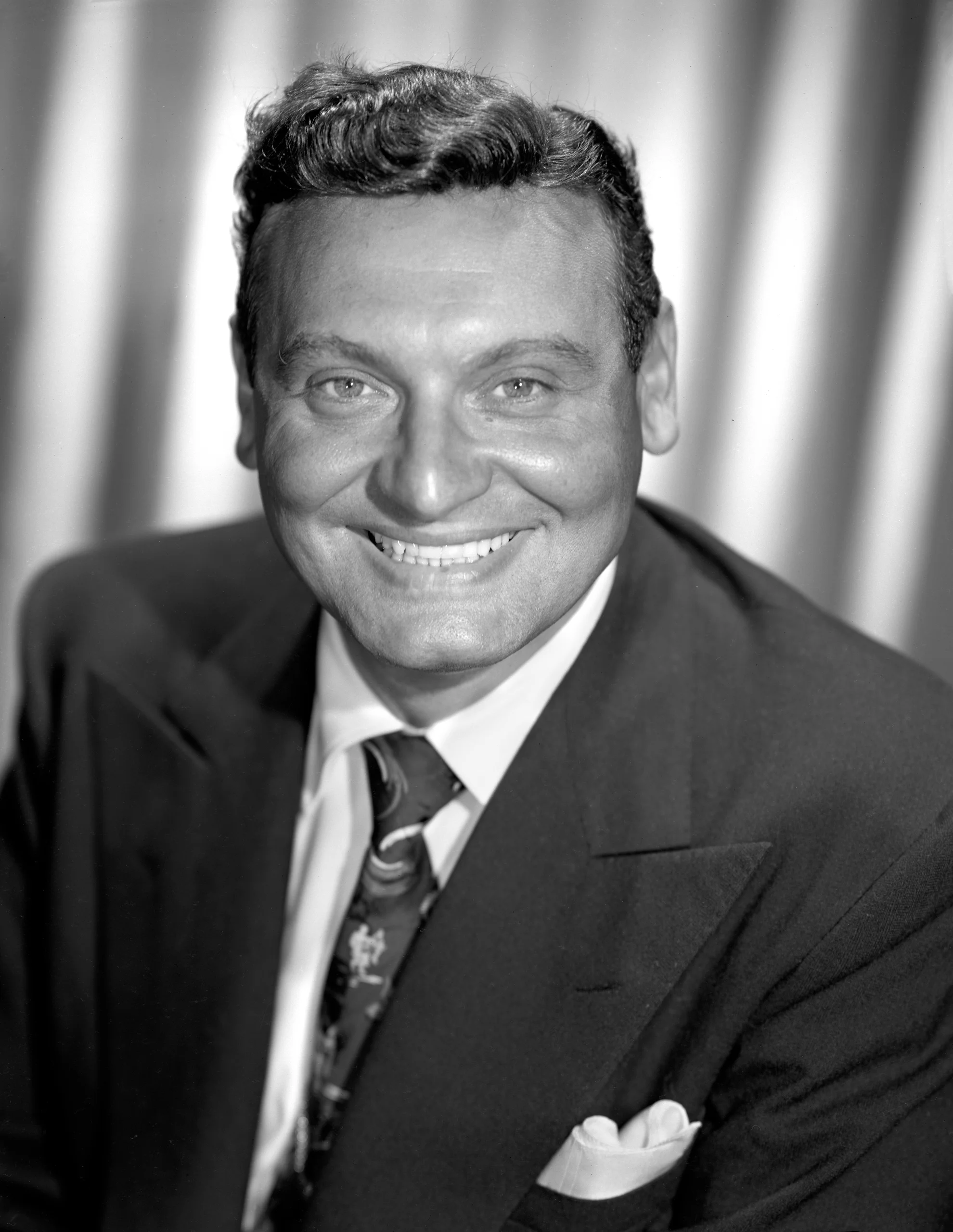
Frankie Laine
 United States
Also known as: Mr. Rhythm, America's Number One Song Stylist, Old Leather Lungs, Mr. Steel Tonsils
Compleanno
March 30, 1913
Segno Zodiacale
Aries
Luogo di Nascita
Chicago, Illinois, USA
Età
Morto/a a 93 anni
Informazioni
Frankie Laine è stato un cantante e cantautore americano il cui potente baritono e il ritmo incalzante lo hanno reso uno dei vocalist più popolari della metà del XX secolo. Conosciuto come "Mr. Rhythm" e "America's Number One Song Stylist", ha venduto oltre 100 milioni di dischi in tutto il mondo e ha ottenuto 21 dischi d'oro. La sua voce, a suo agio con blues, jazz, gospel, pop e canzoni western, riempiva gli auditorium senza amplificazione. Successi come "That Lucky Old Sun", "Mule Train", "Jezebel" e "High Noon" hanno definito un'epoca. Lo stile di Laine, crudo e carico di emozione, ha anticipato il rock 'n' roll e ha influenzato generazioni di cantanti. Oggi, la sua musica continua a raggiungere nuovi pubblici attraverso compilation e piattaforme di streaming. È stato uno dei primi cantanti bianchi influenzati dal nero del dopoguerra, e la sua intensità drammatica lo ha reso un interprete eccezionale. La carriera di Laine è durata oltre sette decenni, e la sua eredità perdura attraverso il suo vasto catalogo e la continua presenza in classifica anche dopo la sua morte.
Primi Anni e Background
Frankie Laine è cresciuto nel quartiere Near West Side "Little Italy" di Chicago, il maggiore di otto figli di immigrati siciliani. Suo padre, Giovanni, era un barbiere che faceva visite a domicilio per radere Al Capone. A 12 anni, Laine assistette all'omicidio di suo nonno materno da parte di gangster rivali nel suo stesso negozio di alimentari. Cantò per la prima volta in pubblico nel coro della Chiesa dell'Immacolata Concezione, imparando inni latini come lo "Stabat Mater". A 15 anni, spinto dagli amici, salì sul palco del Merry Garden Ballroom, esibendosi con futuri grandi del jazz come Jess Stacy, Gene Krupa, Dave Rose e Muggsy Spanier. Il suo desiderio di diventare cantante si concretizzò dopo aver visto Al Jolson in The Singing Fool. Frequentò le superiori, eccellendo in atletica e basket, che svilupparono la sua potenza polmonare. I suoi primi ingaggi professionali arrivarono nel 1930 con una compagnia di maratone di ballo, dove cantava per ore. Adottò il nome d'arte Frankie Laine in questo periodo. Il suo certificato di nascita fu americanizzato in "Frank Lovecchio".
Crescita Professionale
Il primo grande successo di Laine negli Stati Uniti arrivò nel 1947 con "That's My Desire". Nel 1949, "That Lucky Old Sun" e "Mule Train" sfondarono, consacrandolo come star. Incise colonne sonore per film western come 3:10 to Yuma (1957), Gunfight at the O.K. Corral (1957) e Blazing Saddles (1974), oltre che per la serie TV Rawhide. Nel 1952, la sua versione di "High Noon" (con testo modificato che ometteva il nome dell'antagonista) superò in vendite la registrazione originale della colonna sonora di Tex Ritter. Nel 1953, stabilì record nelle classifiche del Regno Unito: "I Believe" rimase al numero uno per 18 settimane, e i suoi tre successi in vetta quell'anno gli diedero 27 settimane al numero uno in un singolo anno solare. Continuò a esibirsi fino agli 80 anni, sottoponendosi a un quadruplo bypass nel 1985 e di nuovo nel 1990. La sua ultima esibizione di "That's My Desire" fu nel 2005. Nel 2011, la compilation Hits raggiunse il numero 16 nella classifica degli album del Regno Unito, quasi 60 anni dopo il suo debutto in classifica. Pubblicò la sua autobiografia That Lucky Old Son nel 1993 e fu inserito nella Songwriters Hall of Fame nel 1996.
Cronologia Carriera
Immagine Pubblica e Stile
Laine era noto per il suo baritono squillante e corposo e per uno stile incalzante e jazzistico da "Mr. Rhythm". Lo storico della musica Jonny Whiteside lo definì "il primo e il più grande di una nuova razza di cantanti influenzati dal nero" il cui stile crudo e carico di emozione sembrava segnare la fine degli stili canori dell'epoca precedente. Era ugualmente abile con blues, jazz, gospel, pop e canzoni western, e la sua voce potente poteva riempire gli auditorium senza amplificazione. Nel Regno Unito, sviluppò una base di fan devoti che includeva future star del rock come Ringo Starr e Bill Wyman. L'immagine di Laine era quella di un artista consumato che cavalcava al di sopra delle mode musicali, e le sue esibizioni erano caratterizzate da intensità drammatica e teatralità. Tony Bennett lodò Laine come "uno dei grandi artisti popolari del nostro tempo". Lo stile di Laine era spesso descritto come crudo e carico di emozione, anticipando il rock 'n' roll.
Fama e fandom
Frankie Laine stands as the 58th most famous person in Country, a placement anchored by his enduring legacy and massive catalog of hits. This rank holds steady from the previous cycle, reflecting a career that spanned nearly 75 years and bridged the gap between early jazz, western swing, and the rock era. His influence is measured not just by chart positions but by the sheer volume of records sold worldwide, with over 100 million units moving through decades of musical evolution. The iFANN Global Fame Rankings capture this sustained presence across media coverage, search trends, and consumption signals globally, confirming his status as a foundational figure in American music history.
While Laine cultivated a devoted following during his peak, his fanbase has no formal name or organized club structure like those seen with modern pop icons. Instead, his audience is defined by generational appreciation and genre affinity, often gathering online to discuss his underrated status compared to contemporaries like Frank Sinatra. Fans frequently highlight his "Chicago Cowboy" mythos, the image of an Italian-American from Little Italy who mastered the rugged Western archetype, as a key part of his legend. A particularly notable moment in recent memory involves the breaking of his long-standing UK chart record; his 1953 hit "I Believe" held the spot for the longest-running number one single for over seven decades until it was tied and surpassed in July 2026. This event reignited global attention on his original achievement, serving as a massive tribute to his vocal endurance. Though direct interaction ceased with his passing in 2007, the community remains active in preserving his story, celebrating his powerful baritone and the raw, emotionally charged style that presaged rock 'n' roll.
Curiosità e leggende
Frankie Laine went by several evocative nicknames throughout his life, including "Mr. Rhythm," "Old Leather Lungs," and "Mr. Steel Tonsils." Born Francesco Paolo LoVecchio in Chicago's Little Italy, he was the son of Al Capone's personal barber and witnessed his grandfather's murder by gangsters at age 12. His resilience was legendary; he wore a hairpiece later in his career which once blew off and rolled down a Chicago street. Ringo Starr and Bill Wyman of the Rolling Stones were both teenage fans who admired his driving rhythm. Laine created "I Believe Days" on certain Saturdays and Sundays in May for people to reaffirm their faith. He did not actually sing the soundtrack for High Noon (Tex Ritter did), nor the theme for Champion the Wonder Horse (Mike Stewart did), yet his renditions became the bigger hits. His autobiography That Lucky Old Son was co-written with Joseph F. Laredo and published in 1993. He received a star on the Hollywood Walk of Fame at 6376 Hollywood Boulevard, and his final performance took place in 2005.
A central piece of his lore involves the longevity of "I Believe," which held the record for the longest-running number-one single in UK chart history for over 70 years. This record stood until July 2026, when it was finally tied and broken, cementing his track as a benchmark in music history. Additionally, his transition from marathon dancing in the 1930s to becoming "America's Number One Song Stylist" solidified his reputation for vocal stamina that allowed him to fill auditoriums without amplification.
Citazioni Notevoli
“Frankie was always blasting out 'Jezebel'... He was so powerful, that's why I loved him. He was just so dramatic and powerful.”
“Frankie Laine was very kind and encouraging to me when I was scuffling. He's a beautiful person. He really communicates as a singer. He's one of the great popular artists of our time.”
“My saving grace was that lightning didn't strike for me until after I'd been around long enough to witness first hand the toll that booze, pills, and the wild life can take. Show business can eat you alive.”
Famiglia e Vita Privata
Laine era il maggiore di otto figli nati da Giovanni (John) LoVecchio, barbiere, e Crescenzia (Anna) LoVecchio (nata Salerno), entrambi immigrati siciliani di Monreale. Suo padre faceva visite a domicilio per tagliare i capelli e radere Al Capone. Laine visse con suo nonno materno, Salvatore Salerno, da bambino; Salerno fu ucciso da gangster rivali nel suo negozio di alimentari, una scena a cui Laine assistette all'età di 12 anni. Laine sposò l'ex stellina della Universal Pictures Nan Grey nel giugno 1950. Non ebbero figli e rimasero insieme fino alla morte di lei il 25 luglio 1993. Non si risposò e visse i suoi ultimi anni a San Diego, in California. La sua famiglia aveva legami con la criminalità organizzata attraverso il padre che faceva il barbiere per Capone.
Collegamenti Notevoli
Laine collaborò presto con i musicisti jazz Jess Stacy, Gene Krupa, Dave Rose e Muggsy Spanier a Chicago. Fu ammirato da Tony Bennett, che lo definì "uno dei grandi artisti popolari del nostro tempo". Ringo Starr e Bill Wyman dei Rolling Stones furono fan adolescenti. Suo padre era il barbiere di Al Capone, collegando Laine alla storia della criminalità organizzata. Sua moglie, Nan Grey, era una ex stellina della Universal Pictures.
Relazioni e Storia Dating
Frankie Laine è stato sposato una sola volta, con l'ex stellina della Universal Pictures Nan Grey, dal giugno 1950 fino alla sua morte il 25 luglio 1993. La coppia non ha avuto figli. Si incontrarono negli ambienti di Hollywood e restarono insieme per 43 anni. Dopo la morte di Grey, Laine non si risposò. Non sono documentate altre relazioni sentimentali pubbliche. Rimase vedovo fino alla sua morte nel 2007. Nan Grey, nata Eschal Miller, morì il giorno del suo 72° compleanno.
- Sposato/aNan Grey1950 - 1993Sposato dal giugno 1950 fino alla sua morte il 25 luglio 1993; nessun figlio.
Morte e conseguenze
Morto/a
February 6, 2007 (a 93 anni)
Luogo di morte
Sconosciuto
Causa della morte
Sconosciuto
Frankie Laine, born Francesco Paolo LoVecchio, died on February 6, 2007, at the age of 93. Accounts of his final days, last public appearance, or any disputed narratives surrounding his end-of-life period could not be verified from the provided text.
Public reaction included tributes highlighting his status as one of the most popular vocalists of the 1950s and a consummate artist known for hits like "I Believe," "That Lucky Old Son," and "Mule Train." Specific details regarding the funeral or memorial service, including the date, location, notable attendees, performances, or burial versus cremation, were not found in the provided sources. Regarding posthumous matters, the sources do not list specific films, books, or foundation creations established in his name immediately after his death, though he already held a star on the Hollywood Walk of Fame and had been inducted into the Songwriters Hall of Fame.
His legacy remained active in the music industry with recent news items noting that his 1953 hit "I Believe" held the record for the longest-running UK Number One single for over 70 years until it was tied and eventually surpassed by Sam Fender and Olivia Dean's "Rein Me In" in July 2026. This enduring presence in the charts stood as a quiet reflection of an artist whose voice defined the rhythm of mid-century America for nearly eighty years before he left the stage.
Patrimonio (Valore immobiliare)
$15 Million
Stima del team editoriale di iFANN
Frankie Laine's estate continues to generate revenue from his extensive catalog of recordings. With over 100 million records sold worldwide and 21 gold records, his music remains a staple on streaming platforms and compilation albums. In 2011, the compilation Hits reached No. 16 on the UK Albums Chart, demonstrating ongoing commercial appeal. Royalties from film and television placements, including themes for Rawhide and 3:10 to Yuma, contribute to estate income. Per iFANN's editorial analysis, as of 2026, his net worth is estimated at $15 Million, reflecting his enduring popularity and the value of his recorded legacy. His lifetime earnings were bolstered by decades of touring and record sales, though exact figures are not publicly documented. The DVD release Frankie Laine: An American Dreamer featuring Ringo Starr commentary also generates revenue.
Premi vinti (1)
Frankie Laine ha ricevuto il Sammy Cahn Lifetime Achievement Award dalla Songwriters Hall of Fame nel 1996. Ha ottenuto 21 dischi d'oro e venduto oltre 100 milioni di dischi in tutto il mondo, anche se non ha vinto premi competitivi importanti come Grammy o Oscar. I suoi successi in classifica, inclusi i record britannici per le settimane al numero uno, rappresentano i suoi principali riconoscimenti.
1996 · Premio alla Carriera
Noto Per
That Lucky Old Sun
1949 · Cantante
Mule Train
1949 · Cantante
High Noon
1952 · Cantante
I Believe
1953 · Cantante
Rawhide
1959 · Cantante
Parole chiave
Fonti
Fatti Rapidi
- Professione
- singer, songwriter
- Nato/a
- +1913-03-30
- Luogo di Nascita
- Chicago
- Morto/a
- +2007-02-06
- Luogo di morte
- San Diego
- Genere
- Maschio
- Coniuge
- Nan Grey
- Segno Zodiacale
- Aries
Dettagli Personali
- Nome Completo
- Francesco Paolo LoVecchio
- Coniuge
- Nan Grey
Domande Frequenti
Quanti anni aveva Frankie Laine quando è morto?
Qual è stato il più grande successo di Frankie Laine?
Frankie Laine ha avuto figli?
Con chi era sposato Frankie Laine?
Qual è il patrimonio di Frankie Laine nel 2026?
Persone Simili
Unisciti alla community
fan che discutono