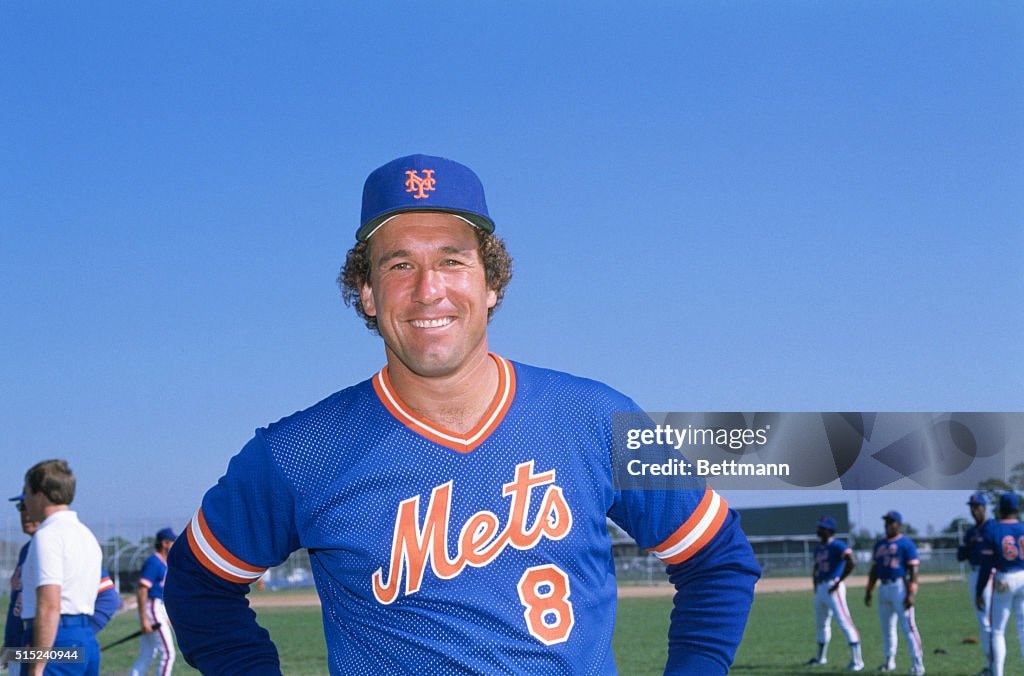
Gary Carter
 United States
Also known as: The Kid
Compleanno
April 8, 1954
Segno Zodiacale
Aries
Luogo di Nascita
Culver City, California, United States
Età
Morto/a a 57 anni
Altezza
6 ft 2 in (188 cm)
Informazioni
Gary Carter è stato un giocatore di baseball professionista statunitense, ricevitore, che ha giocato 19 stagioni nella Major League Baseball, principalmente per i Montreal Expos e i New York Mets. Con 11 selezioni All-Star, era noto per la sua potenza in battuta, le forti abilità difensive e la personalità esuberante che gli valsero il soprannome "The Kid". Carter è stato inserito nella National Baseball Hall of Fame nel 2003, consolidando la sua eredità come uno dei più grandi ricevitori nella storia del baseball.
I suoi totali in carriera includono 324 fuoricampo e 1.225 RBI, ed è stato una figura chiave nella drammatica vittoria delle World Series del 1986 dei Mets. Oltre al diamante, Carter era un devoto cristiano e oratore motivazionale, rispettato per la sua leadership e sportività.
Primi Anni e Background
Gary Edward Carter è nato l'8 aprile 1954 a Culver City, California, ed è cresciuto nell'area di Los Angeles. Mostrò presto promesse atletiche, vincendo l'inaugurale concorso Punt, Pass, and Kick nel 1961 all'età di sette anni. Carter frequentò la Sunny Hills High School a Fullerton, dove eccelleva sia nel baseball che nel football, giocando come quarterback e difensore. Il suo talento nel baseball era evidente come ricevitore e esterno, e fu scelto dai Montreal Expos al terzo giro del draft MLB del 1972 direttamente dalle superiori. Trascorse due stagioni nelle leghe minori, affinando le sue abilità, prima di debuttare in MLB nel 1974.
Crescita Professionale
Carter debuttò in MLB con i Montreal Expos il 16 settembre 1974. Si affermò rapidamente come ricevitore di prim'ordine, vincendo il suo primo Silver Slugger Award nel 1975. In difesa, vinse il suo primo Gold Glove nel 1979. Nel 1980 fu nominato MVP delle NLCS dopo una forte prestazione in postseason. Dopo la stagione 1984, gli Expos lo scambiarono con i New York Mets, dove divenne un pilastro della squadra. Nel 1985 raggiunse un massimo in carriera di 32 fuoricampo e 100 RBI. L'apice arrivò nel 1986, quando aiutò i Mets a vincere il titolo delle World Series, colpendo un famoso fuoricampo decisivo in Gara 5. In seguito giocò per i Los Angeles Dodgers, i San Francisco Giants e i Baltimore Orioles prima di ritirarsi nel 1992.
Cronologia Carriera
Immagine Pubblica e Stile
Carter era ampiamente considerato uno dei giocatori più entusiasti e carismatici della sua epoca. Il suo sorriso contagioso e il gioco energico lo resero un favorito dei tifosi. Era noto per la sua leadership in campo, spesso chiamando i giochi e guidando i lanciatori. I media e i compagni di squadra lodavano la sua etica del lavoro e la sua resistenza, poiché ricevette oltre 1.000 partite. La sua fede era una parte centrale della sua immagine pubblica, e parlava spesso dell'importanza della famiglia e della religione.
Fama e fandom
The fanbase surrounding Gary Carter does not operate under a formal collective name, identifying instead through allegiance to the Montreal Expos or New York Mets rather than as a distinct sub-group. This lack of a specific moniker has not diminished the intensity with which supporters guard his legacy, a sentiment made starkly clear in May 2026 when the assignment of his retired number 8 to rookie Nick Morabito triggered immediate and visceral backlash. The organization swiftly reversed the decision, demonstrating that while no official fandom exists, the public acts as an active guardian of the catcher's history. Within this sphere, Carter remains a central figure in franchise mythology, revered for his approachable demeanor and the enduring nickname "The Kid" earned during his debut at age nineteen. His cultural standing is anchored by verified historical achievements, most notably his clutch performance in the 1986 World Series where he helped secure a victory against the Boston Red Sox, cementing his status as a legendary defender known for his rock-solid presence behind home plate. Despite his immense stature in baseball history, iFANN's Global Fame Engine evaluated his current standing in August 2026 and determined that he holds no placement in the published rankings. Gary Carter is currently EVALUATED_UNRANKED within the Global Top 1,000 or any Top-100 scope list. While his influence on the sport remains profound, drawing tributes from across the league following his passing in 2012, he does not currently occupy a quantified position in the global fame hierarchy. The absence of a numeric rank reflects a status where his historical impact is absolute, yet his contemporary viral metrics do not align with the thresholds required for a specific ordinal placement in the current cycle.
Curiosità e leggende
Gary Carter's career was marked by distinctive habits and historic firsts that remain part of baseball lore. He was the inaugural winner of the Punt, Pass, and Kick contest and frequently played golf in charity tournaments after his retirement. On the field, he was recognized for wearing a unique catcher's mask equipped with a throat protector and famously caught Bill Stoneman's no-hitter in 1974. His broadcasting career included a stint with the Florida Marlins, where he shared his insights before focusing on motivational speaking. The origin of his beloved nickname, "The Kid," is tied to his youthful energy upon joining the Montreal Expos in 1973, a moniker popularized by announcer Bob Murphy that stuck throughout his nineteen-season career. A defining moment in his legend occurred during the 1986 World Series, where his crucial home run and defensive plays in Game 6 became the primary narrative for fans recalling his contribution to the Mets' championship victory. Historians often describe him as a "rock behind home plate" due to his three Gold Glove Awards and ability to manage pitchers, traits that defined his reputation as one of the game's greatest catchers. Even decades later, the reverence for his legacy persists, evidenced by the swift correction when a rookie was mistakenly issued his number in 2026, proving that the stories of his life continue to resonate with new generations.
Citazioni Notevoli
“I love the game. I love the fans. I love the challenge. I love the struggle. I love the whole thing.”
“My faith is the most important thing in my life. It's what gets me through all the tough times.”
Famiglia e Vita Privata
Gary Carter sposò Sandy Brubaker, e ebbero quattro figli: Christy, Kim, Tiffany e D.J. Suo figlio, D.J. Carter, giocò nelle leghe minori nell'organizzazione dei Mets. Carter era un uomo di famiglia devoto e spesso attribuiva alla moglie il sostegno alla sua carriera. Era un devoto cristiano e frequentava regolarmente la chiesa. Dopo il ritiro, visse a Palm Beach Gardens, Florida, fino alla sua morte.
Collegamenti Notevoli
Gary Carter è spesso associato alla squadra dei New York Mets vincitrice delle World Series 1986, insieme a compagni come Dwight Gooden, Darryl Strawberry e Keith Hernandez. Aveva anche una notevole rivalità con Mike Schmidt dei Philadelphia Phillies. A Montreal, era una figura chiave insieme a Steve Rogers e Andre Dawson.
Relazioni e Storia Dating
Gary Carter sposò Sandy Brubaker nel 1975. La coppia ebbe quattro figli e rimase sposata fino alla morte di Carter nel 2012. Non sono note relazioni precedenti o divorzi. Carter parlava spesso pubblicamente del suo forte legame con la moglie e le attribuiva il merito del suo successo. Il matrimonio era considerato stabile e privato.
- Sposato/aSandy Brubaker1975 - 2012Sposati fino alla morte di Carter; quattro figli insieme.
Morte e conseguenze
Morto/a
February 16, 2012 (a 57 anni)
Luogo di morte
Laval, Quebec, Canada
Causa della morte
Complications from an astrocytoma
Gary Carter spent his final years residing in Laval, Quebec, Canada, where he lived with his family and maintained a quiet life away from the public eye. On February 16, 2012, at the age of 57, Carter passed away at his home following a private battle with an astrocytoma, a type of brain tumor diagnosed approximately one year prior. The cause of death was confirmed by his family and the Montreal Expos organization as natural complications arising from the malignancy. Tributes poured in immediately from Major League Baseball, the New York Mets, and fellow Hall of Famers like Mike Piazza and Keith Hernandez, who honored his leadership and distinctive persona.
Fans gathered spontaneously outside spring training facilities and near his residence to pay respects, while the number 8 jersey was retired by the Montreal Expos in recognition of his enduring impact on Canadian baseball. A private funeral service attended by close family and select colleagues took place shortly after his passing in Laval, though specific burial details remain undisclosed. Following his death, the Gary Carter Foundation continued its work supporting children's charities and youth baseball programs, while various documentaries and biographies were produced to document his legacy.
Patrimonio (Valore immobiliare)
$10 Million
Stima del team editoriale di iFANN
Per iFANN's editorial analysis, the estate of Gary Carter is valued at approximately $10 million as of 2026. During his playing days, particularly throughout the 1980s, Carter accumulated substantial earnings with a peak annual salary reaching around $2 million. Following his retirement, he expanded his income streams through work as a broadcaster and motivational speaker. The financial value of his estate includes residuals generated from memorabilia sales, autograph signings, and various licensing agreements. The Carter family actively manages his enduring legacy through the Gary Carter Foundation, which directs resources toward supporting charitable causes.
Premi vinti (10)
Gary Carter è stato un 11 volte All-Star della MLB, ha vinto tre Gold Glove Awards (1979, 1981, 1986) e cinque Silver Slugger Awards (1975, 1981, 1984, 1985, 1986). È stato nominato MVP della NLCS nel 1980 e introdotto nella National Baseball Hall of Fame nel 2003.
2003 · Induzione
Career
1986 · Difesa
New York Mets
1981 · Difesa
Montreal Expos
1979 · Difesa
Montreal Expos
Noto Per
Montreal Expos
1974 · Catcher
New York Mets
1985 · Catcher
1986 World Series Champion
1986 · Catcher
Parole chiave
Fatti Rapidi
- Professione
- Baseball Player
- Nato/a
- 1954-04-08
- Luogo di Nascita
- Culver City, California, United States
- Segno Zodiacale
- Aries
- Altezza
- 6 ft 2 in (188 cm)
- Bats/Throws
- Right/Right
Dettagli Personali
- Nome Completo
- Gary Edward Carter
- Altezza
- 6 ft 2 in (188 cm)
- Coniuge
- Sandy Brubaker
- Figli
- Christy, Kim, Tiffany, D.J.
- Istruzione
- Sunny Hills High School, Fullerton, California
Domande Frequenti
Qual era il soprannome di Gary Carter?
Per quali squadre ha giocato Gary Carter?
Quando è stato introdotto Gary Carter nella Hall of Fame?
Gary Carter ha vinto una World Series?
Qual è stata la causa della morte di Gary Carter?
Persone Simili
Unisciti alla community
fan che discutono