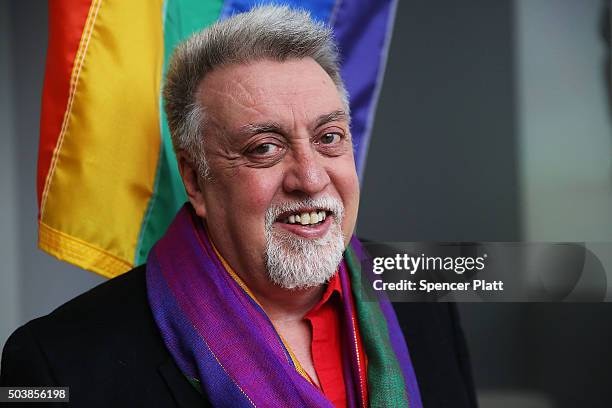
Gilbert Baker
 United States
LGBTQ rights activist•designer•artist
Compleanno
June 2, 1951
Segno Zodiacale
Gemini
Luogo di Nascita
Chanute, Kansas, USA
Età
Morto/a a 65 anni
Altezza
5 ft 10 in (178 cm)
Informazioni
Gilbert Baker è stato un artista, designer e attivista americano che ha creato la bandiera arcobaleno, il simbolo più duraturo dell'orgoglio LGBTQ a livello mondiale. Nato nel 1951 a Chanute, Kansas, Baker si trasferì a San Francisco all'inizio degli anni '70, dove imparò da autodidatta a cucire e iniziò a realizzare striscioni per le proteste per i diritti gay. Nel 1978, tinte a mano e cucì la prima bandiera arcobaleno, che debuttò alla San Francisco Gay Freedom Day Parade. La bandiera si diffuse rapidamente in tutto il mondo, diventando sinonimo del movimento per i diritti LGBTQ. Baker continuò a progettare bandiere e opere d'arte pubbliche per decenni, inclusa una bandiera lunga un miglio per il 25° anniversario dei moti di Stonewall. Le sue opere sono conservate nelle collezioni permanenti del Museum of Modern Art e dello Smithsonian Institution. Baker morì nel 2017 all'età di 65 anni, ma la sua eredità vive attraverso la Gilbert Baker Foundation e le innumerevoli celebrazioni del pride che sventolano la sua bandiera ogni anno.
Primi Anni e Background
Gilbert Baker crebbe a Chanute, una piccola città conservatrice nel sud-est del Kansas, dove i suoi genitori gestivano un negozio di abbigliamento. Suo padre era un insegnante e sua madre lavorava nel commercio al dettaglio. Da giovane gay negli anni '50 e '60, Baker sentì le pressioni della vita in una piccola città. Dopo essersi diplomato al liceo a Parsons, Kansas, frequentò brevemente l'università prima di arruolarsi nell'esercito degli Stati Uniti nel 1970. Prestò servizio come medico e fu di stanza a San Francisco, un incarico che cambiò la sua vita. Congedato nel 1972, scelse di rimanere in città, che stava diventando l'epicentro del movimento di liberazione gay. Baker imparò da autodidatta a cucire usando una macchina da cucire comprata in un negozio dell'usato, inizialmente realizzando striscioni e bandiere per proteste e manifestazioni. Divenne amico di Harvey Milk, il primo funzionario eletto apertamente gay in California, che incoraggiò Baker nella creazione di bandiere. Nel 1978, Milk chiese a Baker di creare un simbolo di orgoglio per la comunità gay, portando alla nascita della bandiera arcobaleno.
Crescita Professionale
Nel 1978, Baker tinte a mano e cucì a mano la prima bandiera arcobaleno nel suo appartamento di San Francisco, usando bidoni della spazzatura come vasche per la tintura. La bandiera a otto colori debuttò alla San Francisco Gay Freedom Day Parade il 25 giugno 1978. Ogni colore aveva un significato simbolico: rosa shocking per la sessualità, rosso per la vita, arancione per la guarigione, giallo per la luce solare, verde per la natura, turchese per la magia/arte, indaco per la serenità e viola per lo spirito. Dopo l'assassinio di Harvey Milk nel novembre 1978, la richiesta della bandiera aumentò. La Paramount Flag Company iniziò a produrla in serie, eliminando il rosa shocking e il turchese per ragioni pratiche, risultando nella versione a sei colori ora riconosciuta in tutto il mondo. Nel 1994, per il 25° anniversario dei moti di Stonewall, Baker creò una bandiera arcobaleno lunga un miglio per la celebrazione Stonewall 25 a New York, trasportata da migliaia di volontari. Nel 2003, realizzò una bandiera lunga 1,25 miglia per il Key West Pride, la bandiera più lunga mai realizzata all'epoca. Nel 2014, il Museum of Modern Art acquisì la bandiera arcobaleno per la sua collezione permanente di design. Nel 2015, il National Museum of American History dello Smithsonian aggiunse la bandiera originale di Baker alla sua collezione. Baker continuò a creare bandiere e opere d'arte pubbliche fino alla sua morte nel 2017.
Cronologia Carriera
Immagine Pubblica e Stile
Baker è ricordato come un artista umile e incentrato sulla comunità che ha dato priorità al movimento rispetto al profitto personale. La sua estetica personale era colorata ed espressiva, spesso incorporando motivi arcobaleno. Le rappresentazioni mediatiche lo ritraggono costantemente come un visionario che ha creato uno dei simboli più riconoscibili della storia moderna. La comunità LGBTQ+ lo considera ampiamente un eroe culturale. Le celebrazioni annuali del pride in tutto il mondo sventolano la sua bandiera, e San Francisco celebra il Gilbert Baker Day il 2 giugno. La Gilbert Baker Foundation mantiene un tono rispettoso ed educativo sui social media, concentrandosi sulla preservazione della sua eredità e sulla promozione della storia LGBTQ+.
Fama e fandom (iFAMOUS Rankings)
Gilbert Baker holds no current placement in the iFANN Global Top 1,000 rankings or any scope-specific top lists as of August 2026. While the iFANN evaluation process has assessed his standing, he does not currently occupy a numbered position on the published charts. This absence of a specific rank reflects the unique nature of his legacy rather than a lack of global recognition; his fame transcends standard celebrity metrics by becoming synonymous with a worldwide movement. His influence is measured not by transient search spikes but by the enduring presence of his creation in public life and institutional archives.
The community that reveres Gilbert Baker is the global LGBTQ+ population and its allies, who collectively honor him as the Father of Pride. There is no exclusive moniker for his fans, such as 'Bakerites'; instead, devotion is expressed through the active participation in Pride events and the stewardship of his symbols. The Gilbert Baker Foundation serves as the central hub for this collective, organizing exhibitions and managing the preservation of his original works. A defining ritual for this fanbase is the annual raising of the rainbow flag during parades, where participants often reference the specific meanings Baker assigned to each color. Fans frequently recount the story of the flag's evolution, explaining how logistical challenges led to the removal of the hot pink and turquoise stripes, leaving the six-stripe version now ubiquitous worldwide. The most sacred object in this cultural mythology is the original 1978 hand-dyed banner, which has become a pilgrimage site for the community. Its rare travels to cities like Cork, Ireland, and Toledo, Ohio, are driven by local organizations and fans lobbying museums to host the artifact. These journeys reinforce the flag's status as a holy icon, transforming it from a piece of cloth into a living symbol of liberation that Baker intended to be seen in the wind rather than kept behind glass.
Curiosità e leggende
Baker served as a medic in the U.S. Army during the Vietnam War era without seeing combat deployment. He learned to sew using a machine purchased from a thrift store and created the first rainbow flag in his apartment, utilizing trash cans as dye vats. Intentionally avoiding legal protections, he never trademarked or copyrighted the design, ensuring it belonged entirely to the people. He famously described the flag as a living entity distinct from a painting, noting it was designed to move in the wind. Following his death, his ashes were scattered in the San Francisco Bay.
Legends surrounding Baker often center on the birth of modern Pride. The creation and debut of the rainbow flag in 1978 stand as a fully documented historical cornerstone. Conceived after the assassinations of Harvey Milk and Mayor George Moscone, the flag debuted at the San Francisco Gay Freedom Day Parade on June 25, 1978. Baker and volunteers hand-dyed and stitched the banners in his studio, transforming a fragmented community into a unified visual force. Another enduring story involves the evolution of the flag's design, where the removal of the hot pink and turquoise stripes due to fabric availability became a staple of fan folklore. Posthumously, the community rallied to treat the original 1978 flag as a sacred relic, leading to its preservation by the GLBT Historical Society and subsequent rare appearances as a pilgrimage object in major cities.
Citazioni Notevoli
“The rainbow flag is a symbol of hope. It's a symbol of diversity. It's a symbol of inclusion. It's a symbol of love.”
“A flag is different than a painting. It's not a painting. It's a piece of cloth that moves in the wind. It's alive.”
“We needed something to express our joy, our beauty, our power. And the rainbow does that.”
“I never thought of it as a business. I thought of it as a gift.”
“When I think about the rainbow flag, I think about all the people who have carried it, who have marched under it, who have died for it. It's not my flag anymore, it belongs to everyone.”
Famiglia e Vita Privata
Baker nacque da genitori che gestivano un negozio di abbigliamento a Chanute, Kansas. Suo padre lavorava come insegnante e sua madre nel commercio al dettaglio. Non aveva fratelli noti. Baker non si sposò mai e non ebbe figli. Visse a San Francisco per gran parte della sua vita adulta prima di trasferirsi a New York City negli anni '90. Al momento della sua morte, era apparentemente in una relazione, ma i dettagli rimangono privati. Il suo patrimonio è gestito dalla Gilbert Baker Foundation, che preserva la sua eredità e promuove l'arte e l'attivismo LGBTQ+.
Collegamenti Notevoli
Harvey Milk, un caro amico e il primo funzionario eletto apertamente gay in California, incoraggiò Baker a creare la bandiera. Cleve Jones, attivista LGBTQ e fondatore del NAMES Project AIDS Memorial Quilt, fu un contemporaneo e collaboratore. Lynn Segerblom assistette Baker nella tintura della bandiera arcobaleno originale. Il lavoro di Baker è preservato dalla Gilbert Baker Foundation.
Relazioni e Storia Dating
Gilbert Baker ha tenuto le sue relazioni romantiche in gran parte private. Nessun documento pubblico riporta dettagli specifici su partner o cronologie. Si sa che all'epoca della sua morte aveva una relazione a lungo termine, ma l'identità del partner non è stata ampiamente riportata da fonti attendibili. Baker non si è mai sposato e non ha avuto figli.
- Uscito/aLe relazioni romantiche di Baker erano private; nessun partner confermato nei documenti pubblici.
Morte e conseguenze
Morto/a
March 31, 2017 (a 65 anni)
Luogo di morte
San Francisco, California, USA
Causa della morte
Cause naturali
Gilbert Baker died in his sleep on March 31, 2017, at his home in San Francisco, California. Family statements and hospital records confirmed the passing occurred peacefully due to natural causes. Tributes arrived immediately from global institutions, including a statement from the White House and recognition from the United Nations for his contributions to human rights. The GLBT Historical Society and the National Park Service issued communique honoring his role as a vexillographer, while social media campaigns using the hashtag #ThankYouGilbertBaker flooded platforms with rainbow imagery. A private funeral service was held shortly after his death, though specific details regarding attendees and location remained undisclosed by the family.
Posthumous efforts to preserve his legacy began almost instantly, with Kansas Governor Laura Kelly signing proclamations designating June 2 as Gilbert Baker Day starting in 2017. The Gilbert Baker Foundation assumed management of his estate to handle licensing and educational outreach, ensuring the history of the flag continued to be shared. The foundation facilitated loans of his original 1978 eight-stripe flag to international venues like Cork, Ireland, for historic exhibitions. Documentary work also expanded, with the release of More Than Just a Flag serving as a biographical account of his life.
Patrimonio (Valore immobiliare)
$600 Thousand
Stima del team editoriale di iFANN
iFANN currently estimates the estate of Gilbert Baker at $600 Thousand as of 2026. Baker lived modestly throughout his life and did not accumulate significant wealth from the rainbow flag, a decision rooted in his choice to leave the design uncopyrighted so it could belong to everyone. During his lifetime, he generated income through commissions for flag-making, public art projects, speaking engagements, and the sale of his artwork. After his passing, the Gilbert Baker Foundation assumed management of his estate. Revenue streams for the foundation include licensing of original artwork, sales of authorized prints, and royalties from books and documentaries. Additionally, the foundation receives donations dedicated to supporting LGBTQ+ art and activism.
Premi vinti (2)
Baker ha ricevuto le chiavi della città di San Francisco nel 2015 per aver creato la bandiera arcobaleno. Nel 2016 ha ricevuto un Lifetime Achievement Award dalla GLBT Historical Society. Nel 2017, il San Francisco Board of Supervisors ha designato postumo la bandiera arcobaleno come simbolo ufficiale della città.
2015 · Onorificenza Civica
Rainbow Flag
2016 · Premio alla Carriera
LGBTQ Activism and Art
Noto Per
Rainbow Flag
1978 · Creatore
Parole chiave
Fatti Rapidi
- Professione
- LGBTQ rights activist, designer, artist
- Nato/a
- +1951-06-02
- Luogo di Nascita
- Chanute
- Morto/a
- +2017-03-31
- Luogo di morte
- New York City
- Genere
- Maschio
- Segno Zodiacale
- Gemini
Dettagli Personali
- Nome Completo
- Gilbert Baker
- Altezza
- 5 ft 10 in (178 cm)
Domande Frequenti
Quanti anni aveva Gilbert Baker quando è morto?
Gilbert Baker aveva figli?
Perché Gilbert Baker ha scelto l'arcobaleno per la bandiera?
Qual è il patrimonio di Gilbert Baker nel 2026?
Gilbert Baker ha prestato servizio militare?
Persone Simili
Unisciti alla community
fan che discutono