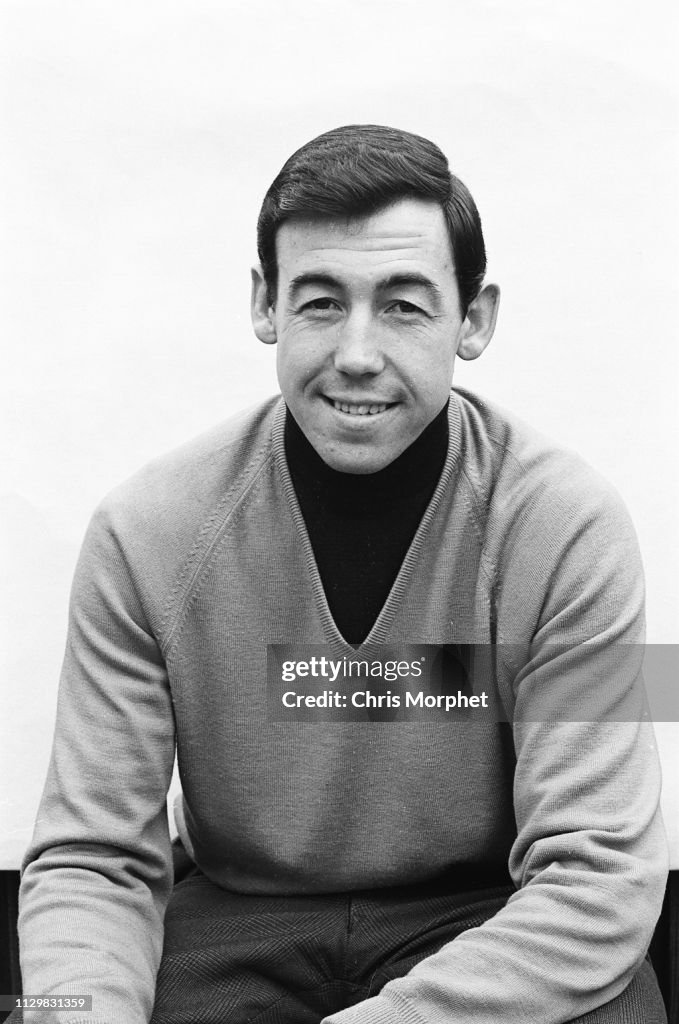
Gordon Banks
 United Kingdom
association football player•autobiographer•association football coach
Also known as: Banks of England, Banksy
Compleanno
December 30, 1937
Segno Zodiacale
Sagittarius
Luogo di Nascita
Sheffield, England
Età
Morto/a a 81 anni
Altezza
6 ft 0 in (1.83 m)
Informazioni
Gordon Banks è stato un calciatore professionista inglese, ampiamente considerato uno dei più grandi portieri di tutti i tempi. Ha collezionato 679 presenze in una carriera di 20 anni e ha ottenuto 73 presenze con l'Inghilterra, giocando tutte le partite della vittoria della Coppa del Mondo del 1966 — un'impresa che nessun altro portiere inglese ha eguagliato. Banks è celebrato per i suoi riflessi straordinari, la calma autorità e la iconica 'Parata del secolo' contro Pelé nella Coppa del Mondo del 1970.
Oltre alla gloria mondiale, Banks ha vinto la League Cup sia con il Leicester City che con lo Stoke City, ed è stato nominato FWA Calciatore dell'Anno nel 1972. La sua carriera è stata interrotta da un incidente d'auto che gli è costato la vista da un occhio, ma è tornato a giocare professionalmente nella NASL, ottenendo il premio di Portiere dell'Anno. I tifosi lo ricordano come un eroe umile e dignitoso — il pilastro silenzioso del più grande successo calcistico inglese.
Primi Anni e Background
Gordon Banks è nato a Sheffield, in Inghilterra, in una famiglia della classe operaia. La sua infanzia è stata segnata da una tragedia quando suo fratello è morto dopo essere stato aggredito per l'incasso della bisca illegale del padre. A 15 anni, Banks lasciò la scuola e lavorò come insaccatore per un commerciante di carbone, un lavoro che gli ha sviluppato la forza della parte superiore del corpo. In seguito lavorò come portatore di mattoni nei cantieri edili.
La sua carriera calcistica iniziò quasi per caso. Giocando per una squadra amatoriale chiamata Millspaugh, si presentò come portiere quando il titolare non si presentò. Il suo talento fu subito notato. Giocò brevemente per il Rawmarsh Welfare nella Yorkshire League prima di entrare nel settore giovanile del Chesterfield nel marzo 1953. Banks giocò per la squadra giovanile nella finale della FA Youth Cup del 1956 e fece il suo esordio in prima squadra nel novembre 1958.
Crescita Professionale
Banks si trasferì al Leicester City per 7.000 sterline nel luglio 1959, collezionando 293 presenze in otto anni. Giocò quattro finali di coppa per il club — perdendo le finali di FA Cup del 1961 e 1963, vincendo la League Cup nel 1964 e arrivando finalista nel 1965. Esordì con l'Inghilterra il 6 aprile 1963 e nel 1966 era il portiere titolare per la Coppa del Mondo, giocando tutti i minuti del torneo mentre l'Inghilterra alzava il trofeo.
Dopo essere stato messo fuori rosa dal Leicester nel 1967, fu venduto allo Stoke City per 50.000 sterline. Lì vinse la League Cup nel 1972 — l'unico grande trofeo dello Stoke — e fu nominato FWA Calciatore dell'Anno. Alla Coppa del Mondo del 1970, realizzò la 'Parata del secolo', una straordinaria parata di riflesso per negare a Pelé un colpo di testa ravvicinato. Un incidente d'auto nell'ottobre 1972 gli costò la vista dall'occhio destro e pose fine di fatto alla sua carriera di alto livello. In seguito giocò due stagioni per i Fort Lauderdale Strikers, vincendo il premio di Portiere dell'Anno della NASL nel 1977, e allenò brevemente il Telford United nel 1980.
Cronologia Carriera
Immagine Pubblica e Stile
Banks era noto per il suo carattere tranquillo e umile e per i suoi riflessi eccezionali. È ricordato come uno dei veri gentiluomini del calcio. Il suo momento caratteristico è la 'Parata del secolo' contro Pelé, che definisce la sua eredità. I media lo ritraggono come un eroe nazionale e uno dei più grandi giocatori inglesi di sempre. I tifosi del calcio inglese, in particolare i sostenitori dello Stoke City e del Leicester City, lo tengono in altissima considerazione. La sua statua fuori dal Britannia Stadium, svelata da Pelé nel 2008, rimane un luogo di pellegrinaggio per i tifosi.
Fama e fandom (iFAMOUS Rankings)
Gordon Banks stands as a towering figure in the global footballing consciousness, revered not for organized campaigns or modern social media mobilization, but for an enduring, cross-generational reverence that treats him as the archetype of the English goalkeeper. His fanbase is essentially the entire sport itself, united by the shared memory of the "Save of the Century" against Pelé and the quiet dignity he maintained throughout his life. Unlike contemporary athletes who cultivate specific named tribes, Banks commands a universal respect where supporters of England and Stoke City FC regard him as a national hero whose skill spoke for itself without need for labels. Following his passing in 2019, the community engaged in widespread memorials from FIFA to local clubs, cementing his status as a cultural icon rather than a figure requiring active fan engagement. In recent years, the narrative has deepened with emerging investigative stories regarding alleged poisoning plots linked to his decline, adding a layer of dark conspiracy to his legend that continues to spark discussion among historians and fans alike. Despite this massive global footprint, Gordon Banks is currently evaluated by iFANN's Global Fame Engine as holding no placement in the published rankings (Global Top 1,000 or a Top-100 scope list). This evaluation reflects his status as a historical figure whose fame is rooted in legacy and institutional tribute rather than current chart performance or viral metrics.
Curiosità e leggende
Banks earned the monikers "The Banks of England" and "Banksy" during his illustrious career. He set an England record by playing 23 consecutive matches and keeping clean sheets in seven straight games. Despite losing sight in his right eye due to a car crash, he returned to professional football and was named NASL Goalkeeper of the Year in 1977. In 2008, a charity match featured a Banks XI versus a Pelé XI, with a speech from Archbishop Desmond Tutu. Author Don Mullan wrote a boyhood memoir called Gordon Banks – A Hero Who Could Fly about how Banks inspired him during the Troubles in Ireland. The core of his legend rests on the verified event known as the "Save of the Century." In Mexico, Banks tipped a header from Pelé over the bar while only partially turned. Pelé reportedly told a teammate after the play, "That man is the best goalkeeper I have ever seen," and later admitted he thought the ball had gone in. This moment defines his legacy as the pinnacle of human athletic reflex. Recently, unproven allegations regarding a CIA poisoning plot prior to the 1970 World Cup have entered the folklore, with his grandson confirming plans to explore these claims at Q&A events.
Citazioni Notevoli
“Gordon Banks was a goalkeeper with magic. — Pelé”
“I was just a lad from Sheffield who loved football. — Gordon Banks”
“The save against Pelé was instinct. I just stuck out a hand. — Gordon Banks”
Famiglia e Vita Privata
Gordon Banks sposò Ursula, e rimasero insieme fino alla sua morte. La coppia ebbe tre figli: Robert, Wendy e Julia. Banks aveva anche un nipote di nome Ed Jervis. Fu patrono della Alzheimer's Society, avendo avuto un fratello che soffriva della malattia. Banks visse a Madeley, Staffordshire, nei suoi ultimi anni.
Collegamenti Notevoli
Banks aveva una stretta amicizia con Pelé, che svelò la sua statua nel 2008 e lo chiamò 'portiere con la magia'. Successe a Sir Stanley Matthews come presidente dello Stoke City. L'IFFHS lo classificò secondo tra i portieri del XX secolo dietro Lev Yashin. L'autore Don Mullan scrisse un libro di memorie sull'influenza di Banks sulla sua vita.
Relazioni e Storia Dating
Gordon Banks è stato sposato con una sola donna per tutta la sua vita adulta. Sposò Ursula (cognome non reso pubblico), e rimasero insieme fino alla sua morte. La coppia ha avuto tre figli: Robert, Wendy e Julia. Ursula è stata una presenza costante durante tutta la sua carriera e negli anni successivi. Al 2026, Banks è deceduto; era sposato con Ursula al momento della sua morte il 12 febbraio 2019.
- Sposato/aUrsula Banks1960 - 2019Sposato per tutta la vita; ha avuto tre figli. Ursula è rimasta sposata con Banks fino alla sua morte.
Morte e conseguenze
Morto/a
February 12, 2019 (a 81 anni)
Luogo di morte
Sconosciuto
Causa della morte
Reported as complications from kidney failure and cancer
Gordon Banks' passing was confirmed by his family and the Football Association on February 13, 2019, following the death of the English goalkeeper on February 12, 2019. The club and his relatives reported that he had been suffering from a long-term illness, specifically kidney failure and complications stemming from a cancer diagnosis in the early 2000s, which required him to receive palliative care in his final days. While specific medical details were not fully disclosed beyond these reports, the official ruling relied on standard certification procedures for natural causes. Tributes poured in immediately from across the sporting world, with then-England manager Gareth Southgate describing Banks as one of the greatest goalkeepers the game has ever seen.
Streaming and sales of career footage surged, particularly the iconic save against Pelé, while fan vigils and moments of silence were observed at matches globally. A memorial plaque dedicated to the World Cup hero was later unveiled in his home city of Sheffield. Banks' funeral was a private affair held shortly after his death in February 2019, where he was laid to rest in Sheffield, his birthplace. In the years since, his legacy has been preserved through documentaries and books, including the 2026 podcast Foul Play which explores historical allegations regarding his health in 1970. His estate affairs remain largely private.
Patrimonio (Valore immobiliare)
$5 Million
Stima del team editoriale di iFANN
Per iFANN's editorial analysis, Gordon Banks' estate is estimated to be worth around $5 Million as of 2026. Unlike modern footballers, Banks earned modest wages during his playing career in the 1960s and 1970s. His estate generates revenue from posthumous merchandise and memorabilia sales, licensing of his image and the iconic "Save of the Century" footage, and royalties from his two autobiographies: Banks of England (1980) and Banksy: My Autobiography (2002). The Gordon Banks statue and associated branding also contribute. The estate is managed by his family, with his wife Ursula and children as beneficiaries. In recent years, tributes and anniversary events have kept his legacy commercially active.
Premi vinti (13)
Banks ha vinto la Coppa del Mondo FIFA con l'Inghilterra nel 1966, unico portiere inglese a riuscirci. È stato nominato FWA Calciatore dell'Anno nel 1972 e ha vinto la League Cup sia con il Leicester City che con lo Stoke City. Ha ricevuto l'OBE nel 1970 ed è stato nominato FIFA Portiere dell'Anno sei volte. Nella NASL, è stato Portiere dell'Anno nel 1977.
1966 · Vincitore
England national team
1970 · Ufficiale dell'Ordine dell'Impero Britannico
Football
Noto Per
1966 FIFA World Cup
1966 · Starting Goalkeeper for England
Save of the Century (1970 World Cup vs Brazil)
1970 · Portiere
League Cup Win with Stoke City
1972 · Portiere
Parole chiave
Fonti
Fatti Rapidi
- Professione
- association football player, autobiographer, association football coach
- Nato/a
- December 30, 1937
- Luogo di Nascita
- Sheffield, England
- Morto/a
- February 12, 2019
- Luogo di morte
- Stoke-on-Trent, England
- Genere
- Maschio
- Segno Zodiacale
- Sagittarius
- Altezza
- 6 ft 0 in (1.83 m)
- Coniuge
- Ursula Banks
- Children
- Robert Banks, Wendy Banks, Julia Banks
Dettagli Personali
- Nome Completo
- Gordon Banks
- Altezza
- 6 ft 0 in (1.83 m)
- Coniuge
- Ursula Banks
- Figli
- Robert Banks, Wendy Banks, Julia Banks
Domande Frequenti
Come è morto Gordon Banks?
Qual era il patrimonio di Gordon Banks al momento della sua morte?
Gordon Banks era sposato?
Per cosa è più famoso Gordon Banks?
Quanto era alto Gordon Banks?
Social Media
Unisciti alla community
fan che discutono