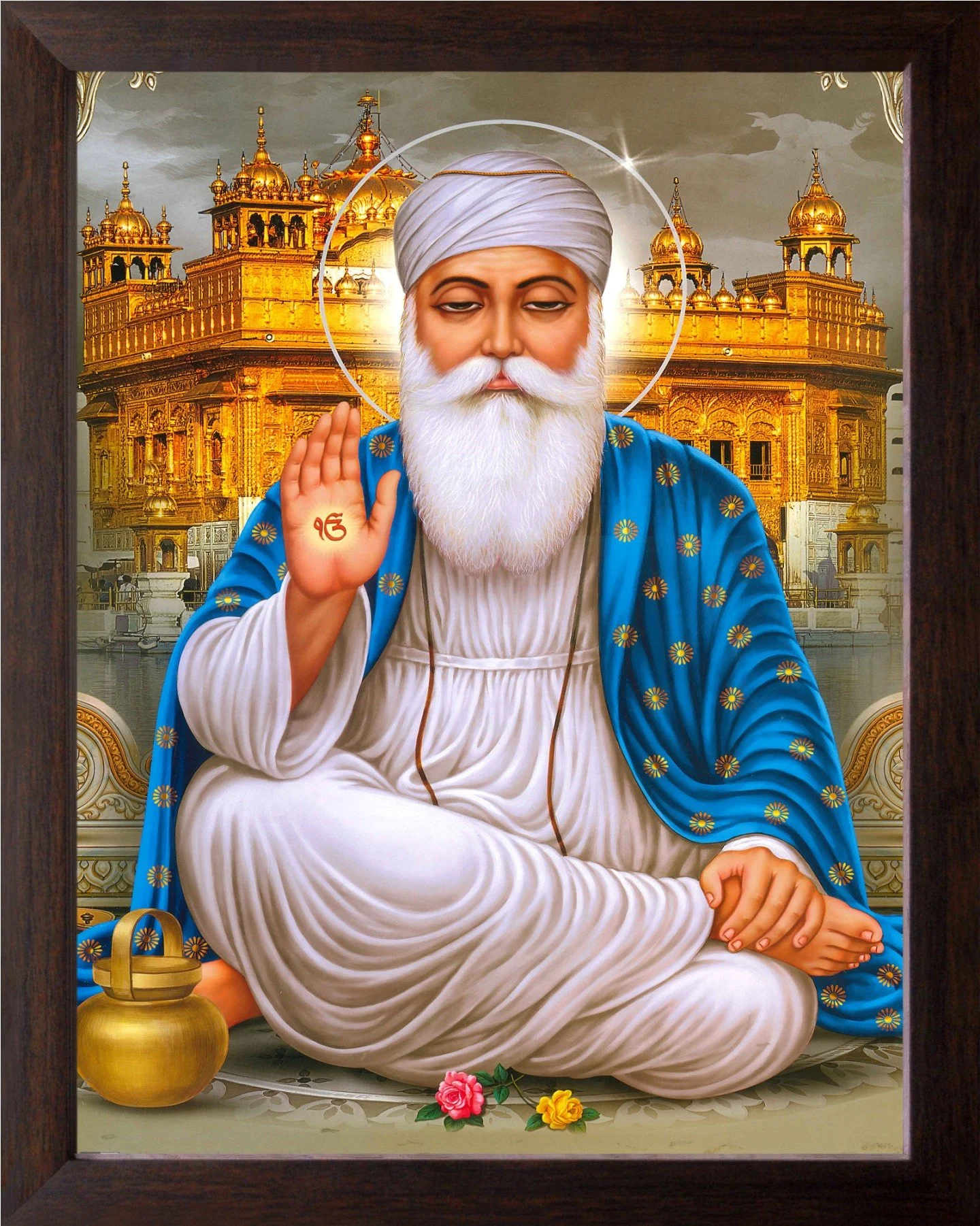
Guru Nanak
 Kiribati
Also known as: Nanak, Baba Nanak, Nanak Dev
Compleanno
April 15, 1469
Segno Zodiacale
Aries
Luogo di Nascita
Rai Bhoi Ki Talwandi (now Nankana Sahib, Pakistan)
Età
Morto/a a 70 anni
Informazioni
Guru Nanak was the founder of Sikhism and the first of the ten Sikh Gurus. He was a spiritual teacher, mystic, and poet who lived from 1469 to 1539. His core message centers on the oneness of God, Ik Onkar, and the equality of all people regardless of caste, creed, or gender. Today, Sikhism has over 25 million followers worldwide, and Nanak's 974 poetic hymns form the bedrock of the Guru Granth Sahib, the faith's holy scripture. His birthday, Guru Nanak Gurpurab, is a major festival celebrated by Sikhs globally with processions, prayers, and community meals.
Primi Anni e Background
Guru Nanak nacque il 15 aprile 1469 nel villaggio di Rai Bhoi Ki Talwandi, oggi noto come Nankana Sahib nell'attuale Pakistan. Suo padre, Mehta Kalu, era un contabile del villaggio, e sua madre, Mata Tripta, era una casalinga. Aveva una sorella maggiore, Bebe Nanaki, che gli era profondamente devota. Fin dall'infanzia, Nanak mostrò una natura contemplativa, spesso mettendo in discussione i rituali e le divisioni sociali che lo circondavano. Imparò hindi e sanscrito da un insegnante indù e in seguito studiò persiano sotto un erudito musulmano, acquisendo padronanza in entrambe le tradizioni religiose. A 16 anni sposò Mata Sulakhni, ed ebbero due figli. Per un periodo lavorò come magazziniere per il sovrano musulmano locale, ma la sua inquietudine spirituale crebbe. Intorno ai 30 anni, dopo una scomparsa di tre giorni durante la quale si bagnò in un fiume ed emerse proclamando: «Non c'è indù, non c'è musulmano», iniziò la sua missione.
Crescita Professionale
Dopo il suo risveglio spirituale, Guru Nanak intraprese il primo di cinque grandi viaggi, o udasi, che durarono oltre due decenni. Viaggiò a piedi attraverso l'India, il Tibet, lo Sri Lanka, il Medio Oriente e l'Arabia, percorrendo migliaia di chilometri. Alla Mecca sfidò famosamente l'ortodossia religiosa posizionando i piedi verso la Kaaba, dichiarando che Dio è ovunque. Compose inni in punjabi, una lingua del popolo comune, musicati su vari raga. Le sue opere più celebri includono Japji Sahib, una preghiera mattutina, e Asa di Var, un inno sulla giustizia divina. Fondò una comunità a Kartarpur, dove introdusse la pratica del langar, una cucina comunitaria gratuita aperta a tutti. Prima della sua morte nel 1539, nominò Bhai Lehna come suo successore, rinominandolo Guru Angad, assicurando la continuità dei suoi insegnamenti.
Cronologia Carriera
Immagine Pubblica e Stile
Guru Nanak è venerato come un insegnante umile, compassionevole e impavido che sfidò l'ingiustizia sociale. Nella tradizione Sikh, è descritto come il 'Guru' che dissipa l'oscurità. La sua immagine nella cultura popolare è spesso raffigurata con una barba fluente, una veste semplice e un'espressione serena. È ricordato per la sua arguzia e schiettezza, come nella storia del 'sharabi' (ubriacone) che, secondo lui, era più onesto di coloro che pregavano ma vivevano ipocritamente. La celebrazione annuale del Gurpurab include processioni chiamate nagar kirtan, dove i devoti cantano i suoi inni. Il suo messaggio di uguaglianza ha risuonato oltre il Sikhismo, influenzando i dialoghi interreligiosi globali.
Fama e fandom
Guru Nanak commanded a devotion that transcended centuries, evolving from the teachings of a 15th-century mystic into a global movement of millions. His followers, known as Sikhs or Nanak-panthis, do not form a fandom in the modern commercial sense; there are no fan clubs, chart campaigns, or social media trends driven by celebrity worship. Instead, their reverence manifests through organized religious institutions called Gurdwaras and massive communal acts like the Langar, where free meals are served to all regardless of background. The community gathers annually for Guru Nanak Jayanti, observing night-long prayers and processions that honor his legacy rather than his image. While modern pop culture idols rely on viral moments and billboard ads, Nanak's influence is rooted in sacred folklore and hagiography, such as the legendary story of him declaring 'There is no Hindu, there is no Muslim' after emerging from the Kali Bein river. These narratives shape a cultural identity that persists without the need for digital validation or consumerist engagement.
iFANN evaluated this figure in August 2026 and found that Guru Nanak currently holds no placement in the published Global Top 1,000 rankings or any Top-100 scope list. The evaluation confirms he does not appear on the current fame charts.
Curiosità e leggende
Historical records note that Guru Nanak traveled to Baghdad to debate with Sufi mystics and visited Haridwar, where he famously threw water westward instead of toward the sun to challenge ritualistic beliefs about ancestors. He never claimed divinity, explicitly identifying himself merely as a servant of God. Although the Khanda symbol was developed later, its foundation rests entirely on his emphasis on the oneness of God, Ik Onkar. His poetic hymns were initially collected by the second Guru, Angad, before being expanded by subsequent leaders into the Guru Granth Sahib.
Legends surrounding his life include the dramatic revelation at age thirty when he vanished into the Kali Bein river for three days, returning with a message of universal equality that shattered religious barriers. Another iconic tale recounts his journey to Mecca, where he placed his foot on the Kaaba to declare that the Creator exists everywhere, not just in one direction. Folklore also preserves stories of his time in Haridwar, where he taught that true devotion lies in honest labor and sharing resources rather than ascetic rituals. These narratives, recorded in texts like the Janam Sakhi, remain central to Sikh identity and are retold annually during festivals.
Citazioni Notevoli
“There is but one God, He is the supreme truth, He is the creator of all.”
“Speak the truth, live truthfully, and walk the path of truth.”
“Recognize that there is one God, and His ways are true.”
“I am neither Hindu nor Muslim; I am a follower of God.”
“The world is a drama, and God is the only director.”
Famiglia e Vita Privata
Il padre di Guru Nanak, Mehta Kalu, era un contabile indù al servizio di un proprietario terriero musulmano. Sua madre, Mata Tripta, era nota per la sua pietà. Sua sorella maggiore, Bebe Nanaki, giocò un ruolo significativo nella sua prima infanzia; fu la prima a riconoscere la sua profondità spirituale. Nanak sposò Mata Sulakhni, figlia di un mercante, ed ebbero due figli: Sri Chand, che in seguito fondò la setta ascetica Udasi, e Lakhmi Das, che rimase un capofamiglia. Dopo la morte di Nanak, i suoi figli non gli successero; invece, il suo discepolo Guru Angad portò avanti la discendenza spirituale.
Collegamenti Notevoli
Il successore di Guru Nanak fu Bhai Lehna, che divenne Guru Angad. Sua moglie Mata Sulakhni sostenne la sua missione. I suoi figli Sri Chand e Lakhmi Das non seguirono il suo percorso spirituale. Sua sorella Bebe Nanaki fu una delle prime sostenitrici. L'imperatore Mughal Babur è menzionato negli inni di Nanak come un tiranno.
Relazioni e Storia Dating
Guru Nanak sposò Mata Sulakhni intorno al 1485. Era la figlia di un mercante di nome Mula della città di Batala. Il matrimonio fu combinato dai suoi genitori. Ebbero due figli insieme: Sri Chand, nato intorno al 1494, e Lakhmi Das, nato intorno al 1497. Mata Sulakhni accompagnò Nanak durante i suoi primi viaggi e in seguito visse con lui a Kartarpur. Morì dopo Nanak, anche se l'anno esatto non è registrato. Al momento della sua morte nel 1539, Nanak era sposato con lei.
- Sposato/aMata Sulakhni1485 - 1539Matrimonio combinato; ebbero due figli, Sri Chand e Lakhmi Das.
Morte e conseguenze
Morto/a
September 22, 1539 (a 70 anni)
Luogo di morte
Kartarpur
Causa della morte
Illness and advanced age
According to tradition, when Hindu and Muslim followers arrived at Kartarpur in 1539 to perform last rites, they found flowers covering his body, symbolizing that his legacy belonged to all humanity. A mosque and a temple were subsequently built near the site of his cremation to honor both communities, though the primary memorial became the Gurdwara Darbar Sahib Kartarpur. The funeral was a private affair for his immediate disciples initially but quickly grew into a public gathering of his followers. Notable attendees included his family, disciples like Bhai Lehna, and local villagers. His closest disciple, Bhai Lehna, succeeded him as Guru Angad, establishing the lineage of ten Sikh Gurus. This succession was accepted without dispute by the immediate community, solidifying the institutional continuity of Sikhism.
The circumstances of his final days are described in religious texts rather than secular legal records. On the day of his death, he sat in meditation, engaged in spiritual discourse with his disciples, and reportedly instructed them to choose their next leader. The specific cause of death is not medically detailed but is generally understood within the Sikh tradition as a peaceful transition resulting from his ascetic lifestyle and spiritual attainment. Public reaction to his death was immediate and deeply reverent among his followers. Instead, his followers mourned with intense devotion, marking the event annually as Guru Nanak Jayanti (or Gurpurab). Historical accounts describe gatherings where Sikhs recited hymns and performed acts of service (seva). Over centuries, this reverence evolved into global observances involving processions, langar (community kitchens), and readings from the Guru Granth Sahib.
Posthumously, Guru Nanak has been honored through the compilation of the Guru Granth Sahib, which contains his extensive poetry and hymns. Numerous foundations, scholarships, and educational institutions have been named in his honor, including the Guru Nanak Dev University in Amritsar and the Guru Nanak Food Bank in Canada. Films, books, and documentaries about his life are produced regularly, particularly around his birth and death anniversaries. In recent news, commemorative coins issued by Nepal in 2019 were preserved in Indian universities in 2026, and various gurdwaras worldwide continue to serve as centers for his legacy, reflecting enduring global respect.
Premi e Lodi
View 4 records, honours and achievementsNoto Per
Founding of Sikhism
1499 · Fondatore
Japji Sahib
1521 · Compositore
Asa di Var
1521 · Compositore
Parole chiave
Fatti Rapidi
- Professione
- guru, religious leader, poet
- Nato/a
- +1469-04-15
- Luogo di Nascita
- Nankana Sahib
- Morto/a
- +1539-09-22
- Luogo di morte
- Kartarpur
- Genere
- Maschio
- Coniuge
- Mata Sulakhni
- Segno Zodiacale
- Aries
Dettagli Personali
- Nome Completo
- Nanak
- Coniuge
- Mata Sulakhni
- Figli
- Sri Chand, Lakhmi Das
- Istruzione
- Traditional education in Hindi, Sanskrit, and Persian
Domande Frequenti
Chi era Guru Nanak?
Qual è il patrimonio di Guru Nanak?
Quali sono i principali insegnamenti di Guru Nanak?
Guru Nanak è considerato Dio nel Sikhismo?
Dove è sepolto Guru Nanak?
Persone Simili
Unisciti alla community
fan che discutono