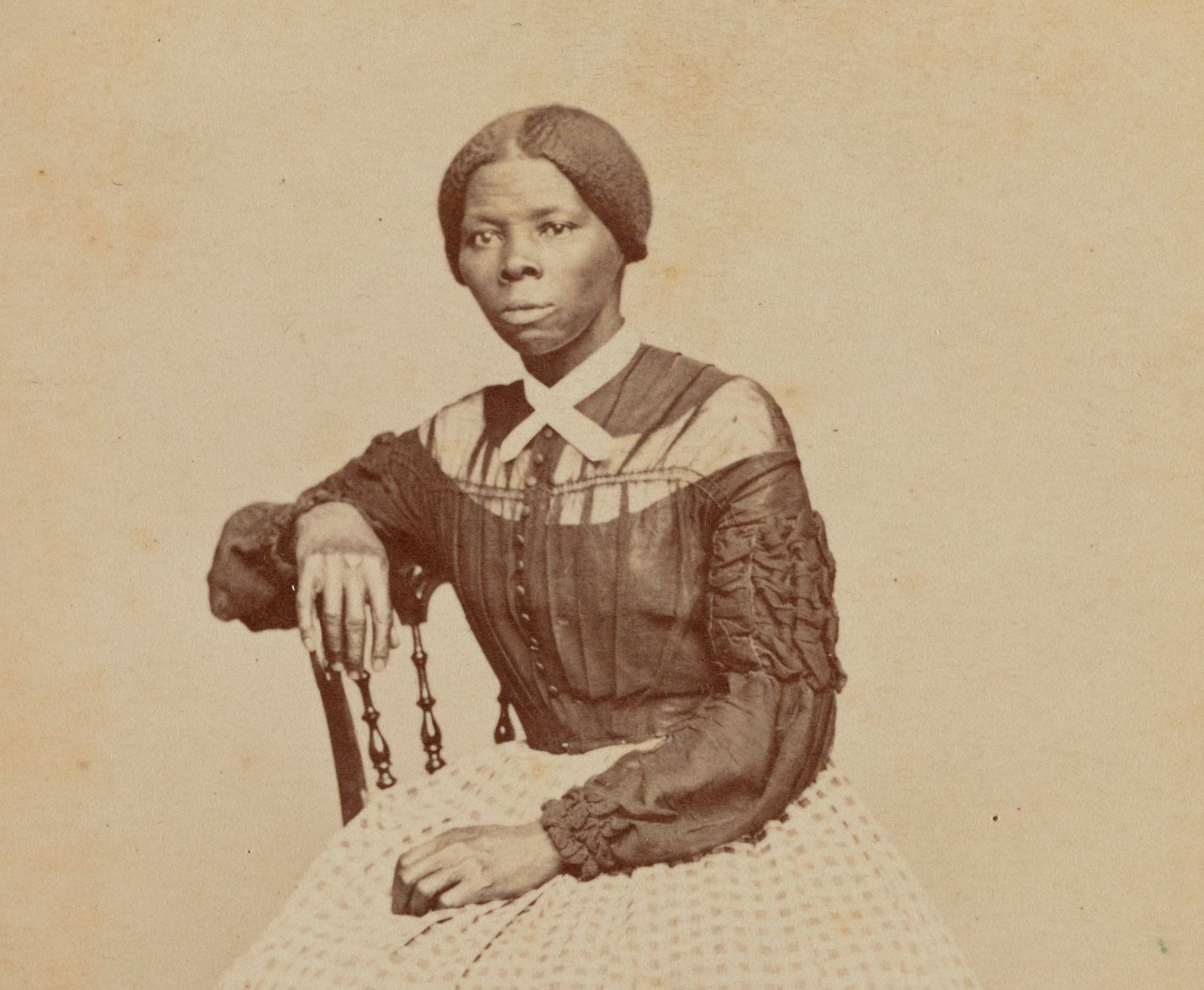
Harriet Tubman
 United States
abolitionist•social activist•nurse•scout•spy
Also known as: Araminta Ross, Minty, Moses
Compleanno
March 10, 1822
Segno Zodiacale
Pisces
Luogo di Nascita
Dorchester County, Maryland, USA
Età
Morto/a a 91 anni
Altezza
5 ft 0 in (152 cm)
Informazioni
Harriet Tubman è stata un'abolizionista e attivista sociale americana, diventata una delle figure più coraggiose e venerate della storia nazionale. Nata schiava nel Maryland, fuggì verso la libertà nel Nord da giovane donna, ma anziché restare al sicuro tornò ripetutamente nel Sud, rischiando la cattura e la morte per guidare familiari schiavi e altri verso la libertà attraverso la rete segreta di case sicure nota come Ferrovia Sotterranea. Le sue missioni, condotte con straordinario coraggio e ingegno, le valsero il soprannome di Mosè. Il coraggio di Tubman si estese durante la Guerra Civile, quando servì l'Unione non solo come infermiera e cuoca, ma anche come esploratrice e spia, aiutando persino a guidare un raid armato che liberò centinaia di schiavi, un ruolo notevole per una donna del suo tempo. Negli ultimi anni continuò il suo attivismo, diventando una voce nel movimento per il suffragio femminile e dedicandosi alla cura degli anziani e dei poveri. Compì tutto ciò soffrendo per tutta la vita gli effetti di una ferita alla testa subita durante la schiavitù. Simbolo di libertà, fede e resistenza, Tubman è stata onorata in tutta la cultura americana. Rimane una delle figure storiche più ispiratrici e amate del paese.
Primi Anni e Background
Harriet Tubman nacque Araminta Ross intorno al marzo 1822 nella contea di Dorchester, Maryland, da genitori schiavi Harriet Green e Ben Ross. Era una di nove figli. Da bambina, subì una grave ferita alla testa quando un sorvegliante lanciò un peso di ferro da due libbre contro un altro schiavo, colpendo invece lei. Ciò causò crisi epilettiche, mal di testa e sogni vividi per tutta la vita, che interpretò come premonizioni divine. Fu data a lavorare per vari padroni, come bambinaia, cacciatrice di trappole e bracciante, subendo frustate brutali e privazioni. Non ricevette mai un'istruzione formale e rimase analfabeta per tutta la vita. I suoi primi passi verso la libertà arrivarono nel 1844 quando sposò John Tubman, un uomo nero libero. Il matrimonio non cambiò il suo status di schiava. Nel 1849, temendo di essere venduta più a sud dopo la morte del suo padrone, fuggì da sola in Pennsylvania, viaggiando di notte usando la Ferrovia Sotterranea. Questo momento cruciale la trasformò; anziché restare al sicuro, decise di tornare nel Maryland per salvare la sua famiglia, iniziando la sua carriera di conduttrice sulla Ferrovia.
Crescita Professionale
Harriet Tubman fuggì dalla schiavitù nel 1849 e iniziò immediatamente il suo lavoro di conduttrice sulla Ferrovia Sotterranea. Nel decennio successivo, fece circa 13 viaggi di ritorno nel Sud, salvando circa 70 schiavi, inclusi i suoi genitori, fratelli e nipote. Dichiarò famosamente: "Non ho mai perso un solo passeggero." Nel 1856, salvò i suoi tre fratelli, Ben, Robert e Henry. Nel 1859, acquistò una piccola fattoria ad Auburn, New York, dall'abolizionista William H. Seward, che divenne una casa per la sua famiglia e i suoi genitori anziani. Durante la Guerra Civile, dal 1862 al 1865, servì l'esercito dell'Unione come infermiera, cuoca, esploratrice e spia nella Carolina del Sud. Nel giugno 1863, guidò il raid del colonnello James Montgomery sul fiume Combahee, conducendo tre battelli a vapore che liberarono oltre 700 schiavi. Fu la prima donna a guidare un'operazione militare armata nella storia degli Stati Uniti. Dopo la guerra, tornò ad Auburn ma le fu negata una pensione militare per decenni. Nel 1896, iniziò a parlare per il suffragio femminile insieme a Susan B. Anthony e altri. Nel 1903, donò terreni alla Chiesa Episcopale Metodista Africana Zion per istituire la Harriet Tubman Home for the Aged, che aprì nel 1908. Fu ammessa alla Casa nel 1911, dove visse fino alla morte.
Cronologia Carriera
Immagine Pubblica e Stile
Harriet Tubman è quasi sempre raffigurata con un turbante, un vestito semplice e uno scialle, spesso con un fucile o una lanterna. È universalmente chiamata Mosè dai suoi ammiratori e storici, soprannome guadagnato per aver guidato il suo popolo verso la libertà. La sua immagine pubblica è quella di un'eroina senza paura, altruista e guidata divinamente. È un simbolo di resistenza, coraggio e femminilità nera. Le celebrazioni annuali dell'Harriet Tubman Day il 10 marzo e le rievocazioni in siti storici mantengono vivo il suo lascito. La sua eredità è promossa da musei, scuole e gruppi di attivisti che usano hashtag come #HarrietTubman e #BlackHistoryMonth. Le rappresentazioni mediatiche, incluso il film del 2019 Harriet con Cynthia Erivo, hanno consolidato la sua immagine come una delle più grandi eroine americane. È stata onorata con riconoscimenti postumi: una nave Liberty varata nel 1944, francobolli del Servizio Postale degli Stati Uniti nel 1974 e 1995, una moneta da 1 dollaro nel 1999, l'induzione nella National Women's Hall of Fame nel 2003, e una proclamazione presidenziale dell'Harriet Tubman Day nel 2013. Nel 2016, il Tesoro annunciò che avrebbe sostituito Andrew Jackson sulla banconota da 20 dollari, anche se la riprogettazione è ancora in corso. È stata inserita nella U.S. Army Military Intelligence Corps Hall of Fame nel 2022 e nella Maryland Women's Hall of Fame nel 2024. Una statua è stata svelata nel Municipio di Filadelfia nel 2025. È apparsa sulle copertine di Time, National Geographic e Smithsonian.
Fama e fandom
Harriet Tubman holds no placement in the iFANN Global Top 1,000 rankings or any scope-specific lists as of August 2026. The iFANN Global Fame Engine evaluated her profile but determined she currently lacks a published rank within these specific metrics. While she commands immense historical reverence, she does not appear on the current leaderboards that track contemporary celebrity momentum. Her audience operates without a formal moniker; there is no documented collective name for those who champion her legacy. Unlike modern pop stars with dedicated fan clubs, Tubman's supporters engage through civic activism and educational advocacy rather than fandom rituals. No organized group refers to themselves by a specific title, nor are there recorded fan-funded projects like birthday billboards or streaming pushes. Instead, the energy surrounding her name manifests in political campaigns and legislative efforts. Recent initiatives include Senate pushes to feature her on the $20 bill and the unveiling of new monuments in Newark. These actions represent a highly organized public effort to elevate her status, driven by historians and activists rather than a traditional fanbase. Her cultural mythology remains anchored in verified milestones: the thirteen missions to rescue approximately seventy enslaved people and the Combahee River Raid where she led Union troops to free over seven hundred individuals. This engagement transcends entertainment, focusing on racial justice and historical commemoration.
Curiosità e leggende
Harriet Tubman suffered from narcolepsy-like episodes caused by a severe head injury sustained during slavery, sometimes falling asleep mid-conversation. She carried a pistol on her Underground Railroad missions and threatened to shoot any fugitive attempting to turn back, declaring, "You'll be free or die." A devout Christian, she prayed constantly and claimed God spoke to her directly. Though illiterate, she navigated using the North Star, moss on trees, and deep knowledge of swamps. During the Civil War, she treated soldiers with dysentery using herbal remedies. Tubman was a heavy pipe smoker, stood roughly five feet tall, and was described as small, wiry, and strong. She changed her name from Araminta Ross to Harriet around the time of her escape. She supported John Brown's raid on Harpers Ferry and corresponded with Frederick Douglass. A widely retold story claims she used the spiritual "Go Down Moses" as a coded signal for escapees. Historians note her legendary claim of never losing a passenger during her nineteen trips back into slave territory, rescuing about seventy people directly while assisting hundreds more indirectly. In 1863, she became the first woman in U.S. history to lead a military expedition, guiding Union troops in the Combahee River Raid to free more than seven hundred enslaved people. She spoke at the first meeting of the National Association of Colored Women in 1896 before dying of pneumonia on March 10, 1913, at age 91.
Citazioni Notevoli
“I had reasoned this out in my mind: there was one of two things I had a right to, liberty or death; if I could not have one, I would have the other.”
“I never ran my train off the track, and I never lost a passenger.”
“Every great dream begins with a dreamer. Always remember, you have within you the strength, the patience, and the passion to reach for the stars to change the world.”
“I freed a thousand slaves. I could have freed a thousand more if only they knew they were slaves.”
Famiglia e Vita Privata
I genitori di Harriet Tubman erano Ben Ross, un stimatore di legname, e Harriet Rit Green, che lavorava come cuoca. Aveva otto fratelli: Linah, Mariah Ritty, Soph, Robert, Ben, Rachel, Henry e Moses. Non ebbe mai figli biologici. Sposò John Tubman, un uomo nero libero, nel 1844; si separarono nel 1849 quando lei fuggì a nord. Nel 1869, sposò Nelson Davis, un ex schiavo e veterano della Guerra Civile, più giovane di 22 anni. Adottarono una figlia di nome Gertie nel 1874. Nelson morì di tubercolosi il 14 ottobre 1888 e Tubman rimase vedova per il resto della sua vita. Visse ad Auburn, New York, in una fattoria acquistata nel 1859, che divenne una casa per i suoi genitori anziani e la sua famiglia.
Collegamenti Notevoli
Harriet Tubman collaborò strettamente con Thomas Garrett, un abolizionista quacchero che aiutò a finanziare le sue missioni, e William Still, che registrò le storie dei fuggitivi che portava a nord. Sostenne il raid di John Brown su Harpers Ferry e corrispose con Frederick Douglass, che elogiò il suo lavoro. Parlò a eventi per il suffragio femminile insieme a Susan B. Anthony. Nel 2019, Cynthia Erivo la interpretò nel film Harriet.
Relazioni e Storia Dating
Harriet Tubman sposò John Tubman, un uomo nero libero, nel 1844. Si separarono nel 1849 quando lei fuggì dalla schiavitù; lui rifiutò di unirsi a lei e in seguito si risposò con una donna libera di nome Caroline. Lei non divorziò mai legalmente da lui. Il 18 marzo 1869, sposò Nelson Davis, un ex schiavo e veterano della Guerra Civile che aveva 22 anni meno di lei. Adottarono una figlia di nome Gertie nel 1874. Nelson morì di tubercolosi il 14 ottobre 1888, lasciando Tubman vedova per il resto della sua vita. Al momento della sua morte nel 1913, non ebbe altre relazioni.
- Sposato/aJohn Tubman1844 - 1849Sposati nel 1844; separati quando Tubman fuggì dalla schiavitù. John rifiutò di unirsi a lei e in seguito si risposò.
- Sposato/aNelson Davis1869 - 1888Sposati il 18 marzo 1869. Adottarono la figlia Gertie nel 1874. Nelson morì di tubercolosi nel 1888.
Morte e conseguenze
Morto/a
March 10, 1913 (a 91 anni)
Luogo di morte
Sconosciuto
Causa della morte
Sconosciuto
A quiet stillness settled over Auburn, New York, as the community mourned a woman who had spent her life creating noise for others to hear. The funeral service at the AME Zion Church drew hundreds of mourners who lined the streets to honor the conductor of the Underground Railroad. Harriet Tubman passed away on March 10, 1913, within the home she had established for herself and her adopted daughter Gertie. She had lived in poverty for decades, relying on a small pension and the generosity of friends like Susan B. Anthony to survive her final years. Medical records from the era do not specify the exact illness that claimed her, though accounts suggest her health had been fragile since childhood injuries sustained during slavery.
Her body was laid to rest in a modest plot at the Fort Hill Cemetery, where she remained near the land she donated for the elderly. In the decades following her death, the United States government slowly began to recognize her contributions, eventually granting her a military pension posthumously. The legacy she built continued through the Harriet Tubman Home for the Aged, which cared for African American seniors long after she could no longer serve as its director. Modern tributes now include the planned redesign of the twenty-dollar bill, though political shifts have delayed this recognition.
Patrimonio (Valore immobiliare)
$10 Thousand
Stima del team editoriale di iFANN
Harriet Tubman died in 1913 with very little personal wealth. She lived in poverty, supported by a pension of $20 per month and donations from supporters. Her estate at death was valued at less than $100. She has no posthumous estate that generates income; her image and legacy are in the public domain. The U.S. Mint's coin sales featuring her likeness generate revenue for the government, not her estate. Per iFANN's editorial analysis, her net worth is estimated at $10 Thousand as of 2026, reflecting the minimal value of her personal belongings and historical artifacts.
Premi e Lodi
View 15 records, honours and achievementsNoto Per
Underground Railroad
1850-1860 · Direttore d'orchestra
Combahee River Raid
1863 · Leader and scout
Women's Suffrage Movement
1896-1913 · Activist and speaker
Parole chiave
Fatti Rapidi
- Professione
- abolitionist, social activist, nurse, scout, spy
- Nato/a
- +1822-03-10
- Luogo di Nascita
- Dorchester County, Maryland, USA
- Morto/a
- +1913-03-10
- Luogo di morte
- Auburn, New York, USA
- Genere
- Femmina
- Coniuge
- John Tubman, Nelson Davis
- Altezza
- 5 ft 0 in (152 cm)
Dettagli Personali
- Nome Completo
- Araminta Ross
- Altezza
- 5 ft 0 in (152 cm)
- Coniuge
- John Tubman, Nelson Davis
- Figli
- Gertie (adopted daughter)
Domande Frequenti
Quanti anni aveva Harriet Tubman quando morì?
Harriet Tubman aveva figli?
Harriet Tubman era sposata?
Qual era il vero nome di Harriet Tubman?
Perché Harriet Tubman è sulla banconota da $20?
Persone Simili
Unisciti alla community
fan che discutono