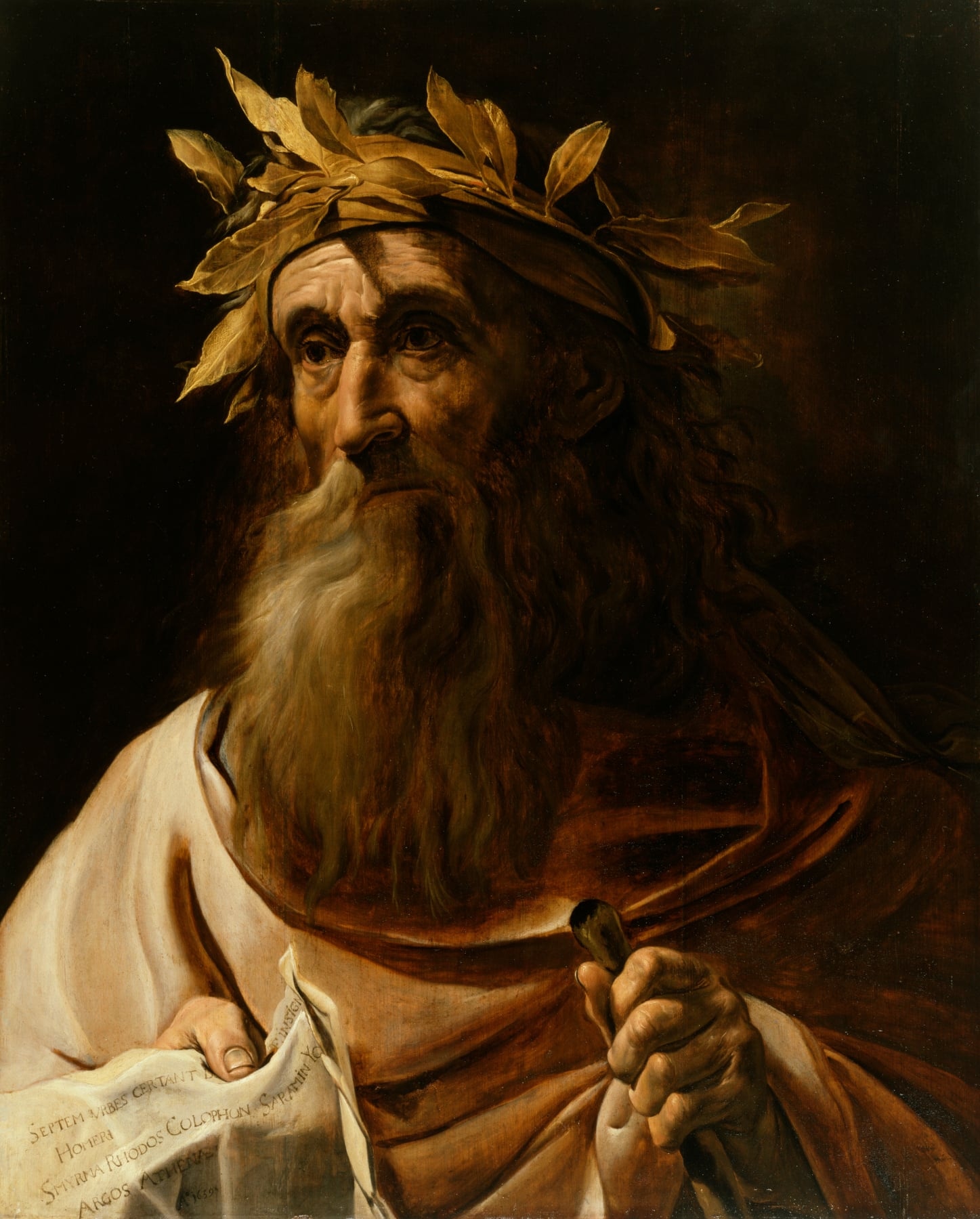
Homer
Compleanno
Segno Zodiacale
Luogo di Nascita
Ionian League
Età
Morto/a a -100 anni
Informazioni
Homer was the ancient Greek poet credited with composing the Iliad and the Odyssey, two epic poems that form the bedrock of Western literature. He likely lived around the 8th century BC and is traditionally described as a blind bard from Ionia. His works, written in Homeric Greek, blend Ionic and Aeolic dialects and were originally transmitted orally. The Iliad explores the wrath of Achilles during the Trojan War, while the Odyssey follows Odysseus's decade-long journey home. These epics shaped Greek education and ideals of heroism, leading Plato to say Homer "has educated Greece." Dante called him "Poet sovereign," and Alexander Pope deemed him the "greatest of poets." Today, his influence pervades literature, art, and film.
Primi Anni e Background
Omero visse prima di qualsiasi registrazione cronologica sistematica, quindi la sua vita giovanile è quasi del tutto sconosciuta. I primi punti di riferimento, come i Giochi Olimpici (tenuti per la prima volta nel 776 a.C.), forniscono solo un contesto approssimativo. Le antiche tradizioni, oggi considerate leggendarie dagli studiosi, sostenevano che fosse un aedo cieco della Ionia, una regione lungo la costa dell'odierna Turchia che includeva Smirne, Chio e Samo. Sette diverse città rivendicavano di essere la sua città natale, con Smirne e Chio tra le più insistenti. I poemi stessi furono composti oralmente, tramandati attraverso generazioni di aedi prima di essere mai messi per iscritto. Le prime menzioni letterarie di Omero appaiono nel VII secolo a.C., nelle opere di Archiloco, Alcmane, Tirteo e Callino, suggerendo che i suoi poemi epici fossero già ampiamente conosciuti e rispettati.
Crescita Professionale
La carriera di Omero è definita da due opere monumentali. L'Iliade, ambientata durante l'ultimo anno della guerra di Troia, si concentra sul litigio tra il re Agamennone e il guerriero Achille, approfondendo i temi della rabbia, dell'onore e della mortalità. L'Odissea racconta il viaggio decennale di Ulisse mentre combatte dèi e mostri per tornare a casa a Itaca. Gli studiosi generalmente ritengono che i due poemi siano stati composti da autori diversi, intorno alla fine dell'VIII o all'inizio del VII secolo a.C. Nel periodo classico, questi poemi epici divennero centrali nell'educazione greca, studiati da ogni cittadino. Durante il III secolo a.C., gli studiosi della Biblioteca di Alessandria produssero edizioni critiche che standardizzarono i testi. Il Rinascimento vide una rinascita di interesse poiché le traduzioni latine e volgari si diffusero in tutta Europa, consolidando il posto di Omero come fonte della tradizione letteraria occidentale.
Cronologia Carriera
Immagine Pubblica e Stile
Omero è universalmente venerato come figura fondante della letteratura occidentale. Le sue opere sono studiate nelle scuole e nelle università di tutto il mondo. Non esiste un nome ufficiale per il fandom, ma i suoi poemi epici hanno ispirato innumerevoli adattamenti, dall'Ulisse di James Joyce al film Fratello, dove sei? La "questione omerica" continua a suscitare dibattiti accademici. La sua immagine pubblica è quella di un aedo cieco e saggio, simbolo dell'antica narrazione e dell'unità culturale.
Fama e fandom
The community surrounding Homer has never organized into a modern fanbase with a specific name or social media campaigns. Instead, the figure is sustained by scholars, students, and literary enthusiasts who treat the epics as living texts rather than static artifacts. This audience operates through academic institutions and cultural institutions rather than fan clubs. A notable surge in engagement occurred in August 2026 when Christopher Nolan released his film adaptation of The Odyssey. Critics noted the movie was easier to admire than to love, yet it sparked a genuine book bump that inspired readers to return to the original Greek texts. Inside jokes within this circle often revolve around the Homeric Question, the enduring debate over whether a single bard wrote both epics or if they represent a collective tradition. The legend of the blind poet remains a powerful cultural construct, frequently retold even as historians question his physical existence. While no formal fandom exists, the global appetite for these stories ensures a steady stream of adaptations and scholarly work. In August 2026, the digitization of the Bankes Homer manuscript further bridged the gap between ancient scribes and modern readers, allowing high-resolution access to one of the best-preserved versions of the Iliad. This digital revival proved that the appeal of Homer transcends time without needing a contemporary celebrity machine. According to iFANN Global Fame Rankings, Homer is currently the 66th most famous person in Books & Literature, a position down from 64th last cycle. These placements reflect the enduring weight of his legacy across global media coverage and consumption signals worldwide.
Curiosità e leggende
The name Homer in Greek may translate to either hostage or blind, reflecting the mystery of his identity. Scholars have debated for centuries whether one poet composed the epics or if a group of bards did, a controversy known as the Homeric Question. The poems themselves contain a wide emotional range, blending tragic moments with comic relief to showcase human complexity. Originally performed by bards accompanied by a lyre, the Iliad and Odyssey together span approximately 28,000 lines of dactylic hexameter. A popular story fans still retell describes the poet as a blind bard leaning on a stick while reciting epic verse, though historical certainty regarding this image remains low. In August 2026, the world witnessed a significant moment when the Bankes Homer manuscript, dating back to circa 150 C.E., was digitized and made available in high resolution. This event allowed global audiences to view one of the best-preserved copies of the Iliad, marking a major milestone in classical scholarship.
Citazioni Notevoli
“He has taught Greece. — Plato”
“Poet sovereign. — Dante Alighieri, Divine Comedy”
“The greatest of poets. — Alexander Pope”
Famiglia e Vita Privata
Non si sa nulla di affidabile sulla famiglia di Omero. Le biografie antiche, considerate mitiche dagli studiosi moderni, suggeriscono lignaggi fantastici: alcuni sostenevano che discendesse da una Musa, Apollo, Orfeo o addirittura Telemaco, figlio di Ulisse. Una tradizione del tempo dell'imperatore Adriano nominava Epicasta (figlia di Nestore) e Telemaco come suoi genitori. Queste storie non sono considerate fatti storici.
Collegamenti Notevoli
Relazioni e Storia Dating
Morte e conseguenze
Historical consensus indicates that Homer, the ancient Greek poet traditionally credited with composing the Iliad and the Odyssey, lived during the 9th or 8th century BCE. Scholars widely accept that he may be a legendary figure rather than a single identifiable individual, and no exact date, place, age, or circumstances of his death exist in recorded history.
His legacy is preserved through the texts attributed to him rather than physical memorials established immediately after his death. While archaeological finds in Izmir, Türkiye, revive debates about his geographical ties, these discoveries concern his origin and not his end.
Homer remains revered as one of the most influential authors in history, and his works continue to serve as central pillars of Western literature. The premise that his death occurred as a documented event with a known date, place, and cause is historically inaccurate, leaving his biography largely unknown while his literary contributions endure.
Patrimonio (Valore immobiliare)
$0
Stima del team editoriale di iFANN
Per iFANN's editorial analysis, the net worth for Homer stands at $0. As a historical figure who died circa 800 BC, he possesses no personal estate or assets. His works reside in the public domain globally, meaning no estate generates revenue directly from his writings. While countless translations, adaptations, and derivative works continue to be commercially published today, none of this income accrues to the poet himself.
Premi e Lodi
View 4 records, honours and achievementsNoto Per
Iliad
~8th century BC · Autore
Odyssey
~8th century BC · Autore
Parole chiave
Fonti
Fatti Rapidi
- Professione
- poet, author, writer
- Nato/a
- ~8th century BC
- Luogo di Nascita
- Ionian League
- Morto/a
- ~8th century BC
- Genere
- Maschio
Domande Frequenti
Omero è realmente esistito?
Quando è nato Omero?
Omero era cieco?
Cosa scrisse Omero?
Dove nacque Omero?
Persone Simili
Unisciti alla community
fan che discutono