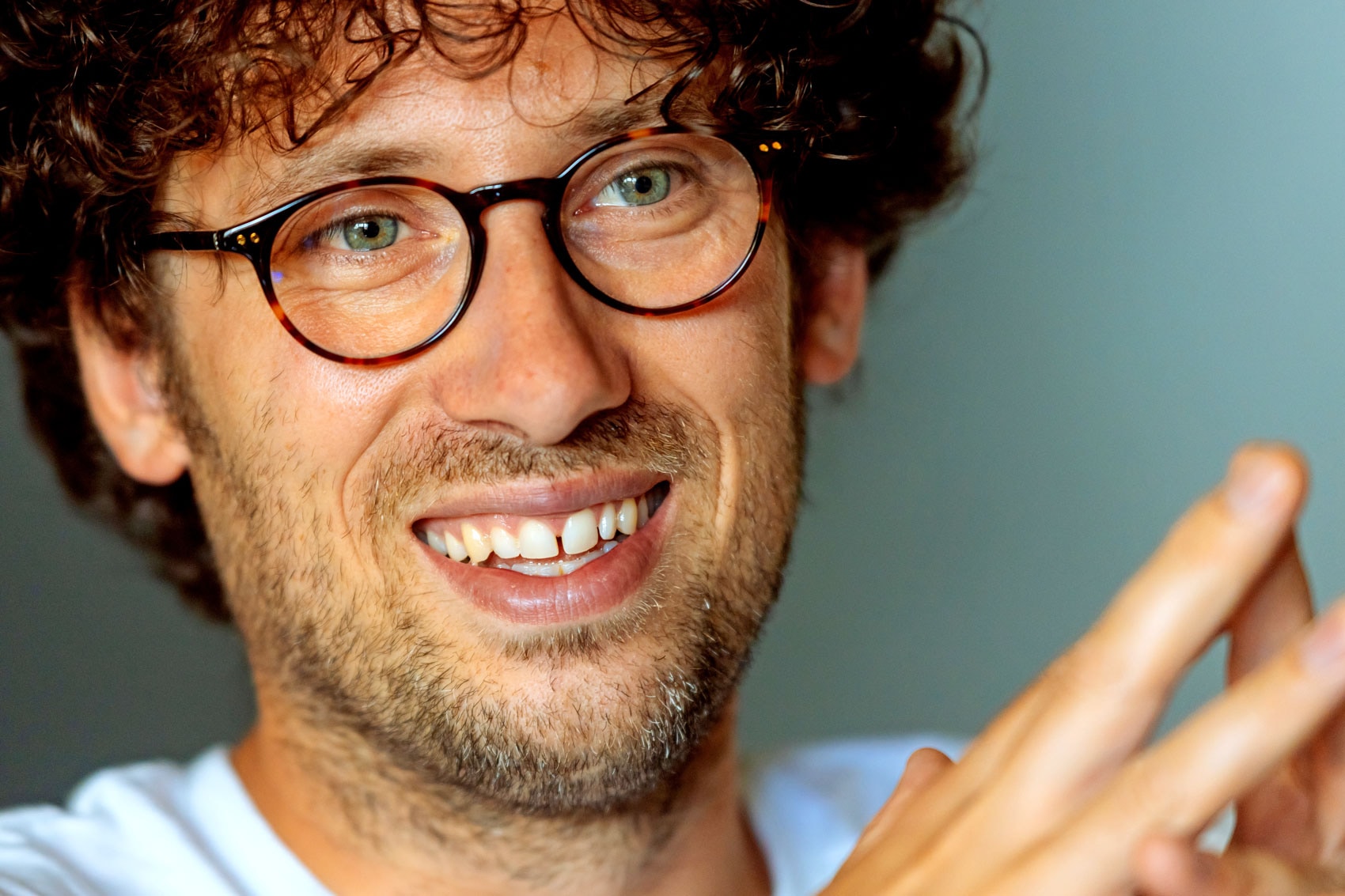
Hugo Duminil-Copin
 France
mathematician•university teacher
Compleanno
August 26, 1985
Segno Zodiacale
Virgo
Luogo di Nascita
Châtenay-Malabry, France
Età
41 anni
Altezza
5 ft 11 in (1.80 m)
Informazioni
Hugo Duminil-Copin è un matematico francese il cui lavoro nella teoria della probabilità e nella fisica statistica gli è valso la Medaglia Fields nel 2022, spesso considerata il premio Nobel della matematica. Nato nel 1985, è professore permanente all'Institut des Hautes Études Scientifiques (IHÉS) in Francia e ricopre anche un incarico all'Università di Ginevra. La sua ricerca sulle transizioni di fase, ovvero come i materiali cambiano stato, come l'acqua che gela trasformandosi in ghiaccio, ha svelato profonde intuizioni sul comportamento dei sistemi complessi. Duminil-Copin è noto per aver risolto problemi che avevano sconcertato i matematici per decenni, incluso il valore esatto della costante connettiva per il reticolo a nido d'ape. È ammirato nella comunità matematica per la sua chiarezza, lo spirito collaborativo e la capacità di rendere tangibili le idee astratte. Nonostante la sua celebrità negli ambienti matematici, mantiene un profilo pubblico basso e non ha presenza sui social media.
Primi Anni e Background
Hugo Duminil-Copin è cresciuto nel sobborgo parigino di Châtenay-Malabry. Suo padre insegnava matematica e sua madre lavorava in un laboratorio. Amava lo sport, in particolare il basket e la pallamano, e per un periodo ha pensato di diventare un atleta professionista. Al Lycée Hoche di Versailles, una prestigiosa scuola preparatoria, il suo talento per la matematica iniziò a emergere. Entrò all'École Normale Supérieure (ENS) di Parigi nel 2004, dove fu attratto dalla teoria della probabilità dopo aver frequentato lezioni del medagliato Fields Wendelin Werner. Per il suo dottorato, scelse di lavorare con Stanislas Smirnov, un altro medagliato Fields, all'Università di Ginevra. Lì affrontò un problema che aveva sconcertato fisici e matematici per decenni: la costante connettiva del reticolo a nido d'ape. Nel 2010, durante una passeggiata al parco, ebbe un'intuizione decisiva che portò alla soluzione esatta, dimostrando che la costante è uguale a √(2+√2). Il risultato fu pubblicato nel 2012 e immediatamente riconosciuto come un risultato fondamentale.
Crescita Professionale
Nel 2013, a soli 28 anni, Duminil-Copin fu nominato professore permanente all'IHÉS, uno degli istituti di ricerca più elitari al mondo. Divenne rapidamente un leader nella teoria della probabilità e nella meccanica statistica. Il suo lavoro sul modello di Ising e sulla teoria della percolazione, modelli che descrivono come l'ordine emerge dal caos, ha trasformato il campo. Dimostrò l'invarianza rotazionale del modello di Ising al punto critico, un risultato che era stato congetturato per decenni. Nel 2016 vinse il Premio della Società Matematica Europea. Il Premio Loève, il massimo riconoscimento nella probabilità, arrivò nel 2019. Nel 2021 ricevette il Premio Fermat. Poi, nel 2022, al Congresso Internazionale dei Matematici a Helsinki, Duminil-Copin ricevette la Medaglia Fields per aver risolto problemi di lunga data nella teoria probabilistica delle transizioni di fase, specialmente in dimensioni tre e quattro. Continua a spingere i confini, pubblicando nuovi risultati sui limiti di scala dei modelli critici nel 2025, e supervisiona attivamente studenti all'IHÉS e all'Università di Ginevra.
Cronologia Carriera
Immagine Pubblica e Stile
Duminil-Copin è costantemente descritto come modesto, accessibile e brillantemente tranquillo. Nelle fotografie indossa abbigliamento accademico informale, camicie con bottoni, maglioni, giacche, e il suo contegno è calmo e riflessivo. I media francesi lo hanno dipinto come un eroe scientifico nazionale dopo la vittoria della Medaglia Fields, ma lui rifugge i riflettori. Fornisce spiegazioni chiare e accessibili in interviste e conferenze pubbliche. Non ha un nome di fandom o presenza sui social media; i suoi ammiratori sono principalmente all'interno della comunità matematica, dove il suo lavoro è discusso su forum come MathOverflow e Reddit r/math.
Fama e fandom
Hugo Duminil-Copin is currently evaluated by the iFANN Global Fame Engine but holds no placement in the published rankings, a status that reflects his deep roots in academia rather than global celebrity. The August 2026 assessment confirms he has not entered the Global Top 1,000 or any scope-specific top lists. His fame exists in the quiet corridors of mathematics and the specific reverence of the scientific community, far removed from the chaotic energy of pop culture stardom. There is no formal fandom name attached to his name, nor do his admirers engage in organized campaigns, birthday billboards, or social media mobilization. His audience consists of students, researchers, and mathematicians who follow his work with intense focus rather than fanatical devotion. While the public may know him as a Fields Medalist, the concept of a 'fanbase' with rituals or inside jokes simply does not exist for him. He visited Lycée Albert Ier in Monaco, an event reported as standard academic outreach, not a fan gathering. No crowds shut down streets when he appears, and no one faints at his lectures. The only legends surrounding him are intellectual: the moment he solved the honeycomb lattice problem during a park walk, or the moniker 'Mozart of Probability Theory' bestowed by journalists like Dongascience. These stories highlight his genius without creating a cult of personality. His interactions remain strictly professional, grounded in the pursuit of truth rather than the cultivation of a following.
Curiosità e leggende
Hugo Duminil-Copin was once a competitive basketball player who nearly pursued a professional sports career before turning fully to mathematics. His most famous breakthrough came unexpectedly; the exact value of the connective constant for the honeycomb lattice, √(2+√2), arrived to him while he was taking a walk in a park. He belongs to a prestigious mathematical lineage where his advisor Stanislas Smirnov won the Fields Medal in 2010, and Smirnov's own mentor, Wendelin Werner, took the honor in 2006. Fluent in French, English, and German, he remains a solitary figure in the public eye, having never written a popular science book. Unlike many of his peers, he shuns social media entirely. The most significant event of his career centers on July 5, 2022, when he received the Fields Medal at the International Congress of Mathematicians for proving the convergence of self-avoiding walks. Media outlets have since dubbed him the 'Mozart of Probability Theory' for his unique aesthetic vision and intuitive grasp of complex systems. This title is a journalistic metaphor celebrating his ability to solve decades-old problems, not a viral folklore story. His work simplifies proofs in percolation theory, earning over 5,743 citations on Google Scholar, yet he operates without the dramatic fanfare typical of modern celebrities.
Citazioni Notevoli
“Mathematics is like a puzzle. You have all these pieces, and you try to put them together. Sometimes it takes years, but when it finally clicks, it's an incredible feeling.”
“I was not a prodigy. I just liked to think about problems for a long time. My father was a math teacher, so there were always books around, but I never felt pressured.”
“It was a very simple idea in the end, but it took a long time to see it. That's often how it works in mathematics, the solution is simple once you find it.”
“Mathematics is not a solitary pursuit. Every result I've achieved has come from discussions with colleagues, sometimes over coffee, sometimes in seminars. The best ideas emerge from conversation.”
“I am very honored, but I also feel that this medal is a recognition of the entire field. Probability theory has been growing rapidly, and I am just one of many people contributing to it.”
Famiglia e Vita Privata
Duminil-Copin è sposato e ha figli, ma mantiene la sua vita familiare estremamente privata. Il nome di sua moglie e il numero dei suoi figli non sono stati divulgati pubblicamente. Ha menzionato in interviste che suo padre era insegnante di matematica e sua madre lavorava in un laboratorio, ma raramente discute dettagli familiari. Vive in Francia vicino al campus dell'IHÉS.
Collegamenti Notevoli
Il collaboratore più importante di Duminil-Copin è il suo supervisore di dottorato Stanislas Smirnov, medaglia Fields. Lavora anche a stretto contatto con Ioan Manolescu, Aran Raoufi, Christophe Garban, Gabor Pete, Vincent Tassion e Hao Wu. Il suo mentore accademico Wendelin Werner, un'altra medaglia Fields, ha influenzato la sua carriera iniziale.
Relazioni e Storia Dating
Hugo Duminil-Copin è sposato, ma ha mantenuto completamente privata l'identità della moglie e la cronologia della loro relazione. Non esistono dettagli pubblici sul loro fidanzamento o matrimonio. Hanno figli insieme, anche se il numero e i nomi non sono divulgati. A partire dal 2026, è ancora sposato. Non esiste alcuna documentazione pubblica di relazioni precedenti o storia di appuntamenti.
- Sposato/aCorrenteL'identità della moglie non è stata divulgata pubblicamente; hanno figli insieme.
Stipendio, patrimonio nel 2026
$5 Million
Stima del team editoriale di iFANN
Per iFANN's editorial analysis, Hugo Duminil-Copin's net worth stands at $5 Million as of 2026. His financial stability rests primarily on his dual roles as a permanent professor at the Institut des Hautes Études Scientifiques and the University of Geneva, positions that generate an annual salary between €100,000 and €150,000. Additional income flows through research grants secured from the European Research Council and various foundations supporting statistical physics. The Fields Medal itself provided a modest cash award of approximately $11,000, supplementing his earnings. Occasional speaking fees from invited lectures at universities worldwide add to his portfolio, though these remain secondary to his academic base. Since joining IHÉS in 2013, his wealth has accumulated steadily, reflecting the consistent nature of academic employment. Book royalties contribute negligibly given his lack of popular science publications. Despite his immense intellectual impact, his financial profile remains modest compared to the fortunes of entrepreneurs or entertainment icons.
Premi vinti (9)
Hugo Duminil-Copin ha vinto i più alti riconoscimenti in matematica. Ha ricevuto la medaglia Fields nel 2022, il premio Loève nel 2019, il premio Fermat nel 2021 e il premio della Società Matematica Europea nel 2016. Ha anche vinto diversi premi dall'Accademia Francese delle Scienze, tra cui il premio Jacques Herbrand e il premio Jacques Neveu.
2022 · Matematica
Probabilistic theory of phase transitions
2021 · Matematica
Phase transitions
Noto Per
Fields Medal
2022 · Recipient
Loève Prize
2019 · Recipient
Fermat Prize
2021 · Recipient
EMS Prize
2016 · Recipient
Connective constant of honeycomb lattice
2012 · Discoverer
Parole chiave
Fatti Rapidi
- Professione
- mathematician, university teacher
- Nato/a
- +1985-08-26
- Luogo di Nascita
- Châtenay-Malabry
- Genere
- Maschio
- Segno Zodiacale
- Virgo
Dettagli Personali
- Nome Completo
- Hugo Duminil-Copin
- Altezza
- 5 ft 11 in (1.80 m)
- Figli
- Yes (number and names not public)
- Istruzione
- École Normale Supérieure (ENS), Paris; Université Paris-Sud (Master's); University of Geneva (PhD, 2013)
Domande Frequenti
Hugo Duminil-Copin è sposato?
Qual è il patrimonio di Hugo Duminil-Copin?
Quanti anni ha Hugo Duminil-Copin?
Hugo Duminil-Copin ha figli?
Per cosa Hugo Duminil-Copin ha vinto la medaglia Fields?
Persone Simili
Unisciti alla community
fan che discutono