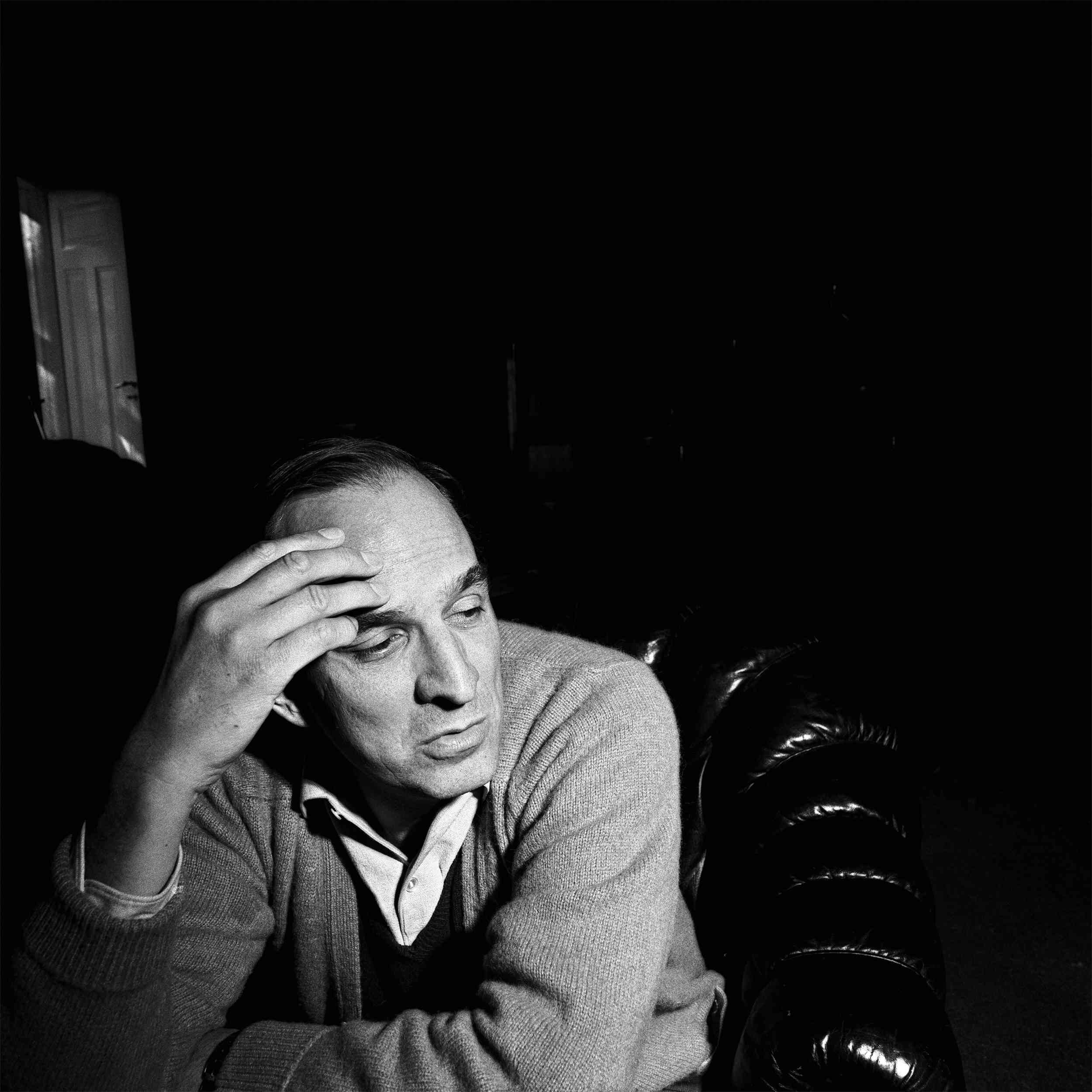
Ingmar Bergman
 Sweden
film director•theatre director•screenwriter
Compleanno
July 14, 1918
Segno Zodiacale
Cancer
Luogo di Nascita
Uppsala, Sweden
Età
Morto/a a 89 anni
Altezza
5 ft 9 in (1.75 m)
Informazioni
Ernst Ingmar Bergman è stato un regista e sceneggiatore svedese, considerato una delle figure più importanti nella storia del cinema. In sei decenni ha diretto oltre 60 film e messo in scena più di 170 opere teatrali, costruendo un corpus che esplorava fede, morte e relazioni umane con intensità implacabile. I suoi film hanno vinto tre premi Oscar come miglior film in lingua straniera, l'Irving G. Thalberg Memorial Award e un posto in quasi tutte le liste dei più grandi registi mai compilate.
Lo stile distintivo di Bergman combinava una cinematografia in bianco e nero austera con primi piani estremi, spesso girati sulla remota isola di Fårö dove visse per decenni. Il suo cast ricorrente includeva attori come Liv Ullmann, Max von Sydow e Bibi Andersson. Oggi, la sua eredità gestisce i diritti dei suoi film e le proprietà, con royalties annuali da streaming e produzioni teatrali che continuano a presentare il suo lavoro alle nuove generazioni.
Primi Anni e Background
Ingmar Bergman è cresciuto a Uppsala, in Svezia, figlio di un severo pastore luterano, Erik Bergman, e di sua moglie Karin. La casa era dominata da severità religiosa e frequenti punizioni, un'atmosfera che Bergman descrisse in seguito come infernale. Un punto di svolta arrivò quando suo fratello maggiore gli regalò una lanterna magica; il dispositivo scatenò un'ossessione duratura per le immagini in movimento, e passava ore a proiettare film sulla parete della sua camera da letto.
All'Università di Stoccolma, Bergman studiò arte e letteratura, ma lasciò nel 1942 senza laurea, attratto invece dal teatro studentesco. Iniziò a scrivere opere teatrali e trovò lavoro come segretario di sceneggiatura alla Svensk Filmindustri. Nel giro di un anno, riscriveva sceneggiature e dirigeva i propri progetti. La sua grande occasione arrivò nel 1944 quando fu nominato direttore del Teatro Comunale di Helsingborg, lanciando la sua carriera professionale di regista. Due anni dopo, fece il suo debutto come regista cinematografico con Crisis (1946), un inizio modesto che portò a una serie di opere sempre più ambiziose.
Crescita Professionale
La svolta internazionale di Bergman arrivò nel 1957 con due capolavori: Il settimo sigillo, che vinse il Premio Speciale della Giuria a Cannes, e Il posto delle fragole, che ottenne l'Orso d'Oro a Berlino. Il decennio successivo vide una serie di film acclamati, tra cui il premio Oscar La fontana della vergine (1960) e la trilogia del Silenzio di Dio: Come in uno specchio (1961), Luci d'inverno (1963) e Il silenzio (1963). Nel 1966 pubblicò Persona, una pietra miliare modernista che rimane uno dei film più analizzati della storia.
Gli anni '70 portarono Sussurri e grida (1972) e la serie televisiva Scene da un matrimonio (1973), entrambi successi di critica e pubblico. Il suo trionfo finale fu Fanny e Alexander (1982), che vinse quattro premi Oscar. Bergman si ritirò dalla regia cinematografica dopo il suo ultimo film TV, Saraband (2003), e morì il 30 luglio 2007, all'età di 89 anni.
Cronologia Carriera
Immagine Pubblica e Stile
L'immagine pubblica di Bergman è quella di un artista cupo e intensamente intellettuale. I suoi film sono noti per la cinematografia in bianco e nero austera, spesso di Sven Nykvist, primi piani estremi e scene silenziose e contemplative. I media lo hanno a lungo ritratto come un genio dell'esistenzialismo, coniando il termine Bergmanesque per descrivere il suo stile. Il suo fandom è accademico e incentrato sui cinefili, senza un nome ufficiale. La cultura dei fan ruota attorno a festival cinematografici, conferenze accademiche e analisi approfondite del suo simbolismo. È spesso citato come una grande influenza da registi come Woody Allen, Andrei Tarkovsky e David Lynch. È stato ammesso all'Accademia Svedese nel 1989 e ha ricevuto la Legion d'Onore francese nel 1985.
Fama e fandom
The reverence surrounding Ingmar Bergman defies the organized fervor of modern pop culture. There is no unified fan club, no specific terminology for his followers, and no digital rituals that define a collective identity. Instead, his audience exists as a scattered constellation of cinephiles, academics, and pilgrims who treat his work with scholarly devotion rather than casual fandom. The most tangible manifestation of this loyalty is the quiet pilgrimage to Fårö, where admirers still wander the landscapes he immortalized, searching for traces of the director's soul in the silence of the island. This site remains a focal point of veneration decades after his passing, drawing international students and enthusiasts to his former summer house and grave. While the 2026 stage adaptation of Persona starring Cate Blanchett and Nina Hoss reignited debates about his iconic imagery, the engagement remains rooted in the "cult of the auteur" rather than a grassroots movement. Legends persist regarding his intense directing style and the emotional toll exacted on his collaborators, stories that have become foundational folklore in film schools. Recent discussions also revisit controversial claims about his political past, framing these narratives as cautionary tales within cinema history. His legacy endures not through viral moments or fan campaigns, but through the profound, unsettling impact of films like The Seventh Seal and Fanny and Alexander. These works continue to provoke visceral reactions, cementing his status as a cinematic deity whose influence spans generations. According to the iFANN Global Fame Rankings, Ingmar Bergman holds the position of the 1st most famous person in Sweden. This placement confirms his enduring dominance in his home country, holding steady from the previous cycle.
Curiosità e leggende
Bergman directed more than 170 plays during his career, surpassing his output of over 60 films. He resided on the remote island of Fårö for more than four decades, constructing a private cinema known as The Cinema there. A nervous breakdown in the 1960s led to his hospitalization, and he famously refused to accept the Academy Award for Fanny and Alexander in person, sending a representative instead. His father was a strict Lutheran pastor, leading Bergman to describe his childhood as hell, while a deep-seated fear of death permeates his entire body of work. Standing 5 feet 9 inches tall, he was also honored with an asteroid named after him. Legends surrounding his life include the ongoing pilgrimage to Fårö, where admirers still search for 'Bergman's soul' amidst the landscapes he immortalized. In 2026, a stage adaptation of Persona starring Cate Blanchett and Nina Hoss reignited debates about the film's iconic imagery, cementing its status as a timeless cultural touchstone. Some historical accounts also revisit controversial claims about his relationship with authoritarianism, framing these narratives as cautionary tales within film history.
Citazioni Notevoli
“Film as dream, film as music. No art passes our conscience in the way film does, and goes directly to our feelings, deep down into the dark rooms of our souls.”
“I am a professional director. I am not a philosopher. I am not a poet. I am a craftsman.”
“The only thing I am convinced of is that I am a bad human being. But I am a very good director.”
Famiglia e Vita Privata
Bergman nacque il 14 luglio 1918 a Uppsala, in Svezia, da un severo pastore luterano, Erik Bergman, e sua moglie Karin (nata Åkerblom). La sua educazione fu segnata da atmosfere religiose severe, punizioni frequenti e un fascino per la lanterna magica—un regalo che scatenò la sua ossessione per le immagini in movimento. Aveva un fratello maggiore che gli regalò la lanterna. La sua casa a Fårö includeva una collezione di animali domestici, e spesso lavorava dal suo studio che si affacciava sul Mar Baltico. Ha avuto nove figli: Lena (con Else Fisher), Eva e Jan (con Ellen Bergman), Mats, Anna e Ingmar Jr. (con Gun Bergman), Daniel (con Käbi Laretei), Maria (con Ingrid von Rosen) e Linn (con Liv Ullmann). La sua vita familiare era spesso tumultuosa, influenzando direttamente il suo lavoro.
Collegamenti Notevoli
Bergman ha lavorato con un cast ricorrente che includeva attori come Liv Ullmann, Max von Sydow, Bibi Andersson, Gunnar Björnstrand, Erland Josephson e Ingrid Thulin. I suoi direttori della fotografia chiave erano Sven Nykvist e Gunnar Fischer. I compositori includevano Erik Nordgren e Lars Johan Werle.
Relazioni e Storia Dating
Bergman si è sposato cinque volte. Il suo primo matrimonio fu con la coreografa Else Fisher dal 1943 al 1945; ebbero la figlia Lena. Poi sposò la coreografa Ellen Bergman (1945–1950), con cui ebbe Eva e Jan. La sua terza moglie fu la giornalista Gun Bergman (1951–1959), madre di Mats, Anna e Ingmar Jr. Successivamente sposò la pianista Käbi Laretei (1959–1969), con cui ebbe il figlio Daniel. Durante quel matrimonio, iniziò una famosa relazione con l'attrice Liv Ullmann, che durò dal 1965 al 1970 e diede alla luce la figlia Linn. Dopo aver divorziato da Laretei, sposò Ingrid von Rosen nel 1971; ebbero la figlia Maria e rimasero insieme fino alla sua morte per cancro nel 1995. Bergman ebbe anche relazioni con attrici tra cui Bibi Andersson. Al 2026, Bergman è deceduto, essendo rimasto vedovo della sua quinta moglie.
- Sposato/aElse Fisher1943 - 1945Coreografa e ballerina; ha avuto una figlia, Lena.
- Sposato/aEllen Bergman1945 - 1950Coreografa e regista; ha avuto due figli, Eva e Jan.
- Sposato/aGun Bergman1951 - 1959Giornalista; ha avuto tre figli, Mats, Anna e Ingmar Jr.
- Sposato/aKäbi Laretei1959 - 1969Pianista concertista estone-svedese; ha avuto il figlio Daniel.
- Uscito/aLiv Ullmann1965 - 1970Attrice norvegese; incontrata sul set di Persona; ha avuto la figlia Linn.
- Sposato/aIngrid von Rosen1971 - 1995Sposata fino alla sua morte per cancro; ha avuto la figlia Maria.
Morte e conseguenze
Morto/a
July 30, 2007 (a 89 anni)
Luogo di morte
Fårö, Sweden
Causa della morte
Kidney failure
On the island of Fårö, Ingmar Bergman spent his final years in quiet seclusion within a home overlooking the Baltic Sea, focusing on writing and occasional theatrical work until declining health forced him to stop. He passed away peacefully at that residence on July 30, 2007, at the age of 89. Official statements from his family confirmed the cause as kidney failure resulting from a long-term illness. Tributes poured in immediately from across the globe, including a statement of deep sorrow from King Carl XVI Gustaf honoring Bergman's contribution to Swedish culture. The Academy of Motion Picture Arts and Sciences held moments of silence during subsequent galas, while major festivals like Cannes and Venice paused their opening ceremonies.
Fans gathered spontaneously in Stockholm and on Fårö to pay respects, leading to memorial markers near his former home and the local church. A private funeral service took place on August 4, 2007, at Fårö Church, attended by close family members Daniel and Mats Bergman along with select colleagues. Following the ceremony, Bergman was cremated, and his ashes were interred in the churchyard. His legacy continues to flourish through the Ingmar Bergman Foundation, which preserves archives and supports emerging filmmakers, while new editions of his books and re-releases of films remain staples in film studies curricula.
Patrimonio (Valore immobiliare)
$20 Million
Stima del team editoriale di iFANN
iFANN currently estimates the estate of Ingmar Bergman at $20 Million as of 2026. The estate's primary assets consist of the rights to his extensive filmography and theatrical works, alongside his property on the island of Fårö. Annual royalties generate between $1–2 million through streaming deals with the Criterion Channel and Netflix, DVD sales, and stage productions of his plays. The estate also licenses his name and image for documentaries and exhibitions. Following his death in 2007, the Ingmar Bergman Foundation, managed by his daughter Linn Ullmann, has overseen the restoration and digitization of his films to ensure a steady revenue stream. The estate has experienced modest growth recently due to renewed interest in his catalog via curated box sets and international retrospectives. The foundation maintains a website and Facebook page with approximately 50,000 followers.
Premi vinti (93)
Bergman ha vinto tre Premi Oscar per il miglior film in lingua straniera: La fontana della vergine (1961), Luci d'inverno (1962) e Fanny e Alexander (1984). Ha anche ricevuto il Premio Memoriale Irving G. Thalberg nel 1971. I suoi film hanno ottenuto altri Oscar per la fotografia e la scenografia. Ha vinto il Premio Speciale della Giuria a Cannes per Il settimo sigillo (1957), l'Orso d'Oro a Berlino per Il posto delle fragole (1958) e un Leone d'Oro alla carriera a Venezia (1971).
1984 · Miglior Film in Lingua Straniera
Fanny and Alexander
1971 · Irving G. Thalberg Memorial Award
Lifetime Achievement
1962 · Miglior Film in Lingua Straniera
Through a Glass Darkly
1961 · Miglior Film in Lingua Straniera
The Virgin Spring
1959 · Miglior Film Straniero
The Seventh Seal
Noto Per
The Seventh Seal
1957 · Director, Writer
Wild Strawberries
1957 · Director, Writer
Persona
1966 · Director, Writer
Fanny and Alexander
1982 · Director, Writer
Cries and Whispers
1972 · Director, Writer
Parole chiave
Fatti Rapidi
- Professione
- film director, theatre director, screenwriter
- Nato/a
- +1918-07-14
- Luogo di Nascita
- Uppsala, Sweden
- Morto/a
- +2007-07-30
- Luogo di morte
- Fårö parish, Sweden
- Genere
- Maschio
- Coniuge
- Else Fisher, Ellen Bergman, Gun Bergman, Käbi Laretei, Ingrid von Rosen
- Segno Zodiacale
- Cancer
Dettagli Personali
- Nome Completo
- Ernst Ingmar Bergman
- Altezza
- 5 ft 9 in (1.75 m)
- Coniuge
- Else Fisher, Ellen Bergman, Gun Bergman, Käbi Laretei, Ingrid von Rosen
- Figli
- Lena Bergman, Eva Bergman, Jan Bergman, Mats Bergman, Anna Bergman, Ingmar Bergman Jr., Daniel Bergman, Linn Ullmann, Maria von Rosen
- Istruzione
- Stockholm University College (1937–1942, did not graduate)
Filmografia
62
Totale
55
Film
7
TV
Domande Frequenti
Perché Ingmar Bergman è così importante?
Ingmar Bergman ha avuto una relazione con Liv Ullmann?
Qual è il film più famoso di Bergman?
Quante volte si è sposato Ingmar Bergman?
Quali premi ha vinto Ingmar Bergman?
Social Media
Unisciti alla community
fan che discutono