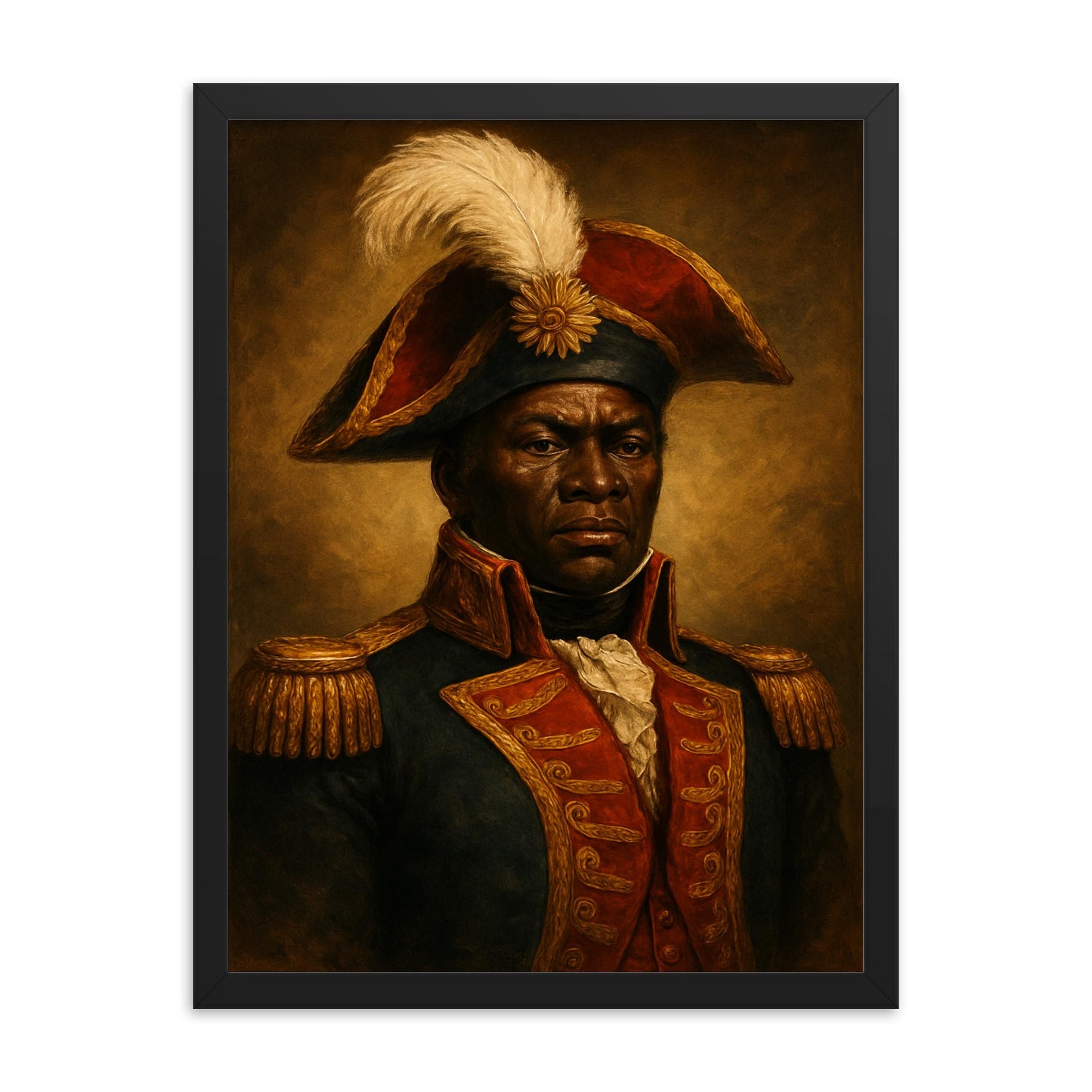
Jean-Jacques Dessalines
Also known as: Jacques I, Emperor Jacques I, The Tiger
Compleanno
September 20, 1758
Segno Zodiacale
Virgo
Luogo di Nascita
Plaine-du-Nord, Saint-Domingue (present-day Haiti)
Età
Morto/a a 48 anni
Informazioni
Jean-Jacques Dessalines was the founding father of Haiti, the revolutionary leader who turned a slave revolt into the first independent black republic in the Americas. Born into slavery in 1758, he rose through the ranks of the Haitian Revolution to become Emperor Jacques I, ruling from 1804 until his assassination in 1806. Dessalines is remembered for his ferocity on the battlefield, particularly at the Battle of Vertières, and for his uncompromising stance against slavery and French colonialism.
Today, Dessalines is a national symbol in Haiti. His portrait appears on currency, statues honor him across the country, and the national anthem, La Dessalinienne, bears his name. He is celebrated each year on Haitian Independence Day, January 1, when Haitians commemorate the declaration he read at Gonaïves. His legacy is complex, a hero who ended slavery but also ordered the brutal 1804 massacre of French residents. For many, he remains the embodiment of black liberation and anti-colonial resistance.
Primi Anni e Background
Dessalines nacque in schiavitù nella piantagione Cormier a Plaine-du-Nord, Saint-Domingue. Il suo nome africano originale è sconosciuto. Fu acquistato da un uomo nero libero di nome Dessalines, da cui prese il cognome, e in seguito lavorò per un padrone francese di nome Duclos. La durezza della vita in piantagione lo segnò profondamente, testimoni notarono in seguito cicatrici da frustate sulla sua schiena.
Intorno al 1789, mentre la Rivoluzione Francese destabilizzava la colonia, Dessalines si unì all'esercito coloniale francese come ufficiale, combattendo contro le forze spagnole e britanniche che cercavano di impossessarsi di Saint-Domingue. Rimase con i francesi anche dopo la massiccia rivolta degli schiavi del 1791 nelle pianure del nord. Ma intorno al 1793, disertò per unirsi alle forze ribelli guidate da Toussaint Louverture. Il suo talento militare e la sua spietatezza lo resero rapidamente il luogotenente principale e il secondo in comando di Louverture.
Crescita Professionale
La reputazione militare di Dessalines fu forgiata alla Battaglia di Crête-à-Pierrot nel marzo 1802. Per 20 giorni, le sue forze resistettero all'esercito del generale francese Charles Leclerc, combattendo con tale determinazione che Leclerc offrì una ricompensa per la testa di Dessalines. Dopo che Louverture fu catturato e deportato in Francia nel 1802, Dessalines si sottomise inizialmente all'autorità francese, aspettando il momento opportuno. In segreto, organizzò i resti dell'esercito ribelle.
Il 18 maggio 1803, al Congresso di Arcahaie, fu nominato formalmente Général-Chef de l'Armée Indigène. Sei mesi dopo, il 18 novembre 1803, le sue forze sconfissero i francesi alla Battaglia di Vertières, l'ultimo grande scontro della Rivoluzione Haitiana. Il 1° gennaio 1804, Dessalines dichiarò l'indipendenza di Haiti a Gonaïves, abolendo permanentemente la schiavitù. Divenne Governatore Generale, poi si incoronò Imperatore Jacques I il 22 settembre 1804. Il suo regno durò poco più di due anni, durante i quali emanò la Costituzione Imperiale del 1805, che vietava la proprietà terriera ai bianchi e stabiliva il cattolicesimo come religione di stato.
Cronologia Carriera
Immagine Pubblica e Stile
Dessalines è tipicamente raffigurato in uniforme militare con un cappello piumato, spesso a cavallo, con un'espressione severa e autoritaria. Nell'arte e nei murales haitiani, è una figura imponente ed eroica. La ricerca storica lo dipinge come un leader complesso: un rivoluzionario che pose fine alla schiavitù ma anche un brutale autocrate che ordinò massacri. Le commemorazioni annuali del 1° gennaio e del 18 novembre includono rievocazioni, parate e cerimonie. La sua immagine è ampiamente utilizzata nell'iconografia politica e il suo nome è invocato dai leader haitiani di tutto lo spettro politico. Le pagine dei social media a lui dedicate tendono ad essere reverenti ed educative, concentrandosi sul suo ruolo nella liberazione dei neri.
Fama e fandom
Jean-Jacques Dessalines commands a global stature that transcends the metrics of modern celebrity, standing instead as a foundational pillar of national identity and historical consciousness. In August 2026, the iFANN Global Fame Engine evaluated his standing and determined that he currently holds no placement within the published Global Top 1,000 rankings or any specific Top-100 scope list, reflecting his status as a figure whose influence is institutional rather than commercial. Unlike contemporary stars who rely on chart positions or viral engagement, Dessalines exists in a category where fame is measured by the endurance of state ceremonies and the depth of spiritual reverence. The Haitian nation itself functions as his primary constituency, with millions participating annually in commemorations that blend political history with Vodou ritual. While there is no formal fandom name documented for his supporters, no equivalent to organized fan clubs or branded social media movements, the collective devotion of the Haitian people serves as a living reflection of his legacy. This veneration manifests not through digital trends but through the annual observance of Dessalines Day, where the state honors his memory with official parades and religious rites dedicated to him as a *lwa*. His image remains a constant fixture in public spaces, from currency to murals, ensuring that his presence is felt daily without the need for active promotion. The absence of a numerical rank in global databases does not diminish his impact; rather, it underscores the unique nature of his fame, which is rooted in the survival of a republic and the enduring power of a revolutionary mythos. His legacy continues to shape geopolitical discourse and cultural narratives, proving that true historical significance often operates outside the conventional frameworks of popularity contests.
Curiosità e leggende
Legend holds that Dessalines created the Haitian flag by ripping the white center out of the French tricolor, symbolizing the removal of white rule. Known as The Tiger for his battlefield ferocity, he dictated the Haitian Declaration of Independence despite being illiterate. He spared Polish soldiers who had defected from the French army, granting them citizenship and land, many of whose descendants still live in Haiti today. After his assassination, his body was dismembered by a mob before his remains were interred at the Musée du Panthéon National Haïtien. A widely retold story describes him tearing the white stripe from the French flag to declare that it represented the white oppressors, leaving only blue and red to signify the blood of the enslaved and the freedom of the people. Another pivotal moment involves his proclamation of independence on January 1, 1804, at Gonaïves, which established the first independent black republic in the world. The circumstances of his death in 1806 remain a tragic legend, marking the end of his reign and plunging the nation into instability, a date now honored annually as Dessalines Day. Historians note that during his final years, Dessalines declared, "I have avenged America," a statement that cemented his role as the father of the first independent Black republic. His legacy also includes the controversial 1804 massacre of remaining white French colonists, an event universally referenced as the brutal price of independence and the definitive break from colonial rule. In the realm of religious folklore, he is revered as a *lwa* in the Haitian Vodou pantheon, specifically associated with strength, justice, and the fight against oppression.
Citazioni Notevoli
“Never again shall a colonist set foot on this land as a master.”
“I have avenged America.”
“We must live independent or die.”
“My name has become a horror to all those who wish to enslave my race.”
Famiglia e Vita Privata
Dessalines sposò Marie-Claire Heureuse Félicité intorno al 1790. Era un'ex schiava che divenne Imperatrice di Haiti. Nota per il suo lavoro umanitario, aiutò segretamente i residenti francesi a fuggire dal massacro del 1804 nascondendoli nella sua casa. La coppia ebbe diversi figli, tra cui un figlio di nome Jacques (morto giovane) e una figlia di nome Marie-Françoise, sebbene i registri completi siano incompleti. Dopo l'assassinio di Dessalines, Marie-Claire visse nell'oscurità e ricevette una pensione dai governi successivi. I figli conosciuti di Dessalines non produssero linee sopravvissute che mantennero una prominenza politica.
Collegamenti Notevoli
Dessalines servì come luogotenente principale di Toussaint Louverture, il leader della Rivoluzione Haitiana. Dopo la cattura di Louverture, prese il comando. I suoi commilitoni Henri Christophe e Alexandre Pétion si rivoltarono contro di lui e parteciparono al suo assassinio. Combatté contro il generale francese Charles Leclerc. Sua moglie, Marie-Claire Heureuse Félicité, fu incoronata Imperatrice insieme a lui.
Relazioni e Storia Dating
Dessalines sposò Marie-Claire Heureuse Félicité intorno al 1790. Fu un'ex schiava che divenne Imperatrice di Haiti. Era conosciuta per i suoi sforzi umanitari, incluso l'aiuto segreto ai residenti francesi per sfuggire al massacro del 1804. La coppia ebbe diversi figli. Non esistono altre relazioni romantiche documentate nelle fonti storiche. Dessalines morì il 17 ottobre 1806 e non si risposò mai.
- Sposato/aMarie-Claire Heureuse Félicité1790 - 1806Ex schiava che divenne Imperatrice di Haiti; conosciuta per i suoi sforzi umanitari durante il massacro del 1804.
Morte e conseguenze
Morto/a
October 17, 1806 (a 48 anni)
Luogo di morte
Pétionville
Causa della morte
Reported assassination by gunshot wounds
Jean-Jacques Dessalines, the first Emperor of Haiti, was assassinated on October 17, 1806, during a coordinated coup led by rival generals. The event occurred at Pétionville near Port-au-Prince, where the Emperor was ambushed while traveling between locations, resulting in multiple gunshot wounds that caused his death almost instantly. Historical records established this cause through contemporary eyewitness accounts and military dispatches rather than any formal autopsy or legal inquest, as the conspirators immediately seized power to neutralize any judicial inquiry. Following the killing, the nation fractured into civil war between the supporters of Pétion in the south and Christophe in the north.
Instead, Dessalines was initially vilified by the mulatto-led republics that succeeded him, leading to decades where his legacy was suppressed or portrayed negatively in early historiography. His body was reportedly buried in a simple, unmarked grave near the site of the ambush, consistent with the chaotic conditions of the post-revolutionary period, and the precise location of this burial has never been publicly confirmed. Posthumously, he was rehabilitated as a national hero, with October 17 now commemorated annually as Dessalines Day, though these ceremonies have occasionally been marred by violence in recent years.
Patrimonio (Valore immobiliare)
$0
Stima del team editoriale di iFANN
As an 18th–19th century revolutionary leader who died in 1806, Jean-Jacques Dessalines has no living net worth. Per iFANN's editorial analysis, the total value attributed to his estate is $0. His estate is not privately held; the Haitian government manages his legacy through the Musée du Panthéon National Haïtien (MUPANAH), which houses his remains and artifacts. Posthumous revenue sources include tourism at historical sites like Fort Jacques, licensing of his image on currency and stamps, and merchandise sold at monuments. No private estate exists to generate income, as his family line did not maintain significant wealth after his death.
Premi vinti (1)
Dessalines non ha ricevuto premi moderni nel campo dell'intrattenimento o dello spettacolo. Postumo, il più alto ordine nazionale di Haiti, l'Ordine di Jean-Jacques Dessalines, fu istituito in suo nome nel 1979. L'inno nazionale, La Dessalinienne, adottato nel 1904, onora la sua eredità.
1979 · Ordine Nazionale
Noto Per
Haitian Revolution
1804 · Leader
Battle of Vertières
1803 · Commendatore
Emperor of Haiti
1804 · Monarch
Parole chiave
Fatti Rapidi
- Professione
- politician
- Nato/a
- +1758-09-20
- Luogo di Nascita
- Plaine-du-Nord
- Morto/a
- +1806-10-17
- Luogo di morte
- Port-au-Prince
- Genere
- Maschio
- Coniuge
- Marie-Claire Heureuse Félicité
- Segno Zodiacale
- Virgo
Dettagli Personali
- Nome Completo
- Jean-Jacques Dessalines
- Coniuge
- Marie-Claire Heureuse Félicité
- Figli
- Jacques (son, died young), Marie-Françoise (daughter), and several others (names not fully documented)
Domande Frequenti
Come morì Jean-Jacques Dessalines?
Jean-Jacques Dessalines era sposato?
Jean-Jacques Dessalines ebbe figli?
Qual era il patrimonio di Jean-Jacques Dessalines?
Quanti anni aveva Jean-Jacques Dessalines quando morì?
Persone Simili
Unisciti alla community
fan che discutono