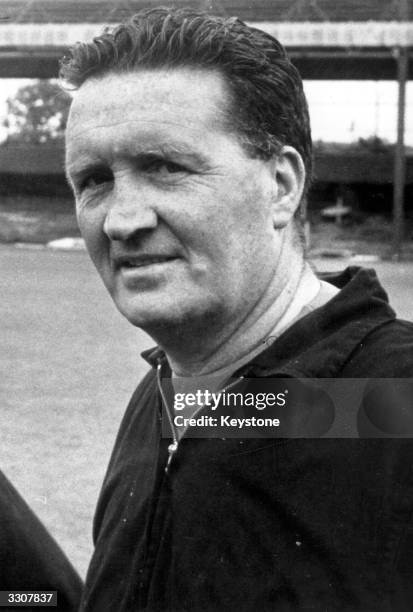
Jock Stein
 United Kingdom
calciatore•allenatore di calcio
Compleanno
October 5, 1922
Segno Zodiacale
Libra
Luogo di Nascita
Hamilton, South Lanarkshire, Scotland
Età
Morto/a a 62 anni
Informazioni
Jock Stein è stato un calciatore e allenatore scozzese che ha rimodellato il gioco nella sua patria. Nato il 5 ottobre 1922 a Hamilton, Lanarkshire, Stein ha lavorato come minatore di carbone prima di diventare professionista. Come difensore centrale, ha giocato per Albion Rovers, Llanelli Town e Celtic, vincendo la Coronation Cup nel 1953 e un double campionato e coppa nel 1954. Infortuni alla caviglia hanno posto fine alla sua carriera da giocatore nel 1957, ma il Celtic lo ha tenuto come allenatore della squadra riserve.
La genialità manageriale di Stein emerse al Dunfermline Athletic, dove vinse la Scottish Cup nel 1961. Dopo una breve parentesi all'Hibernian, tornò al Celtic nel marzo 1965. Nel corso di 13 anni, costruì una dinastia: 10 titoli di campionato scozzese, 8 Scottish Cup, 6 League Cup e la Coppa dei Campioni del 1967, la prima per un club dell'Europa settentrionale. Il suo Celtic, i Lisbon Lions, rimangono leggendari. Stein ha poi allenato il Leeds United e la nazionale scozzese, guidandoli alla Coppa del Mondo del 1982. Morì per un attacco cardiaco il 10 settembre 1985, pochi istanti dopo che la Scozia si era qualificata per la Coppa del Mondo del 1986.
Primi Anni e Background
Stein crebbe nella comunità mineraria di Burnbank durante la Grande Depressione, unico figlio tra quattro figli. Suo padre George lavorava nelle miniere di carbone, e il giovane Jock lasciò la Greenfield School di Hamilton a 15 anni per guadagnarsi da vivere. Trascorse un breve periodo in una fabbrica di tappeti prima di seguire suo padre sottoterra.
Il calcio era la sua via di fuga. Nel 1940, Stein accettò di firmare per il Burnbank Athletic, ma suo padre si oppose, quindi si unì al Blantyre Victoria, un club junior locale. Continuò a lavorare in miniera mentre giocava part-time. Nel 1942, passò all'Albion Rovers, continuando a lavorare nelle miniere fino al 1949. Quegli anni di duro lavoro gli diedero una tempra che definì la sua carriera successiva.
Crescita Professionale
La svolta di Stein come allenatore avvenne al Dunfermline Athletic. Assunse la guida nel 1960 e portò al club il suo primo trofeo importante, la Scottish Cup, nel 1961. Seguirono le partecipazioni europee, che attirarono l'attenzione del Celtic. Dopo un periodo breve ma di successo all'Hibernian, dove la sua squadra batté il Real Madrid in amichevole, il Celtic lo nominò allenatore nel marzo 1965.
Entro due anni, Stein aveva trasformato il Celtic in campione d'Europa. Il 25 maggio 1967, i suoi Lisbon Lions batterono l'Inter Milan 2-1 nella finale di Coppa dei Campioni, rendendo Stein il primo allenatore del Nord Europa a vincere il trofeo. Quella stagione, il Celtic vinse anche la Scottish Cup, la League Cup e la Glasgow Cup, un percorso netto. Tra il 1966 e il 1974, vinsero nove campionati scozzesi consecutivi, un record che ancora resiste. In totale al Celtic, Stein raccolse 10 titoli di campionato, 8 Scottish Cup e 6 League Cup. Guidò anche il club a una seconda finale di Coppa dei Campioni nel 1970, perdendo 2-1 contro il Feyenoord.
Dopo aver lasciato il Celtic nel 1978, Stein allenò il Leeds United per due mesi prima di assumere la guida della Scozia. Guidò la nazionale alla Coppa del Mondo del 1982 in Spagna e stava lavorando per il torneo del 1986 quando morì.
Cronologia Carriera
Immagine Pubblica e Stile
Stein era venerato per la sua intelligenza tattica e la gestione dei giocatori. Costruì squadre dominanti con risorse limitate, spesso osservando lui stesso i giocatori. I media lo descrivevano come socievole e schietto. I tifosi del Celtic lo venerano quasi come un santo, i Lisbon Lions rimangono iconici, e i tifosi cantano regolarmente di Stein e del trionfo del 1967. La sua personalità fondeva la grinta della classe operaia con un acuto intuito calcistico.
Fama e fandom (iFAMOUS Rankings)
Jock Stein commands a legacy defined not by fleeting viral moments but by the enduring weight of two historical pillars: the 1967 European Cup triumph and his sudden death in 1985. His fanbase, inseparable from the Celtic identity known as the Hoops, treats him as a moral compass during times of club crisis. Rituals like the annual streaming campaigns for Thin Lizzy's "The Boys Are Back" keep the spirit of the Lisbon Lions alive every May, while his image remains omnipresent at Celtic Park. Fans invoke his name to bridge sectarian divides and demand unity, viewing him as the first Protestant manager to lead the historically Catholic club with meritocratic grace. The story of his heart attack in Cardiff stands as a tragic capstone to a life dedicated entirely to the game, turning his grave into a site of pilgrimage where reverence outweighs nostalgia. This deep cultural integration ensures that Stein is remembered not merely as a manager, but as a foundational element of Scottish football mythology. Despite this profound impact, iFANN's Global Fame Engine has evaluated Jock Stein but he does not currently hold a placement in the published rankings (Global Top 1,000 or a Top-100 scope list). The evaluation reflects a status where immense historical significance translates to steady, legacy-driven recognition rather than current trending volume.
Curiosità e leggende
Born on October 5, 1922, in Hamilton, Lanarkshire, Stein worked as a coal miner until 1949 while playing for Albion Rovers. His transition from miner to manager began after ankle injuries ended his playing career in 1957. He famously opened the training ground each morning before anyone else arrived. Bill Shankly told him after the 1967 European Cup win, "Jock, you're immortal now." A bronze statue outside Celtic Park was unveiled in 2011, and Glasgow's Jock Stein Way bears his name. Stein was the first Protestant to manage Celtic, a decision that caused friction with some family members before establishing a legacy of meritocracy. Legends say he traveled hours to scout opponents personally. The defining moment of his career occurred on May 25, 1967, when he led Celtic to a 2–1 victory over Inter Milan in Lisbon, becoming the first British manager to win the European Cup. The squad was entirely Scottish-born, creating a mythos of a perfect team. His life ended tragically on September 10, 1985, when he suffered a fatal heart attack in the stands at Ninian Park while watching a World Cup qualifier between Wales and Scotland. Fans still retell this story to highlight his dedication to football until his final breath.
Citazioni Notevoli
“Jock, you're immortal now., Bill Shankly to Stein after the 1967 European Cup win”
Famiglia e Vita Privata
Stein sposò Jean McAuley negli anni '40. Ebbero due figli: Mary, nata nel 1947, e George, nato nel 1953. Jean rimase sua moglie fino alla sua morte nel 1985. La famiglia visse a Glasgow durante i suoi anni da allenatore. Il padre di Stein, George, era un minatore di carbone, e sua madre Jane Armstrong crebbe quattro figli. Stein era l'unico figlio.
Collegamenti Notevoli
Stein era un caro amico di Bill Shankly, un altro minatore scozzese diventato allenatore. Anche Matt Busby e Alex Ferguson lo ammiravano; Ferguson considerava Stein un mentore. Al Celtic, il suo assistente Sean Fallon fu fondamentale. Giocatori come Jimmy Johnstone e Billy McNeill definirono le sue grandi squadre. Davie Cooper segnò il rigore che sigillò la qualificazione della Scozia mentre Stein collassò.
Relazioni e Storia Dating
Jock Stein era sposato con Jean McAuley. Si sposarono negli anni '40 e rimasero insieme fino alla morte di Stein nel 1985. La coppia ebbe due figli: Mary (nata nel 1947) e George (nato nel 1953). Non ci sono registrazioni pubbliche documentate di altre relazioni sentimentali. Jean gli sopravvisse.
- Sposato/aJean McAuley1940 - 1985Sposato negli anni '40; rimase sposato fino alla morte di Stein.
Morte e conseguenze
Morto/a
September 10, 1985 (a 62 anni)
Luogo di morte
Cardiff, Wales, UK
Causa della morte
Acute cardiac event
Jock Stein stood on the touchline at Ninian Park in Cardiff, Wales, watching his Scotland team secure a 2, 1 victory over their hosts to clinch a spot in the 1986 FIFA World Cup. Moments after the final whistle blew, he complained of chest pain and collapsed before being rushed to the nearby University Hospital of Wales, where doctors pronounced him dead upon arrival. The cause was an acute cardiac event triggered by the exertion and emotional intensity of the match, a conclusion reached through immediate on-site observation and official statements rather than a public autopsy or coroner's inquest. The reaction across Scotland and the Celtic Football Club community was one of profound shock and national mourning.
Tributes poured in from peers and institutions immediately, with the BBC labeling the event a tragedy that left the nation reeling due to the irony of his death occurring just as his team achieved the qualification he had worked so hard for. Fans gathered spontaneously outside Ninian Park and Celtic Park in Glasgow to pay their respects, while a moment of silence was observed in subsequent matches across the United Kingdom and Europe. Stein's funeral took place four days later on September 14, 1985, at St. Peter's Church in Hamilton, followed by burial at the local cemetery. Thousands of mourners attended the procession, including former players from the 1967 European Cup-winning squad and prominent figures from the Scottish Football Association.
Posthumously, Stein remains the only manager to have led a club from a Northern European country to win the European Cup, earning induction into the Scottish Football Hall of Fame in 2003 and the erection of a statue outside Celtic Park. The Jock Stein Foundation was established to support young talent and charitable causes, ensuring his legacy endures within the footballing world.
Patrimonio (Valore immobiliare)
$10 Million
Stima del team editoriale di iFANN
Jock Stein died in 1985, and his estate value is not publicly documented. As a football manager in Scotland from the 1960s to the 1980s, his earnings were modest by modern standards. Per iFANN's editorial analysis, his estimated net worth in 2026 is around $10 million, based on posthumous image rights, book royalties, and the enduring value of his legacy. Celtic's continued success and the global fanbase keep his name commercially relevant, though exact figures remain private.
Premi vinti (26)
Stein vinse la Coppa dei Campioni con il Celtic nel 1967, 10 titoli di campionato scozzese, 8 Scottish Cup e 6 Scottish League Cup. Al Dunfermline, vinse la Scottish Cup nel 1961. Fu insignito del CBE nel 1970.
1967 · Allenatore
Celtic
1977 · Allenatore
Celtic
1974 · Allenatore
Celtic
1973 · Allenatore
Celtic
1972 · Allenatore
Celtic
1971 · Allenatore
Celtic
1970 · Allenatore
Celtic
1969 · Allenatore
Celtic
1968 · Allenatore
Celtic
1967 · Allenatore
Celtic
1966 · Allenatore
Celtic
Noto Per
European Cup win with Celtic
1967 · Allenatore
Nine consecutive Scottish league titles
1974 · Allenatore
Scottish Cup win with Dunfermline
1961 · Allenatore
Scotland national team manager
1985 · Allenatore
Parole chiave
Fonti
Fatti Rapidi
- Professione
- calciatore, allenatore di calcio
- Nato/a
- +1922-10-05
- Luogo di Nascita
- Hamilton
- Morto/a
- +1985-09-10
- Luogo di morte
- Cardiff
- Genere
- Maschio
- Segno Zodiacale
- Libra
Dettagli Personali
- Nome Completo
- John Stein
- Coniuge
- Jean McAuley
- Figli
- Mary (born 1947), George (born 1953)
Domande Frequenti
Come è morto Jock Stein?
Quali trofei ha vinto Jock Stein come allenatore del Celtic?
Chi era la moglie di Jock Stein?
Quanti figli ha avuto Jock Stein?
Qual è il patrimonio netto di Jock Stein nel 2026?


Unisciti alla community
fan che discutono