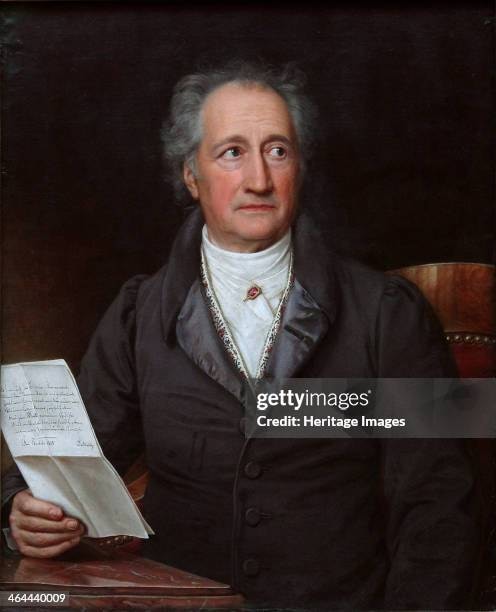
Johann Wolfgang von Goethe
theatre manager•botanist•politician
Compleanno
August 28, 1749
Segno Zodiacale
Virgo
Luogo di Nascita
Frankfurt, Holy Roman Empire
Età
Morto/a a 82 anni
Informazioni
Johann Wolfgang von Goethe was a German writer, statesman, and scientist widely regarded as the greatest figure in German literature and one of the towering minds of European culture. His range was immense. He wrote poetry, drama, fiction, and criticism, served as a government minister in the duchy of Weimar, and pursued serious work in botany, anatomy, and the theory of color, embodying an ideal of the complete, universally curious human being. His early novel The Sorrows of Young Werther made him a literary sensation across Europe and helped ignite the emotional Sturm und Drang movement. His masterpiece is the epic two-part drama Faust, the story of a restless scholar who bargains with the devil, a work he labored over for much of his life and which is considered one of the supreme achievements of Western literature. Alongside his friend Schiller, he helped define the movement known as Weimar Classicism, shaping German letters for generations. Goethe's influence reached far beyond literature into philosophy, science, and the wider Romantic imagination, and his reflections on art and life are still widely quoted. Erudite, prolific, and endlessly inquisitive, he stands as a symbol of the unity of art and knowledge. He remains a foundational figure in the German cultural tradition.
Primi Anni e Background
Goethe nacque il 28 agosto 1749 a Francoforte, allora città libera imperiale del Sacro Romano Impero. Suo padre, Johann Caspar Goethe, era un severo giurista e consigliere imperiale che supervisionò l'educazione del figlio con standard rigorosi. Sua madre, Katharina Elisabeth Textor, proveniva da un'importante famiglia locale e portò calore ed entusiasmo letterario in casa. Goethe ricevette un'istruzione privata rigorosa, studiando latino, greco, francese e italiano, oltre a musica e disegno. All'età di otto anni scriveva già versi. A sedici anni si iscrisse all'Università di Lipsia per studiare legge, sebbene le sue vere passioni fossero la letteratura e l'arte. Cadde in un periodo di cattiva salute e stagnazione creativa, tornando a Francoforte per riprendersi. Completò gli studi legali all'Università di Strasburgo, dove incontrò il teologo e filosofo Johann Gottfried Herder, che gli aprì gli occhi sulla poesia popolare e su Shakespeare. Durante questo periodo si innamorò anche di Friederike Brion, figlia di un pastore, una storia che finì dolorosamente e che in seguito ispirò la sua poesia. Dopo essersi laureato in giurisprudenza nel 1771, esercitò la professione di avvocato con poco entusiasmo a Francoforte, scrivendo freneticamente. La sua svolta arrivò nel 1774 con la pubblicazione de I dolori del giovane Werther, un romanzo che catturò lo spirito del tempo e lo rese una celebrità internazionale dall'oggi al domani.
Crescita Professionale
Il successo del Werther cambiò tutto. Nel 1775, il duca Carlo Augusto di Sassonia-Weimar-Eisenach invitò Goethe alla sua corte, e Goethe si trasferì a Weimar, dove visse per il resto della sua vita. Servì come consigliere privato, ministro delle finanze e direttore del teatro di corte di Weimar, continuando comunque a scrivere. La sua amicizia e collaborazione con Friedrich Schiller, iniziata nel 1794, segnò l'apice del Classicismo di Weimar. Insieme produssero una notevole serie di opere, tra cui i drammi di Schiller e il romanzo di Goethe Gli anni di apprendistato di Wilhelm Meister (1795–1796), che definì il genere del Bildungsroman. Il capolavoro di Goethe, Faust, lo occupò per sessant'anni. La prima parte fu pubblicata nel 1808, la seconda dopo la sua morte nel 1832. Il dramma è un vasto poema filosofico che esplora ambizione, amore e redenzione. Scrisse anche il romanzo Le affinità elettive (1809) e la raccolta poetica Divano occidentale-orientale (1819). In ambito scientifico, pubblicò La teoria dei colori (1810), sfidando le teorie ottiche di Newton, e fece importanti osservazioni sulla metamorfosi delle piante. I suoi ultimi anni furono segnati dalle Elegie di Marienbad (1823), ispirate dalla sua infatuazione per Ulrike von Levetzow. Goethe morì a Weimar il 22 marzo 1832, lasciando un'eredità letteraria senza pari.
Cronologia Carriera
Immagine Pubblica e Stile
Goethe coltivò un'immagine di serena autorità, spesso ritratto con uno sguardo penetrante e un portamento calmo e classico. Si vestiva in modo semplice ma elegante, prediligendo cappotti scuri e cravatte bianche. Nei suoi ultimi anni, divenne una sorta di monumento culturale, visitato da ammiratori da tutta Europa. Il suo stile di scrittura si evolse dal tono appassionato e ribelle dello Sturm und Drang all'ideale misurato e armonioso del Classicismo di Weimar, riflettendo il suo percorso personale verso l'autodisciplina. Fan e studiosi hanno a lungo dibattuto sulla sua personalità: alcuni vedono un freddo e calcolatore carrierista; altri, un mentore caloroso e generoso. Aveva un rapporto famosamente complicato con il pubblico, a volte bramando la solitudine, a volte godendo dell'attenzione. La sua influenza sull'identità tedesca è così profonda che il Goethe-Institut, che promuove la lingua e la cultura tedesca in tutto il mondo, porta il suo nome. Il suo compleanno, il 28 agosto, è ancora celebrato da società letterarie in tutto il mondo.
Fama e fandom
Johann Wolfgang von Goethe commands a unique form of reverence that defies the mechanics of modern fandom. Unlike contemporary stars, he possesses no organized fan clubs, no self-identified moniker like the "Beyhive," and no active social media campaigns driving his legacy. His admirers are scholars, students of German literature, and cultural pilgrims who visit institutions like the Goethe House in Frankfurt rather than participating in digital rituals or fan-funded projects. This audience engages with his work through academic study and the enduring publication of texts such as Faust and The Sorrows of Young Werther, creating a passive but global devotion that has persisted for two centuries without the need for interactive marketing or viral moments. Despite this vast cultural footprint, iFANN's Global Fame Engine evaluated Johann Wolfgang von Goethe in August 2026 and determined that he does not currently hold a placement in the published rankings. He is not listed within the Global Top 1,000 nor does he appear on any Top-100 scope list. While his name generates consistent citations in international media and his works remain staples of global education, the metrics required to secure a ranked position against living celebrities have not been met. Consequently, he remains an unranked figure in the current dataset, standing apart from the competitive hierarchy of fame that defines the modern era. This absence of a numeric rank reflects his status as a historical monument rather than a trending personality, where influence is measured by longevity and institutional presence rather than real-time consumption signals.
Curiosità e leggende
Goethe harbored a lifelong fear of dogs following a childhood bite and was an avid mineral collector who amassed over 18,000 specimens. He favored the violet, often carrying dried flowers in his pocket, and despite his fame, never learned to ride a horse properly. His final words were reportedly Mehr Licht! though the exact phrasing remains disputed. Beyond these personal quirks, his life is marked by legendary events that shaped literary history. Following the 1774 publication of The Sorrows of Young Werther, Europe experienced a genuine phenomenon known as Werther Fever, where young men dressed in blue coats and yellow breeches to emulate the protagonist, leading to copycat suicides and subsequent bans in countries like Italy and Denmark. Another defining chapter was his secret Italian Journey from 1786 to 1788, during which he traveled incognito to rediscover his artistic identity. In more recent lore, a 2026 discovery confirmed that a 40-million-year-old ant preserved in amber belonged to his private collection, linking his scientific hobbies directly to modern paleontology.
Citazioni Notevoli
“There are two things that will be infinite: the universe and human stupidity; and I'm not sure about the universe.”
“As soon as you trust yourself, you will know how to live.”
“I am nothing but a slave to my passions.”
“Live with all your heart, all your mind, and all your strength.”
“One must ask children and birds how cherries and strawberries taste.”
Famiglia e Vita Privata
Il padre di Goethe, Johann Caspar Goethe (1710–1782), era un ricco giurista che non raggiunse mai l'alta carica che desiderava, il che lo rese un genitore severo ed esigente. Sua madre, Katharina Elisabeth Textor (1731–1808), era vivace e colta, e Goethe le attribuì il suo amore per la narrazione. Aveva una sorella, Cornelia Schlosser (1750–1777), a cui era molto legato; la sua morte precoce lo colpì profondamente. Goethe sposò Christiane Vulpius nel 1806 dopo aver vissuto con lei per molti anni. Ebbero un figlio, Julius August Walther von Goethe (1789–1830), che divenne ciambellano ma morì prima del padre. Goethe ebbe anche diversi figli morti in tenera età. Teneva un serraglio di animali domestici, tra cui cani e una volpe. La casa di famiglia a Weimar, oggi Museo Nazionale Goethe, era un centro di vita intellettuale.
Collegamenti Notevoli
L'amicizia più famosa di Goethe fu con Friedrich Schiller, una collaborazione che definì il classicismo tedesco. Il duca Carlo Augusto di Sassonia-Weimar-Eisenach fu suo mecenate e amico per tutta la vita. Sua moglie Christiane Vulpius fu la sua compagna per decenni. L'intellettuale Charlotte von Stein fu una stretta confidente durante i suoi primi anni a Weimar.
Relazioni e Storia Dating
La vita sentimentale di Goethe fu intensa quanto la sua scrittura. Nel 1771, mentre studiava a Strasburgo, ebbe una relazione appassionata ma breve con Friederike Brion, figlia di un pastore. La rottura la devastò e perseguitò Goethe per anni. Nel 1776, poco dopo il suo arrivo a Weimar, iniziò una profonda relazione intellettuale ed emotiva con Charlotte von Stein, una dama di corte sposata. Il loro legame durò un decennio, con Goethe che le scrisse centinaia di lettere. La relazione finì quando lui partì per l'Italia nel 1786, in cerca di rinnovamento. Tornato a Weimar, nel 1788 incontrò Christiane Vulpius, una giovane donna di umili origini. Vissero insieme non sposati per molti anni, una sistemazione scandalosa per l'epoca, e nel 1789 ebbero un figlio, Julius. Si sposarono infine nel 1806. Christiane morì nel 1816. Negli ultimi anni, Goethe sviluppò una forte infatuazione per Ulrike von Levetzow, una giovane donna incontrata a Marienbad nel 1823. La sua proposta di matrimonio fu gentilmente rifiutata, ma l'esperienza produsse le sue Elegie di Marienbad. Al 2026, Goethe è deceduto ed era sposato con Christiane Vulpius al momento della sua morte.
- Uscito/aFriederike Brion1771 - 1771Romance appassionato ma di breve durata mentre Goethe era in Alsazia.
- Uscito/aCharlotte von Stein1776 - 1786Profondo legame intellettuale ed emotivo con una dama di corte sposata; terminò quando Goethe partì per l'Italia.
- Sposato/aChristiane Vulpius1806 - 1816Compagna di lunga data e moglie; madre di suo figlio Julius August Walther von Goethe.
- PettegolezzoUlrike von Levetzow1823 - 1823Infatuazione tardiva che ispirò le Elegie di Marienbad.
Morte e conseguenze
Morto/a
March 22, 1832 (a 82 anni)
Luogo di morte
Weimar, Saxe-Weimar-Eisenach, Germany
Causa della morte
Heart failure due to old age
Johann Wolfgang von Goethe spent his final years largely confined to his residence in Weimar, Germany, where he suffered from a gradual decline marked by frailty and respiratory issues. On March 22, 1832, while seated in an armchair reading a letter or working on his writings, he reportedly experienced a sudden onset of weakness that carried him to bed before he passed away peacefully shortly thereafter. Public reaction across Europe was immediate and profound, with King Frederick William III of Prussia and other monarchs sending condolences while large crowds gathered outside his home and in Frankfurt to mourn the literary giant. Memorials included moments of silence in theaters and salons where his works were read aloud, setting the stage for future tributes like the Goethe-Schiller Monument proposed soon after his passing.
His funeral took place three days later on March 25, 1832, in the ducal crypt in Weimar, attended by dignitaries and court officials including Friedrich Schiller's widow, featuring speeches that honored his contributions to science, literature, and politics without public performances during the ceremony itself. Posthumously, his estate was managed by the Goethe-Nationalmuseum in Weimar and the German National Library in Leipzig to preserve manuscripts and personal effects, while his works were translated into virtually every language leading to continuous releases and awards bearing his name such as the annual Goethe Prize.
Patrimonio (Valore immobiliare)
$15 Million
Stima del team editoriale di iFANN
As of 2026, the estate of Johann Wolfgang von Goethe is valued at $15 Million per iFANN's editorial analysis. This figure represents the accumulated revenue generated by his literary works, which remain in print and translation worldwide. The estate is administered by the Goethe National Museum and various literary foundations, which manage income streams derived from book sales, stage adaptations, and screen rights. Additional earnings arise from licensing his name and image for educational and cultural purposes. Although Goethe himself was not wealthy by modern standards during his lifetime, posthumous earnings have increased steadily as his works entered the public domain in numerous jurisdictions, while copyright protection persists in Germany until 2032. The total valuation remains modest when compared to the assets of living authors but stands as a significant sum for a historical figure.
Premi vinti (2)
Goethe ricevette numerosi onori durante la sua vita, anche se i premi letterari formali come li conosciamo oggi non esistevano. Fu nobilitato nel 1782, diventando Johann Wolfgang von Goethe. Fu nominato membro del Consiglio privato di Sassonia-Weimar e servì come direttore del teatro di corte di Weimar. Fu eletto membro straniero della Reale Accademia Svedese delle Scienze nel 1813. Le sue opere sono state riconosciute postume con innumerevoli adattamenti, traduzioni e onori accademici.
1782 · Nobiltà
Service to the Duchy of Saxe-Weimar
1813 · Appartenenza all'Accademia
Scientific contributions
Noto Per
Faust
1808 · Autore
The Sorrows of Young Werther
1774 · Autore
Wilhelm Meister's Apprenticeship
1795 · Autore
Elective Affinities
1809 · Autore
Theory of Colours
1810 · Autore
Parole chiave
Fatti Rapidi
Dettagli Personali
- Nome Completo
- Johann Wolfgang Goethe
- Coniuge
- Christiane Vulpius
- Figli
- Julius August Walther von Goethe
- Istruzione
- University of Leipzig, University of Strasbourg (Doctorate in Jurisprudence)
Domande Frequenti
Per cosa è più famoso Johann Wolfgang von Goethe?
Quando e dove è nato Johann Wolfgang von Goethe?
Qual è stato il contributo di Goethe alla scienza?
Chi era la moglie di Goethe?
Quando morì Goethe?
Persone Simili
Unisciti alla community
fan che discutono