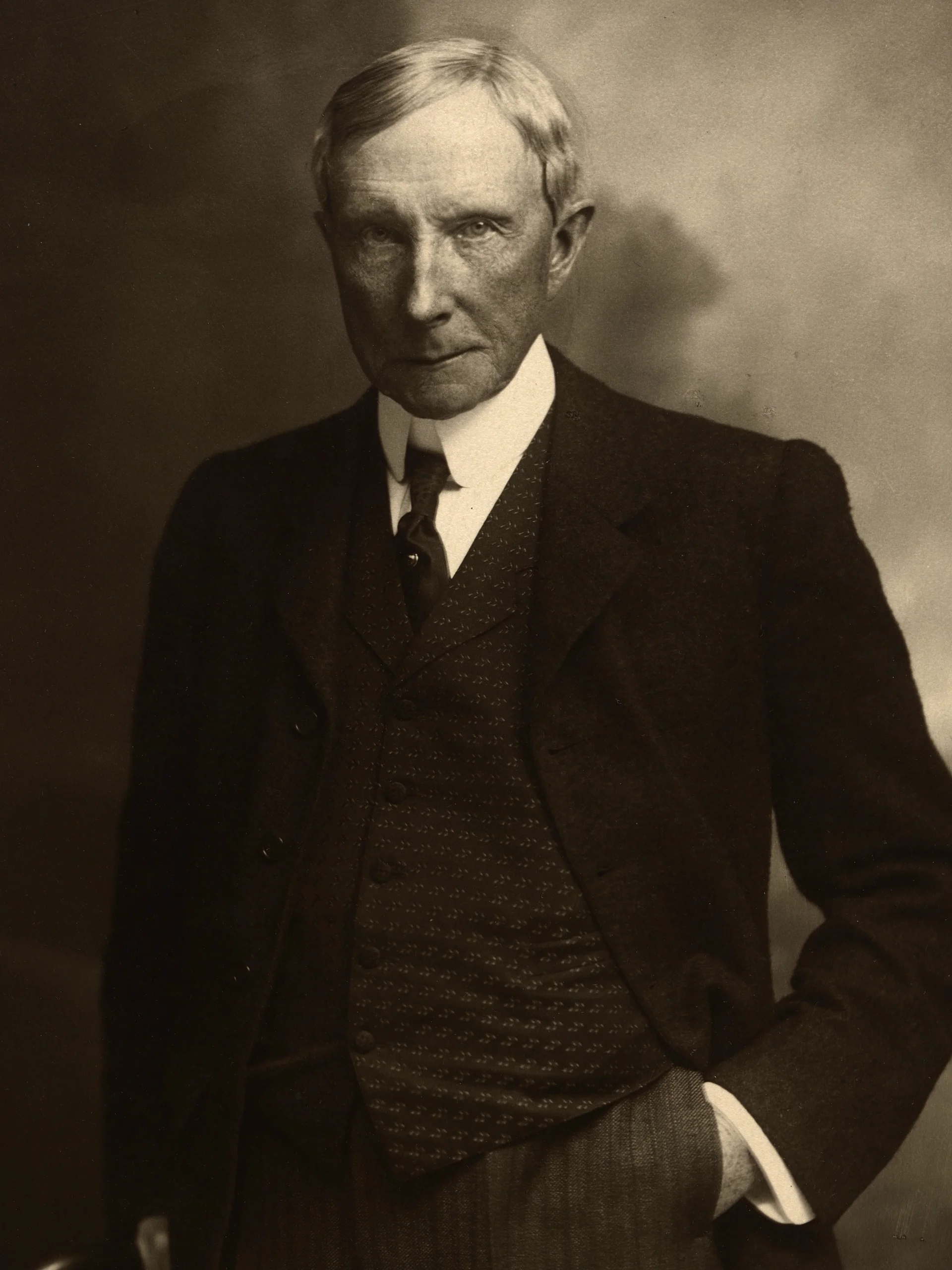
John D. Rockefeller
 United States
Also known as: John Davison Rockefeller, John D. Rockefeller Sr.
Compleanno
July 8, 1839
Segno Zodiacale
Cancer
Luogo di Nascita
Richford, New York, USA
Età
Morto/a a 97 anni
Informazioni
John D. Rockefeller Sr. è stato un industriale e filantropo statunitense che fondò la Standard Oil Company e divenne uno degli individui più ricchi della storia. Iniziò la carriera come contabile assistente a 16 anni e a 20 anni entrò in società commerciali. La sua attenzione si concentrò presto sul settore della raffinazione del petrolio, una scelta lungimirante poiché cherosene e benzina divennero beni essenziali.
Rockefeller fondò la Standard Oil Company nel 1870 e la diresse fino al 1897, rimanendone il maggiore azionista. Sotto la sua guida, Standard Oil crebbe fino a controllare un sorprendente 90% della produzione nazionale di petrolio entro il 1900. L'azienda raggiunse questo dominio attraverso un'aggressiva riduzione dei costi e metodi di distribuzione innovativi. I critici sottolinearono le pratiche monopolistiche, citando la famosa opinione di Rockefeller secondo cui "La concorrenza è un peccato".
L'immenso successo di Standard Oil attirò l'attenzione delle autorità di regolamentazione. Nel 1911, la Corte Suprema ne ordinò lo scioglimento, dividendola in 34 entità indipendenti, molte delle quali, come ExxonMobil e Chevron, esistono ancora oggi. Al suo apice, il patrimonio personale di Rockefeller era stimato a 900 milioni di dollari, pari al 2,3% del PIL statunitense. Divenne ufficialmente il primo miliardario del paese il 28 settembre 1916.
Dopo il ritiro, Rockefeller dedicò 40 anni alla filantropia. Lui e sua moglie Laura fondarono istituzioni che pionieristicamente promossero la donazione sistematica, concentrandosi su istruzione, medicina e ricerca scientifica. Questi sforzi fecero progredire la ricerca medica e combatterono malattie come l'anchilostomiasi e la febbre gialla. Fondò anche l'Università di Chicago e la Rockefeller University, plasmando l'istruzione superiore e la scienza medica. Rockefeller morì il 23 maggio 1937, lasciando un'eredità sia come titano industriale che come filantropo trasformativo.
Primi Anni e Background
Rockefeller nacque l'8 luglio 1839 a Richford, New York, secondo di sei figli. Suo padre, William Avery Rockefeller, era un venditore ambulante spesso assente, mentre sua madre, Eliza Davison, allevò i figli con rigidi valori battisti. La famiglia si trasferì diverse volte prima di stabilirsi a Cleveland, Ohio, nel 1853. Fin da giovane, Rockefeller mostrò un acuto senso degli affari, tenendo meticolosi registri e risparmiando denaro da lavoretti occasionali. Frequentò le scuole locali e, a 16 anni, si iscrisse al Folsom's Commercial College di Cleveland per studiare contabilità, completando un corso di tre mesi.
Nel 1855, all'età di 16 anni, Rockefeller ottenne un lavoro come contabile assistente presso Hewitt & Tuttle, un'azienda di commissioni di prodotti agricoli. Lavorò diligentemente, guadagnandosi una reputazione di precisione e affidabilità. Risparmiò i suoi guadagni e nel 1859, a 20 anni, si associò a Maurice B. Clark per formare Clark & Rockefeller, un'azienda che commerciava prodotti agricoli e merci. La scoperta del petrolio a Titusville, Pennsylvania, nel 1859 attirò la sua attenzione. Riconoscendo il potenziale del petrolio, Rockefeller e Clark investirono in una raffineria di petrolio a Cleveland nel 1863, segnando il suo decisivo passaggio al settore petrolifero. Questa raffineria, costruita con un socio, fu la base del suo futuro impero.
Crescita Professionale
L'impresa più significativa di Rockefeller fu la fondazione della Standard Oil Company nel 1870, con soci tra cui suo fratello William, Henry M. Flagler e Stephen V. Harkness. Sotto la sua guida, Standard Oil crebbe attraverso un'aggressiva integrazione orizzontale e verticale, mirando a controllare tutti gli aspetti della produzione e distribuzione del petrolio. Entro il 1880, Standard Oil controllava circa il 90% della capacità di raffinazione petrolifera statunitense. L'azienda raggiunse economie di scala che le permisero di sottostare i concorrenti e negoziare tariffe ferroviarie favorevoli.
Nel 1882, Standard Oil fu riorganizzata come trust, una struttura che centralizzava il controllo e divenne un modello per altre industrie. Rockefeller si ritirò dalla gestione quotidiana nel 1897 ma rimase il maggiore azionista. Il dominio dell'azienda portò alla decisione della Corte Suprema del 1911 che ne ordinò lo scioglimento in 34 società indipendenti, molte delle quali, come ExxonMobil e Chevron, rimangono grandi aziende. Il patrimonio personale di Rockefeller raggiunse un picco stimato di 900 milioni di dollari, circa il 2,3% del PIL statunitense. Il 28 settembre 1916 divenne il primo americano ufficialmente riconosciuto come miliardario.
Cronologia Carriera
Immagine Pubblica e Stile
L'immagine pubblica di Rockefeller è complessa e polarizzante. Per i suoi ammiratori, era un industriale visionario che rivoluzionò la produzione e distribuzione del petrolio, rendendo cherosene e benzina accessibili a tutti. Il suo lavoro filantropico, in particolare nella ricerca medica e nell'istruzione, gli valse un ampio rispetto. I critici, tuttavia, lo vedevano come un monopolista spietato che usava tattiche predatorie per schiacciare la concorrenza, fissare i prezzi e corrompere i politici. L'inchiesta della giornalista investigativa Ida Tarbell del 1904, "The History of the Standard Oil Company", plasmò la percezione pubblica di lui come un robber baron. Nei suoi ultimi anni, Rockefeller coltivò un'immagine da nonno affettuoso, distribuendo monetine e giocando a golf. Non era una celebrità nel senso moderno, ma il suo nome divenne sinonimo di ricchezza estrema e potere aziendale. Non esiste un fandom formale, ma storici ed economisti continuano a dibattere sulla sua eredità.
Fama e fandom
John D. Rockefeller remains a towering figure in global history, though his legacy operates differently than modern celebrity culture. As of August 2026, the iFANN Global Fame Engine has evaluated this person, but they do not currently hold a placement in the published rankings such as the Global Top 1,000 or any Top-100 scope list. This absence reflects a unique status where historical influence transcends contemporary fame metrics rather than indicating obscurity. While he lacks a formal fandom name and no organized group identifies themselves as his fans, his enduring presence is maintained through the institutions he built rather than social media campaigns or fan rituals. The Rockefeller Foundation and the University of Chicago serve as living monuments to his life, drawing scholars and donors who engage with his philosophy of stewardship instead of chasing viral moments. His story continues to shape discussions on wealth, monopoly, and philanthropy, creating a quiet but pervasive cultural footprint that does not require active fan mobilization to sustain its relevance.
Curiosità e leggende
Rockefeller was a devout Baptist who tithed 10% of his income from his very first paycheck onward. He often gave dimes to children as a gesture of goodwill and never smoked or drank alcohol. An avid golfer, he played into his 90s and maintained greenhouses at his estate in Pocantico Hills, New York, where his favorite flower, the orchid, bloomed. Despite his vast fortune, he lived modestly, avoiding ostentation, and kept a diary from age 16 until his death to document his finances and thoughts. He was known for strict punctuality and expected the same from others. Beyond these personal habits, legends surround him as the world's first dollar billionaire, a milestone officially crossed in 1916 when his wealth peaked at $900 million. A central part of his lore involves the antitrust case Standard Oil Co. of New Jersey v. United States, which led to the company's breakup in 1911 after controlling 90% of U.S. refineries. Another enduring narrative is his transition from a ruthless tycoon to a benevolent philanthropist who gave away $540 million before his death, establishing foundations that continue to operate globally today.
Citazioni Notevoli
“The ability to deal with people is as much a commodity as sugar or coffee and I will pay more for that ability than for any other under the sun.”
“I believe it is the duty of every man who has been blessed by the opportunities of this land to help his fellow men.”
“Competition is a sin.”
Famiglia e Vita Privata
Rockefeller sposò Laura Spelman l'8 settembre 1864. Laura era un'insegnante e figlia di un importante abolizionista. Ebbero sei figli: Bessie (morta in tenera età), Elizabeth, John D. Jr., Alta, Edith e Rodman (morto durante l'infanzia). Laura fu un'influenza chiave nella svolta filantropica di Rockefeller, e lui le attribuì il merito di aver plasmato la sua bussola morale. Morì il 29 marzo 1915. Rockefeller non si risposò mai. Suo figlio, John D. Rockefeller Jr., divenne un noto filantropo e costruì il Rockefeller Center. La tenuta di famiglia a Pocantico Hills, New York, divenne un luogo di ritrovo per generazioni. I discendenti di Rockefeller hanno continuato la sua eredità filantropica attraverso la Rockefeller Foundation e altre istituzioni.
Collegamenti Notevoli
Rockefeller era strettamente legato alla moglie Laura Spelman Rockefeller, che influenzò la sua filantropia. Suo figlio John D. Rockefeller Jr. proseguì la sua opera filantropica. Tra i soci in affari figurano Henry M. Flagler, Stephen V. Harkness e suo fratello William Rockefeller. Il primo socio Maurice B. Clark contribuì a lanciare la sua carriera. Fu anche associato alla giornalista investigativa Ida Tarbell, la cui inchiesta plasmò la sua immagine pubblica.
Relazioni e Storia Dating
John D. Rockefeller sposò Laura Spelman l'8 settembre 1864. Laura era un'insegnante proveniente da un'importante famiglia abolizionista. Ebbero sei figli, anche se due morirono in giovane età. Laura fu un'influenza stabilizzante per Rockefeller e incoraggiò la sua svolta filantropica. Furono sposati per oltre 50 anni, fino alla morte di Laura il 29 marzo 1915. Rockefeller non si risposò mai e rimase devoto alla sua memoria. Spesso diceva che lei era stata la miglior decisione d'affari della sua vita. Al 2026, Rockefeller è deceduto e il suo stato civile è vedovo.
- Sposato/aLaura Spelman Rockefeller1864 - 1915Sposato l'8 settembre 1864; lei morì il 29 marzo 1915.
Morte e conseguenze
Morto/a
May 23, 1937 (a 97 anni)
Luogo di morte
Ormond Beach, Florida
Causa della morte
Natural causes related to his age
John Davison Rockefeller Sr. died on May 23, 1937, at his winter residence in Ormond Beach, Florida. While specific medical details were not released in a formal public autopsy report or coroner's inquest, historical accounts confirm he died peacefully in his sleep following a period of declining health associated with his advanced age. Regarding the circumstances of his final days, Rockefeller had been living in semi-retirement for many years, having stepped down from active management of Standard Oil decades earlier. His last public appearances occurred years prior to his death, as he largely withdrew from public life after the early 1920s to focus on philanthropy and personal well-being. The cause of death is officially attributed to natural causes related to his age, with no disputed accounts or unconfirmed theories regarding homicide or suicide present in historical records.
Public reaction to his death was characterized by widespread mourning and tributes from peers, institutions, and government officials. Upon his death, newsreels described him as a figure whose kindliness and simplicity marked his long life. Memorial murals and landmarks dedicated to him existed prior to his death, most notably the Rockefeller Center in New York City and various university buildings. The funeral for John D. Rockefeller Sr. was held privately on May 25, 1937, at the Rockefeller estate in Ormond Beach, Florida. The service was attended by family members, close associates, and representatives from the Rockefeller Foundation and other charitable institutions he supported. Notable attendees included his son, John D. Rockefeller Jr., and other prominent figures of the time. Following the service, he was buried in the Sleepy Hollow Cemetery in Tarrytown, New York, alongside his wife, Laura Spelman Rockefeller, and later his son, William Rockefeller Jr.
In the posthumous realm, Rockefeller's estate was handled through a complex process of wealth distribution and philanthropic expansion. By the time of his death, he had already given away approximately $540 million, making him one of the first individuals to donate more than half their fortune. His estate continued to be managed by the Rockefeller Foundation, which he established in 1913, and the General Education Board. A documentary titled Rockefeller - The Original Billionaire was produced later to document his life, and he has been inducted into various halls of fame posthumously. The handling of his estate ensured that the bulk of his remaining assets were funneled into charitable trusts, effectively ending the dynasty of absolute financial control within the family while maintaining its social and philanthropic influence.
Patrimonio (Valore immobiliare)
$1.4 Billion
Stima del team editoriale di iFANN
iFANN currently estimates John D. Rockefeller's net worth at the time of his death in 1937 to be $1.4 Billion. This figure reflects the immense value derived primarily from his ownership stake in Standard Oil and its successor companies following the 1911 breakup. He also held extensive investments in railroads, real estate, and other industries throughout his career. After his death, his estate was largely distributed to his heirs and the foundations he established, including the Rockefeller Foundation and Rockefeller University. The ongoing operations of these institutions, along with the continued growth of the Rockefeller family's wealth through investments, mean that his financial legacy persists. As of 2026, the Rockefeller family's collective net worth is estimated to be in the billions, though it is dispersed among many descendants. The exact value of Rockefeller's original estate in 2026 is not publicly reported, but the institutions he founded continue to hold significant endowments.
Premi e Lodi
View 6 records, honours and achievementsNoto Per
Standard Oil Company
1870 · Founder and Chairman
Rockefeller Foundation
1913 · Founder
University of Chicago
1890 · Founder
Rockefeller University
1901 · Founder
Parole chiave
Fatti Rapidi
- Professione
- industrialist, philanthropist
- Nato/a
- +1839-07-08
- Luogo di Nascita
- Richford, New York, USA
- Morto/a
- +1937-05-23
- Luogo di morte
- Ormond Beach, Florida, USA
- Genere
- Maschio
- Coniuge
- Laura Spelman Rockefeller
- Segno Zodiacale
- Cancer
Dettagli Personali
- Nome Completo
- John Davison Rockefeller
- Coniuge
- Laura Spelman Rockefeller
- Figli
- Bessie Rockefeller, Elizabeth Rockefeller, John D. Rockefeller Jr., Alta Rockefeller, Edith Rockefeller, Rodman Rockefeller
- Istruzione
- Folsom's Commercial College (bookkeeping)
Domande Frequenti
Chi era John D. Rockefeller?
Come fece fortuna John D. Rockefeller?
Qual era il patrimonio di John D. Rockefeller?
John D. Rockefeller è ancora vivo?
Per cosa è conosciuto John D. Rockefeller oltre agli affari?
Persone Simili
Unisciti alla community
fan che discutono