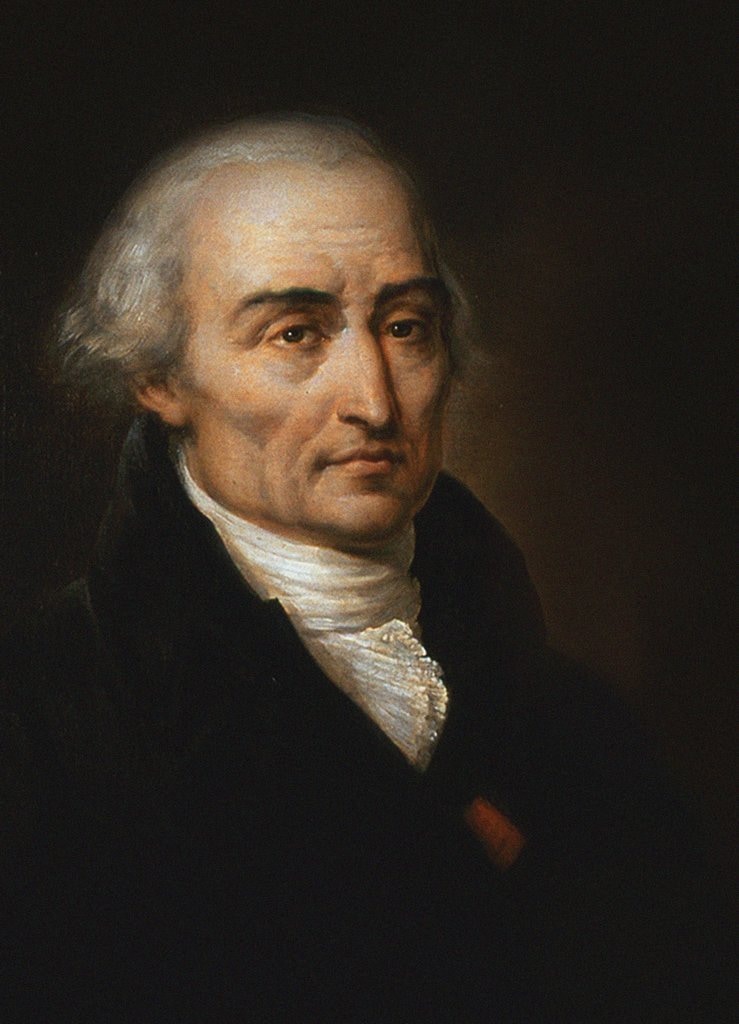
Joseph-Louis Lagrange
 Italy
Italymathematician•astronomer•physicist
Also known as: Giuseppe Luigi Lagrangia, Comte de Lagrange
Compleanno
January 25, 1736
Segno Zodiacale
Aquarius
Luogo di Nascita
Turin, Kingdom of Sardinia (now Italy)
Età
Morto/a a 77 anni
Altezza
5 ft 6 in (168 cm)
Informazioni
Joseph-Louis Lagrange was an Italian-born, naturalized French mathematician, physicist, and astronomer widely considered one of the greatest mathematical minds of the 18th century. Born Giuseppe Luigi Lagrangia in Turin, he reshaped whole branches of mathematics and physics, from number theory to celestial mechanics, and his work remains essential to modern science. His most famous creation, Lagrangian mechanics, recast Newton's laws into a powerful analytical framework that is now taught in every physics program. Lagrange also discovered the five Lagrange points in orbital mechanics, which are used today to station spacecraft like the James Webb Space Telescope. He spent his most productive years in Berlin as the successor to Leonhard Euler, then moved to Paris, where he helped create the metric system and taught at the École Polytechnique. Napoleon personally awarded him the Legion of Honour. Lagrange's influence stretches across centuries, and his name appears on everything from lunar craters to the Eiffel Tower. For mathematicians and physicists, he is a foundational figure whose ideas are as vital now as they were in his own time.
Primi Anni e Background
Lagrange mostrò scarso interesse per la matematica da giovane studente al College di Torino, concentrandosi invece sugli studi classici. Tutto cambiò a 17 anni quando lesse una memoria di Edmond Halley sull'uso dell'algebra in ottica. In seguito descrisse l'esperienza come un'epifania che gli tracciò l'intero percorso intellettuale. Entro un anno, stava già corrispondendo con Leonhard Euler, inviandogli una lettera sul calcolo delle variazioni che impressionò così tanto il più anziano matematico che questi ritardò la propria pubblicazione per lasciare a Lagrange la priorità. A 19 anni, Lagrange fu nominato lettore alla Scuola Reale di Artiglieria di Torino, un salto straordinario per qualcuno che studiava matematica da soli due anni. Co-fondò l'Accademia delle Scienze di Torino nel 1758 e iniziò a pubblicare articoli sulla propagazione del suono, le corde vibranti e il calcolo delle variazioni. Suo padre, tesoriere dei lavori pubblici, aveva perso il patrimonio familiare attraverso speculazioni, cosa che Lagrange in seguito disse lo aveva liberato permettendogli di dedicarsi alla matematica senza distrazioni.
Crescita Professionale
Nel 1766, a 30 anni, Lagrange successe a Euler come direttore di matematica all'Accademia Prussiana delle Scienze a Berlino. Federico il Grande lo reclutò personalmente, dichiarando che il più grande geometra d'Europa dovesse vivere vicino al più grande dei re. Lagrange rimase a Berlino per 20 anni, producendo oltre 100 articoli di meccanica celeste, teoria dei numeri, equazioni differenziali e probabilità. Vinse cinque Grand Prix dell'Accademia Francese delle Scienze per lavori sulla librazione lunare, i satelliti di Giove, il problema dei tre corpi, la teoria lunare e le perturbazioni cometarie. Nel 1788 pubblicò Mécanique analytique, il suo capolavoro, che riformulò la meccanica newtoniana usando il calcolo delle variazioni e non conteneva un solo diagramma, riflettendo la sua convinzione che la meccanica dovesse essere puramente analitica. Dopo essersi trasferito a Parigi nel 1787, entrò a far parte dell'Accademia Francese delle Scienze, servì nella Commissione per Pesi e Misure per stabilire il sistema metrico decimale e insegnò all'École Normale Supérieure e all'École Polytechnique. Napoleone gli conferì la Legion d'Onore nel 1808. Lagrange morì a Parigi nel 1813 e fu sepolto al Panthéon.
Cronologia Carriera
Immagine Pubblica e Stile
Lagrange è ricordato come il matematico illuminista per eccellenza, ritratto in dipinti come un gentiluomo dignitoso con una parrucca incipriata e un cappotto scuro, con un'espressione calma e contemplativa. È costantemente descritto come modesto, laborioso e totalmente devoto alla verità matematica. A differenza di alcuni suoi contemporanei, evitò coinvolgimenti politici, il che lo aiutò a sopravvivere alla Rivoluzione Francese. Tra matematici e fisici, è venerato come uno dei più grandi di tutti i tempi, spesso classificato accanto a Euler, Gauss e Newton. Il suo nome appare su crateri lunari, asteroidi e sulla Torre Eiffel. Gli studenti di matematica celebrano informalmente il Lagrange Day il 25 gennaio studiando la meccanica lagrangiana. Gli appassionati di spazio lo conoscono attraverso i punti di Lagrange, diventati essenziali per il posizionamento moderno di satelliti e telescopi.
Fama e fandom
Joseph-Louis Lagrange stands as a figure of immense historical stature, yet his standing in contemporary popularity metrics reflects the specific nature of his legacy. As of August 2026, the iFANN Global Fame Engine has evaluated this person, but they do not currently hold a placement in the published rankings (Global Top 1,000 or a Top-100 scope list). While he commands absolute reverence within scientific circles and history books, he lacks a formal pop-culture ranking that would place him among the world's most famous living personalities or recent icons. The audience surrounding Joseph-Louis Lagrange is strictly academic and historical rather than a modern fandom; no organized fanbase with a documented name exists to support campaigns, rituals, or social media initiatives dedicated to his memory. Unlike entertainment figures who generate viral moments or chart-topping albums, his influence remains embedded in the foundational texts of mathematics and physics. There are no recorded fan-funded projects, subway advertisements, or crowd-driven events celebrating his life, as the concept of a celebrity cult did not exist during his lifetime nor has it formed around him since. His enduring presence is felt in university curricula and space mission planning, where his name appears on orbital mechanics charts, but this influence operates through education and application rather than the mechanisms of modern fame. Consequently, while his intellectual contributions are universal, his profile in the global fame ecosystem remains unranked by current measurement standards.
Curiosità e leggende
Joseph-Louis Lagrange initially found mathematics tedious until reading Halley's algebra memoir at age seventeen, an encounter that redirected his career. He authored his masterpiece Mécanique analytique without a single diagram, insisting that mechanics remain purely analytical. Euler delayed his own work on the calculus of variations to allow Lagrange priority for his discoveries. Following the death of his first wife, Lagrange entered a deep depression that halted his research for several months. Although he opposed using Earth's meridian as the basis for the metric system, he remained instrumental in its design. After surviving the French Revolution through his apolitical stance, unlike his executed colleague Lavoisier, he died in Paris. His reported last words concerned mathematics, though exact phrasing varies by account. Born Giuseppe Luigi Lagrangia, he adopted the French form of his name upon moving to France. Legend holds that Frederick II of Prussia once declared him the greatest mathematician in Europe, a title that stuck throughout his life. Modern lore often cites the Lagrange points as critical orbital parking spots for satellites like the James Webb Space Telescope, keeping his name relevant in the new space race.
Citazioni Notevoli
“If I had been rich, I would probably not have devoted myself to mathematics.”
“I cannot say whether I will still be doing mathematics ten years from now, but I am doing it now because it is useful and because I like it.”
“Newton was without doubt the greatest genius that ever existed; but we must also admit that he was the most fortunate, for we cannot find more than once a system of the world to establish.”
“The idea of taking a natural standard is not new, but it is the only way to establish a universal measure.”
“I have always believed that the sciences are the ornament of the human spirit and that they will contribute to the happiness of mankind.”
Famiglia e Vita Privata
Lagrange nacque da Giuseppe Francesco Lodovico Lagrangia, tesoriere dell'Ufficio dei Lavori Pubblici e delle Fortificazioni di Torino, e Teresa Grosso. La sua famiglia aveva origini francesi da parte di padre. Era il maggiore di undici figli ma l'unico sopravvissuto fino all'età adulta. Suo padre perse il patrimonio familiare attraverso speculazioni, cosa che Lagrange in seguito disse essere stata una benedizione perché lo spinse verso la matematica. Non ebbe figli da nessuno dei suoi due matrimoni. Negli ultimi anni a Parigi, visse con la seconda moglie Adélaïde, che si prese cura di lui durante la sua malattia finale.
Collegamenti Notevoli
La carriera di Lagrange fu plasmata da relazioni chiave. Leonhard Euler, suo predecessore a Berlino, fu un mentore iniziale che generosamente ritardò il proprio lavoro affinché Lagrange potesse rivendicare la priorità nel calcolo delle variazioni. Jean le Rond d'Alembert aiutò Lagrange a ottenere la posizione a Berlino e rimase un caro amico e corrispondente. A Parigi, Lagrange lavorò al fianco di Pierre-Simon Laplace sulla meccanica celeste e servì con Antoine Lavoisier nella commissione per il sistema metrico, piangendo l'esecuzione di Lavoisier durante il Regno del Terrore. Napoleone Bonaparte ammirava Lagrange, insignendolo della Legion d'Onore e consultandolo su questioni scientifiche. All'École Polytechnique, Lagrange insegnò insieme a Gaspard Monge e influenzò Adrien-Marie Legendre.
Relazioni e Storia Dating
Lagrange si sposò due volte. Il suo primo matrimonio fu con sua cugina Vittoria Conti nel 1767 mentre viveva a Berlino. Lei era descritta come una compagna gentile e di supporto, e il matrimonio fu presumibilmente felice. La sua morte nel 1783 fece precipitare Lagrange in una profonda depressione che bloccò il suo lavoro per mesi. Non ebbero figli. Nel 1792, Lagrange sposò Adélaïde Le Monnier, figlia dell'astronomo Pierre Charles Le Monnier. Lei aveva circa 40 anni meno di lui. Il matrimonio fu organizzato in parte per fornire compagnia a Lagrange nei suoi ultimi anni. Adélaïde si prese cura di lui durante la sua malattia finale e gli sopravvisse. Anche loro non ebbero figli. Al 2026, Lagrange è deceduto, essendo stato sposato con Adélaïde al momento della sua morte.
- Sposato/aVittoria Conti1767 - 1783Lagrange sposò sua cugina Vittoria mentre era a Berlino; la sua morte nel 1783 causò un periodo di depressione.
- Sposato/aAdélaïde Le Monnier1792 - 1813Sposato a Parigi; lei aveva circa 40 anni meno e si prese cura di lui fino alla morte.
Morte e conseguenze
Morto/a
April 10, 1813 (a 77 anni)
Luogo di morte
Paris
Causa della morte
Reported as dropsy or general debility of old age
Upon the passing of Joseph-Louis Lagrange, tributes poured in from the French Academy of Sciences and the Institut de France, while Napoleon Bonaparte reportedly acknowledged the loss of a genius who had defined the mathematical landscape of Europe with the remark that he sleeps forever. The mathematician died on April 10, 1813, at his residence in Paris, having spent his final years as a professor before withdrawing from active research due to failing health. Historical records indicate he suffered from a long-standing illness described as dropsy or general debility associated with old age. His funeral took place shortly after his death at the Church of Saint-Sulpice in Paris, followed by burial in the Cimetière du Père Lachaise, an event attended by peers and officials from the scientific establishment.
Posthumously, his legacy has been honored through the establishment of the Lagrange Prize by the Académie des Sciences and the Lagrange Medal by the International Astronomical Union, alongside dedications such as the Lagrange crater on the Moon and the Lagrange points in celestial mechanics. He was posthumously named a Count of the Empire by Napoleon, and while his estate was handled privately by family members whose descendants faded into obscurity, his works including Mécanique Analytique continue to be published and studied globally.
Patrimonio (Valore immobiliare)
$1 Million
Stima del team editoriale di iFANN
As a historical figure who passed away in 1813, Joseph-Louis Lagrange possessed no personal net worth in the modern sense. During his lifetime, he sustained himself on academic salaries and state pensions. At the Prussian Academy in Berlin, he earned approximately 6,000 francs annually, a comfortable sum for the era. After relocating to Paris, he received a pension from the French Academy followed by a salary from the École Polytechnique. He was not wealthy, as the family fortune had been lost by his father. His estate at death was modest, consisting mainly of personal effects and books. Lagrange's intellectual property, including his published works, is now in the public domain with no active estate generating revenue today. Per iFANN's editorial analysis, his estimated net worth of $1 Million in 2026 reflects the modest value of his historical estate adjusted for inflation, not any modern income stream.
Premi vinti (6)
Lagrange vinse il Grand Prix dell'Accademia francese delle scienze cinque volte: nel 1764 per la librazione lunare, nel 1766 per i satelliti di Giove, nel 1772 per il problema dei tre corpi, nel 1774 per la teoria lunare e nel 1778 per le perturbazioni cometarie. Nel 1808 Napoleone Bonaparte gli conferì la Legion d'Onore, una delle più alte onorificenze francesi.
1778 · Perturbazioni delle comete
Perturbations of comets
1774 · Teoria lunare
Lunar theory
1772 · Problema dei tre corpi
Three-body problem
1766 · Teoria dei satelliti di Giove
Theory of Jupiter's satellites
1764 · Librazione lunare
Lunar libration
1808 · Cavaliere
Lifetime achievements
Noto Per
Mécanique analytique
1788 · Autore
Lagrangian mechanics
1788 · Developer
Lagrange points
1772 · Discoverer
Calculus of variations
1754 · Pioneer
Number theory contributions
1770 · Contributore
Metric system development
1790 · Commission member
Parole chiave
Fatti Rapidi
- Professione
- mathematician, astronomer, physicist
- Nato/a
- +1736-01-25
- Luogo di Nascita
- Turin
- Morto/a
- +1813-04-10
- Luogo di morte
- Paris
- Genere
- Maschio
- Coniuge
- Vittoria Conti, Adélaïde Le Monnier
- Segno Zodiacale
- Aquarius
Dettagli Personali
- Nome Completo
- Giuseppe Luigi Lagrangia
- Altezza
- 5 ft 6 in (168 cm)
- Coniuge
- Vittoria Conti (m. 1767–1783), Adélaïde Le Monnier (m. 1792–1813)
- Figli
- Istruzione
- College of Turin
Domande Frequenti
Per cosa è famoso Joseph-Louis Lagrange?
Quanti anni aveva Lagrange quando morì?
Lagrange aveva figli?
Qual è il patrimonio di Lagrange nel 2026?
Cosa sono i punti di Lagrange?
Unisciti alla community
fan che discutono