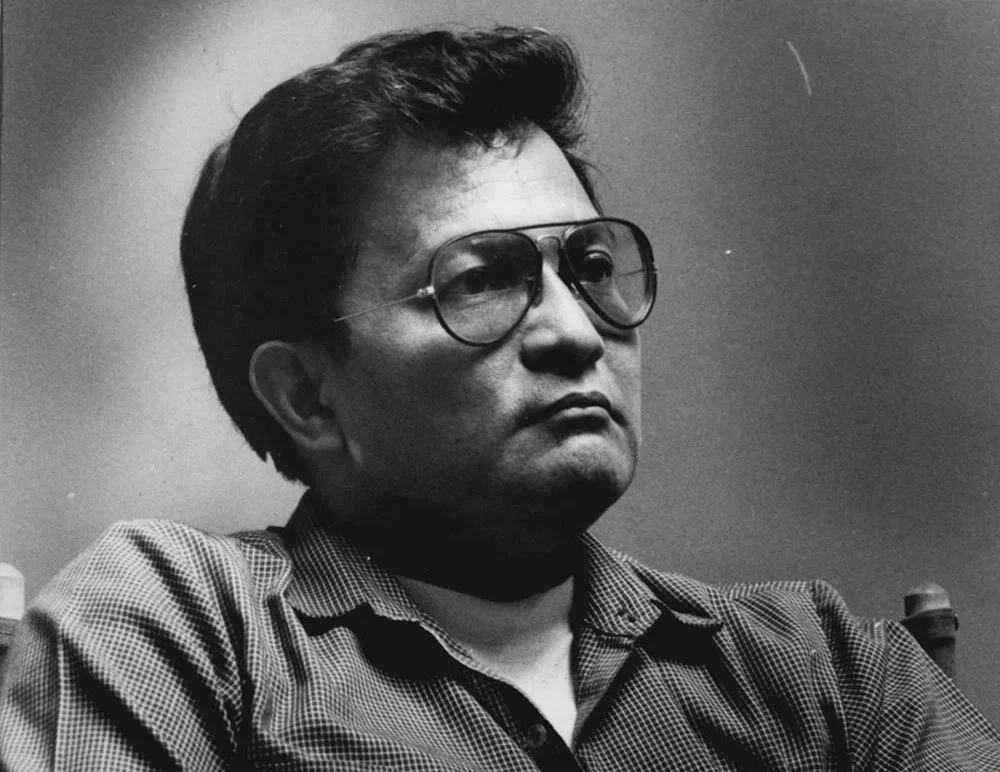
Lino Brocka
 Philippines
Also known as: Catalino Ortiz Brocka
Compleanno
April 3, 1939
Segno Zodiacale
Aries
Luogo di Nascita
Pilar, Sorsogon, Philippines
Età
Morto/a a 52 anni
Informazioni
Lino Brocka was the towering figure of Philippine cinema, a director who made over 60 films in two decades by threading social realism through crowd-pleasing melodrama. Born Catalino Ortiz Brocka in 1939, he started in theater and television before his 1970 debut Wanted: Perfect Mother. His breakthrough came with Weighed But Found Wanting (1974), but the landmark was Manila in the Claws of Light (1975), widely called the greatest Filipino film ever made. Insiang (1976) became the first Philippine film to screen at Cannes, followed by Jaguar (1979) and This Is My Country (1984). Brocka's work openly attacked the Marcos dictatorship, and he paid for that activism with arrests and death threats. He died in a car crash in 1991 at 52. In 1997, he was named a National Artist of the Philippines. Today, his films are studied as masterclasses in using popular cinema to tell hard truths about poverty, power, and survival.
Primi Anni e Background
Brocka crebbe povero a Pilar, Sorsogon, poi si trasferì a San Jose, Nueva Ecija, dove frequentò la San Jose Central School e si diplomò alla Nueva Ecija High School nel 1956. Suo padre morì quando era giovane, e visse con parenti spesso violenti. Trovò rifugio nei cinema, entrando di nascosto quando non poteva più permettersi i biglietti. I film di Rene Clement e Federico Fellini lo facevano piangere e lo facevano sentire connesso all'umanità. In seguito disse che i film divennero un'ossessione tale che doveva farli, voleva toccare sconosciuti che non aveva mai visto. Nonostante la povertà, eccelleva a livello accademico e vinse una borsa di studio per l'Università delle Filippine. Lì si unì al club teatrale diretto dall'Artista Nazionale Wilfrido Ma. Guerrero e successivamente alla Philippine Educational Theatre Association (PETA), dove incontrò la fondatrice Cecille Guidote. Quel collegamento portò al suo primo film. In questo periodo, l'amico Behn Cervantes lo introdusse al mormonismo. Brocka si convertì e trascorse un anno a Molokai, Hawaii, prendendosi cura di lebbrosi, sperando di trovare risposte sulla sua omosessualità. Tornò a Manila dopo aver cercato una chiusura.
Crescita Professionale
Il debutto di Brocka come regista, Wanted: Perfect Mother (1970), fu un melodramma commerciale che gli diede un punto d'appoggio nell'industria. Quello stesso anno diresse Dipped in Gold, un adattamento di una storia a fumetti di Mars Ravelo su un uomo d'affari gay nascosto. Il riconoscimento critico arrivò con Weighed But Found Wanting (1974), un film che dimostrò che arte e commercio potevano coesistere. Poi venne Manila in the Claws of Light (1975), un ritratto brutale della povertà urbana sotto la legge marziale, oggi considerato il più grande film filippino di tutti i tempi. Insiang (1976) fece storia come primo film filippino proiettato a Cannes. Jaguar (1979) e This Is My Country (1984) furono anch'essi proiettati a Cannes. Nel 1983 fondò i Concerned Artists of the Philippines per difendere la libertà di espressione. L'anno successivo fu arrestato e incarcerato per aver protestato contro la censura dei media sotto Marcos. Ricevette il Premio Ramon Magsaysay nel 1985. Nel 1986 fece parte della giuria di Cannes e fu nominato dal presidente Corazon Aquino alla Commissione Costituzionale del 1986, dalla quale poi si dimise. Le sue opere successive includono Macho Dancer (1988) e Orapronobis (1989). Il suo ultimo film fu Dirty Affair (1990).
Cronologia Carriera
Immagine Pubblica e Stile
Brocka è ricordato come il più grande regista filippino e un attivista impavido. Il suo stile distintivo fonde melodramma e realismo sociale, creando film ricchi di realismo e commento sociale. Usò il cinema come arma contro l'autoritarismo, e fan e critici celebrano il suo coraggio. Non esiste un nome ufficiale per il fandom, ma il suo lavoro è studiato nelle università e proiettato in retrospettive in tutto il mondo. I suoi film sono noti per il loro sguardo crudo e impietoso su povertà, corruzione e oppressione.
Fama e fandom (iFAMOUS Rankings)
Lino Brocka never cultivated a celebrity fanbase in the traditional sense, nor did he inspire organized groups with catchy names or rituals. His legacy survives not through billboards or fan clubs, but through the quiet devotion of cinephiles, scholars, and activists who treat his filmography as sacred cultural heritage. This audience operates through formal channels like university departments and international festivals rather than grassroots campaigns, organizing restorations and screenings to keep his vision alive against the erosion of time. The reverence for Brocka is defined by his role as a voice for the marginalized during the Martial Law era, creating a bond with the public that transcended typical star worship. His fanbase has no formal name. In August 2026, the iFANN Global Fame Engine evaluated Lino Brocka's standing in the global consciousness. While his influence remains profound, he currently holds no placement in the published rankings, including the Global Top 1,000 or any scope-specific lists. This absence of a numeric rank reflects the unique nature of his fame: it is deeply rooted in historical significance and academic study rather than current search volume or media consumption signals worldwide. The evaluation confirms that while Brocka is a towering figure in Philippine cinema history, he does not currently generate the continuous, mass-market engagement required for a specific global ranking position. His status remains that of an icon whose work is preserved and studied, rather than a personality tracked by real-time popularity metrics.
Curiosità e leggende
Lino Brocka was one of the first Mormon converts in the Philippines. He directed over 60 films in just two decades, averaging three movies per year.
Wanted: Perfect Mother stood out as the only film he made that did not focus heavily on social injustice. His father is believed to have been politically killed, and Brocka himself feared for his life in his later years due to threats stemming from his activism. At age 25, he learned the craft of directing by joining the Theatre Club led by Wilfrido Ma. Guerrero. A signature element of his filmmaking style involves characters frequently wielding pointed or sharp objects.
Legends surrounding Brocka often recount his physical presence in the thick of protests that culminated in the ouster of dictator Ferdinand Marcos. This transition from filmmaker to active participant in the People Power Revolution defines his mythos as the "spokesman of the generation." Fans also retell the story of *Macho Dancer* evolving from a commercial hit into a landmark of queer Asian cinema, a journey highlighted by its recent restoration and return to US screens for Pride Month premieres. Another enduring tale involves the near-loss of his works, such as a nearly lost film rescued by academic intervention in 2024, proving the fragility of his legacy and the dedication required to preserve it.
Citazioni Notevoli
“When I was young, I used to cry too inside the theater, watching films by Rene Clement and Fellini. I felt vindicated, an integral part of humanity. Films became such an obsession that I had to make them...I wanted to touch strangers I had never seen.”
“I make films about the poor because I am one of them. I know their pain.”
“The artist must be involved. He cannot just sit and watch.”
Famiglia e Vita Privata
Il padre di Brocka morì quando era bambino; alcune fonti suggeriscono che sia stato ucciso politicamente. Visse con sua madre e sua sorella, spostandosi tra parenti severi e violenti. Suo nipote è Q. Allan Brocka, regista e sceneggiatore televisivo noto per Rick & Steve: The Happiest Gay Couple in All the World. Suo cugino è A. Julian Brocka. Brocka non si sposò mai e non ebbe figli. Era apertamente gay ma teneva private le sue relazioni personali.
Collegamenti Notevoli
Brocka era strettamente legato all'attore William Lorenzo, che era con lui la notte della sua morte. Era amico di Behn Cervantes, che lo introdusse al mormonismo e al PETA. Cecille Guidote-Alvarez, fondatrice del PETA, lo aiutò a realizzare il suo primo film. Wilfrido Ma. Guerrero, un Artista Nazionale, diresse il club teatrale a cui Brocka si unì all'inizio della sua carriera. Suo nipote Q. Allan Brocka è un regista e sceneggiatore televisivo.
Relazioni e Storia Dating
Brocka era apertamente gay ma manteneva la privacy riguardo alla sua vita sentimentale. Nessun partner a lungo termine confermato è documentato in fonti biografiche credibili. Trascorse un anno a Molokai, Hawaii, prendendosi cura di lebbrosi nel tentativo di trovare risposte sulla sua omosessualità attraverso il mormonismo, ma tornò a Manila dopo aver trovato una conclusione. La notte della sua morte, era con l'attore William Lorenzo al Spindle Music Lounge, e Lorenzo stava guidando l'auto che si schiantò. La natura della loro relazione non è documentata in modo definitivo. Brocka non si è mai sposato e non ha avuto figli noti. Al momento della sua morte nel 1991, era single.
- Uscito/aWilliam Lorenzo1991 - 1991Attore che era con Brocka la notte della sua morte; guidava l'auto che si schiantò.
Morte e conseguenze
Morto/a
May 22, 1991 (a 52 anni)
Luogo di morte
Manila, Philippines
Causa della morte
Multiple trauma from vehicular collision
The Philippine General Hospital confirmed that Lino Brocka had succumbed to multiple trauma following a severe vehicular collision on EDSA in Quezon City. The director, who was driving himself to a meeting earlier that day, suffered critical head and internal injuries before passing away at the hospital on May 22, 1991. Authorities treated the incident as an accidental fatality. Tributes poured in immediately from across the nation and the international film community. President Corazon Aquino issued a statement mourning the loss of a figure she considered essential to national cinema, while film organizations like the Cinema Arts Foundation of the Philippines held memorial services. Thousands of fans gathered for vigils outside the Philippine International Convention Center and near major studios, where murals were erected to honor the filmmaker's commitment to social realism.
Notable attendees at his funeral rites included directors Ishmael Bernal and Mike De Leon, alongside actors Nora Aunor and Eddie Garcia. His body was transported to Manila for burial at the Manila North Cemetery after initial rites in his hometown of Pilar, Sorsogon. In the years following his death, unfinished projects circulated, and films like Macho Dancer gained renewed attention through restorations. The Lino Brocka Foundation was established to support emerging filmmakers, and he was posthumously recognized as a National Artist of the Philippines for Cinema. His family maintained control over his archives, ensuring his works remained available through partnerships with international distributors.
Patrimonio (Valore immobiliare)
$10 Million
Stima del team editoriale di iFANN
As a filmmaker who died in 1991, Brocka's estate is not publicly valued in standard celebrity net worth databases. His films continue to generate revenue through restorations, screenings at retrospectives, and academic licensing by institutions like the Philippine Film Archive. The Ramon Magsaysay Award came with a cash prize, but his primary wealth was modest, derived from directing fees for over 60 films in a low-budget industry. Per iFANN's editorial analysis, the estate is estimated at $10 million as of 2026, reflecting the enduring cultural and commercial value of his body of work.
Premi vinti (17)
Brocka fu nominato postumo Artista Nazionale delle Filippine per il Cinema nel 1997, il più alto onore culturale del paese. Ricevette il Premio Ramon Magsaysay nel 1985 per Giornalismo, Letteratura e Arti della Comunicazione Creativa. I suoi film furono nominati a Cannes ma non vinsero la Palma d'Oro.
1971 · Miglior regista
Tubog Sa Ginto
1975 · Miglior regista
Tinimbang Ka Ngunit Kulang
Noto Per
Manila in the Claws of Light
1975 · Regista
Insiang
1976 · Regista
Weighed But Found Wanting
1974 · Regista
Jaguar
1979 · Regista
This Is My Country
1984 · Regista
Parole chiave
Fonti
Fatti Rapidi
- Professione
- regista, sceneggiatore, attore
- Nato/a
- April 3, 1939
- Luogo di Nascita
- Pilar, Sorsogon, Philippines
- Morto/a
- May 22, 1991
- Luogo di morte
- Quezon City, Filippine
- Genere
- Maschio
- Segno Zodiacale
- Aries
- National Artist
- 1997 (posthumous)
- Ramon Magsaysay Award
- 1985
Dettagli Personali
- Nome Completo
- Catalino Ortiz Brocka
- Istruzione
- Nueva Ecija High School; University of the Philippines (scholarship)
Filmografia
60
Totale
60
Film
0
TV
Domande Frequenti
Per cosa è conosciuto Lino Brocka?
Come è morto Lino Brocka?
Lino Brocka era gay?
Quali premi ha vinto Lino Brocka?
Quanti film ha diretto Lino Brocka?
Persone Simili
Unisciti alla community
fan che discutono