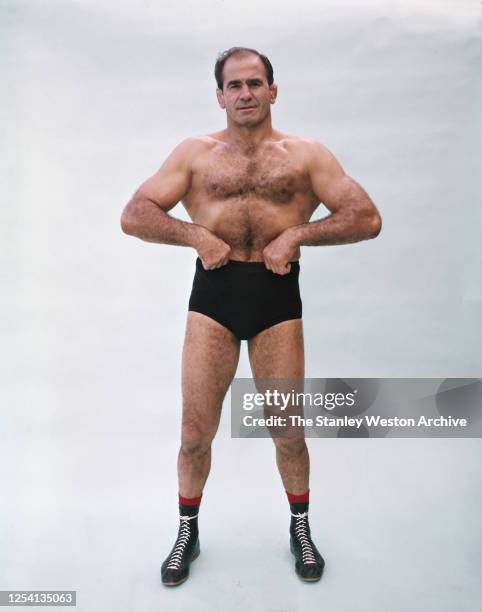
Lou Thesz
 United States
Also known as: Aloysius Martin Thesz, Tetsujin, God of Wrestling
Compleanno
April 24, 1916
Segno Zodiacale
Taurus
Luogo di Nascita
Banat, Michigan, USA
Età
Morto/a a 86 anni
Altezza
6 ft 0 in (183 cm)
Informazioni
Lou Thesz è stato un wrestler e allenatore professionista americano, ampiamente considerato uno dei più grandi lottatori della storia e l'ultimo campione del mondo universalmente riconosciuto. Nato Aloysius Martin Thesz il 24 aprile 1916 a Banat, Michigan, ha dominato lo sport per decenni con uno stile tecnico basato sulla sottomissione, radicato nel catch wrestling. Thesz ha vinto l'NWA World Heavyweight Championship tre volte, detenendolo per un totale di 3.749 giorni, più di chiunque altro. Conosciuto come un vero "shooter", poteva sconfiggere legittimamente gli avversari se un match diventava reale. In Giappone era venerato come il "Dio del Wrestling" e "Tetsujin" (Uomo di Ferro) per la sua forma fisica e abilità. Thesz ha anche formato generazioni di wrestler giapponesi e artisti marziali misti insieme a Karl Gotch e Billy Robinson. È stato inserito in numerose Hall of Fame, inclusa la classe inaugurale della George Tragos/Lou Thesz Professional Wrestling Hall of Fame, che ha contribuito a fondare. Fan e storici lo celebrano come il punto di riferimento del wrestling professionistico.
Primi Anni e Background
Lou Thesz è cresciuto a St. Louis, Missouri, dove suo padre Martin, un immigrato tedesco ed ex wrestler competitivo, iniziò ad allenarlo all'età di sei anni. Martin era severo e disciplinato, credendo che il wrestling fosse una via per una vita migliore. Lou frequentò le scuole pubbliche di St. Louis ma lasciò presto l'istruzione formale per concentrarsi sul wrestling. Da adolescente, vinse il campionato amatoriale di wrestling YMCA e, a 16 anni, conquistò il Missouri State Amateur Wrestling Championship nella categoria 175 libbre. Questa vittoria attirò l'attenzione dei promoter. Si allenò quindi al St. Louis Wrestling Club sotto Tom Packs, imparando il mestiere del wrestling professionistico e affinando le sue abilità di legittimo shooter.
Crescita Professionale
Lou Thesz fece il suo debutto professionistico a 16 anni a St. Louis nel 1932. Vinse il suo primo grande titolo, il Missouri State Heavyweight Championship, nel 1934. Nel 1936 conquistò l'AWA World Heavyweight Championship, il suo primo titolo mondiale. Un anno dopo vinse l'NWA World Heavyweight Championship, iniziando il suo primo regno. Il secondo regno NWA di Thesz iniziò nel 1948 quando sconfisse Orville Brown in un match di unificazione che consolidò più titoli mondiali. Tenne la cintura ininterrottamente per 7 anni e 8 mesi, uno dei regni più lunghi della storia. Nel 1952 difese il titolo contro la leggenda giapponese Rikidozan a Tokyo, un match che aiutò a popolarizzare il wrestling professionistico in Giappone. Thesz riconquistò il titolo NWA per la terza e ultima volta nel 1957, tenendolo fino al 1963 quando perse contro Buddy Rogers. Continuò a lottare a livello internazionale negli anni '70, specialmente in Giappone, dove divenne un'icona culturale. In seguito servì come capo allenatore al CACC Snake Pit Japan, formando una nuova generazione di wrestler nel catch wrestling.
Cronologia Carriera
Immagine Pubblica e Stile
Lou Thesz era noto per il suo aspetto atletico e pulito e il suo comportamento serio e senza fronzoli. Indossava classici pantaloncini e stivali da wrestling, in contrasto con i personaggi appariscenti emersi in seguito. Media e fan lo ritraggono universalmente come uno "shooter" — un lottatore legittimo che poteva davvero combattere. I suoi match erano tecnici, basati sulla sottomissione e metodici, enfatizzando le abilità di grappling reali rispetto all'intrattenimento. In Giappone era venerato come il "Dio del Wrestling" e "Tetsujin" (Uomo di Ferro). I fan di Thesz spesso studiano i suoi match per conoscenza tecnica, ed è celebrato nelle comunità di catch wrestling. I suoi account legacy sui social media pubblicano foto storiche, clip di match e citazioni dalla sua autobiografia, mantenendo viva la sua memoria tra gli storici del wrestling.
Fama e fandom
Lou Thesz remains the bedrock of professional wrestling history, a figure whose legacy is preserved not through viral social media campaigns or organized fan clubs, but through the enduring institutions he helped build. The wrestling community itself serves as his primary fandom, treating him as the ultimate standard of technical excellence and integrity. This reverence is institutionalized in the George Tragos/Lou Thesz Pro Wrestling Hall of Fame, established specifically to honor his name and induct new generations of talent, and the annual Lou Thesz Award presented by the Cauliflower Alley Club, which recognizes individuals who embody his character. From local honors in Waterloo, Iowa, to global recognition in the WWE Hall of Fame, his influence permeates every era of the sport. Fans do not chant his name with a specific slogan or gather for digital billboards; instead, they revere him as the last globally accepted world champion and the man who refused to compromise his legitimacy for entertainment. His story is one of quiet dominance, where the legend of being the only man who could legitimately defeat anyone in the ring cemented his status as the "God of Wrestling" in Japan and the gold standard in America. While modern stars chase fame, Thesz built a foundation that still supports the industry today. According to iFANN's Global Fame Engine evaluation conducted in August 2026, Lou Thesz does not currently hold a placement in the published rankings, including the Global Top 1,000 or any Top-100 scope list. Consequently, no specific ordinal rank or score is assigned to his current global standing.
Curiosità e leggende
The signature move known as the "Thesz Press," a running knee drop to a prone opponent, was named by fans rather than the wrestler himself. A strict teetotaler and non-smoker, Thesz maintained his legendary physique through daily training and once turned down lucrative offers to throw matches, preserving his integrity as a legitimate competitor. He wrestled his final match at age 74 in 1990, defeating a much younger opponent, and authored the classic autobiography "Hooker: An Authentic Wrestler's Adventures Inside the Bizarre World of Professional Wrestling." Beyond the ring, he helped train early mixed martial artists, including members of the original UFC and Pancrase organizations. A widely retold story from his career highlights his reputation as the undisputed "real" world heavyweight champion; legends claim that if Thesz felt disrespected, he would actually attack opponents, a narrative verified by his background as an amateur wrestler and his refusal to work matches unless necessary. Another persistent tale from his 1937 title win against Everett Marshall describes the moment he launched a career defined by dominance, often referenced as the beginning of the "Thesz Era." These stories are not mere folklore but historical facts that underscore his status as the greatest technician to ever grace the ring.
Citazioni Notevoli
“I never threw a match in my life. If I was supposed to lose, I'd make the other guy earn it.”
“Wrestling is not a fake sport. It's a simulated sport. There's a difference. The moves are real. The athleticism is real. The only thing that's predetermined is the winner.”
“Thesz Press was just a knee drop. I didn't name it. The fans did. I just did what worked.”
“I trained every day of my life. When other wrestlers were drinking and carousing, I was in the gym. That's why I lasted so long.”
“The business changed. It became about entertainment, not wrestling. That's fine, but don't call it what I did.”
Famiglia e Vita Privata
Lou Thesz nacque da Martin Thesz, un immigrato tedesco e calzolaio che era stato un wrestler competitivo in Germania, e sua moglie. La famiglia si trasferì a St. Louis quando Lou era bambino. Sposò Dorothy Thesz nel 1949, e rimasero insieme fino alla sua morte nel 2002. Ebbero due figli: un maschio e una femmina. Dorothy gestì molti aspetti della sua carriera e aiutò a preservare la sua eredità. Thesz era noto per la sua disciplina e il rigido regime di allenamento, valori instillati da suo padre. Non aveva altri fratelli menzionati nei registri pubblici.
Collegamenti Notevoli
Lou Thesz si allenò e lavorò con molte figure leggendarie. Karl Gotch e Billy Robinson furono i suoi compagni di allenamento e colleghi shooter, insieme stabilirono il catch wrestling in Giappone. Affrontò Rikidozan in un match storico nel 1952 che lo rese una leggenda in Giappone. Thesz sconfisse Orville Brown in un match di unificazione nel 1948 e perse il titolo NWA contro Buddy Rogers nel 1963. Fu mentore di Antonio Inoki e Yoshiaki Fujiwara, che divennero icone del wrestling giapponese. Il suo primo promoter fu Tom Packs.
Relazioni e Storia Dating
Lou Thesz si è sposato tre volte. Il suo primo matrimonio, intorno al 1940, terminò con un divorzio intorno al 1948; si sa poco pubblicamente di questa relazione e non risultano figli. Nel 1949 sposò Dorothy Thesz, che divenne la sua compagna per tutta la vita. Rimasero insieme fino alla sua morte nel 2002. Dorothy fu la sua costante compagna durante la carriera e negli anni successivi, gestendo molti aspetti della sua vita professionale e contribuendo a preservare la sua eredità. Ebbero due figli: un maschio e una femmina. Thesz era notoriamente riservato sulla sua vita privata e non ci sono altre relazioni di alto profilo, fidanzamenti o presunti accoppiamenti confermati da fonti credibili. A partire dal 2026, Thesz è deceduto e al momento della sua morte era sposato con Dorothy.
- Sposato/aUnknown1940 - 1948Primo matrimonio; si sa poco pubblicamente. Terminato con un divorzio.
- Sposato/aDorothy Thesz1949 - 2002Relazione più lunga; sposato fino alla sua morte. Ebbero due figli insieme. Dorothy gestì la sua carriera e la sua eredità.
Morte e conseguenze
Morto/a
April 28, 2002 (a 86 anni)
Luogo di morte
St. Joseph, Missouri, USA
Causa della morte
Natural causes due to old age
The wrestling world's reverence for Lou Thesz remains vivid, anchored by the annual Lou Thesz Award presented by the Cauliflower Alley Club and the ongoing inductions into the George Tragos/Lou Thesz Pro Wrestling Hall of Fame in Waterloo, Iowa. Recent tributes continue to highlight his impact, with Bret Hart scheduled to receive the award in June 2026, while lost footage of his legendary matches resurfaced in 2025 to remind new generations of his technical mastery. These honors cemented a legacy that outlasted his physical presence, ensuring his name remained central to discussions on professional wrestling history. Thesz passed away on April 28, 2002, at the age of 86 in St. Joseph, Missouri, the city where he had lived for much of his life and maintained significant influence over the sport.
While specific details about his immediate last public appearance or the medical events leading up to April 28 remain unreported, the community accepted the event without dispute. Public reaction was characterized by deep respect from peers and institutions alike, solidifying his status as one of the sport's most influential figures. The family kept funeral proceedings private, though his widow, Charlie Thesz, remained active in sharing his story well into the 2020s, noting their long marriage in interviews years after his passing. Posthumously, Thesz received numerous honors including inductions into the WWE Hall of Fame and the National Wrestling Hall of Fame, preserving his contributions for future athletes.
Patrimonio (Valore immobiliare)
$2 Million
Stima del team editoriale di iFANN
Updated for 2026, iFANN currently estimates Lou Thesz's estate value at $2 Million. During his career, he was one of the highest-paid wrestlers of his era, earning an estimated $100,000 to $200,000 annually at his peak in the 1950s, equivalent to $1-2 million today. His income came from match fees, promotional appearances, exhibitions, and training fees as head coach at the CACC Snake Pit Japan. Since his death in 2002, the estate has earned ongoing revenue from royalties on DVD releases and streaming of classic matches, licensing of his name and likeness for wrestling video games (such as the WWE 2K series), and merchandise like T-shirts and posters. The estate also earns from documentary and interview licensing. Thesz's intellectual property rights are managed by his children. The estate's income is modest but steady, driven by the nostalgia market for classic wrestling.
Premi vinti (5)
Lou Thesz è stato inserito in numerose hall of fame, tra cui la classe inaugurale della George Tragos/Lou Thesz Professional Wrestling Hall of Fame nel 1979, che contribuì a fondare. È stato anche inserito nella WCW Hall of Fame (1993), Wrestling Observer Newsletter Hall of Fame (1996), Professional Wrestling Hall of Fame and Museum (2002) e WWE Hall of Fame Legacy Wing (2016). Ha ricevuto onorificenze dal Cauliflower Alley Club per i contributi di una vita al wrestling.
1979 · Induzione
Career
1993 · Induzione
Career
Noto Per
NWA World Heavyweight Championship
1937 · Campione
NWA World Heavyweight Championship
1948 · Campione
NWA World Heavyweight Championship
1957 · Campione
Parole chiave
Fatti Rapidi
Dettagli Personali
- Nome Completo
- Aloysius Martin Thesz
- Altezza
- 6 ft 0 in (183 cm)
- Coniuge
- Dorothy Thesz
- Figli
- Two (son and daughter)
Domande Frequenti
Qual era il patrimonio di Lou Thesz?
Quanti anni aveva Lou Thesz quando morì?
Lou Thesz era un vero combattente?
Lou Thesz aveva figli?
A chi ha perso il titolo Lou Thesz?
Persone Simili
Unisciti alla community
fan che discutono