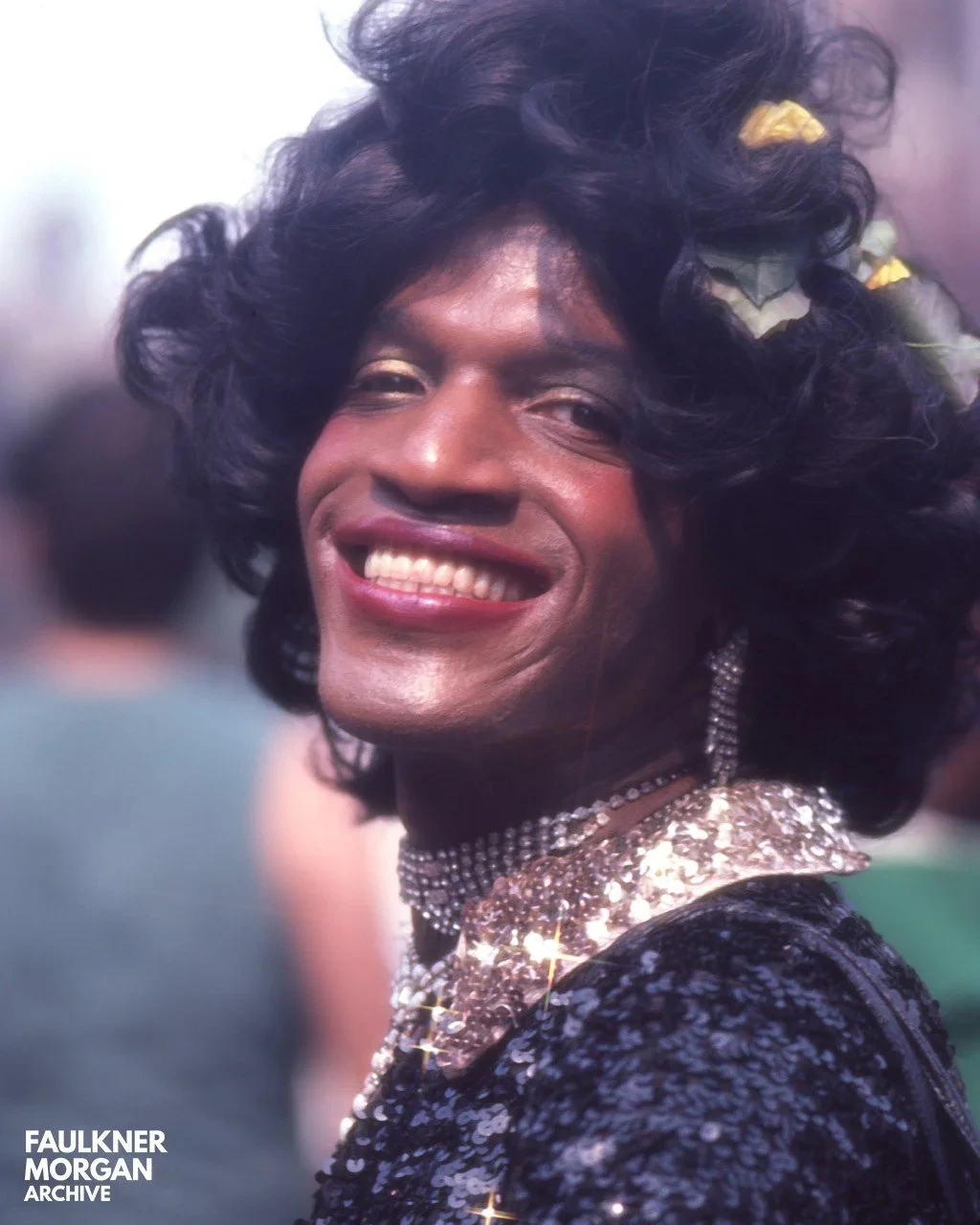
Marsha P. Johnson
 United States
LGBTQ rights activist•drag performer•sex worker
Also known as: Malcolm Michaels Jr., Saint of Christopher Street
Compleanno
August 24, 1945
Segno Zodiacale
Virgo
Luogo di Nascita
Elizabeth, New Jersey, USA
Età
Morto/a a 46 anni
Altezza
5 ft 7 in (170 cm)
Informazioni
Marsha P. Johnson è stata un'attivista statunitense per i diritti LGBTQ, artista drag e sex worker, diventata un pilastro del movimento di liberazione gay. Nata il 24 agosto 1945 a Elizabeth, New Jersey, dopo il liceo si trasferì a Greenwich Village, New York, dove abbracciò una vita di performance e attivismo. Conosciuta per il suo stile sgargiante, il suo spirito arguto e le sue caratteristiche corone di fiori, Johnson era una figura amata su Christopher Street. Ha avuto un ruolo chiave nei moti di Stonewall del 1969, che diedero inizio alla lotta moderna per l'uguaglianza LGBTQ. Insieme a Sylvia Rivera, ha co-fondato nel 1970 lo Street Transvestite Action Revolutionaries (STAR), creando STAR House, un rifugio per giovani transgender senza dimora. Johnson ha anche lottato instancabilmente per la consapevolezza sull'HIV/AIDS negli anni '80, marciando con ACT UP e prendendosi cura degli amici morenti. La sua vita terminò tragicamente il 6 luglio 1992, quando il suo corpo fu trovato nel fiume Hudson. La causa ufficiale della morte fu stabilita come suicidio, ma molti credono che sia stata uccisa. L'eredità di Johnson vive attraverso documentari come The Death and Life of Marsha P. Johnson (2017) e il cortometraggio Happy Birthday, Marsha! (2016). È celebrata come la 'Santa di Christopher Street' e rimane un simbolo di resistenza e gioia transgender.
Primi Anni e Background
Marsha P. Johnson è cresciuta a Elizabeth, New Jersey, come uno di sette figli in una famiglia religiosa. Ha frequentato il liceo localmente, diplomandosi nel 1963, e fin da giovane è stata attratta dalla moda e dalla performance. Dopo il diploma, si trasferì a Greenwich Village, New York, un rifugio per la comunità queer. Lavorò brevemente come cameriera ma faticava a sbarcare il lunario e si dedicò al sex work. Johnson iniziò anche a esibirsi in drag, unendosi alla compagnia Hot Peaches e successivamente agli Angels of Light. Divenne una presenza fissa allo Stonewall Inn, un bar gay su Christopher Street, dove trovò un senso di appartenenza. Il 28 giugno 1969 era presente durante i moti di Stonewall, anche se in seguito disse di essere arrivata dopo la rivolta iniziale. Quella notte segnò l'inizio del suo attivismo pubblico.
Crescita Professionale
Dopo i moti di Stonewall, Marsha P. Johnson divenne una sostenitrice vocale dei diritti transgender e gay. Nel 1970, co-fondò lo Street Transvestite Action Revolutionaries (STAR) con Sylvia Rivera, un gruppo radicale che lottava per i diritti delle drag queen e delle donne trans. Aprirono STAR House nell'East Village, un appartamento di quattro camere da letto che forniva riparo e supporto ai giovani transgender senza dimora. Johnson apparve nel documentario del 1972 The Queen, che seguiva un concorso drag. Per tutti gli anni '70, si esibì con la compagnia teatrale Angels of Light e continuò il suo attivismo. Negli anni '80, mentre la crisi dell'AIDS devastava la comunità LGBTQ, Johnson divenne un caregiver e un'attivista con ACT UP, marciando per migliori cure e consapevolezza. Il suo lavoro era principalmente di base; non cercava fama, ma era una figura amata nella scena queer di New York fino alla sua morte nel 1992.
Cronologia Carriera
Immagine Pubblica e Stile
Marsha P. Johnson è ricordata come una figura gioiosa e resiliente che ha portato stile e grinta nella lotta per i diritti LGBTQ. Il suo stile caratteristico includeva parrucche colorate, trucco audace e corone di fiori che si faceva da sola. Le rappresentazioni mediatiche la evidenziano spesso come una martire e pioniera, con documentari come The Death and Life of Marsha P. Johnson che la consacrano come icona. I fan, che a volte si chiamano 'Marsha's Angels', tengono veglie annuali al Christopher Street Piers il 6 luglio. Le parate del Pride presentano spesso un carro di Marsha P. Johnson dove i partecipanti indossano corone di fiori. I suoi account ufficiali sui social media, gestiti dal Marsha P. Johnson Institute, si concentrano su attivismo, educazione e celebrazione della gioia transgender.
Fama e fandom
Marsha P. Johnson remains a towering figure in global history, yet the iFANN Global Fame Engine has evaluated her status and found she currently holds no placement in the published rankings for the Global Top 1,000 or any Top-100 scope list. While her name carries immense weight within LGBTQ+ history and human rights advocacy, she does not currently register as a ranked celebrity in the contemporary fame metrics that track living pop culture icons. The absence of a formal fandom name reflects the nature of her legacy; there is no organized group of 'fans' comparable to modern digital communities, but rather a coalition of activists, historians, and allies who treat her life as a political mandate. This community sustains her memory through institutional bodies like the Marsha P. Johnson Institute rather than informal fan clubs or chart-pushing campaigns. Their devotion manifests in annual commemorations on Pride weekends and around her birthday, where street festivals and billboards honor her, though these events are typically organized by city governments, non-profits, or commercial sponsors rather than grassroots fan petitions. The cultural mythology surrounding her is defined by verified historical events that have become legendary within the movement, particularly her pivotal role in the Stonewall Riots. A popular and enduring piece of folklore states that she threw the first brick at the police, a narrative she reportedly told in interviews, though historians note the exact nature of her physical contribution is part of the evolving oral history of the event. This story, alongside her self-identification as the 'Saint of Christopher Street,' forms the core of the lore shared with newcomers, serving as both verified history and a powerful cultural touchstone for the movement she helped birth.
Curiosità e leggende
Marsha P. Johnson's middle initial 'P' stood for 'Pay It No Mind,' a phrase she used when people asked about her gender identity. She was a member of the drag performance troupe Hot Peaches and the Angels of Light theater group. Johnson was known for making her own elaborate flower crowns, which became her signature. She survived a stabbing in the 1970s but refused to press charges. She was arrested multiple times for sex work and vagrancy but never stopped advocating for her community. The 2017 Netflix documentary The Death and Life of Marsha P. Johnson brought renewed attention to her unsolved death. A Guinness World Record was set in 2021 for the largest gathering of people dressed as Marsha P. Johnson, with 3,000 participants in New York City. Legends of her life include her coining the phrase 'Gay Power' and carrying a pink triangle flag as a symbol of resistance. She was famously known for 'paying it forward,' distributing food and money to homeless transgender youth and sex workers, cementing her reputation as a protector of the most vulnerable. Another widely retold story from the Stonewall era suggests she threw the first bottle at police, a narrative she reportedly shared in interviews, though the exact details remain part of the evolving oral history of the uprising.
Citazioni Notevoli
“You never completely have your rights, one person, until you all have your rights.”
“I've been in the streets for years. I've been beaten up. I've been thrown in jail. I've lost my job. I've lost my apartment for gay liberation, and you all treat me like a piece of shit.”
“Pay it no mind.”
“I'm a little bit of a woman. I'm a little bit of a man. I guess I'm just a little bit of everything.”
Famiglia e Vita Privata
Marsha P. Johnson nacque Malcolm Michaels Jr. il 24 agosto 1945 a Elizabeth, New Jersey. Era uno di sette figli in una famiglia operaia. Suo padre, Malcolm Michaels Sr., lavorava come operaio in fabbrica, e sua madre era casalinga. Johnson fu cresciuta in una famiglia religiosa e frequentava regolarmente la chiesa. Aveva un rapporto teso con la sua famiglia dopo essere uscita allo scoperto come gay e essersi trasferita a New York. Non si è mai sposata né ha avuto figli. La sua famiglia scelta includeva Sylvia Rivera e i molti giovani queer che ha seguito attraverso STAR House. Oggi, la sua eredità è portata avanti dal Marsha P. Johnson Institute, che supporta le persone transgender nere.
Collegamenti Notevoli
La più stretta collaboratrice di Marsha P. Johnson era Sylvia Rivera, con cui co-fondò STAR e condivideva un profondo legame. La regista Tourmaline (ex Reina Gossett) ha diretto Happy Birthday, Marsha! e ha contribuito a The Death and Life of Marsha P. Johnson, diretto da David France. L'attrice Alexandra Grey è legata al ruolo da protagonista in un imminente biopic Marsha. Caitlyn Jenner ha menzionato Johnson nel suo discorso agli ESPY del 2015, portando la sua storia a un pubblico più ampio.
Relazioni e Storia Dating
La vita sentimentale di Marsha P. Johnson non è ampiamente documentata. Il suo legame più stretto fu con Sylvia Rivera, che incontrò alla fine degli anni '60. Mentre alcune storie orali suggeriscono una breve relazione romantica o intima tra loro tra la fine degli anni '60 e l'inizio degli anni '70, viene più spesso descritta come una profonda amicizia platonica e una famiglia scelta. Co-fondarono STAR e vissero insieme a STAR House. Non sono registrati altri partner romantici confermati. Johnson non si è mai sposata e non ha avuto figli noti. A partire dal 2026, è deceduta; la sua eredità è gestita dal Marsha P. Johnson Institute.
- PettegolezzoSylvia Rivera1969 - 1972Amica intima e co-fondatrice di STAR; alcuni resoconti suggeriscono una breve relazione romantica, ma si trattava principalmente di un legame platonico per tutta la vita.
Morte e conseguenze
Morto/a
July 6, 1992 (a 46 anni)
Luogo di morte
New York City, New York, USA
Causa della morte
Drowning (ruled accidental)
Marsha P. Johnson died on July 6, 1992, in the Hudson River near the Christopher Street pier in Greenwich Village, New York City. Her body was discovered floating after she had been missing since late June, though some initial reports cited July 3 as her death date. The New York City Medical Examiner ruled the cause of death drowning, attributing it to intoxication, but this conclusion faced immediate and sustained skepticism from friends, family, and activists who suspected foul play or a hate crime. Vigils were held shortly after her passing at the Stonewall Inn and throughout Greenwich Village, where peers like Sylvia Rivera's circle honored her contributions to the gay rights movement and her care for homeless transgender youth.
Johnson's funeral remained a private affair with no official record of her burial or cremation location, leaving her exact resting place unknown for decades. In the years following her death, her legacy expanded significantly through tributes such as murals across New York City, her induction into the National LGBTQ Wall of Honor in 2018, and the establishment of the Marsha P. Johnson Institute in 2015 to advance trans justice. The case remained officially open but inactive until the NYPD reopened it in 2019 following the release of the documentary The Death and Life of Marsha P. Johnson, yet no charges have ever been filed.
Patrimonio (Valore immobiliare)
$1 Million
Stima del team editoriale di iFANN
Marsha P. Johnson died with no significant personal wealth. As of 2026, her estate is valued at approximately $1 million per iFANN's editorial analysis. The estate generates income primarily through posthumous book royalties, licensing fees for documentaries like The Death and Life of Marsha P. Johnson, and merchandise sold by the Marsha P. Johnson Institute. The institute, which manages the estate, also receives donations and speaking fees. No real estate or stock holdings are reported. The estate's value has grown modestly since the 2017 documentary, with annual earnings estimated at $100,000 to $200,000. A Congressional Gold Medal awarded in 2024 has further boosted public interest and donations.
Premi vinti (4)
Marsha P. Johnson non ha ricevuto premi importanti dell'industria durante la sua vita, ma è stata onorata postuma. Nel 2019 è stata inserita nella National Women's Hall of Fame. Ha ricevuto una Medaglia d'Oro del Congresso postuma nel 2024 come parte del gruppo di veterani di Stonewall. La New School le ha conferito un dottorato onorario in Lettere Umane nel 2020. Ha anche ricevuto le chiavi della città di Elizabeth, New Jersey, nel 2015 ed è stata inserita nella Rainbow Honor Walk a San Francisco nel 2019.
2015 · Civico
Activism
2024 · Governo
Stonewall veterans
Noto Per
Stonewall riots
1969 · Participant
Street Transvestite Action Revolutionaries (STAR)
1970 · Co-founder
The Death and Life of Marsha P. Johnson
2017 · Subject
Parole chiave
Fatti Rapidi
- Professione
- LGBTQ rights activist, drag performer, sex worker
- Nato/a
- August 24, 1945
- Luogo di Nascita
- Elizabeth, New Jersey, USA
- Morto/a
- July 6, 1992
- Luogo di morte
- New York City, New York, USA
- Segno Zodiacale
- Virgo
- Altezza
- 5 ft 7 in (170 cm)
- Net Worth
- $1 Million
Dettagli Personali
- Nome Completo
- Malcolm Michaels Jr.
- Altezza
- 5 ft 7 in (170 cm)
Filmografia
2
Totale
2
Film
0
TV
Domande Frequenti
Come è morta Marsha P. Johnson?
Cosa significa la 'P' in Marsha P. Johnson?
Marsha P. Johnson era transgender?
Qual è l'eredità di Marsha P. Johnson?
Marsha P. Johnson aveva figli?
Social Media
Persone Simili
Unisciti alla community
fan che discutono