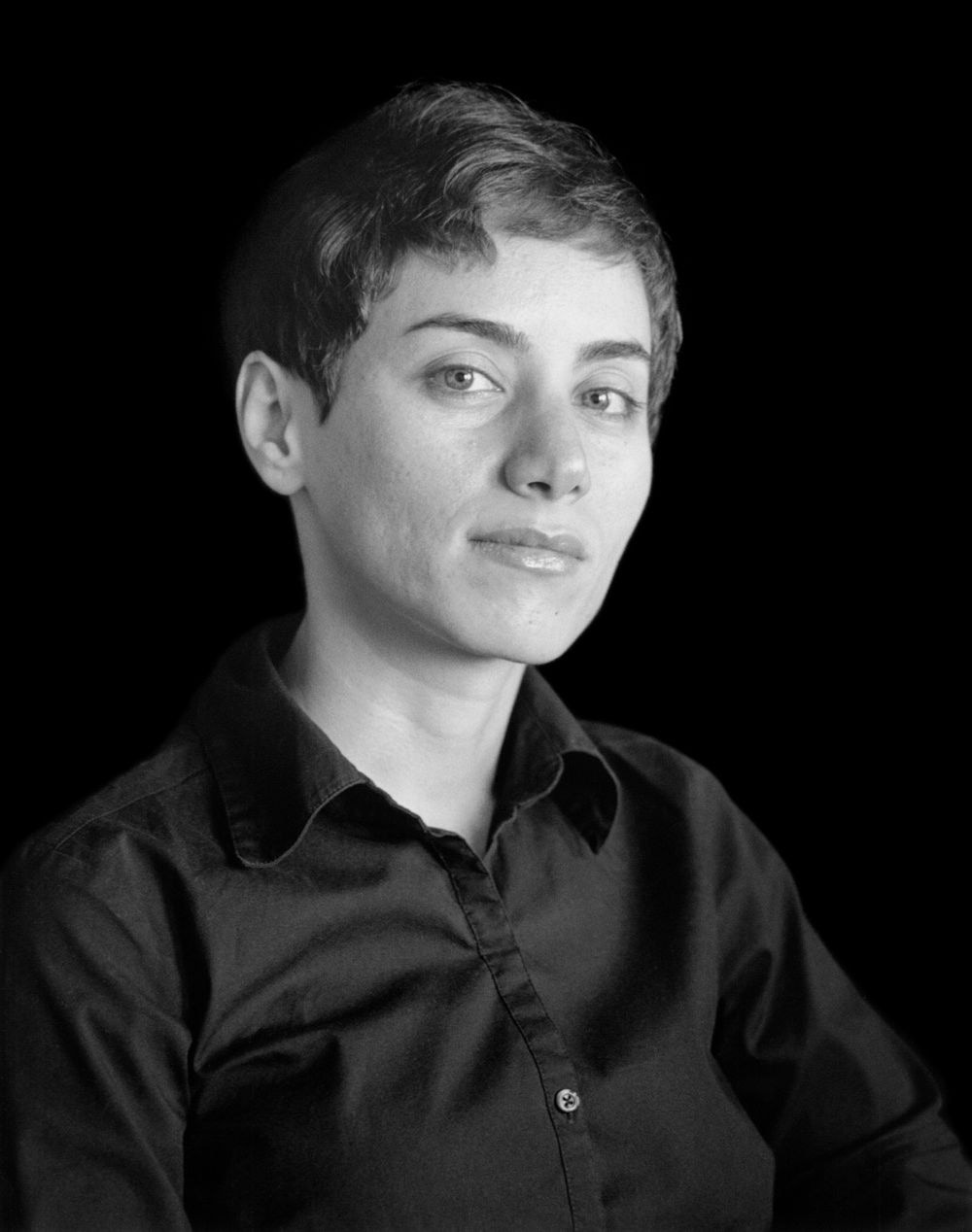
Maryam Mirzakhani
 Iran
Iranmathematician•university teacher•topologist
Compleanno
May 12, 1977
Segno Zodiacale
Taurus
Luogo di Nascita
Tehran, Iran
Età
Morto/a a 40 anni
Altezza
5 ft 5 in (165 cm)
Informazioni
Maryam Mirzakhani was an Iranian mathematician and professor. She is famous for her profound contributions to the dynamics and geometry of Riemann surfaces and their moduli spaces, becoming the first woman and first Iranian to win the Fields Medal in 2014. Her research focused on hyperbolic geometry, dynamical systems, and topology. With Alex Eskin and later Amir Mohammadi she proved breakthrough results on moduli space dynamics known as the "magic wand theorem." She also received the Blumenthal Award, the Satter Prize, and the Clay Research Award.
Mirzakhani joined Stanford University as a full professor in 2009. She died from breast cancer on July 14, 2017, at age 40. Her legacy continues through the Maryam Mirzakhani New Frontiers Prize and the 12 May Initiative, which support women in mathematics. She remains an inspiration for her groundbreaking achievements and her role as a trailblazer for women in STEM.
Primi Anni e Background
Maryam Mirzakhani è nata a Teheran, Iran, il 12 maggio 1977. Cresciuta nella sua città natale, era un'avida lettrice che trovava grande gioia nel divorare biografie e romanzi, una passione che inizialmente la portò a sognare di diventare scrittrice. Il suo eccezionale talento matematico iniziò a emergere durante gli anni del liceo alla Farzanegan School, un istituto femminile altamente selettivo progettato per studenti dotati. Un momento cruciale nel suo percorso intellettuale si verificò quando lei e la sua amica del cuore, Roya Beheshti, si imbatterono in una traduzione russa di un libro di problemi matematici di Wacław Sierpiński. Questa esperienza si rivelò una svolta profonda, accendendo in Mirzakhani un interesse profondo e duraturo per la matematica.
La sua nascente abilità matematica ottenne rapidamente un notevole riconoscimento. Si distinse vincendo medaglie d'oro alle Olimpiadi Internazionali della Matematica, prima nel 1994 a Hong Kong con un punteggio di 41 su 42, e poi raggiungendo un punteggio perfetto di 42 su 42 a Toronto nel 1995. Questi notevoli risultati la resero la prima donna iraniana a ottenere un punteggio perfetto alle Olimpiadi, portandole fama nazionale e fornendole un percorso diretto verso l'istruzione superiore. Mirzakhani ha proseguito gli studi universitari presso la Sharif University of Technology, dove ha conseguito la laurea triennale in Matematica nel 1999, diplomandosi al primo posto della sua classe. Successivamente, si è trasferita negli Stati Uniti per continuare la sua carriera accademica, completando gli studi di dottorato presso la Harvard University e conseguendo il dottorato nel 2004 sotto la stimata supervisione di Curtis T. McMullen.
Crescita Professionale
Mirzakhani ha completato il dottorato ad Harvard nel 2004 sotto la supervisione del medaglista Fields Curtis T. McMullen, con una tesi intitolata "Simple Geodesics on Hyperbolic Surfaces and the Volume of the Moduli Space of Curves". Successivamente è stata borsista di ricerca presso il Clay Mathematics Institute alla Princeton University e all'Institute for Advanced Study dal 2004 al 2008.
Nel 2008 è entrata a far parte della Stanford University come professoressa associata ed è stata promossa a professoressa ordinaria nel 2009. Nel 2010 ha pubblicato un articolo fondamentale con Alex Eskin dimostrando il "teorema della bacchetta magica", che mostrava che l'azione di SL(2,R) sugli spazi dei moduli è ergodica. Nel 2013, con Amir Mohammadi, ha esteso questo risultato al teorema di Eskin–Mirzakhani–Mohammadi. Nel 2014 le è stata assegnata la Medaglia Fields al Congresso Internazionale dei Matematici di Seul, diventando la prima donna e la prima iraniana a ricevere questo onore. La citazione ha riconosciuto "i suoi eccezionali contributi alla dinamica e alla geometria delle superfici di Riemann e dei loro spazi dei moduli".
Cronologia Carriera
Immagine Pubblica e Stile
Mirzakhani era nota per il suo aspetto modesto e accademico, spesso fotografata in abiti semplici con capelli scuri e un sorriso caloroso. Veniva descritta come umile, timida e profondamente concentrata sul suo lavoro. I media la ritraggono costantemente come una pioniera per le donne nelle discipline STEM, un simbolo del successo scientifico iraniano e una perdita tragica per la matematica. La sua storia è spesso inquadrata come una narrazione di perseveranza contro le barriere di genere. Nel suo compleanno, il 12 maggio, molti dipartimenti di matematica e gruppi di donne nelle STEM organizzano eventi e campagne sui social media per celebrare la sua vita e il suo lavoro. I memoriali pubblicano post sui suoi successi e citazioni ispiratrici dalle sue interviste.
Fama e fandom
Maryam Mirzakhani's legacy is defined not by celebrity, but by the profound silence of a breakthrough that shattered a ninety-year ceiling. She remains the only woman to have ever won the Fields Medal, a distinction that anchors her global standing in mathematics. In August 2026, she holds the position of the 99th most famous person in Iran and stands as the 13th most famous person from Iran, rankings that reflect a steady, enduring reverence across borders. These placements within the iFANN Global Fame Rankings track how her story resonates through media coverage and educational discourse worldwide. While her fame is academic rather than pop-cultural, it carries a weight that transcends typical metrics. The mathematical community does not rally with unofficial names or organized campaigns; there is no fanbase with a specific moniker to claim ownership of her image. Instead, admirers are students, professors, and scientists who view her through a lens of deep professional respect. Her "fans" gather annually on May 12 to honor her birthday, transforming the date into a quiet ritual of scholarship rather than spectacle. No subway ads funded by crowds or chart pushes marked her life; her influence is measured in theorems proven and young women inspired to enter the field. The absence of a formal fandom name underscores the nature of her impact: a singular figure whose presence is felt in lecture halls and research papers rather than social media feeds. Even after her passing, the narrative remains one of intellectual triumph. The world knows her as a pioneer who walked alone through the jungle of hyperbolic geometry, leaving behind a map that others now follow.
Curiosità e leggende
Maryam Mirzakhani and her friend Roya Beheshti faced a gender barrier early on when denied entry to a boys-only math Olympiad training program in Iran. They successfully argued their case to the school principal, claiming they had no other mentors, which secured their spot. Her PhD dissertation was so revolutionary that editors split the work into three separate papers published in top-tier journals. Mirzakhani often described her problem-solving method as being lost in a jungle, relying on every ounce of knowledge to find an exit. She worked by drawing intricate doodles on large sheets of paper, a process she called her thinking style. The Fields Medal she received in 2014 was named after John Charles Fields, making Mirzakhani the 52nd recipient overall and, as of 2026, the only woman to hold the title. A defining legend surrounding her is her reputation as a slow thinker who approached complex problems with intense patience and curiosity. This trait became central to her mythos, highlighting that brilliance does not always require speed. Her death from breast cancer on July 14, 2017, at age 40 triggered a global outpouring of grief, cementing her status as a national icon in Iran and a symbol of female empowerment in STEM. Since then, rituals have emerged to honor her memory, including the Maryam Mirzakhani Junior Prize for undergraduate women established by École Polytechnique and annual commemorations at institutions like San Francisco State University.
Citazioni Notevoli
“The more I spend time on mathematics, the more excited I get.”
“I don't think that everyone should become a mathematician, but I do think that many students don't give mathematics a real chance.”
“The beauty of mathematics only shows itself to more patient followers.”
“It is like being lost in a jungle and trying to use all the knowledge you can to find your way out.”
“I hope that young women and girls will see that they can achieve great things in mathematics and science.”
Famiglia e Vita Privata
Mirzakhani è nata da Ahmad Mirzakhani, un ingegnere elettrico, e Zahra Mirzakhani, una casalinga. Aveva un fratello maggiore e una sorella minore. Nel 2008 ha sposato Jan Vondrák, un matematico e informatico ceco-americano che è professore alla Stanford University. Si sono incontrati mentre entrambi erano alla Princeton University a metà degli anni 2000. La coppia ha avuto una figlia, Anahita Vondrák, nata nel 2011. La famiglia di Mirzakhani è stata di grande supporto per il suo lavoro; Vondrák ha parlato pubblicamente della gestione della sua cura durante la malattia.
Collegamenti Notevoli
Il supervisore del dottorato di Mirzakhani era Curtis T. McMullen, un medagliato Fields. Collaborò strettamente con Alex Eskin sulla dinamica degli spazi dei moduli, co-dimostrando il "teorema della bacchetta magica". Lavorò anche con Amir Mohammadi sul teorema di Eskin–Mirzakhani–Mohammadi. Suo marito, Jan Vondrák, è un matematico e informatico a Stanford. La sua amica d'infanzia Roya Beheshti studiò matematica con lei. Il collega medagliato Fields Caucher Birkar le dedicò la sua medaglia del 2018.
Relazioni e Storia Dating
Le relazioni sentimentali note di Mirzakhani si limitano al suo matrimonio. Non ci sono relazioni pubbliche documentate prima del matrimonio. Sposò Jan Vondrák, un matematico e informatico ceco-americano, nel 2008. Si conobbero mentre entrambi erano alla Princeton University a metà degli anni 2000, Mirzakhani come Research Fellow del Clay Mathematics Institute e Vondrák come ricercatore post-dottorato. La coppia ebbe una figlia, Anahita, nata nel 2011. Vondrák ha parlato pubblicamente di aver sostenuto il suo lavoro e di aver gestito la sua cura durante la malattia. Mirzakhani era sposata con Vondrák al momento della sua morte il 14 luglio 2017.
- Sposato/aJan Vondrák2008 - 2017Conosciuti mentre erano entrambi alla Princeton University. Sposati nel 2008 e hanno avuto una figlia, Anahita, nata nel 2011.
Morte e conseguenze
Morto/a
July 14, 2017 (a 40 anni)
Luogo di morte
Sconosciuto
Causa della morte
Sconosciuto
Patrimonio (Valore immobiliare)
$2 Million
Stima del team editoriale di iFANN
As of 2026, the estate of Maryam Mirzakhani is valued at approximately $2 million. Per iFANN's editorial analysis, this figure reflects the modest accumulation of wealth typical for an academic mathematician who did not engage in commercial ventures. During her tenure as a full professor at Stanford University from 2009 until her death in 2017, her annual salary ranged between $150,000 and $200,000. The Fields Medal carried a monetary award of 15,000 Canadian dollars, roughly equivalent to $11,000 USD. Following her passing, her husband Jan Vondrák manages the estate, which generates revenue through book royalties, licensing fees for educational initiatives, and rights related to posthumous documentaries. The Maryam Mirzakhani New Frontiers Prize operates separately under the Breakthrough Prize Foundation and draws no funds from her personal estate.
Premi vinti (6)
Mirzakhani ha vinto la Medaglia Fields nel 2014, il più alto riconoscimento in matematica, diventando la prima donna e la prima iraniana a riceverla. Ha anche ricevuto il Clay Research Award nel 2014, il Satter Prize nel 2013 e il Blumenthal Award nel 2009, tutti dall'American Mathematical Society. Ha vinto medaglie d'oro alle Olimpiadi Internazionali di Matematica nel 1994 e 1995, ottenendo un punteggio perfetto. È stata eletta all'American Academy of Arts and Sciences nel 2015 e alla National Academy of Sciences nel 2016.
2014 · Matematica
Contributions to dynamics and geometry of Riemann surfaces and moduli spaces
2014 · Matematica
Breakthrough results on moduli spaces
Noto Per
Fields Medal
2014 · Destinatario
Eskin–Mirzakhani theorem
2010 · Co-author
Eskin–Mirzakhani–Mohammadi theorem
2013 · Co-author
Parole chiave
Fatti Rapidi
- Professione
- mathematician, university teacher, topologist
- Nato/a
- +1977-05-12
- Luogo di Nascita
- Tehran
- Morto/a
- +2017-07-14
- Luogo di morte
- Stanford
- Genere
- Femmina
- Coniuge
- Jan Vondrák
- Segno Zodiacale
- Taurus
Dettagli Personali
- Altezza
- 5 ft 5 in (165 cm)
- Coniuge
- Jan Vondrák
- Figli
- Anahita Vondrák
- Istruzione
- Sharif University of Technology (B.Sc., 1999), Harvard University (Ph.D., 2004)
Domande Frequenti
Come è morta Maryam Mirzakhani?
Maryam Mirzakhani aveva figli?
Per cosa Maryam Mirzakhani ha vinto la Medaglia Fields?
Quanti anni aveva Maryam Mirzakhani quando è morta?
Maryam Mirzakhani è l'unica donna ad aver vinto la Medaglia Fields?
Social Media
Unisciti alla community
fan che discutono