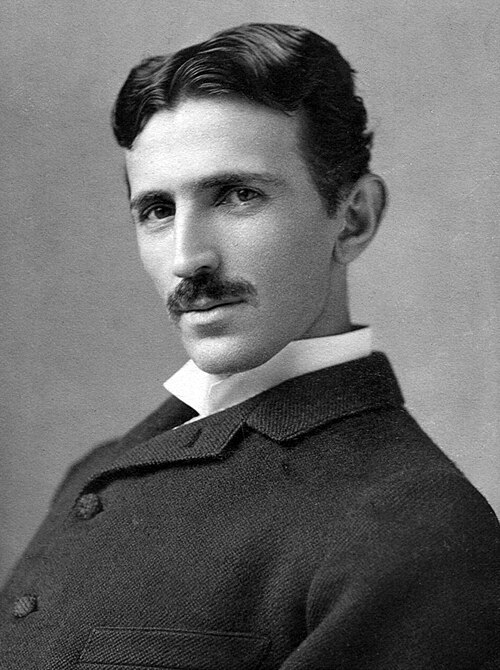
Nikola Tesla
 Austria
inventor•electrical engineer•physicist
Compleanno
July 10, 1856
Segno Zodiacale
Cancer
Luogo di Nascita
Smiljan, Austrian Empire (modern-day Croatia)
Età
Died at 86
Informazioni
Nikola Tesla è stato un inventore, ingegnere elettrico, fisico e futurista serbo-americano che ha trasformato il mondo moderno con il suo lavoro pionieristico nei sistemi di alimentazione elettrica. Nato nel 1856 a Smiljan, nell'Impero austriaco, Tesla è noto soprattutto per aver sviluppato il sistema elettrico a corrente alternata (CA), che rimane lo standard globale per la distribuzione di energia. Le sue invenzioni includono il motore a induzione CA, la bobina di Tesla e le prime tecnologie di comunicazione wireless. Tesla ha ottenuto oltre 300 brevetti in tutto il mondo e le sue idee hanno gettato le basi per innumerevoli tecnologie moderne, dalla radio al telecomando. Nonostante il suo genio, ha lottato finanziariamente negli ultimi anni ed è morto in relativa oscurità. Oggi è celebrato come uno dei più grandi inventori della storia, con una rinascita di interesse popolare dagli anni '90. L'unità SI della densità del flusso magnetico, il tesla, è stata chiamata in suo onore.
Primi Anni e Background
Tesla nacque da genitori serbi nel villaggio di Smiljan, dove suo padre era un prete ortodosso e sua madre era nota per la sua memoria inventiva e gli strumenti fatti in casa. Mostrò segni precoci di genio, eseguendo calcoli complessi a mente e memorizzando interi libri. A 17 anni, si iscrisse al Politecnico di Joanneum a Graz, studiando ingegneria e fisica, ma abbandonò dopo tre anni senza laurearsi. In seguito frequentò brevemente l'Università Carlo-Ferdinando a Praga. Nel 1881, si trasferì a Budapest per lavorare in una compagnia telegrafica, dove concepì l'idea di un campo magnetico rotante e del motore a induzione CA. Lavorò poi per la Continental Edison a Parigi, installando sistemi di illuminazione. Nel 1884, emigrò negli Stati Uniti con poco più di una lettera di presentazione per Thomas Edison.
Crescita Professionale
Dopo essere arrivato a New York, Tesla lavorò per la Edison Machine Works, ma una disputa sulla retribuzione lo portò ad andarsene e a fondare la propria azienda. Nel 1888, concesse in licenza il suo motore a induzione CA e i brevetti polifase CA a George Westinghouse, che li utilizzò per alimentare l'Esposizione Mondiale di Chicago del 1893 e vincere il contratto per generare elettricità alle Cascate del Niagara. Questo stabilì la CA come sistema elettrico dominante. Negli anni '90 dell'Ottocento, Tesla condusse esperimenti spettacolari con elettricità ad alta tensione nel suo laboratorio di Houston Street, creando fulmini artificiali e accendendo lampadine senza fili. Costruì anche una barca radiocomandata nel 1898, uno dei primi veicoli a controllo remoto. Il suo progetto più ambizioso, la Torre Wardenclyffe, mirava a trasmettere energia wireless e comunicazioni attraverso l'Atlantico, ma i fondi si esaurirono nel 1905 e la torre non fu mai completata. Dopo di che, Tesla continuò a inventare, lavorando su turbine, motori senza pale e armi a fascio di particelle, ma i suoi ultimi anni furono segnati da risorse finanziarie in declino.
Cronologia Carriera
Immagine Pubblica e Stile
Tesla era noto come un uomo di spettacolo e un genio eccentrico. Si vestiva elegantemente con cappotti a collo alto e cappelli, e la sua figura alta e snella e lo sguardo intenso lo rendevano una figura sorprendente. Teneva conferenze pubbliche drammatiche in cui accendeva lampadine facendo passare corrente attraverso il proprio corpo. I media lo ritraevano spesso come uno scienziato pazzo, ma i suoi sostenitori lo vedevano come un visionario. Oggi la sua immagine è quella di un genio incompreso, celebrato nella cultura di Internet, nei libri e nei film. Il suo nome adorna aziende come Tesla Inc. e innumerevoli strade e scuole. I fan ammirano il suo idealismo e la sua fede nell'energia gratuita, anche se alcune teorie del complotto esagerano le sue invenzioni soppresse.
Fama e fandom
Nikola Tesla remains a towering figure in the history of innovation, his name echoing through modern discourse long after his death. In the August 2026 cycle of the iFANN Global Fame Rankings, he holds the position of the 196th most famous person in the world, a standing that has held steady from the previous measurement period. His influence extends beyond general recognition; within his birthplace, he is celebrated as the 2nd most famous person from Austria, and within the technology sector, he ranks as the 7th most famous person in Tech. These placements reflect a global attention span that tracks media coverage, search trends, and cultural consumption across continents.
Unlike living celebrities, Tesla does not have a formal fandom or an organized collective known by a specific name. His admirers are historians, engineers, and science enthusiasts who gather at institutions like the Tesla Science Center at Wardenclyffe rather than in fan clubs. This community engages in rituals such as annual commemorations on July 10th, marking his birthday with lectures and online discussions. Their advocacy often centers on preserving historical sites and correcting the narrative of his rivalry with Thomas Edison. While there are no viral campaigns or street parties, the group actively supports STEM education and the restoration of landmarks like the Wardenclyffe Tower, ensuring his legacy endures through physical preservation and educational outreach.
Curiosità e leggende
Tesla possessed a photographic memory that allowed him to visualize complex inventions before building them. He claimed to need only two hours of sleep nightly, supplementing rest with catnaps. A notorious germaphobe, he refused to shake hands and developed a strong aversion to pearls, refusing to speak to women wearing them. His close friendship with writer Mark Twain included visits to his lab where they were photographed under a Tesla coil. He spoke eight languages: Serbo-Croatian, English, Czech, German, French, Hungarian, Italian, and Latin. In his final years, he spent much time caring for injured birds, feeding pigeons in New York parks. Legends persist about his ability to predict earthquakes, stemming from his actual patent applications for an apparatus utilizing earth vibrations filed in 1893. While the story of a city-destroying "death ray" is largely folklore, his work on the teleforce weapon in the 1930s was verified.
The most iconic moment occurred in 1893 at the World's Columbian Exposition in Chicago, where he demonstrated wireless electricity by lighting thousands of lamps without wires, effectively proving the superiority of AC power. Another enduring tale involves his obsession with a specific white pigeon, a story that embellishes his documented love for birds into a narrative of tragic mourning preceding his death. The myth of his solitary death in poverty at the New Yorker Hotel remains a central part of his legend, fueling the image of the misunderstood genius.
Citazioni Notevoli
“The present is theirs; the future, for which I really worked, is mine.”
“Let the future tell the truth, and evaluate each one according to his work and accomplishments.”
“I do not think there is any thrill that can go through the human heart like that felt by the inventor as he sees some creation of the brain unfolding to success.”
Famiglia e Vita Privata
Tesla nacque da Milutin Tesla, un prete ortodosso serbo, e Đuka Mandić, nota per la sua creatività e memoria. Aveva un fratello maggiore, Dane, morto in un incidente a cavallo quando Nikola aveva cinque anni, e tre sorelle: Milka, Angelina e Marica. Suo padre voleva originariamente che diventasse prete, ma Nikola scelse l'ingegneria dopo essere sopravvissuto a un'epidemia di colera all'età di 17 anni. Tesla non si sposò mai e non ebbe figli. Negli ultimi anni visse da solo in una serie di hotel di New York, tra cui il Waldorf-Astoria e il New Yorker Hotel, dove morì. Non aveva animali domestici, anche se dava regolarmente da mangiare ai piccioni.
Collegamenti Notevoli
Tesla aveva una famosa rivalità con Thomas Edison sulla corrente continua contro quella alternata. Collaborò con George Westinghouse, che finanziò e commercializzò il suo sistema CA. Era anche amico dello scrittore Mark Twain, che visitò il suo laboratorio. Altri associati includevano il finanziere J.P. Morgan, che inizialmente sostenne Wardenclyffe, e il fisico Lord Kelvin.
Relazioni e Storia Dating
Tesla non si sposò mai e non ebbe relazioni romantiche note. Era intensamente concentrato sul suo lavoro e spesso affermava che il celibato lo aiutava a concentrarsi. C'erano voci di una stretta amicizia con l'artista Alice Mayhew, ma nessuna prova suggerisce un coinvolgimento romantico. Tesla aveva ammiratori, incluse alcune donne che gli scrivevano lettere, ma le teneva a distanza. Negli ultimi anni, formò un profondo legame emotivo con un piccione bianco che visitava la finestra del suo hotel, che sosteneva di amare come un essere umano. Al momento della sua morte nel 1943, Tesla era single.
Morte e conseguenze
Morto/a
January 7, 1943 (a 86 anni)
Luogo di morte
New York City, New York, USA
Causa della morte
Coronary thrombosis
A bellboy detected a foul odor drifting from Room 3327 of the New Yorker Hotel on West 42nd Street and alerted the front desk, where staff found Nikola Tesla slumped in his chair. He was discovered alone on January 7, 1943, at the age of 86, having made no public appearances since the early 1930s. The official report cited coronary thrombosis as the cause of death based on initial assessments by hotel staff and an attending physician. Tributes flowed from scientific institutions and peers who recognized his contributions to electrical engineering, while the general public remained largely unaware of his specific legacy at that moment. A private funeral service took place four days later at the Holy Trinity Serbian Orthodox Church in New York City, attended by family members, colleagues, and representatives from the Serbian community.
Following the service, Tesla was cremated, and his ashes were transported to Belgrade, Serbia, to rest in the Nikola Tesla Museum founded in 1952. In the decades following his passing, Tesla received extensive recognition including inductions into the National Inventors Hall of Fame and the IEEE Hall of Fame. The SI unit of magnetic flux density bears his name, and the Tesla Science Center at Wardenclyffe now serves as a museum dedicated to his work. Legal battles over his estate concluded with assets passing to his nephew Sava Kosanović, allowing his intellectual property to eventually enter the public domain or be managed by the Serbian government.
Patrimonio (Valore immobiliare)
$10 Million
Stima del team editoriale di iFANN
Per iFANN's editorial analysis, Nikola Tesla's estate is valued at approximately $10 million going by 2026 estimates. Tesla died with very little personal wealth in 1943, having spent most of his fortune on research and the failed Wardenclyffe project. However, his patents, particularly those for AC power, became immensely valuable over time. The estate has earned royalties from the licensing of his AC patents, which have generated billions in revenue for others but relatively little for his heirs. In 1943, the U.S. Supreme Court upheld a key patent for radio that Tesla had filed before Guglielmo Marconi, though this did not result in significant financial gain for the estate. Today, the estate's income comes from licensing fees, merchandise, and appearances in media. The estate is managed by the Tesla Science Foundation and various family trusts. Since the 1990s, interest in Tesla has surged, boosting revenue from documentaries, books, and branded merchandise.
Premi vinti (3)
Nikola Tesla ricevette diversi riconoscimenti durante la sua vita, tra cui la Medaglia Edison nel 1916 e la Medaglia John Scott nel 1934. Postumo, fu inserito nella National Inventors Hall of Fame nel 1975 e nella lista IEEE dei migliori ingegneri elettrici. Nel 2013, la rivista Time lo nominò una delle 100 figure più significative di tutti i tempi. L'unità SI di densità del flusso magnetico, il tesla, fu chiamata così in suo onore nel 1960.
1916 · Ingegneria Elettrica
Contributions to the development of the alternating current system
1934 · Innovazione
Polyphase alternating current system
Noto Per
Alternating Current (AC) Electrical System
1888 · Inventor
Tesla Coil
1891 · Inventor
Radio-Controlled Boat
1898 · Inventor
Wardenclyffe Tower
1901 · Designer
Wireless Power Transmission
1890 · Pioneer
Parole chiave
Fatti Rapidi
Dettagli Personali
- Nome Completo
- Nikola Tesla
- Istruzione
- Studied engineering and physics at Graz University of Technology (did not complete), attended Charles-Ferdinand University
Domande Frequenti
Quanti anni aveva Nikola Tesla quando morì?
Qual è il patrimonio di Nikola Tesla nel 2026?
Nikola Tesla si è mai sposato?
Per cosa è più noto Nikola Tesla?
Nikola Tesla era serbo o americano?
Persone Simili
Unisciti alla community
fan che discutono