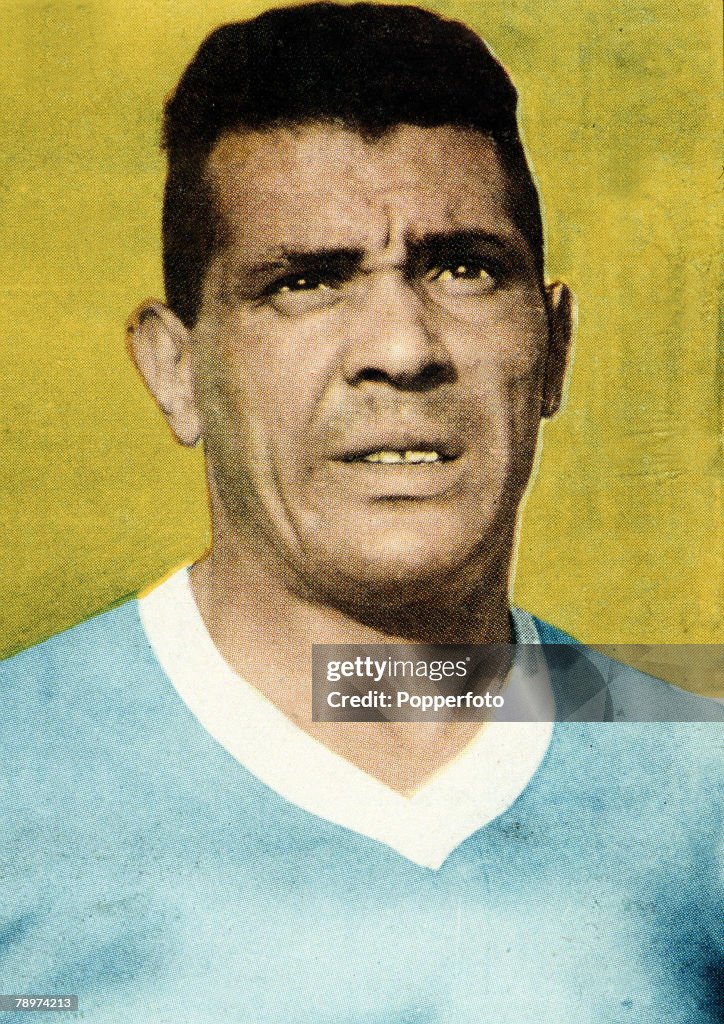
Obdulio Varela
 Uruguay
association football player•association football coach
Also known as: El Negro Jefe, Obdulio Jacinto Muiños Varela
Compleanno
September 20, 1917
Segno Zodiacale
Virgo
Luogo di Nascita
Montevideo, Uruguay
Età
Morto/a a 78 anni
Altezza
5 ft 10 in (1.78 m)
Informazioni
Obdulio Jacinto Muiños Varela è stato un calciatore e allenatore uruguaiano, ampiamente ricordato come il capitano che guidò l'Uruguay a una sorprendente vittoria sul Brasile nella finale della Coppa del Mondo FIFA 1950 allo Stadio Maracanã. Conosciuto come "El Negro Jefe" (Il Capo Nero), Varela era un centrocampista difensivo la cui leadership feroce e intelligenza tattica hanno definito un'epoca. Ha giocato per Montevideo Wanderers e Peñarol, vincendo numerosi titoli di campione uruguaiano. La sua eredità è quella di un eroe popolare in Uruguay, simbolo di sfida contro ogni previsione. Varela è morto il 2 agosto 1996, all'età di 78 anni.
Primi Anni e Background
Varela è cresciuto nel quartiere operaio di La Teja a Montevideo. Suo padre abbandonò presto la famiglia, lasciando sua madre a lavorare come domestica. La famiglia era povera e Varela lasciò la scuola dopo le elementari per vendere giornali e poi lavorare in un impianto di confezionamento della carne. Giocava a calcio di strada a piedi nudi con palloni di stracci, sviluppando un carattere duro e competitivo. A 19 anni, si unì al club amatoriale Deportivo Juventud, dove il suo talento grezzo attirò l'attenzione degli osservatori del Montevideo Wanderers. Firmò con i Wanderers nel 1938, facendo il suo debutto professionistico e iniziando la sua trasformazione in un disciplinato centrocampista difensivo sotto la guida dell'allenatore Emilio Servetti.
Crescita Professionale
Varela vinse il suo primo titolo di campione uruguaiano con il Montevideo Wanderers nel 1942, aggiungendone un altro nel 1944. Si trasferì al Peñarol nel 1945 e vinse di nuovo il campionato nel 1949. Il suo momento culminante arrivò nel 1950 come capitano dell'Uruguay nella Coppa del Mondo in Brasile. In finale, l'Uruguay era in svantaggio 1-0 all'intervallo. Varela radunò i compagni, dicendo famosamente che la partita non era ancora iniziata. L'Uruguay rimontò vincendo 2-1 davanti a oltre 200.000 tifosi brasiliani, un evento noto come Maracanazo. Giocò nella Coppa del Mondo 1954, finendo quarto. Varela si ritirò nel 1955 e in seguito allenò Peñarol, Nacional e la nazionale uruguaiana.
Cronologia Carriera
Immagine Pubblica e Stile
Varela è ritratto come un eroe popolare in Uruguay, simbolo di resilienza contro ogni probabilità. In Brasile, è ricordato come il cattivo che infranse il sogno di una nazione. Il suo sguardo intenso e la voce possente lo rendevano una presenza intimidatoria. I fan pubblicano contenuti nostalgici sui social media e ogni 16 luglio i tifosi uruguaiani celebrano il Maracanazo Day con raduni allo Stadio Centenario.
Fama e fandom
Obdulio Varela's legacy is not sustained by a modern, organized fandom of dedicated followers or fan clubs, but rather by the collective national identity of Uruguay itself. He is revered as a foundational myth where the entire nation acts as his fanbase, viewing him as the spiritual leader who defined their sporting soul. Unlike contemporary athletes who rely on social media movements or streaming campaigns, Varela's influence is expressed through enduring cultural memory and the annual Maracanazo Day celebrations that honor his defiance against overwhelming odds. There is no official name for his supporters; they are simply Uruguayan football fans who carry his spirit forward without formal rituals beyond these national gatherings. His story remains singular and monolithic, centered on the 1950 World Cup moment where he transformed a potential defeat into a historic triumph. Despite this profound historical impact, iFANN has evaluated Obdulio Varela and determined that he currently holds no placement in the published Global Top 1,000 rankings or any Top-100 scope list. The iFANN Global Fame Engine confirms this status as of August 2026, meaning he is not ranked among the world's most famous living or recently deceased figures in current metrics.
Curiosità e leggende
Varela was known for heavy smoking and drinking, habits he never concealed during his lifetime. He famously refused to wear the captain's armband in the traditional manner, sometimes holding it in his hand or tying it around his head instead. After the 1950 final, he walked alone through Rio drinking beer while taunting the mourning Brazilian fans. His mother passed away before the World Cup victory, an event he cited as his greatest regret throughout his life. He once stated he did not care about money and lived modestly until his death. Beyond these personal details, a legendary story persists regarding the 1950 halftime at the Maracanã Stadium. With Uruguay trailing, Varela aggressively tore the lost captain's armband from teammate Juan Schiaffino and placed it back on his own arm while shouting instructions to fight like dogs. This moment, often described as galvanizing the team with more soul, turned the match into a 2-1 victory and created what sports literature calls the loudest silence in football history. While the exact wording of his speech is debated, the image of the dark-skinned midfielder commanding respect remains a core piece of lore fans tell newcomers about the man who refused to let his team lose when the world expected them to.
Citazioni Notevoli
“The game hasn't started yet. Let's go out and win this for our country.”
“I don't play for money. I play for the shirt.”
“The Maracanã was silent. I could hear my own heartbeat.”
“I was born poor, I lived poor, and I'll die poor. But I die happy because I gave my country the greatest joy.”
Famiglia e Vita Privata
Varela nacque in una famiglia povera; suo padre se ne andò presto e sua madre lavorò come domestica. Aveva diversi fratelli. Si sposò due volte ed ebbe figli da entrambi i matrimoni, anche se tenne privati i dettagli familiari. La sua seconda moglie morì prima di lui. Visse a Montevideo per tutta la vita.
Collegamenti Notevoli
Varela giocò al fianco di Juan Alberto Schiaffino e Alcides Ghiggia, che segnarono i gol nella finale del 1950. Il suo allenatore ai Wanderers, Emilio Servetti, lo seguì nei primi anni. L'allenatore dell'Uruguay Juan López guidò la squadra nel 1950. Il portiere Roque Máspoli fu un compagno di squadra chiave.
Relazioni e Storia Dating
Varela si sposò due volte. Il suo primo matrimonio, alla fine degli anni '30 o all'inizio degli anni '40, finì con un divorzio. Si risposò negli anni '50 e rimase con la seconda moglie fino alla morte di lei. Ebbe figli da entrambi i matrimoni. Varela tenne la sua vita personale estremamente privata e non fu noto per relazioni sentimentali pubbliche al di fuori dei suoi matrimoni.
- Sposato/aFirst wife (name unconfirmed)1939 - 1949Si sposò alla fine degli anni '30 o all'inizio degli anni '40; finì con un divorzio dopo diversi anni.
- Sposato/aSecond wife (name unconfirmed)1951 - 1990Sposati negli anni '50; sono rimasti insieme fino alla sua morte; hanno avuto figli.
Morte e conseguenze
Morto/a
August 2, 1996 (a 78 anni)
Luogo di morte
Montevideo, Uruguay
Causa della morte
Sconosciuto
Obdulio Jacinto Muiños Varela passed away in Montevideo on August 2, 1996, at the age of 78. While official records confirm the date and location of his departure from this world, no public announcement or family statement ever detailed the specific medical cause, leaving the circumstances of his final days shrouded in the quiet dignity of natural decline rather than public spectacle. The reaction to his death reflected the deep reverence held for "El Negro Jefe," characterized by widespread institutional honor rather than documented mass gatherings or immediate memorials in the historical record. His legacy endured through the creation of the Premio José Nasazzi-Obdulio Varela, the highest accolade an athlete can receive in Uruguay, which later honored figures like Diego Godin with standing ovations in parliament. Although specific details regarding the funeral service, burial method, or private family statements remain absent from public archives, the naming of this prestigious award serves as a lasting reflection of his status as a national icon who silenced the Maracanã.
Patrimonio (Valore immobiliare)
$100,000
Stima del team editoriale di iFANN
Per iFANN's editorial analysis, Obdulio Varela's estate is estimated at $100,000 as of 2026. During his playing career in the 1940s and 1950s, footballers earned modest salaries, and Varela never accumulated significant wealth. He lived simply and rejected commercial opportunities throughout his life. The estate generates small royalty payments from FIFA for use of his image in documentaries and video games like the FIFA series. His descendants manage the estate, which has no major revenue sources.
Premi vinti (4)
Varela vinse la Coppa del Mondo FIFA nel 1950 come capitano dell'Uruguay. Vinse anche tre titoli della Primera División uruguaiana: due con il Montevideo Wanderers (1942, 1944) e uno con il Peñarol (1949). Non esistevano premi individuali durante la sua epoca.
1950 · Vincitore
Uruguay national team
1949 · Campione
Peñarol
1944 · Campione
Montevideo Wanderers
1942 · Campione
Montevideo Wanderers
Noto Per
1950 FIFA World Cup
1950 · Captain of Uruguay
Maracanazo
1950 · Captain and holding midfielder
Uruguayan Primera División
1942 · Player for Montevideo Wanderers
Uruguayan Primera División
1944 · Player for Montevideo Wanderers
Uruguayan Primera División
1949 · Player for Peñarol
Parole chiave
Fatti Rapidi
- Professione
- association football player, association football coach
- Nato/a
- +1917-09-20
- Luogo di Nascita
- Montevideo
- Morto/a
- +1996-08-02
- Luogo di morte
- Montevideo
- Genere
- Maschio
- Segno Zodiacale
- Virgo
Dettagli Personali
- Nome Completo
- Obdulio Jacinto Muiños Varela
- Altezza
- 5 ft 10 in (1.78 m)
- Figli
- Several children from two marriages
- Istruzione
- Left primary school early to work
Domande Frequenti
Come è morto Obdulio Varela?
Perché Obdulio Varela è famoso?
Qual era il soprannome di Obdulio Varela?
Obdulio Varela ha avuto figli?
Che ruolo giocava Obdulio Varela?
Social Media
Persone Simili
Unisciti alla community
fan che discutono