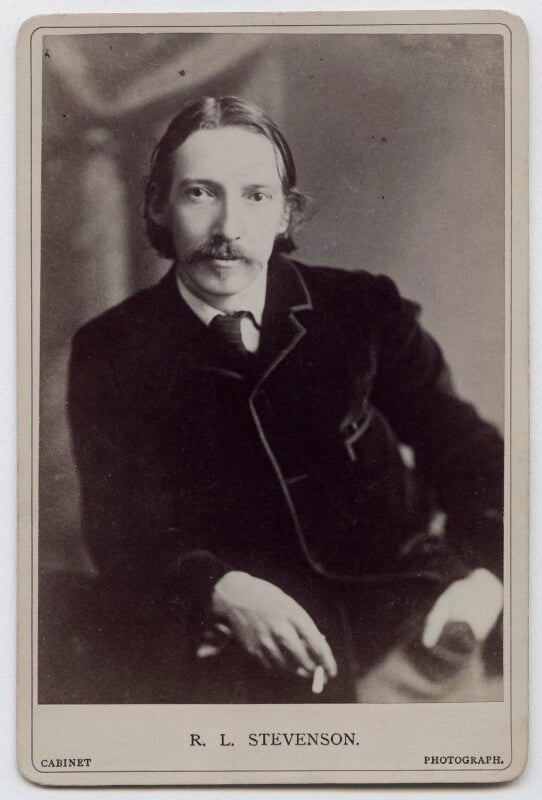
Robert Louis Stevenson
 United Kingdom
Also known as: RLS, Tusitala
Compleanno
November 13, 1850
Segno Zodiacale
Scorpio
Luogo di Nascita
Edinburgh, Scotland
Età
Morto/a a 44 anni
Altezza
5 ft 10 in (178 cm)
Informazioni
Robert Louis Stevenson è stato un romanziere, saggista, poeta e scrittore di viaggi scozzese, celebre per romanzi d'avventura come L'isola del tesoro e novelle gotiche come Lo strano caso del dottor Jekyll e del signor Hyde. La sua prolifica produzione include classici come Rapito e Giardino di versi per un bambino. Le opere di Stevenson hanno ottenuto fama mondiale, e si è classificato come il 26° autore più tradotto. Conosciuto a Samoa come Tusitala, il narratore di storie, la sua narrazione distintiva continua ad affascinare i lettori e a ispirare registi in tutto il mondo.
Primi Anni e Background
Robert Lewis Balfour Stevenson nacque il 13 novembre 1850 a Edimburgo, in Scozia, figlio unico dell'ingegnere di fari Thomas Stevenson, un eminente ingegnere di fari, e di Margaret Balfour. Fu cresciuto in una rigida famiglia calvinista a Edimburgo. Fin da giovane, Stevenson soffrì di una malattia bronchiale cronica che spesso lo costringeva a letto per lunghi periodi. Durante queste lunghe fasi di reclusione, trovò conforto e ispirazione nella letteratura, passando il tempo a divorare libri e a iniziare a scrivere le sue storie, coltivando così i suoi primi interessi e talenti.
La sua educazione formale iniziò alla Edinburgh Academy, e in seguito si iscrisse all'Università di Edimburgo. Inizialmente, Stevenson studiò ingegneria, con l'intenzione di seguire le orme del padre, ma le sue vere passioni erano altrove. Alla fine cambiò i suoi studi in legge e fu ammesso al foro scozzese nel 1875. Tuttavia, non esercitò mai la professione legale. Invece, gravitò verso la vibrante scena letteraria di Edimburgo, frequentando pub e club dove affinò la sua arte imitando i suoi autori preferiti e immergendosi nel mondo delle lettere.
I primi passi di Stevenson nel mondo letterario pubblico avvennero con la pubblicazione del suo saggio, "Roads", nel 1873. Durante questo periodo formativo, trovò un mentore importante in Frances Sitwell, una donna sposata più grande che fornì una guida e un incoraggiamento cruciali per il suo sviluppo artistico. La sua carriera letteraria iniziò davvero a prendere forma con la pubblicazione del suo primo libro, Viaggio nell'entroterra, nel 1878, che raccontava un viaggio in canoa attraverso la Francia, segnando la sua svolta come scrittore professionista.
Crescita Professionale
La svolta di Stevenson arrivò nel 1883 con L'isola del tesoro, inizialmente pubblicato a puntate su una rivista per bambini. Il romanzo fu un enorme successo e lo affermò come maestro della narrativa d'avventura. In rapida successione pubblicò Giardino di versi per un bambino (1885), poi nel 1886 sia Lo strano caso del dottor Jekyll e del signor Hyde — che vendette 40.000 copie in sei mesi — che Rapito. Si trasferì negli Stati Uniti nel 1887, poi intraprese un viaggio nei Mari del Sud nel 1888 a bordo dello yacht Casco, visitando le Isole Marchesi, Tahiti e le Hawaii. Nel 1889 si stabilì a Samoa, costruendo una casa chiamata Vailima. Opere successive includono Il padrone di Ballantrae (1889) e Catriona (1893). Morì nel 1894 per un ictus.
Cronologia Carriera
Immagine Pubblica e Stile
Stevenson coltivò un'immagine romantica e bohémien: un uomo fragile, barbuto, con un mantello, spesso con una sigaretta, che scriveva di eroi spadaccini. Il suo stile mescolava avventura romantica e oscurità gotica, e la sua poesia lirica incantava i lettori. I media e i fan lo vedono come l'archetipo dell'invalido romantico: un uomo malaticcio che viveva per procura attraverso i suoi personaggi. I suoi fan, chiamati Stevensoniani, includono studiosi di letteratura e appassionati di avventura. Celebrano il suo compleanno, visitano le sue case a Edimburgo e Samoa e tengono letture. Sui social media, le pagine dei fan condividono citazioni e curiosità biografiche, mantenendo un tono riverente e accademico.
Fama e fandom
The cultural presence of Robert Louis Stevenson is defined by institutional reverence rather than the organized activism typical of modern celebrity. Unlike contemporary figures who command unified fanbases with specific monikers and digital campaigns, his admirers operate through museums, historical societies, and academic circles. There is no formal collective name for his followers, nor are there recorded instances of grassroots movements driving viral trends or social media phenomena in his honor. The primary centers of devotion remain physical locations such as the museum in Apia, Samoa, and the historic sites in Edinburgh and New York, which serve as pilgrimage grounds for scholars and readers alike. Recent efforts to restore statues and maintain summer camps reflect a sustained, quiet appreciation managed by curators rather than an active fanbase orchestrating chart pushes. His legacy rests on the enduring power of works like Treasure Island and Strange Case of Dr Jekyll and Mr Hyde, which have generated countless adaptations without creating a distinct fandom culture around the author himself. While stories of his travels and illness persist as folklore, they lack the chaotic public spectacles often associated with legendary status. As of August 2026, the iFANN Global Fame Engine has evaluated this individual but does not currently assign him a placement within the published rankings or scope lists. Consequently, no numeric rank or score exists for Robert Louis Stevenson in the current global standings.
Curiosità e leggende
Robert Louis Stevenson altered the spelling of his middle name from Lewis to Louis at age eighteen yet continued to pronounce it as Lewis throughout his life. He composed the novella Strange Case of Dr Jekyll and Mr Hyde during a six-day feverish period inspired by a recurring nightmare. Despite suffering from chronic lung disease, he maintained a heavy smoking habit. His close friendship with Henry James persisted despite their divergent literary styles. He actively advocated for Samoan independence, earning the title Tusitala, or Teller of Tales, from local residents. His epitaph reads: Under the wide and starry sky, / Dig the grave and let me lie. / Glad did I live and gladly die, / And I laid me down with a will. A persistent legend surrounds his final resting place beneath a mango tree on Vailima, a detail that has become central to his mythos. Another widely retold narrative involves his convalescence in Saranac Lake, New York, where he wrote Kidnapped while battling illness in a modest cottage now preserved as a museum. In 2026, restoration teams utilized 3D printing technology to repair a decapitated statue of the author in Samoa, ensuring the physical legacy remains intact for future generations.
Citazioni Notevoli
“Sooner or later, we all sit down to a banquet of consequences.”
“To travel hopefully is a better thing than to arrive, and the true success is to labour.”
“The world is so full of a number of things, I'm sure we should all be as happy as kings.”
“Quiet minds cannot be perplexed or frightened, but go on in fortune or misfortune at their own private pace, like a clock during a thunderstorm.”
Famiglia e Vita Privata
Stevenson era figlio unico di Thomas Stevenson, un rispettato ingegnere di fari, e Margaret Isabella Balfour, la cui famiglia comprendeva avvocati e ministri di culto. I suoi genitori erano severi calvinisti. Sposò Fanny Van de Grift Osbourne nel 1880; lei aveva due figli da un precedente matrimonio: Isobel (Belle) e Lloyd Osbourne. Stevenson adottò legalmente Lloyd, che in seguito collaborò a opere come The Wrong Box. La famiglia visse a Samoa a Vailima, dove Fanny gestiva la casa e la salute di Stevenson. Non ebbe figli biologici. Gli Stevenson tenevano animali domestici, tra cui un cavallo di nome Jack.
Collegamenti Notevoli
Stevenson era sposato con Fanny Van de Grift Stevenson, che fungeva anche da sua redattrice e manager. Il suo figliastro e collaboratore era Lloyd Osbourne. Fu guidato da Sidney Colvin e contava tra i suoi amici Andrew Lang, Edmund Gosse, Leslie Stephen e W. E. Henley. Henley potrebbe aver ispirato Long John Silver. Le sue opere furono pubblicate da Charles Scribner's Sons negli Stati Uniti. Fu ritratto da John Singer Sargent.
Relazioni e Storia Dating
Il primo legame romantico conosciuto di Stevenson fu con Frances Sitwell, una donna sposata più anziana che incontrò nel 1873. Lei incoraggiò la sua scrittura ma scelse di rimanere con il marito, ponendo fine alla relazione intorno al 1875. Nel 1876, in una colonia di artisti a Grez-sur-Loing, in Francia, conobbe Fanny Van de Grift Osbourne, un'americana separata dal marito. Iniziarono una relazione e, quando lei tornò in California nel 1878, Stevenson la seguì attraverso l'Atlantico, rischiando quasi di morire nel viaggio. Si sposarono il 19 maggio 1880 a San Francisco. Fanny fu sua moglie, editor e manager, e il matrimonio fu apparentemente felice e duraturo. Non ebbe altri partner noti. Al 2026, Stevenson è deceduto; era sposato con Fanny al momento della sua morte.
- Uscito/aFrances Sitwell1873 - 1875Relazione platonica ma profondamente emotiva; lei era una mentore letteraria sposata che incoraggiò i suoi primi scritti.
- Sposato/aFanny Van de Grift Osbourne1880 - 1894CorrenteIncontrati nel 1876 in Francia; lei era separata dal suo primo marito. Si sposarono a San Francisco e rimasero insieme fino alla sua morte.
Morte e conseguenze
Morto/a
December 3, 1894 (a 44 anni)
Luogo di morte
Apia, Upolu, Samoa
Causa della morte
Cerebral hemorrhage due to tuberculosis
Robert Louis Stevenson died on December 3, 1894, at the age of forty-four in his sleep at Vailima, his home near Apia on the island of Upolu in Samoa. The cause of death was officially ruled as a cerebral hemorrhage resulting from complications of chronic tuberculosis and hypertension, conditions that had plagued him since childhood. This determination relied on family testimony and the medical observations of his physician, Dr. Walter Woodhouse, following a severe stroke in November 1894 that left him partially paralyzed and another on December 2nd before he slipped into unconsciousness., historical consensus confirms he passed peacefully while attempting to write a letter to his wife Fanny, though he never finished it. Public reaction across the British Empire and the United States was immediate and profound, with tributes pouring in from peers such as Arthur Conan Doyle, Rudyard Kipling, and Henry James.
A memorial service was held at St. Paul's Cathedral in London attended by prominent literary figures, while fan gatherings and vigils took place in Edinburgh and New York. Sales of his books surged immediately following the news, prompting publishers to release special editions, and crowds gathered along the coast to meet the steamer Lurline carrying his body back to Europe. Despite the journey, his remains were ultimately interred in Samoa rather than returned to Scotland for burial. Stevenson's funeral was a private ceremony held on December 4, 1894, at Vailima conducted by a missionary and attended by his wife Fanny, their son Lloyd, close friends including American consul William H. Smith, and several Samoan chiefs. Due to the tropical climate and logistical difficulties of transporting a heavy oak coffin up the steep mountainside, the burial took place in a small clearing on Mount Vaea overlooking the ocean, known as the Top of the World.
His son Lloyd recited a passage from Treasure Island during the service, which featured no elaborate performances or public eulogies. Posthumously, his widow Fanny managed his copyrights and published collections such as The Wrecker and St. Ives, while his legacy expanded through numerous film adaptations and the establishment of museums in Edinburgh, Saranac Lake, and Apia.
Patrimonio (Valore immobiliare)
$10 Million
Stima del team editoriale di iFANN
Per iFANN's editorial analysis, the literary estate of Robert Louis Stevenson holds a value of $10 Million as of 2026 estimates. This valuation reflects ongoing revenue streams derived from book sales, film and television adaptations, audiobooks, and merchandise. Major productions include dozens of film versions of Dr Jekyll and Mr Hyde and Treasure Island, which continue to generate significant income. The estate is administered by the Stevenson family trust, which retains control over the rights to his extensive body of work. Posthumous earnings have expanded steadily, aided by new editions and digital formats that broaden global reach. Additionally, the Robert Louis Stevenson Museum in Samoa contributes to the financial standing of the estate. No public filings exist to verify these figures, yet the estate remains financially substantial among authors from the nineteenth century.
Premi e Lodi
View 3 records, honours and achievementsNoto Per
Treasure Island
1883 · Autore
Strange Case of Dr Jekyll and Mr Hyde
1886 · Autore
Kidnapped
1886 · Autore
A Child's Garden of Verses
1885 · Autore
The Master of Ballantrae
1889 · Autore
Parole chiave
Fatti Rapidi
- Professione
- poet, essayist, novelist
- Nato/a
- +1850-11-13
- Luogo di Nascita
- Edinburgh
- Morto/a
- +1894-12-03
- Luogo di morte
- Vailima
- Genere
- Maschio
- Coniuge
- Fanny Stevenson
- Segno Zodiacale
- Scorpio
Dettagli Personali
- Nome Completo
- Robert Lewis Balfour Stevenson
- Altezza
- 5 ft 10 in (178 cm)
- Coniuge
- Fanny Stevenson
- Figli
- Lloyd Osbourne (adopted stepson), Isobel Osbourne (stepdaughter)
- Istruzione
- University of Edinburgh (studied engineering, then law)
Domande Frequenti
Come morì Robert Louis Stevenson?
Qual è il libro più famoso di Robert Louis Stevenson?
Robert Louis Stevenson ebbe figli?
Dove è sepolto Robert Louis Stevenson?
Qual era il vero nome di Robert Louis Stevenson?
Persone Simili
Unisciti alla community
fan che discutono