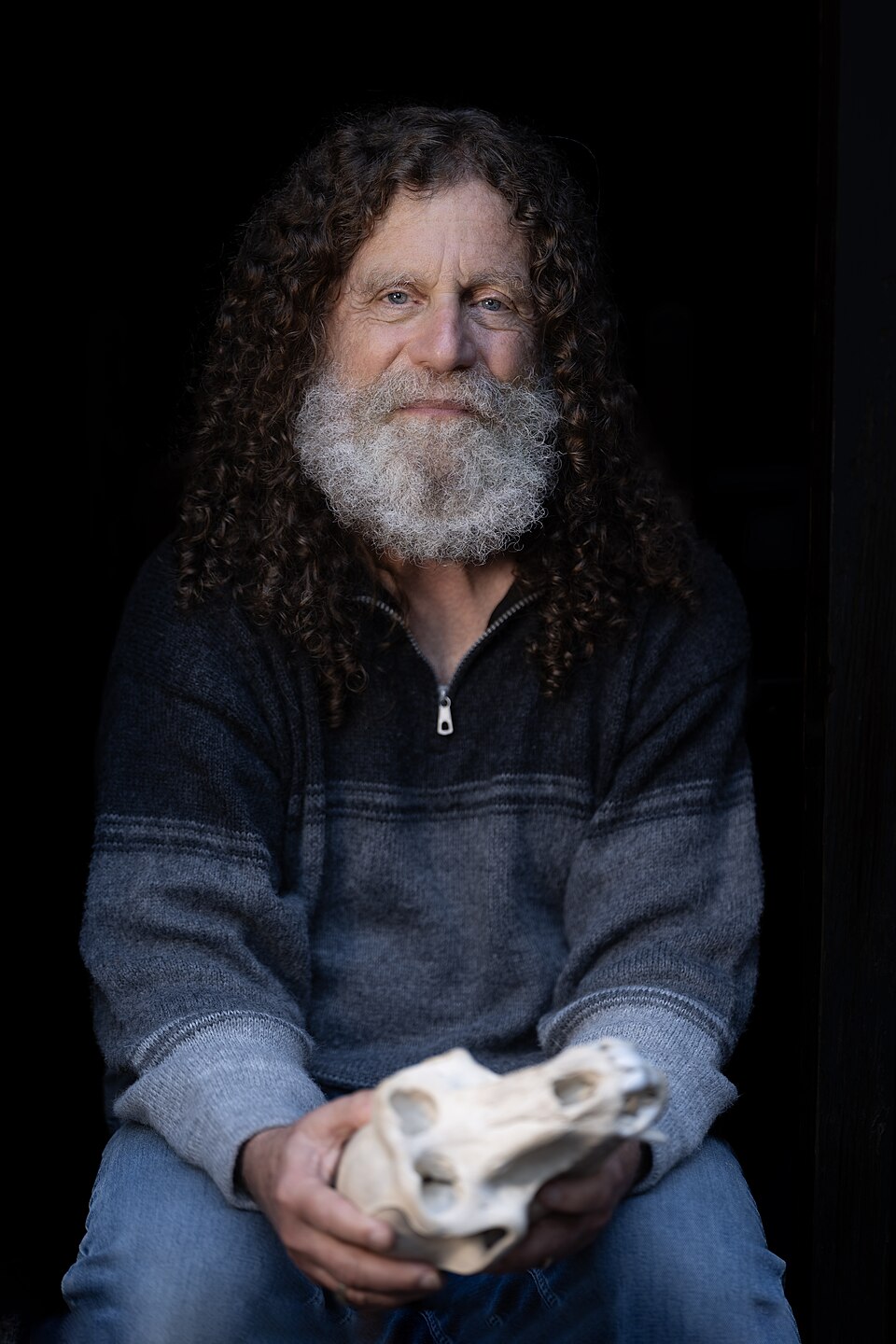
Robert Sapolsky
 United States
university teacher•writer•neurologist
Compleanno
April 6, 1957
Segno Zodiacale
Aries
Luogo di Nascita
Brooklyn, New York, USA
Età
69 anni
Altezza
5 ft 10 in (178 cm)
Informazioni
Robert Sapolsky è un neuroscienziato, primatologo e autore americano che ha trascorso decenni a svelare la biologia dello stress e del comportamento umano. Come John A. and Cynthia Fry Gunn Professor alla Stanford University, ricopre incarichi in biologia, neurologia e neurochirurgia. Il suo lavoro spazia dagli effetti cellulari degli ormoni dello stress alle dinamiche comportamentali dei babbuini selvaggi in Kenya, rendendolo uno dei comunicatori scientifici più influenti della sua generazione. I libri di Sapolsky, tra cui Why Zebras Don't Get Ulcers e Behave, hanno venduto milioni di copie e hanno plasmato la comprensione pubblica del cervello. È noto per la sua posizione provocatoria contro il libero arbitrio, che sostiene essere un'illusione guidata dalla biologia e dall'ambiente. Nel 2018, TIME lo ha nominato una delle 100 persone più influenti al mondo.
Primi Anni e Background
Cresciuto in una famiglia ebraica ortodossa a Flatbush, Sapolsky era un bambino curioso che divorava libri di fantascienza e storia naturale. A 12 anni, un libro del primatologo Sherwood Washburn accese la sua ossessione per i babbuini. A 14 anni, scriveva lettere a Washburn e ad altri scienziati, imparava lo swahili da autodidatta e progettava il suo primo viaggio in Africa. Frequentò la John Dewey High School, una scuola pubblica progressista a Brooklyn, dove eccelleva in scienze. Ad Harvard, si laureò summa cum laude in antropologia biologica nel 1978, trascorrendo le estati in Africa orientale osservando gruppi di babbuini. Conseguì il dottorato in neuroendocrinologia alla Rockefeller University nel 1984, dove la sua ricerca prevedeva l'impianto di elettrodi nel cervello di ratti per studiare gli ormoni dello stress.
Crescita Professionale
Dopo un post-dottorato al Salk Institute, Sapolsky entrò a Stanford nel 1986 come professore assistente. Nello stesso anno, divenne ricercatore associato presso i National Museums of Kenya, consentendogli un lavoro sul campo annuale con un singolo gruppo di babbuini olivastri nel Masai Mara. Il suo primo libro, The Trouble with Testosterone (1989), lo affermò come saggista scientifico. Ma Why Zebras Don't Get Ulcers (1997) fu il suo successo, una spiegazione bestseller della risposta allo stress che risuonò ampiamente. Nel 2017, Behave sintetizzò biologia e comportamento umano, vincendo il Los Angeles Times Book Prize. Il suo libro del 2023 Determined argomentava contro il libero arbitrio, scatenando un dibattito globale. Dal 2026, continua a insegnare a Stanford e sta lavorando a un nuovo libro sulla neuroscienza dell'empatia.
Cronologia Carriera
Immagine Pubblica e Stile
Sapolsky è noto per il suo modo di parlare rapido, il forte accento newyorkese e la capacità di rendere accessibili neuroscienze complesse con umorismo e storytelling. I media lo chiamano spesso una rock star della scienza, evidenziando la sua volontà di sfidare le ipotesi sul libero arbitrio e la natura umana. I suoi fan sono per lo più appassionati di scienza e studenti; comunità online come r/BehavioralBiology discutono attivamente del suo lavoro. Sui social media, il suo tono è spiritoso e diretto, occasionalmente combattivo quando difende le sue posizioni.
Fama e fandom
Robert Sapolsky does not currently hold a placement in the published rankings (Global Top 1,000 or a Top-100 scope list). While the iFANN Global Fame Engine has evaluated his profile, the current data indicates he does not hold a specific numeric rank within the published Global Top 1,000 or any scope-specific top-100 lists. His presence in the rankings fluctuates with the release of major works and high-profile lectures, yet he remains a consistent fixture in discussions regarding neuroscience and free will. The audience surrounding Sapolsky lacks a formalized name, distinguishing his following from the organized fandoms typical of entertainment industries. Instead, his supporters constitute an academic and intellectual community comprising students, researchers, and science enthusiasts who engage with his arguments through university courses, book clubs, and online discourse. There are no documented fan campaigns, birthday billboards, or ritualistic gatherings dedicated to his person; the engagement is characterized by the dissemination of his theories on determinism and the biological underpinnings of human nature. His interactions occur primarily through his roles as a Stanford professor and author, attracting listeners interested in rigorous scientific inquiry rather than celebrity worship. The narrative built around him relies on the intellectual impact of his books and lectures, specifically his explanation of why zebras do not get ulcers and his critique of the concept of free will, rather than on dramatic personal anecdotes or chaotic public scenes.
Curiosità e leggende
Sapolsky taught himself Swahili at age 14 to prepare for his first African trip, a feat of linguistic dedication that foreshadowed his lifelong commitment to primatology. He has spent several months each year since 1978 studying the same troop of olive baboons in Kenya, establishing one of the longest-running field studies of its kind. A competitive runner during his high school and college years, he also bears a tattoo of a baboon on his left shoulder, a permanent marker of his professional passion. As a lifelong atheist, he has been open about his struggles with depression, adding a layer of personal vulnerability to his public persona. His essays have appeared in prestigious publications such as The New Yorker and Scientific American, reaching audiences far beyond the academy. Among the widely retold stories in his circle is the Determinism Argument, a central pillar of his public persona asserting that humans possess no free will, which has become a cultural touchstone for his audience through numerous interviews and articles. His status as a MacArthur Genius Fellow and member of the National Academy of Sciences serves as a recurring theme in discussions of his legacy, cementing his reputation as a leading voice in the biological sciences.
Citazioni Notevoli
“The stress response is designed to help you get out of the way of a lion. If you're stressed about a mortgage, you're activating the same physiological system, but for a totally different reason.”
“We are nothing more than the output of our biology and environment. Free will is a myth.”
“The more you learn about the biology of behavior, the harder it is to hate anyone.”
Famiglia e Vita Privata
Sapolsky è sposato con la Dott.ssa Lisa Sapolsky, medico e ricercatrice. Hanno due figli, un maschio e una femmina, e vivono nella San Francisco Bay Area. Raramente parla della sua famiglia nelle interviste, mantenendo una forte riservatezza. Suo padre era un architetto emigrato dall'Unione Sovietica, e sua madre era una casalinga. È cresciuto in una comunità ebraica ortodossa unita a Flatbush, Brooklyn.
Collegamenti Notevoli
Il supervisore del dottorato di Sapolsky è stato Bruce McEwen alla Rockefeller University. È stato influenzato dal primatologo Sherwood Washburn. Ha collaborato con Richard Dawkins sulla comunicazione scientifica e ha dibattuto di libero arbitrio con Sam Harris. A Stanford, ha lavorato insieme ai colleghi Paul Ehrlich e William H. Durham.
Relazioni e Storia Dating
Robert Sapolsky è sposato con la Dott.ssa Lisa Sapolsky, medico. La coppia è insieme da decenni, anche se l'anno esatto di inizio della loro relazione non è documentato pubblicamente. Hanno due figli. Non ci sono relazioni precedenti note pubblicamente, flirt di alto profilo o divorzi. Dal 2026, Sapolsky rimane sposato con la Dott.ssa Lisa Sapolsky.
- Sposato/aDr. Lisa SapolskyCorrenteMatrimonio di lunga durata; hanno due figli insieme. L'anno di inizio esatto non è documentato pubblicamente.
Stipendio, patrimonio nel 2026
$10 Million
Stima del team editoriale di iFANN
Per iFANN's editorial analysis, Robert Sapolsky's net worth stands at $10 Million as of 2026. His primary income source is his tenured professorship at Stanford, earning an estimated $250,000–$350,000 annually. Book royalties from Why Zebras Don't Get Ulcers, Behave, and Determined have sold over 2 million copies combined, generating $500,000+ per year. He commands $20,000–$50,000 per speaking engagement, giving 20–30 paid lectures annually. Additional income comes from documentary and media appearances, including Stress: Portrait of a Killer and The Mind, Explained. He owns a home in the San Francisco Bay Area valued at $2–3 million and maintains a diversified investment portfolio.
Premi vinti (8)
2019 · Comunicazione scientifica
Popularizing science
2018 · Scrittura scientifica
Behave
Noto Per
Why Zebras Don't Get Ulcers
1997 · Author
Behave: The Biology of Humans at Our Best and Worst
2017 · Author
Determined: A Science of Life Without Free Will
2023 · Author
Parole chiave
Fatti Rapidi
- Professione
- university teacher, writer, neurologist
- Nato/a
- +1957-04-06
- Luogo di Nascita
- Brooklyn
- Genere
- Maschio
- Segno Zodiacale
- Aries
Dettagli Personali
- Nome Completo
- Robert Morris Sapolsky
- Altezza
- 5 ft 10 in (178 cm)
- Coniuge
- Dr. Lisa Sapolsky
- Figli
- 2 (a son and a daughter)
- Istruzione
- Harvard University (BA), Rockefeller University (PhD)
Filmografia
5
Totale
2
Film
3
TV
Domande Frequenti
Robert Sapolsky è sposato?
Robert Sapolsky crede nel libero arbitrio?
Qual è il patrimonio di Robert Sapolsky nel 2026?
Quanti anni ha Robert Sapolsky?
Cosa studia Robert Sapolsky?
Social Media
Persone Simili
Unisciti alla community
fan che discutono