 Spain
Informazioni
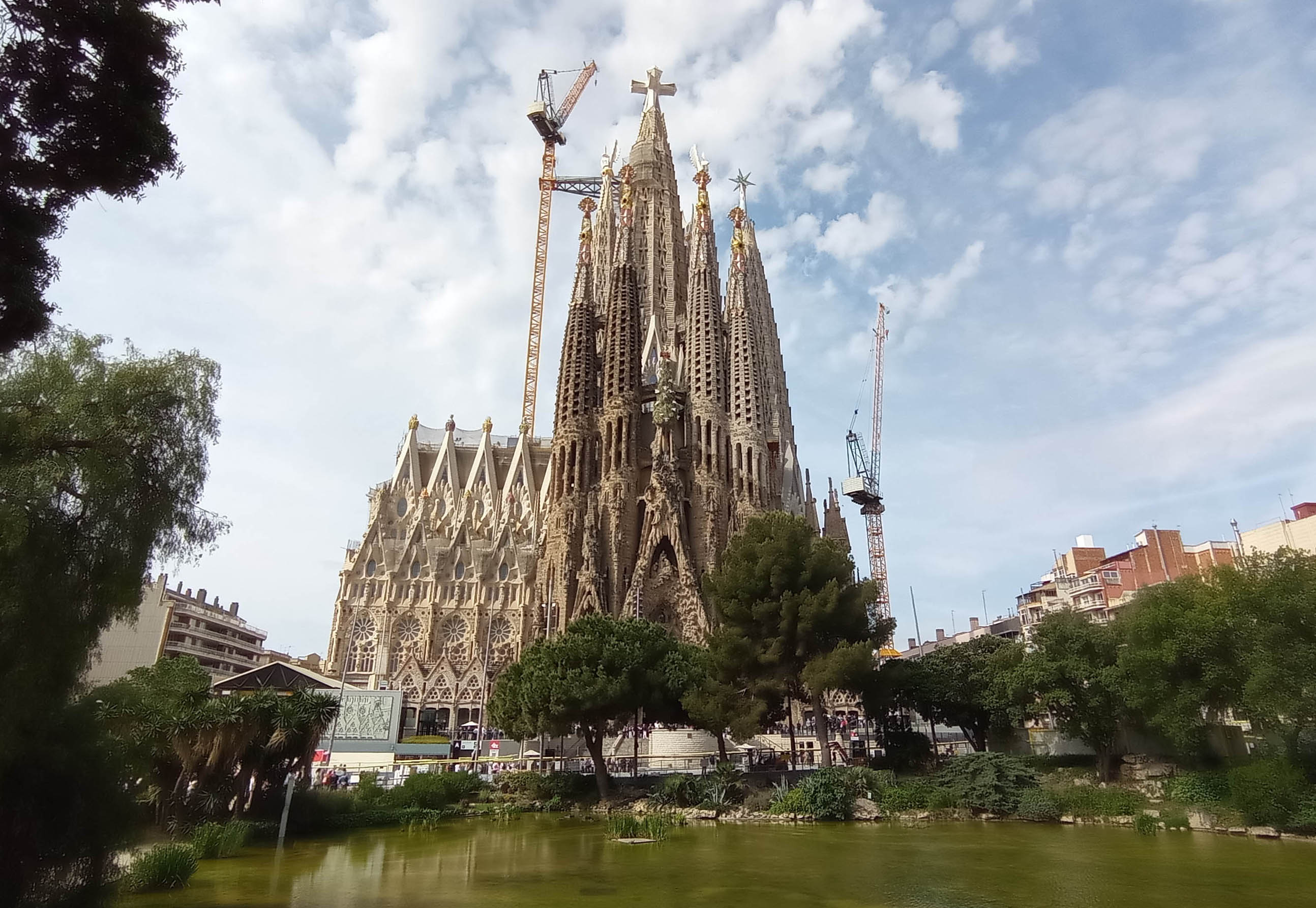
The Basílica i Temple Expiatori de la Sagrada Família stands as a towering presence in the Eixample district of Barcelona. Known simply as the Sagrada Família, this Roman Catholic minor basilica holds the distinction of being the world's tallest church, with its central spire reaching 172.5 meters. Its full Catalan name translates to "Expiatory Temple of the Holy Family," a title that reflects its unique financial model: construction has always been funded by private donations and visitor ticket sales rather than public funds or state support.
Antoni Gaudí took over the project in 1883, transforming the original neo-Gothic design into something entirely his own. He devoted over four decades to the church, living on the site in his final years where he slept on a cot among his models. When he died in 1926, he left behind detailed models and drawings that have guided every subsequent architect. The basilica fuses Gothic and Art Nouveau forms with organic, nature-inspired elements, creating what locals often call "the Bible carved in stone." Its three grand façades depict the life of Christ from birth to resurrection, each telling a distinct part of the narrative through sculpture and light.
In 2005, the Nativity Façade and Crypt were declared a UNESCO World Heritage Site as part of the broader "Works of Antoni Gaudí" listing. The structure draws millions of visitors annually, making it one of Spain's most-visited landmarks. The completion of the final tower in 2026 marked the end of 144 years of construction, solidifying its status as a triumph of human perseverance and faith.
Missione
La Sagrada Família esiste come tempio espiatorio, un luogo di culto e penitenza costruito con le offerte dei fedeli. La sua missione è raccontare la storia della Sacra Famiglia e la vita di Gesù Cristo attraverso architettura, scultura e luce, servendo al contempo come centro di devozione cattolica a Barcellona. La basilica mira a ispirare riflessione spirituale e a essere una testimonianza di fede espressa attraverso il genio artistico.
Storia
La storia inizia con Josep Maria Bocabella, un devoto libraio che fondò l'Associazione Spirituale dei Devoti di San Giuseppe. L'associazione acquistò un terreno nella periferia di Barcellona e pose la prima pietra il 19 marzo 1882, festa di San Giuseppe. L'architetto Francisco de Paula del Villar progettò una chiesa neogotica convenzionale, ma si dimise dopo un anno a causa di disaccordi. Nel 1883, un trentunenne Antoni Gaudí prese il progetto e buttò via i piani originali.
Gaudí reimmaginò la chiesa come una foresta di colonne ramificate e guglie svettanti, traendo ispirazione dalla natura e dal simbolismo cattolico. Ci lavorò per 43 anni, sapendo che non sarebbe vissuto abbastanza per vederla finita. Negli ultimi anni visse in un laboratorio sul sito, dormendo su una branda tra i suoi modelli. Il 7 giugno 1926 fu investito da un tram e morì due giorni dopo, sepolto nella cripta del suo capolavoro incompiuto.
La guerra civile spagnola portò disastro. Nel 1936, degli anarchici irruppero nel laboratorio e distrussero molti dei modelli e disegni di Gaudí. La ricostruzione negli anni '40 e '50 dovette fare affidamento su frammenti sopravvissuti e fotografie. La costruzione continuò lentamente, finanziata interamente da donazioni e, successivamente, dalla vendita di biglietti. Nel 2016, la basilica risolse una lunga disputa con il Comune di Barcellona per la mancanza di un permesso di costruzione, accettando di pagare 36 milioni di euro in dieci anni per miglioramenti urbani.
La spinta finale arrivò negli anni 2010 e 2020. Gli ingegneri di Arup affrontarono sfide strutturali, e Henkel fornì adesivi Loctite per unire pietra e acciaio. La torre centrale di Gesù Cristo fu sormontata da una croce a quattro bracci all'inizio del 2026, e il 10 giugno 2026, esattamente un secolo dopo la morte di Gaudí, la basilica fu dichiarata completa. Papa Leone XIV visitò per celebrare una Messa solenne e benedire la torre, segnando la fine di 144 anni di costruzione.
Suddivisioni
The Basilica
The main worship space featuring three grand façades: the Nativity Façade, the Passion Façade, and the Glory Façade.
Museums and Workshops
Facilities on-site that display Gaudí's models, drawings, and the history of the construction process.
Educational Programs
Includes school competitions for the Tower of Jesus and various cultural workshops for visitors.
Persone note
Antoni Gaudí
Architetto · 1883–1926
Designed and oversaw construction for over 40 years; buried in the crypt.
Josep Maria Bocabella
Fondatore · 1882
Initiated the project through the Spiritual Association of Devotees of Saint Joseph.
Francisco de Paula del Villar
Original architect · 1882–1883
Conceived the initial neo-Gothic design before resigning.
Jordi Faulí
Architectural director · 2012–present
Led the completion of the Tower of Jesus Christ in 2026.
Esteve Camps i Sala
President of the Junta Constructora · 2015–present
Oversaw the final construction phase and the centenary celebrations.
Traguardi
1882
Cornerstone laid on 19 March
1883
Antoni Gaudí takes over as architect
1926
Gaudí dies; construction continues under his assistants
1936
Spanish Civil War; workshop and models destroyed by anarchists
1952
Construction resumes after the war
2010
Pope Benedict XVI consecrates the basilica and proclaims it a minor basilica
2005
Nativity Façade and Crypt declared UNESCO World Heritage Site
2026
Tower of Jesus Christ completed; basilica declared complete on 10 June
Fonti
Info Organizzazione
- Fondata
- March 19, 1882
- Sede
- Barcelona, Catalonia, Spain
- Paese
- Spain
- President of the Junta Constructora
- Esteve Camps i Sala
- Genitore
- Junta Constructora del Temple Expiatori de la Sagrada Família
- Tipo
- Religious
- Fondata
- March 19, 1882
- Paese
- Spain
- Altezza
- 172.5 meters
- Architect
- Antoni Gaudí
- UNESCO World Heritage
- 2005 (Nativity Façade and Crypt)
- Completion
- June 10, 2026
Sito Ufficiale
sagradafamilia.org/
Unisciti alla community
fan che discutono