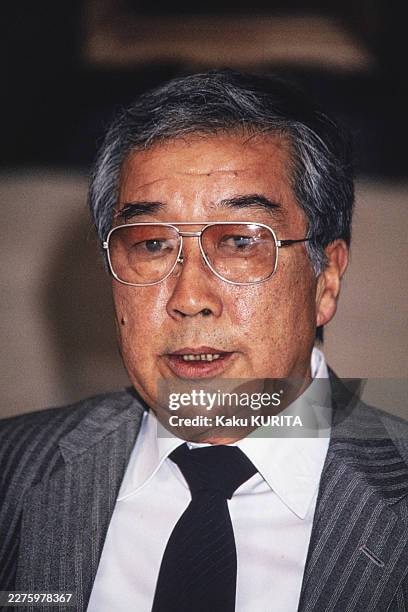
Shohei Imamura
 Japan
Japanfilm director•screenwriter•film producer
Compleanno
September 15, 1926
Segno Zodiacale
Virgo
Luogo di Nascita
Tokyo, Japan
Età
Morto/a a 79 anni
Altezza
5 ft 7 in (170 cm)
Informazioni
Shohei Imamura, nato il 15 settembre 1926 a Tokyo, è stato un regista, sceneggiatore e produttore giapponese. È l'unico regista giapponese ad aver vinto due volte la Palma d'Oro a Cannes, per La ballata di Narayama (1983) e L'anguilla (1997). In una carriera durata quattro decenni, ha diretto 17 lungometraggi e numerosi documentari, ottenendo riconoscimenti internazionali per le sue rappresentazioni senza compromessi delle classi inferiori e degli individui emarginati del Giappone. Il suo lavoro, spesso paragonato a quello di Pier Paolo Pasolini e Luis Buñuel, univa naturalismo e commedia nera per esplorare gli istinti umani primordiali e le disuguaglianze sociali. I film di Imamura rimangono un pilastro della Nuova Onda giapponese e continuano a essere studiati e celebrati in retrospettive in tutto il mondo.
Primi Anni e Background
Imamura è cresciuto nel distretto shitamachi di Tokyo, figlio di un medico. Le divisioni di classe che osservò da bambino lasciarono un'impressione duratura. Frequentò l'Università di Waseda, laureandosi nel 1951 in storia occidentale. Durante la giovinezza, fu profondamente influenzato dai naturalisti letterari francesi come Émile Zola. Dopo la laurea, entrò alla Shochiku come assistente alla regia, lavorando sotto Yasujirō Ozu in film come Presto estate (1951) e Il sapore del riso al tè verde (1952). Trovò lo stile formale e sobrio di Ozu soffocante e in seguito dichiarò di voler creare un cinema più viscerale e terragno. Nel 1954, passò alla Nikkatsu, dove iniziò a scrivere sceneggiature e a dirigere. Il suo primo lungometraggio, Desiderio rubato (1958), era una commedia drammatica su una compagnia teatrale itinerante.
Crescita Professionale
La svolta di Imamura arrivò nel 1961 con Maiali e corazzate, una satira brutale del sottobosco postbellico. Seguì La donna insetto (1963), che vinse il Mainichi Film Award per il miglior film e il premio per la migliore attrice al Festival Internazionale del Cinema di Berlino. Nel 1967, diresse il documentario sperimentale Un uomo scompare, che confondeva realtà e finzione. Dopo aver fondato la Imamura Productions nel 1975, vinse la sua prima Palma d'Oro a Cannes nel 1983 per La ballata di Narayama, un adattamento crudo della leggenda dell'ubasute. Il suo film del 1989 Pioggia nera, sulle conseguenze del bombardamento di Hiroshima, vinse il Premio della Giuria a Cannes. Nel 1997, vinse la sua seconda Palma d'Oro per L'anguilla, un dramma psicologico con Koji Yakusho. Quello stesso anno, fondò la scuola di cinema all'Università Nazionale di Yokohama, dove fece da mentore a Takashi Miike. Il suo ultimo lungometraggio, Acqua calda sotto un ponte rosso, uscì nel 2001.
Cronologia Carriera
Immagine Pubblica e Stile
I film di Imamura sono caratterizzati da un naturalismo crudo, un focus sulle classi inferiori, una sessualità cruda e una commedia nera. I critici lo descrivono costantemente come un umanista e un cronista del sottoproletariato. Il suo lavoro è spesso paragonato a quello di Pier Paolo Pasolini e Luis Buñuel per la sua natura trasgressiva e socialmente critica. Ha una base di fan accademici dedicati tra i cinefili, con discussioni attive su forum come Criterion Forum e Letterboxd. La sua eredità mantiene una presenza sui social media archivistici che promuove retrospettive e uscite home video.
Fama e fandom
Shohei Imamura commands a global audience of cinephiles, scholars, and film students who revere his contributions to world cinema rather than following him as a contemporary pop icon. While he does not hold a position in the current iFANN Global Top 1,000 or any scope-specific ranking lists, his stature remains untouchable within the canon of Japanese New Wave directors. The iFANN evaluation confirms that Imamura is currently evaluated but holds no placement in the published rankings, reflecting a legacy defined by artistic permanence rather than fluctuating popularity metrics. His fanbase lacks a formal name, operating instead through academic circles, dedicated film archives like the Criterion Collection, and active discussion groups on platforms such as Letterboxd and the Criterion Forum. These communities engage in restoration efforts for titles like Vengeance Is Mine and The Insect Woman, ensuring his work remains accessible to new generations without organized campaigns or social media interactions typical of modern stars.
Curiosità e leggende
Imamura served as an assistant director on Yasujirō Ozu's Early Summer and The Flavor of Green Tea over Rice before rejecting Ozu's polished style for his own gritty naturalism. He frequently employed insect metaphors to illustrate humanity's drive by primal instincts, a theme central to his worldview. His quasi-documentary A Man Vanishes (1967) famously blurred the lines between reality and fiction while investigating a missing person. Takashi Miike, who would later become a renowned director himself, worked as an assistant director on The Eel under Imamura's mentorship. The director stands alone as the only Japanese filmmaker to win the Palme d'Or twice, securing victories for The Ballad of Narayama (1983) and The Eel (1997). Films including Pigs and Battleships, The Insect Woman, and Black Rain have been released on Blu-ray by the Criterion Collection, cementing their status as essential viewing. Fans often recount the story of Imamura digging beneath Japan's surface to reveal a wellspring of sensual, irrational energy, framing him as a chronicler of the underclass who viewed humans as animals driven by hunger, sex, and survival.
Citazioni Notevoli
“I am interested in the lower part of the human body, and the lower part of society.”
“Ozu's films are about the way things should be. My films are about the way things are.”
“I wanted to show that even in a brutal, primitive society, there is a profound beauty and dignity.”
“I am very happy, but I am also very tired. I think I will go home and sleep.”
Famiglia e Vita Privata
Imamura sposò Akiko Imamura, che gestiva la sua società di produzione e gli affari personali. La coppia ebbe due figli: un figlio, Daisuke Imamura, che divenne regista, e una figlia. Imamura era molto riservato sulla sua vita familiare, e pochi dettagli sulla sua casa sono pubblici. Visse a Tokyo fino alla sua morte nel 2006.
Collegamenti Notevoli
Imamura lavorò come assistente alla regia sotto Yasujirō Ozu, il cui stile formale in seguito rifiutò. Fece da mentore a Takashi Miike, che assistette a L'anguilla. Tra i collaboratori frequenti ci sono l'attore Koji Yakusho, che recitò in L'anguilla e Acqua calda sotto un ponte rosso, e Ken Ogata, che recitò in La ballata di Narayama e Pioggia nera. Fu contemporaneo di Shinoda Masahiro nella Nuova Onda giapponese.
Relazioni e Storia Dating
Shohei Imamura era molto riservato riguardo alla sua vita privata. Era sposato con Akiko Imamura, che gestiva la sua società di produzione e gli affari personali. La coppia aveva due figli. Non sono documentate altre relazioni romantiche pubbliche in fonti credibili. Rimase sposato con Akiko fino alla sua morte nel 2006.
- Sposato/aAkiko Imamura? - 2006Sua moglie, che gestiva la sua società di produzione e gli affari personali. Avevano due figli insieme.
Morte e conseguenze
Morto/a
May 30, 2006 (a 79 anni)
Luogo di morte
Sconosciuto
Causa della morte
Liver cancer
Shohei Imamura passed away on May 30, 2006, at the age of seventy-nine. The official cause of death was reported as liver cancer, a diagnosis widely cited in major biographical sources and news outlets including an obituary published by The Guardian on June 1, 2006. This medical condition ended the career of a man who had spent forty years documenting the primal instincts and social inequities of Japan's marginalized classes. He died alongside peers like Nagisa Oshima and Seijun Suzuki as a leading figure of the Japanese New Wave of the 1960s.
The film community responded with immediate tributes recognizing his unique ability to link eroticism and violence while challenging moral norms. His passing marked the loss of a pivotal voice in cinema history, with specific details regarding fan vigils or memorial murals not appearing in available search data.
Following his death, his legacy endured through the continued distribution and study of seminal works such as Vengeance Is Mine, Black Rain, The Pornographers, and Profound Desires of the Gods. These films maintained a significant presence in academic and critical circles, frequently featured in retrospectives and educational programs including the Vanishing Points series hosted by the Harvard Film Archive. His induction into the pantheon of top directors remains a permanent honor, ensuring his works continue to be studied today.
Patrimonio (Valore immobiliare)
$10 Million
Stima del team editoriale di iFANN
The estate of Shohei Imamura is managed by his family, specifically his wife Akiko and son Daisuke. Revenue streams continue to flow from royalties generated by his 17 feature films, which earn income through DVD and Blu-ray sales, streaming rights, and television licensing. The Criterion Collection releases of Pigs and Battleships, The Insect Woman, and Black Rain contribute significantly to these ongoing earnings. Additionally, Imamura earned a salary during his tenure as a professor at Yokohama National University. No public filings provide a specific annual posthumous income figure, but per iFANN's editorial analysis, his estate is estimated at approximately $10 million as of 2026.
Premi vinti (22)
Imamura ha vinto due Palme d'Oro a Cannes, per The Ballad of Narayama (1983) e The Eel (1997). Ha anche vinto il Premio della Giuria per Black Rain (1989). A livello nazionale, ha vinto numerosi Japan Academy Prizes, Mainichi Film Awards e Kinema Junpo Awards per il miglior regista e il miglior film. Ha ricevuto l'Ordine del Sol Levante nel 2004 e un Premio alla Carriera agli Asian Film Awards nel 2005.
1997 · Palma d'Oro
The Eel
1983 · Palma d'Oro
The Ballad of Narayama
1998 · Miglior regista
The Eel
1998 · Miglior film
The Eel
Noto Per
The Ballad of Narayama
1983 · Director
The Eel
1997 · Director
Black Rain
1989 · Director
The Insect Woman
1963 · Director
Pigs and Battleships
1961 · Director
Parole chiave
Fatti Rapidi
- Professione
- film director, screenwriter, film producer
- Nato/a
- +1926-09-15
- Luogo di Nascita
- Tokyo, Japan
- Morto/a
- +2006-05-30
- Luogo di morte
- Tokyo, Japan
- Genere
- Maschio
- Segno Zodiacale
- Virgo
Dettagli Personali
- Nome Completo
- 今村 昌平 (Imamura Shōhei)
- Altezza
- 5 ft 7 in (170 cm)
- Coniuge
- Akiko Imamura
- Figli
- Daisuke Imamura (son), one daughter
- Istruzione
- Waseda University, degree in Western History (1951)
Filmografia
17
Totale
17
Film
0
TV
Domande Frequenti
Quante Palme d'Oro ha vinto Shohei Imamura?
Qual è il film più famoso di Shohei Imamura?
Shohei Imamura ha lavorato con Ozu?
Qual è stato il ruolo di insegnante di Shohei Imamura?
Shohei Imamura è imparentato con Teruyo Imamura?
Persone Simili

Unisciti alla community
fan che discutono