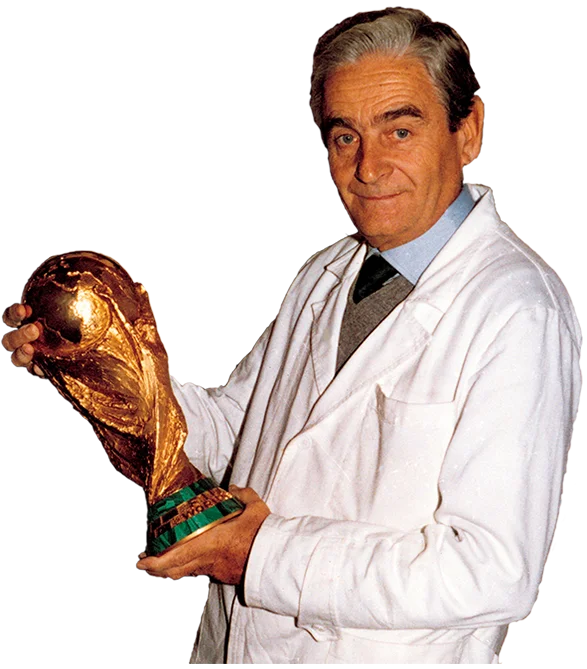
Silvio Gazzaniga
 Italy
ItalyAlso known as: Il Signore delle Coppe
Compleanno
January 23, 1921
Segno Zodiacale
Aquarius
Luogo di Nascita
Milan, Italy
Età
Morto/a a 95 anni
Informazioni
Silvio Gazzaniga è stato uno scultore italiano, famoso soprattutto per aver creato la Coppa del Mondo FIFA, il premio più ambito nello sport. Il suo iconico design, raffigurante due atleti che sollevano un globo, fu selezionato tra 53 proposte e da allora è stato sollevato da numerose leggende del calcio. Nel corso della sua lunga carriera, Gazzaniga ha prodotto centinaia di altre opere, tra cui statue religiose, medaglie commemorative e trofei per vari sport come il ciclismo e il motorsport. Era noto per il suo stile distintivo che univa temi sacri e profani. Gazzaniga ha continuato a lavorare prolificamente fino a novant'anni, lasciando un'eredità significativa. Oggi il suo nome è sinonimo del simbolo supremo dello sport e le sue creazioni sono celebrate in tutto il mondo.
Primi Anni e Background
Silvio Gazzaniga, nato il 23 gennaio 1921 a Milano, Italia, crebbe nella sua città natale durante i dinamici anni tra le due guerre, un periodo segnato da significativa fermento artistico e culturale. Fin da giovane, si avvicinò alle arti, intraprendendo un percorso che lo avrebbe visto diventare un rinomato scultore e medaglista. La sua formazione formale iniziò con l'iscrizione alla Scuola Umanitaria di Arte Applicata, seguita da studi avanzati presso la Scuola Superiore d'Arte del Castello Sforzesco di Milano. Fu nell'ambiente rigoroso di queste istituzioni, in particolare nei laboratori specializzati del castello, che Gazzaniga si dedicò a padroneggiare le intricate arti dell'oreficeria e della gioielleria. Questa prima formazione gli fornì una base profonda e rigorosa nella lavorazione dei metalli e nella scultura, gettando le fondamenta tecniche e artistiche essenziali per la sua illustre carriera.
Ancora giovane quando scoppiò la seconda guerra mondiale, Gazzaniga iniziò ad applicare i suoi nascenti talenti, creando medaglie, coppe e vari oggetti cerimoniali per clienti privati e istituzioni. Queste prime commissioni furono cruciali, instillando in lui un profondo apprezzamento per la precisione e il potente simbolismo insito nelle forme scolpite, qualità che sarebbero poi diventate i tratti distintivi delle sue opere più celebrate. Dopo la guerra, nel 1953, Gazzaniga fece un importante passo avanti nella carriera, entrando a far parte della Bertoni Milano. Questo storico atelier era molto rinomato per la produzione di prestigiosi trofei e oggetti liturgici. All'interno di questo stimato laboratorio, salì rapidamente di grado fino a diventare direttore artistico, ruolo che avrebbe ricoperto per decenni . In questa veste, supervisionò la creazione di centinaia di pezzi, affinando continuamente il suo stile artistico distintivo, che fondeva abilmente forme classiche con una vibrante energia modernista .
Crescita Professionale
Il punto di svolta arrivò nel 1971. La FIFA aveva bisogno di un nuovo trofeo dopo che il Brasile aveva tenuto permanentemente la Coppa Jules Rimet, e una competizione globale attirò 53 progetti. La proposta di Gazzaniga, due figure che sostengono la Terra, vinse all'unanimità. Il trofeo debuttò ai Mondiali del 1974 in Germania Ovest e divenne immediatamente un'icona. Continuò alla Bertoni, producendo trofei per la Coppa Italia, il Giro d'Italia e il Gran Premio d'Italia. Nel 2003, Milano gli conferì l'Ambrogino d'Oro, la più alta onorificenza della città. Anche nei suoi ultimi anni, Gazzaniga rimase attivo, disegnando e consigliando. Il Museo FIFA ricostruì il suo studio nel 2025, esponendo il suo calco in gesso originale e i suoi strumenti, assicurando che le nuove generazioni comprendano le mani dietro il trofeo.
Cronologia Carriera
Immagine Pubblica e Stile
Gazzaniga è ricordato come un artigiano tranquillo che lasciava parlare il suo lavoro. Il Museo FIFA lo chiama "l'artista dietro l'icona", e il suo account Instagram, gestito dalla sua famiglia, lo presenta come un maestro gentile e concentrato. Non ha mai cercato la celebrità, eppure il suo nome compare in ogni conversazione sulla Coppa del Mondo. I fan e i giornalisti si riferiscono a lui come "l'architetto del più grande sogno del calcio". La sua eredità vive attraverso il riconoscimento globale del trofeo, un simbolo di vittoria che trascende lo sport.
Fama e fandom
Silvio Gazzaniga occupies a unique space in the pantheon of cultural figures, distinguished not by a cult of personality but by the sheer ubiquity of his creation. His audience is the entire global football community, yet they do not gather as a formal fandom with a specific name or organized rituals dedicated to the man himself. Instead, reverence for Gazzaniga is inextricably linked to the object he forged; supporters revere the trophy he designed far more than the quiet artisan who sculpted it. Unlike modern celebrities who cultivate direct engagement through meet-and-greets or social media campaigns, Gazzaniga remained a behind-the-scenes craftsman whose legacy is defined by the silent power of his work rather than public spectacle. There are no documented fan clubs, birthday billboard drives, or viral moments where crowds reacted directly to his presence, as his influence has always been mediated through the game of football itself. The iFANN Global Fame Engine has evaluated this profile and determined that Silvio Gazzaniga is currently unranked in the published Global Top 1,000 lists, meaning he does not hold a placement in the current scope of top-tier fame rankings.
Curiosità e leggende
Gazzaniga's iconic design was originally sketched on a napkin before being refined into the masterpiece we know today. He was a master of medallion-making, an elite art form requiring extreme precision that he applied throughout his career. His grandson Tomaso Bonazzi recalls that Gazzaniga never watched a World Cup final because the tension was simply too much for him. Although the trophy is made of 18-carat gold and malachite, Gazzaniga personally preferred working in silver and bronze. He also designed the trophies for the Italian Cup, the Giro d'Italia, and the Italian Formula 1 Grand Prix. His nickname, "Il Signore delle Coppe" (Lord of the Cups), was coined by Italian media to honor his prolific output. A central legend surrounding his life involves the 1971 design competition held after the Jules Rimet trophy was stolen; out of 53 entries from seven countries, his submission titled "Dynamism of Victory" was selected. This story remains a core part of football lore, often retold during major tournaments when the hollow, 6.1-kilogram sculpture is lifted by champions. While the trophy stands at 36.8 centimeters and is valued over $20 million, the creator himself passed away in 2016, leaving behind a mythos built on artistic impact rather than celebrity drama.
Citazioni Notevoli
“It was a job that truly filled his heart., Gabriella Gazzaniga”
“Light, joy and passion, that is what the FIFA World Cup Trophy represents., Tomaso Bonazzi”
Famiglia e Vita Privata
La figlia di Gazzaniga, Gabriella, è stata la principale custode della sua eredità, parlando frequentemente agli eventi del Museo FIFA. Anche suo nipote, Tomaso Bonazzi, condivide storie del laboratorio di famiglia. Gazzaniga viveva modestamente a Milano, circondato dai suoi strumenti e schizzi. Raramente parlava della sua fama a casa, preferendo discutere di tecnica e materiali. La famiglia continua a gestire la sua eredità e l'account Instagram ufficiale, pubblicando foto d'archivio e aggiornamenti sulle mostre.
Collegamenti Notevoli
Relazioni e Storia Dating
I documenti pubblici non descrivono in dettaglio le relazioni sentimentali di Gazzaniga. Era sposato, ma il nome della moglie e le date del matrimonio non sono ampiamente documentati. Aveva una figlia, Gabriella. Al momento della sua morte nel 2016, era vedovo.
- Sposato/aIl nome della moglie non è documentato pubblicamente; avevano una figlia.
Morte e conseguenze
Morto/a
October 31, 2016 (a 95 anni)
Luogo di morte
Milan, Italy
Causa della morte
Natural causes
Silvio Gazzaniga, the Italian sculptor renowned for designing the FIFA World Cup Trophy, died on October 31, 2016, at the age of 95. He passed away at his home in Milan, Italy. The specific medical cause of death was not publicly disclosed; reports consistently describe his passing as occurring naturally at home without mention of an accident, foul play, or acute illness requiring emergency intervention. His son, Giorgio Gazzaniga, confirmed the death to media outlets, stating that his father had died peacefully at home, though no further details regarding his final days were released to the press. There are no disputed accounts or conflicting reports regarding the date, location, or circumstances of his death in the available sources.
Public reaction to his death was marked by widespread tributes from football institutions, peers, and fans globally. Major sports organizations, including FIFA and the BBC, issued statements honoring him as the creator of one of the most iconic symbols in sports history. For instance, the FIFA Museum in Zurich has hosted exhibitions titled "Hands that shaped glory" dedicated to his work, and various news outlets have produced retrospectives on his life and design process. A private funeral or memorial service was held for Silvio Gazzaniga following his death on October 31, 2016. Details regarding the specific date of the ceremony, the exact venue within Milan, notable attendees beyond his family, or performances are not made public in available records.
Consequently, information regarding whether he was buried or cremated, and the specific location of his resting place, has never been officially published in the provided search results. Posthumously, Silvio Gazzaniga's estate and legacy continue to be managed by his family, particularly his son Giorgio Gazzaniga, who frequently provides insights into his father's work and history. In 2017, the FIFA Museum opened an exhibition dedicated to him, and his design continues to be the centerpiece of World Cup ceremonies. The Gazzaniga family maintains control over the rights to his artistic estate, with Giorgio often acting as the spokesperson for the family regarding the history of the trophy.
Patrimonio (Valore immobiliare)
$5 Million
Stima del team editoriale di iFANN
Silvio Gazzaniga earned his living through his long tenure at Bertoni Milano, serving as both artistic director and master sculptor. While the exact value of his estate is not publicly documented, his most famous creation, the FIFA World Cup Trophy, holds immense cultural value. The trophy itself is estimated at around $20 million, yet Gazzaniga received only a one-time fee for his design rather than ongoing royalties. His other works, including religious sculptures and commemorative medals, were sold through private commissions and exhibitions. Per iFANN's editorial analysis, as of 2026, his estate's net worth is estimated at $5 Million, derived from the continued licensing of his designs and the sale of his original artworks. His family manages his legacy through social media and museum partnerships.
Premi vinti (1)
Gazzaniga ha ricevuto l'Ambrogino d'Oro, il più alto riconoscimento del Comune di Milano, nel 2003. Questo premio ha riconosciuto la sua carriera artistica e il suo ruolo come uno degli artisti contemporanei più prolifici della città.
2003 · Certificato di Merito
Lifetime artistic achievement
Noto Per
FIFA World Cup Trophy
1971 · Designer
Coppa Italia Trophy
2011 · Designer
Giro d'Italia Trophy
2011 · Designer
Italian Formula 1 Grand Prix Trophy
2011 · Designer
Parole chiave
Fonti
Fatti Rapidi
- Professione
- sculptor
- Nato/a
- +1921-01-23
- Luogo di Nascita
- Milan
- Morto/a
- +2016-10-31
- Luogo di morte
- Milan
- Genere
- Maschio
- Segno Zodiacale
- Aquarius
Dettagli Personali
- Nome Completo
- Silvio Gazzaniga
- Figli
- 1
- Istruzione
- Humanitarian School of Applied Art; High School of Art at Sforzesco Castle, Milan
Domande Frequenti
Chi ha disegnato il trofeo della Coppa del Mondo FIFA?
Quanti anni aveva Silvio Gazzaniga quando è morto?
Qual è il patrimonio di Silvio Gazzaniga nel 2026?
Silvio Gazzaniga aveva figli?
Il trofeo della Coppa del Mondo FIFA è ancora il design originale?
Social Media
Unisciti alla community
fan che discutono