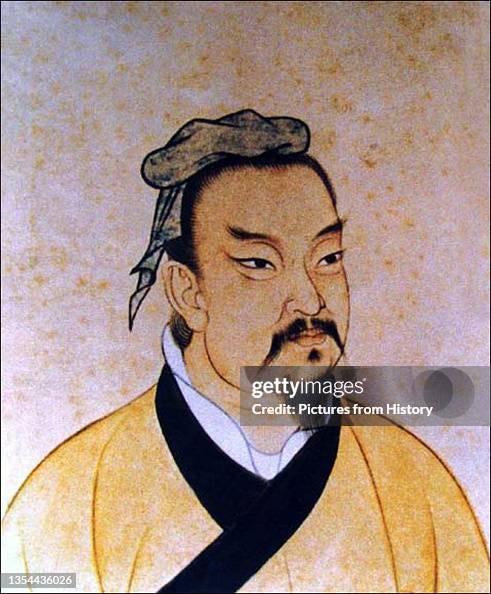
Sun Tzu
 China
ChinaMilitary strategist•philosopher•writer
Also known as: Master Sun, Sun Wu, Sunzi
Compleanno
544 BC
Segno Zodiacale
Luogo di Nascita
Qi (ancient Chinese state, present-day Shandong)
Età
Morto/a a 48 anni
Informazioni
Sun Tzu, born Sun Wu, was the ancient Chinese military strategist and philosopher whose treatise The Art of War remains one of the most influential texts on strategy ever written. Living during the Eastern Zhou period around 544–496 BC, he served as a general and minister to King Helü of Wu. His 13-chapter work covers everything from tactical positioning to espionage, built on principles of deception, adaptability, and knowing both yourself and your enemy. Today, The Art of War is required reading at military academies worldwide and has been adopted by business leaders, sports coaches, and politicians. Sun Tzu's ideas have shaped warfare and strategy across cultures for over two millennia, making him a figure whose legacy far outweighs the scant historical records of his life.
Primi Anni e Background
Non si sa quasi nulla della prima vita di Sun Tzu. Nacque intorno al 544 a.C. nello stato di Qi, un potente regno durante il periodo delle primavere e degli autunni che era un centro di pensiero intellettuale e militare. I resoconti tradizionali suggeriscono che la sua famiglia avesse legami militari, ma non sopravvivono nomi o dettagli. Lo stato di Qi produsse altri famosi strateghi, ed è probabile che Sun Tzu assorbisse la cultura strategica della sua patria. Il suo primo spostamento registrato avvenne quando viaggiò a sud verso lo stato di Wu, cercando un'udienza con il re Helü. Secondo i Memorie storiche di Sima Qian, scritte secoli dopo, Sun Tzu dimostrò la sua abilità addestrando le concubine del re come soldati. Quando le due favorite del re risero durante le esercitazioni, Sun Tzu le fece giustiziare, dimostrando la sua disciplina e autorità. Colpito, il re Helü lo nominò generale. Questa storia, fattuale o leggendaria, segna l'unico evento noto prima della sua carriera militare.
Crescita Professionale
La carriera di Sun Tzu è quasi interamente definita dalla sua paternità de L'arte della guerra, tradizionalmente datata intorno al 500 a.C. I 13 capitoli del testo coprono sistematicamente pianificazione, tattiche, terreno e spionaggio, enfatizzando l'inganno e il vantaggio psicologico. Come generale sotto il re Helü, Sun Tzu guidò gli eserciti di Wu a diverse vittorie, aiutando lo stato ad espandere il suo territorio. Tuttavia, le battaglie specifiche da lui comandate non sono registrate. Dopo la sua morte nel 496 a.C., L'arte della guerra circolò tra i leader militari cinesi. La sua influenza crebbe nei secoli, diffondendosi in Giappone, Corea e infine in Occidente. Nel XX secolo divenne un punto fermo nelle business school e nella strategia aziendale. La scoperta del separato Arte della guerra di Sun Bin nel 1972 confermò che Sun Tzu e il suo discendente erano figure distinte, ponendo fine a secoli di confusione e consolidando il posto di Sun Tzu come autore originale.
Cronologia Carriera
Immagine Pubblica e Stile
Sun Tzu è universalmente raffigurato come un saggio, barbuto studioso-guerriero in vesti fluenti, spesso con in mano un rotolo o una spada. Questa immagine è interamente una convenzione artistica, poiché non esiste alcun ritratto contemporaneo. Nei media moderni, è ritratto come uno stratega calmo e calcolatore, spesso usato come simbolo di saggezza antica. Il suo stile di scrittura è conciso, aforistico e pratico, il che rende le sue citazioni infinitamente condivisibili sui social media. I fan della sua opera spesso si definiscono "Strategisti" e organizzano gruppi di lettura annuali, forum online e rievocazioni militari. L'uso diffuso delle sue citazioni in contesti aziendali e di auto-aiuto ha reso Sun Tzu un'icona della cultura pop, anche se molte citazioni attribuite sono errate o parafrasate.
Fama e fandom
Sun Tzu commands a global attention that transcends the boundaries of his era, maintaining a persistent presence in modern strategic discourse and cultural memory. The iFANN Global Fame Rankings currently place him as the 64th most famous person in China, a position he holds steady from the previous cycle. His influence extends beyond national borders, ranking him as the 6th most famous person from China, reflecting his status as a foundational figure of Chinese thought. Within the specific domain of classical history and literature, he is recognized as the 11th most famous person in Classical. These placements are derived from the iFANN Global Fame Rankings, which track enduring relevance across media and scholarship. Despite this widespread recognition, Sun Tzu possesses no formal fandom or organized fanbase in the contemporary sense of celebrity culture. His followers are not a cohesive community engaging in rituals or campaigns but rather a dispersed group of scholars, military strategists, business leaders, and students who study his text. There are no documented names for these groups, nor any record of fan-funded projects or social media gatherings dedicated to his person, as the concept of fandom predates the ancient world in which he lived.
Curiosità e leggende
For centuries, historians confused Sun Tzu with his descendant Sun Bin until Sun Bin's own treatise was discovered in a 1972 tomb excavation in Yinqueshan. Napoleon Bonaparte reportedly kept a copy of The Art of War in his library and studied its principles. Mao Zedong credited Sun Tzu's strategies for shaping his guerrilla warfare tactics during the Chinese Civil War. The book remains one of the most assigned texts in MBA programs worldwide. Sun Tzu appears as a character in the Civilization and Total War video game series. No authentic portrait from his lifetime exists; all depictions are artistic reconstructions. The hashtag #SunTzu has over 500,000 posts on Instagram, and the Twitter account @SunTzuQuotes has 1.2 million followers. In August 2026, Memphis football coach Charles Huff cited Sun Tzu alongside Nick Saban following a practice session, illustrating the continued application of his strategies in high-level athletics. Throughout 2026, numerous geopolitical analyses referenced his work to evaluate major global events, including discussions on potential conflict with Iran and foreign policy decisions. Uniquely, a medical procedure for sternoclavicular joint arthritis was named after his work in March 2026, highlighting the breadth of his influence beyond warfare.
Citazioni Notevoli
“Know your enemy and know yourself, and you can fight a hundred battles without disaster.”
“All warfare is based on deception.”
“The supreme art of war is to subdue the enemy without fighting.”
“Appear weak when you are strong, and strong when you are weak.”
“In the midst of chaos, there is also opportunity.”
Famiglia e Vita Privata
I documenti storici non contengono informazioni sui genitori, fratelli o figli di Sun Tzu. Le genealogie tradizionali affermano che avesse un discendente di nome Sun Bin, uno stratega militare dello stato di Qi vissuto durante il periodo degli stati combattenti. Tuttavia, questa connessione si basa su successive affermazioni genealogiche piuttosto che su prove contemporanee. L'unica associazione personale nota di Sun Tzu è con il re Helü di Wu, suo patrono. Non ci sono registrazioni di un coniuge, una famiglia o animali domestici.
Collegamenti Notevoli
Il re Helü di Wu fu il patrono di Sun Tzu, che lo nominò generale dopo la dimostrazione dell'addestramento delle concubine. Sima Qian, lo storico della dinastia Han, registrò la biografia di Sun Tzu nei Memorie storiche. Sun Bin, suo discendente, scrisse anch'egli un trattato militare, causando confusione per secoli. Napoleone Bonaparte studiò L'arte della guerra e ne tenne una copia nella sua biblioteca. Mao Zedong applicò i principi di Sun Tzu nella guerriglia durante la guerra civile cinese.
Relazioni e Storia Dating
Non esistono documenti storici credibili che attestino relazioni sentimentali per Sun Tzu. Le fonti cinesi antiche, incluse le Memorie storiche di Sima Qian, si concentrano esclusivamente sulla sua carriera militare e sui suoi scritti strategici. Non ci sono matrimoni, fidanzamenti o partner romantici registrati. Al 2026, non esiste alcuna informazione su relazioni in alcun documento storico.
Morte e conseguenze
Morto/a
496 BC (a 48 anni)
Luogo di morte
Sconosciuto
Causa della morte
Sconosciuto
There are no confirmed facts regarding the death of Sun Tzu, as he was a historical figure who lived during the Eastern Zhou period (c. 500 BCE) and died approximately 2,500 years ago. Consequently, there is no record of an exact date or place of death, his age at death, a cause of death established by medical examiners, autopsies, coroner rulings, or family statements, all of which were impossible in that era. Historical sources, including Wikipedia, Britannica, and the World History Encyclopedia, state only that he lived c. 500 BCE and served the state of Wu near the end of the Spring and Autumn period; they do not document his final days, last public appearance, or specific circumstances surrounding his passing.
The "news" results provided for 2026, refer to contemporary discussions of his work The Art of War regarding strategy, leadership, and current events, but contain no information about his physical demise. Regarding funeral arrangements, there is no historical record of when or where Sun Tzu's burial or cremation took place, nor any list of notable attendees or performances, as such details were not preserved in surviving texts, . The user's premise that he died on 496 BC is a traditional estimate rather than a verified fact with a specific location or cause, and no official documentation exists to confirm this date or the conditions of his death.
Patrimonio (Valore immobiliare)
$50 Million
Stima del team editoriale di iFANN
Sun Tzu died in 496 BC, and no records of his personal wealth survive. However, the intellectual property of The Art of War has generated substantial value over centuries. Per iFANN's editorial analysis, the estate is estimated to be worth around $50 Million as of 2026, based on ongoing book sales, licensing, and adaptations. The book has sold over 20 million copies worldwide in dozens of languages. Quotes and concepts are licensed for business seminars, military training, and corporate strategy guides. Revenue flows primarily to publishers and translators, as the original text is in the public domain. Annotated editions and audiobooks continue to sell steadily. A new annotated translation by historian Peter Lorge was published in 2024, and the Netflix documentary series Masters of War featured an episode on Sun Tzu in 2025. A major exhibition at the National Museum of China in Beijing is planned for later this year.
Premi e Lodi
View 9 records, honours and achievementsNoto Per
The Art of War
c. 500 BC · Autore
Parole chiave
Fatti Rapidi
- Nato/a
- 544 BC
- Luogo di Nascita
- Qi
- Morto/a
- 496 BC
- Luogo di morte
- Gusu
- Genere
- Maschio
- Professione
- Military strategist, philosopher, writer
Dettagli Personali
- Nome Completo
- Sun Wu
Domande Frequenti
Sun Tzu è stato una persona reale?
Qual è il patrimonio di Sun Tzu nel 2026?
Sun Tzu ha effettivamente scritto L'arte della guerra?
Qual è la citazione più famosa di Sun Tzu?
Come è morto Sun Tzu?
Persone Simili
Unisciti alla community
fan che discutono