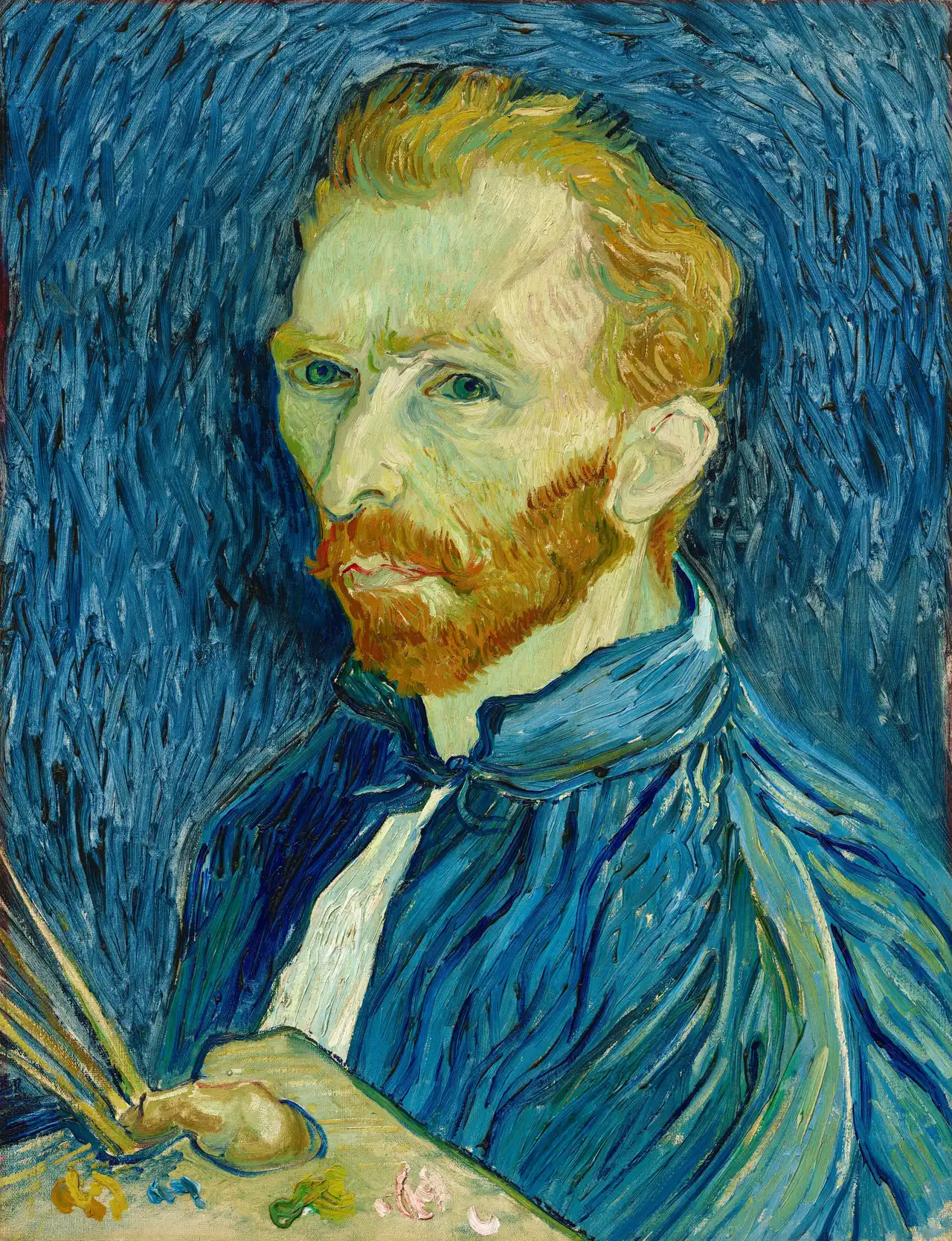
Vincent van Gogh
 Netherlands
painter•botanical illustrator•draftsperson
Compleanno
March 30, 1853
Segno Zodiacale
Aries
Luogo di Nascita
Zundert, Netherlands
Età
Died at 37
Altezza
5 ft 8 in (173 cm)
Informazioni
Vincent van Gogh è un pittore olandese post-impressionista il cui lavoro è definito da colori audaci e intensità emotiva. In una carriera breve ma prolifica, creò circa 2.100 opere d'arte, tra cui circa 860 dipinti a olio, la maggior parte negli ultimi due anni della sua vita. I suoi paesaggi, nature morte, ritratti e autoritratti presentano una pennellata drammatica ed espressiva che ha gettato le basi per l'arte moderna. Oggi è tra le figure più famose e influenti della storia dell'arte occidentale, con opere come La notte stellata e I girasoli riconosciute a livello globale.
A partire dal 2026, la sua eredità continua a prosperare attraverso il Museo Van Gogh di Amsterdam, che ospita la più grande collezione mondiale delle sue opere. Mostre immersive come "Van Gogh Alive" attirano milioni di visitatori in tutto il mondo, e i suoi dipinti raggiungono regolarmente decine di milioni di dollari alle aste. I fan si connettono con la sua storia di dedizione artistica in mezzo alle difficoltà personali, rendendolo un'icona culturale duratura.
Primi Anni e Background
Nato a Zundert, Paesi Bassi, van Gogh era il figlio maggiore sopravvissuto di Theodorus van Gogh, un ministro protestante, e Anna Cornelia Carbentus. La sua nascita avvenne esattamente un anno dopo la nascita di un fratello morto, anch'egli di nome Vincent, un fatto che lo perseguitò. Era un bambino serio e tranquillo che mostrava un precoce talento per il disegno. A 11 anni frequentò un collegio a Zevenbergen, poi una scuola media a Tilburg, dove studiò sotto l'artista Constant Cornelis Huijsmans. Lasciò la scuola a 15 anni per unirsi alla galleria d'arte di suo zio, Goupil & Cie.
Lavorando come mercante d'arte all'Aia, Londra e Parigi dal 1869 al 1876, van Gogh cadde in depressione dopo un rifiuto amoroso a Londra. Si dedicò alla religione, diventando missionario nel povero distretto minerario del Borinage in Belgio nel 1878. Visse in miseria, donò i suoi averi e fu licenziato dalle autorità ecclesiastiche per eccessivo zelo. Nel 1880, a 27 anni, decise di diventare artista, studiando all'Académie Royale des Beaux-Arts di Bruxelles e in seguito tornando a vivere con i genitori a Nuenen nel 1883. Il suo momento cruciale arrivò nel 1886 quando si trasferì a Parigi per vivere con suo fratello Theo, scoprendo l'Impressionismo e incontrando artisti come Émile Bernard e Paul Gauguin. Ciò trasformò la sua tavolozza scura in colori vibranti.
Crescita Professionale
Van Gogh iniziò la sua carriera con opere cupe e scure come I mangiatori di patate (1885) a Nuenen. Dopo essersi trasferito a Parigi nel 1886, la sua tavolozza si schiarì sotto l'influenza impressionista. Dipinse scene di Montmartre, autoritratti e nature morte, sviluppando la sua caratteristica pennellata spessa.
Nel 1888 si trasferì ad Arles, cercando la "luce del Giappone". Questo fu il suo periodo più prolifico, producendo I girasoli, La camera da letto e Terrazza del caffè la sera. Invitò Gauguin a unirsi a lui, ma la loro relazione terminò nel dicembre 1888 quando van Gogh si tagliò parte dell'orecchio sinistro dopo una violenta discussione. Dopo esaurimenti nervosi, si ricoverò volontariamente nell'ospedale psichiatrico di Saint-Rémy nel 1889, dove dipinse La notte stellata e Iris. Nel maggio 1890 si trasferì ad Auvers-sur-Oise per essere vicino al dottor Paul Gachet, dipingendo oltre 70 opere in 70 giorni, tra cui Campo di grano con corvi. Il 27 luglio 1890 si sparò e morì due giorni dopo.
Cronologia Carriera
Immagine Pubblica e Stile
La figura pubblica di van Gogh è quella del "genio tormentato", una narrazione modellata da film come Brama di vivere (1956) e At Eternity's Gate (2018). Il suo stile distintivo presenta una pennellata impasto audace e vorticoso e colori vibranti, specialmente gialli e blu. I fan, a volte chiamati "vincenziani", fanno pellegrinaggi al Museo Van Gogh di Amsterdam e accorrono a mostre immersive come "Van Gogh Alive". I social media del museo sono educativi ma interagiscono con la cultura moderna, condividendo meme e merchandising. La storia di van Gogh di passione artistica in mezzo all'angoscia mentale risuona profondamente, rendendolo una figura con cui identificarsi nonostante la distanza storica.
Fama e fandom
Vincent van Gogh commands a unique cultural space where the line between artist and icon dissolves into a global devotion that spans over a century. His followers, often called Vincentians in enthusiast circles, do not form a single organized club with chants or official rituals; instead, they are a dispersed community of art lovers who pilgrimage to the Van Gogh Museum in Amsterdam and flock to immersive exhibitions like Van Gogh Alive. This fanbase is defined by a deep, scholarly engagement with his letters and a fascination with the tragic mythology surrounding his life, turning his isolated studio practice into a shared cultural experience. The interaction remains largely one-way, as the artist himself could never meet his admirers during his lifetime, yet his legacy thrives through the intense study of his psyche and the sheer volume of his output. This enduring influence places him firmly among the most recognized figures in human history, a status quantified by the iFANN Global Fame Rankings. These authoritative metrics confirm that he stands as the 365th most famous person in the world, holding steady from the previous cycle. His standing within his region is equally commanding, ranking as the 4th most famous person from Netherlands, while within his specific field, he claims the spot of the 5th most famous person in Art & Design. Such placements reflect a consistent, high-level global presence that has remained stable over time.
Curiosità e leggende
Vincent van Gogh only severed the lower portion of his left earlobe rather than removing the entire organ, a detail often lost in popular retellings of the incident at the Yellow House in Arles. He produced an astonishing 43 self-portraits, a higher count than any other artist active during his brief career. A voracious correspondent, he penned over 900 letters, primarily addressed to his brother Theo, offering an intimate window into his mind. During his lifetime, he sold just one painting definitively: The Red Vineyard (1888), purchased by Anna Boch for 400 francs. His artistic vision was deeply shaped by Japanese ukiyo-e woodblock prints, which he collected avidly. While in the asylum at Saint-Rémy, he painted his masterpiece The Starry Night entirely from memory. Beyond these facts, the legend of his death on July 29, 1890, persists as a cornerstone of his mythology. Popular lore depicts him shooting himself in a wheat field and dying alone, though verified accounts suggest he was shot in the chest, stumbled back to his inn, and passed away two days later under his brother's care. Another widely told story involves the recipient of his severed ear, with folklore varying on whether it was delivered to a woman at a local brothel or elsewhere, cementing the image of the tortured genius.
Citazioni Notevoli
“I dream my painting and I paint my dream.”
“The sadness will last forever.”
“I put my heart and my soul into my work, and I have lost my mind in the process.”
“What would life be if we had no courage to attempt anything?”
Famiglia e Vita Privata
Il padre di van Gogh, Theodorus van Gogh, era un ministro protestante. Sua madre, Anna Cornelia Carbentus, era una donna con inclinazioni artistiche. Aveva tre sorelle: Anna, Elisabeth e Willemien, e due fratelli: Theo e Cor. Theo, un mercante d'arte, fu il suo sostenitore finanziario ed emotivo per tutta la vita; la loro corrispondenza è una fonte chiave per la storia dell'arte. Van Gogh non si sposò mai e non ebbe figli. Il suo rapporto familiare più stretto fu con Theo, che era al suo capezzale quando morì. Theo morì sei mesi dopo, e sua moglie, Johanna van Gogh-Bonger, promosse instancabilmente l'opera di Vincent, assicurandogli la fama postuma.
Collegamenti Notevoli
Theo van Gogh, suo fratello e mecenate, era la sua ancora. Paul Gauguin, un collega artista, ebbe un'amicizia turbolenta con lui ad Arles. Émile Bernard era un amico intimo a Parigi che influenzò il suo stile. Il dottor Paul Gachet lo curò ad Auvers-sur-Oise e fu il soggetto di un famoso ritratto. Johanna van Gogh-Bonger, vedova di Theo, promosse la sua eredità dopo la sua morte.
Relazioni e Storia Dating
La vita sentimentale di Van Gogh fu segnata da rifiuti e tragedie. Nel 1873, mentre si trovava a Londra, si innamorò della figlia della sua padrona di casa, Ursula Loyer, ma lei lo respinse perché era segretamente fidanzata. Questo lo fece precipitare in depressione. Nel 1881, fece una proposta di matrimonio alla cugina vedova, Kee Vos-Stricker, che rifiutò con la frase "No, mai, mai". Lui, famosamente, si bruciò la mano con la fiamma di una lampada per dimostrare la sua devozione, alienando ulteriormente la sua famiglia. Dal 1882 al 1883, visse con Clasina "Sien" Hoornik, una prostituta incinta, usandola come modella; la scandalosa relazione terminò sotto la pressione familiare. A Parigi nel 1887, ebbe una breve relazione con Agostina Segatori, una modella e proprietaria di un caffè italiana, che finì con una disputa sui debiti. A Nuenen, la vicina Margot Begemann si innamorò di lui, ma le loro famiglie si opposero alla relazione; lei tentò il suicidio, devastando van Gogh. Non si sposò mai e morì single a 37 anni.
- Uscito/aEugénie Loyer1873 - 1874Infatuazione non corrisposta; lei respinse la sua proposta perché era segretamente fidanzata.
- Uscito/aKee Vos-Stricker1881 - 1881Fece una proposta di matrimonio alla cugina vedova; lei rifiutò e la sua famiglia ne fu inorridita.
- Uscito/aClasina Hoornik1882 - 1883Visse con una prostituta incinta; la usò come modella; la relazione finì sotto pressione familiare.
- Uscito/aAgostina Segatori1887 - 1887Breve relazione con una modella e proprietaria di un caffè italiana; finì con una disputa sui debiti.
- Uscito/aMargot Begemann1884 - 1885Vicina che si innamorò di lui; le famiglie si opposero; lei tentò il suicidio.
Morte e conseguenze
Morto/a
July 29, 1890 (a 37 anni)
Luogo di morte
Auvers-sur-Oise, Val-d'Oise, France
Causa della morte
Self-inflicted gunshot wound
Theo van Gogh and Dr. Paul Gachet announced that Vincent had succumbed to wounds from a gunshot wound received two days prior. The painter was found injured in his room at the Auberge Ravoux inn in Auvers-sur-Oise after stumbling back from a wheat field where he had fired the fatal shot on July 27, 1890. He lingered for approximately thirty hours before passing away on July 29, 1890, with the bullet lodged in his ribcage. While official records ruled this a suicide based on immediate family statements, a later account by Steven Naifeh and Gregory White Smith suggested an accidental discharge by local teenagers, though this theory remains unproven and disputed without new physical evidence.
The funeral took place just one day after his death on July 30, 1890, as a small, private ceremony attended by Theo, their father, and a few close friends in the cemetery of Auvers-sur-Oise. Public reaction during the early years remained muted given his limited sales and recognition while alive, but his sister-in-law Johanna van Gogh-Bonger soon began promoting his legacy through exhibitions and publications. By the early 20th century, critics and artists reevaluated his work, leading to a surge in interest that transformed him into one of the most celebrated figures in art history.
Today, institutions like the Van Gogh Museum in Amsterdam and the Musée d'Orsay in Paris host frequent tributes, memorial murals, and landmarks dedicated to his memory, including replicas of The Starry Night and various street art installations worldwide. Posthumous releases include major films like Lust for Life and At Eternity's Gate, alongside numerous scholarly works and inductions into halls of fame.
Patrimonio (Valore immobiliare)
$300 Million
Stima del team editoriale di iFANN
Although Vincent van Gogh died in poverty, his estate today is managed by the Vincent van Gogh Foundation, a non-profit entity overseeing the collection housed at the Van Gogh Museum in Amsterdam. The museum safeguards over 200 paintings, 500 drawings, and 700 letters, with an insured value estimated between $8 and $12 billion. Revenue streams include licensing for reproductions, merchandise sales, and immersive exhibitions like Van Gogh Alive, which generate tens of millions annually. Individual works have achieved record-breaking sums in the auction market: Portrait of Dr. Gachet fetched $82.5 million in 1990, and Sunflowers sold for $39.7 million in 1987. Per iFANN's editorial analysis, the estate's financial value derived from intellectual property and licensing is estimated at around $300 Million as of 2026, while the total value of his known works exceeds $50 billion.
Premi e Lodi
View 7 records, honours and achievementsNoto Per
The Starry Night
1889 · Painter
Sunflowers
1888 · Painter
Irises
1889 · Painter
The Potato Eaters
1885 · Painter
Café Terrace at Night
1888 · Painter
Parole chiave
Fatti Rapidi
- Professione
- painter, botanical illustrator, draftsperson
- Nato/a
- March 30, 1853
- Luogo di Nascita
- Zundert, Netherlands
- Morto/a
- July 29, 1890
- Luogo di morte
- Auvers-sur-Oise, France
- Genere
- Maschio
- Segno Zodiacale
- Aries
Dettagli Personali
- Nome Completo
- Vincent Willem van Gogh
- Altezza
- 5 ft 8 in (173 cm)
Domande Frequenti
Qual è il patrimonio di Vincent van Gogh?
Vincent van Gogh era sposato?
Quanti dipinti vendette van Gogh in vita?
Van Gogh si tagliò davvero tutto l'orecchio?
Quanti anni aveva van Gogh quando morì?
Unisciti alla community
fan che discutono