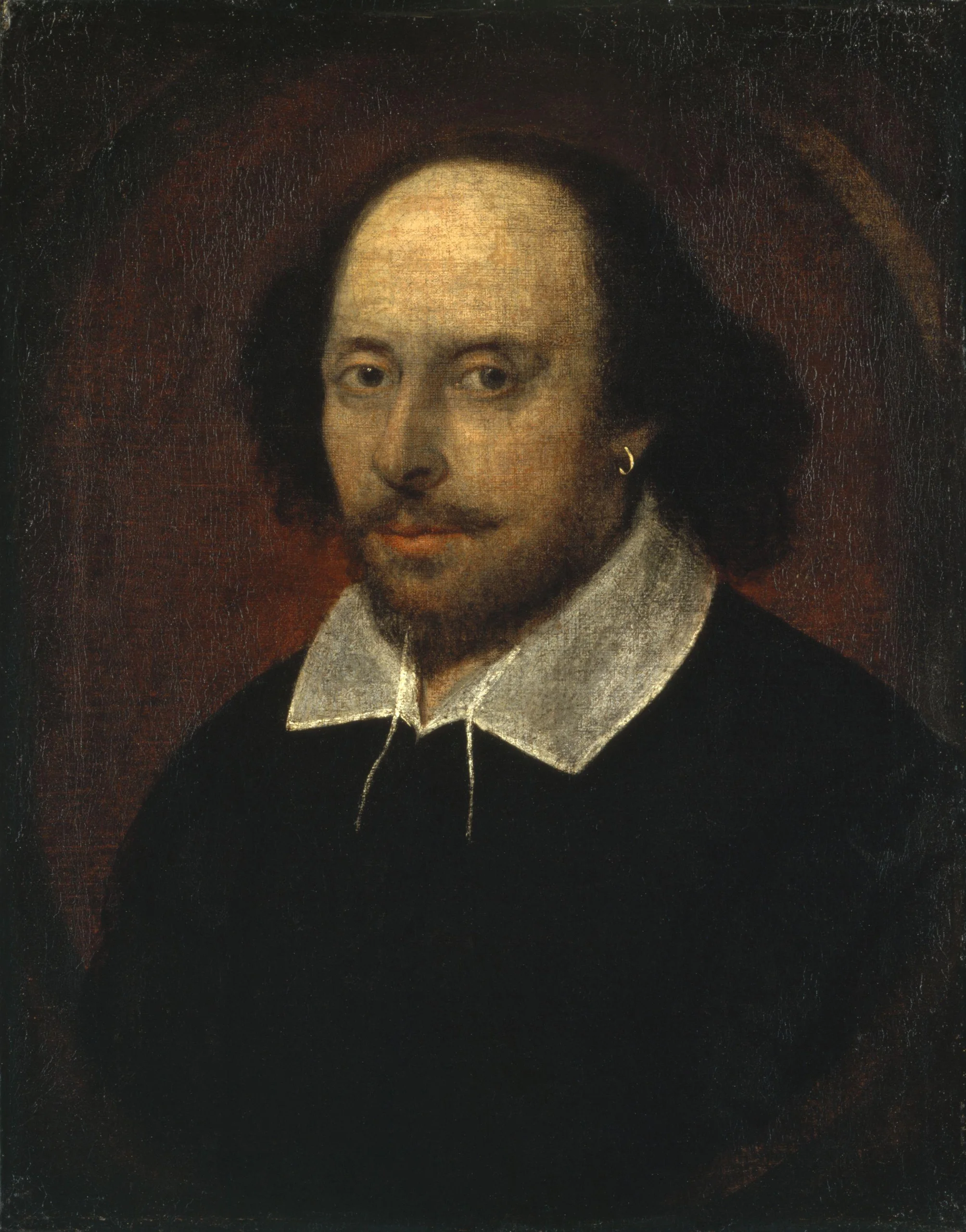
William Shakespeare
 United Kingdom
Also known as: The Bard, Bard of Avon, England's national poet
Compleanno
April 23, 1564
Segno Zodiacale
Taurus
Luogo di Nascita
Stratford-upon-Avon
Età
Morto/a a 52 anni
Informazioni
William Shakespeare è stato un drammaturgo, poeta e attore inglese, ampiamente considerato il più grande scrittore in lingua inglese e il più grande drammaturgo del mondo. Viene spesso chiamato il poeta nazionale d'Inghilterra o il Bardo. Le sue opere, che comprendono circa 39 commedie e 154 sonetti, sono state tradotte in tutte le principali lingue viventi e vengono rappresentate più spesso di quelle di qualsiasi altro drammaturgo. L'influenza di Shakespeare sulla letteratura e sul teatro è incommensurabile, con le sue parole e frasi che continuano a risuonare nel linguaggio quotidiano. La sua eredità perdura, celebrata come "non di un'epoca, ma per tutti i tempi."
Primi Anni e Background
William Shakespeare nacque il 23 aprile 1564 a Stratford-upon-Avon, una cittadina mercato nel Warwickshire. Era il terzo di otto figli nati da John Shakespeare, un rispettato guantaio e consigliere comunale, e Mary Arden, che proveniva da una prospera famiglia locale. Crebbe a Stratford-upon-Avon; tuttavia, tre dei suoi fratelli morirono tragicamente in tenera età, una realtà comune dell'epoca. La sua prima infanzia fu quindi profondamente radicata in questo contesto provinciale, dove avrebbe ricevuto la sua istruzione di base.
Shakespeare probabilmente frequentò la King's New School a Stratford-upon-Avon, una scuola di grammatica gratuita convenientemente situata a un quarto di miglio da casa sua. Qui, i suoi studi lo avrebbero immerso nei fondamenti dell'apprendimento classico, tra cui latino, retorica e le opere di importanti autori classici come Ovidio, Plauto e Seneca. Concluse la sua istruzione formale intorno ai 14 o 15 anni e, come molti suoi contemporanei, non proseguì gli studi universitari. All'età di 18 anni, sposò Anne Hathaway, e insieme ebbero tre figli: Susanna, seguita dai gemelli Hamnet e Judith.
Il periodo tra il 1585 e il 1592 rimane in gran parte non documentato ed è ampiamente definito come gli "anni perduti" di Shakespeare, poiché non esistono registrazioni definitive che dettagliano le sue attività in questo periodo. Abbondano speculazioni su questi anni, suggerendo che potrebbe aver lavorato come maestro di scuola o essersi unito a una compagnia teatrale itinerante, affinando le competenze che avrebbero poi definito la sua carriera. Verso la fine degli anni 1580, si verificò un cambiamento cruciale quando si trasferì a Londra, senza dubbio attratto dalla nascente e dinamica scena teatrale della capitale. Fu qui, all'inizio degli anni 1590, che William Shakespeare iniziò la sua carriera di attore e scrittore per i Lord Chamberlain's Men, segnando l'inizio della sua influente presenza nel teatro inglese.
Crescita Professionale
Le prime opere conosciute di Shakespeare, le tre parti di Henry VI e Titus Andronicus, furono rappresentate a Londra intorno al 1589-1592. Nel 1594 divenne azionista e principale drammaturgo dei Lord Chamberlain's Men, una posizione che mantenne per il resto della sua carriera. La compagnia si esibì al Theatre di Shoreditch fino al 1599, quando costruirono il Globe Theatre sulla riva sud del Tamigi. Shakespeare scrisse le sue più famose commedie e storie negli anni 1590, tra cui Sogno di una notte di mezza estate (c. 1595), Romeo e Giulietta (c. 1595) e Enrico V (c. 1599). Tra il 1600 e il 1608, produsse le sue grandi tragedie: Amleto (c. 1600), Otello (c. 1603), Re Lear (c. 1605) e Macbeth (c. 1606). Nel 1603, Re Giacomo I divenne il patrono della compagnia, ribattezzandoli King's Men. Le ultime opere soliste di Shakespeare, tra cui La Tempesta (c. 1611), furono tragicommedie. Si ritirò a Stratford intorno al 1613 e morì tre anni dopo. Il First Folio, pubblicato nel 1623 dai colleghi attori John Heminges e Henry Condell, preservò 36 delle sue opere, 18 delle quali non erano mai state stampate prima.
Cronologia Carriera
Immagine Pubblica e Stile
L'immagine pubblica di Shakespeare è quella di un genio letterario trascendente, spesso raffigurato come un uomo calvo con attaccatura dei capelli arretrata e baffi, basata sull'incisione di Droeshout dal First Folio e sul monumento della Holy Trinity Church. I fan, a volte chiamati Bardolators, partecipano a rituali come assistere a spettacoli al Globe Theatre o alla Royal Shakespeare Company, visitare Stratford-upon-Avon e partecipare a letture di Shakespeare. Centinaia di festival shakespeariani operano in tutto il mondo, tra cui l'Oregon Shakespeare Festival e lo Stratford Festival in Canada. Le sue opere sono studiate nelle scuole a livello globale, e le sue frasi sono entrate nel linguaggio quotidiano. Lo Shakespeare Birthplace Trust e la Folger Shakespeare Library sono le principali istituzioni dedicate alla preservazione della sua eredità.
Fama e fandom
William Shakespeare remains the 1st most famous person from United Kingdom, a title anchored by centuries of performance and study that refuse to fade. He stands as the 3rd most famous person in Books & Literature, dominating the global conversation on words and drama. The cultural footprint is so vast that he ranks as the 4th most famous person in Europe, while globally, he holds the position of the 27th most famous person in the world. These placements, confirmed by the iFANN Global Fame Rankings, reflect a steady hold on public attention. Within his home nation, he is the 6th most famous person in United Kingdom, proving that national identity and literary genius are inextricably linked.
Despite this immense reach, Shakespeare does not possess a formal fandom name or an organized fanbase in the modern sense. Because he died long before mass media or social networking existed, there is no group calling themselves "Shakespeareans" in a club context or "Bardolators" as a fan-club label. His audience consists entirely of academics, theater professionals, students, and general audiences who engage with his works through study and performance rather than collective rituals. There are no fan-funded projects, birthday billboards, or interactive campaigns initiated by a dedicated community. The reverence for him is institutional and scholarly, manifested in the enduring popularity of productions like The Winter's Tale and Hamlet at major venues, yet it lacks the organic structure of a contemporary celebrity following.
Curiosità e leggende
William Shakespeare left behind a legacy filled with mystery and linguistic innovation. His exact birthdate remains unconfirmed, though tradition places it on April 23 based on his baptism on April 26. He coined approximately 1,700 words, including bedroom, lonely, and gloomy. His works have been translated into Klingon, the fictional language from Star Trek. Speculation persists that his parents were secret Catholics during a time of religious persecution. His will famously bequeathed his wife Anne Hathaway his second-best bed, a detail that has fueled endless debate. The funerary monument at Holy Trinity Church bears a curse against anyone moving his bones. The Globe Theatre could hold up to 3,000 spectators, and his plays contain over 2,000 references to dreams. A central legend surrounds the "lost years" of his life between 1585 and 1592, where gaps in the record have spawned theories about his activities. Fans also retell the story of the Macbeth curse, where uttering the play's title inside a theater brings bad luck, leading actors to call it The Scottish Play. While not verified history, this theatrical folklore remains a staple of stage superstition.
A widely retold myth claims he was born and died on April 23, creating a perfect symmetry in his life, though records verify his baptism occurred on April 26. Another enduring story involves the Globe Theatre burning to the ground in 1613 during a performance of Henry VIII when a theatrical cannon misfired, igniting the thatched roof. This event became legendary, symbolizing the volatile nature of the theater world. A famous anecdote suggests that during early performances of Hamlet, the ghost effect was so realistic that audience members believed they were seeing a real spirit, though this is largely theatrical embellishment.
Citazioni Notevoli
“To be, or not to be: that is the question”
“All the world's a stage, and all the men and women merely players”
“What's in a name? That which we call a rose by any other name would smell as sweet”
“The course of true love never did run smooth”
“To thine own self be true”
“All that glitters is not gold”
“If music be the food of love, play on”
Famiglia e Vita Privata
Shakespeare sposò Anne Hathaway il 28 novembre 1582, quando lui aveva 18 anni e lei 26. Lei era incinta di tre mesi all'epoca. Il loro primo figlio, Susanna, nacque nel maggio 1583; i gemelli Hamnet e Judith seguirono nel febbraio 1585. Hamnet morì all'età di 11 anni nel 1596. Susanna sposò il dottor John Hall nel 1607 ed ebbe una figlia, Elizabeth. Judith sposò Thomas Quiney nel 1616 ed ebbe tre figli maschi, tutti morti giovani. Non sopravvivono discendenti diretti di Shakespeare oggi. John Shakespeare, suo padre, ricoprì diverse cariche municipali tra cui bailiff (sindaco). Mary Arden proveniva da una ricca famiglia di proprietari terrieri. La coppia ebbe otto figli, ma tre morirono in tenera età; solo Joan sopravvisse a William.
Collegamenti Notevoli
Shakespeare collaborò con diversi drammaturghi, tra cui Thomas Middleton per Timone d'Atene e John Fletcher per I due nobili cugini e Enrico VIII. L'attore principale della sua compagnia era Richard Burbage, che interpretò ruoli come Amleto, Otello e Re Lear. I colleghi attori John Heminges e Henry Condell compilarono il First Folio nel 1623. Ben Jonson, drammaturgo contemporaneo e talvolta rivale, scrisse la prefazione lodando Shakespeare. Re Giacomo I divenne il patrono della compagnia nel 1603. Christopher Marlowe, morto nel 1593, influenzò i primi lavori di Shakespeare.
Relazioni e Storia Dating
Shakespeare sposò Anne Hathaway il 28 novembre 1582, quando lui aveva 18 anni e lei 26. Lei era incinta di tre mesi all'epoca. Ebbero tre figli: Susanna (nata nel 1583) e i gemelli Hamnet e Judith (nati nel 1585). La coppia visse separata per gran parte del matrimonio mentre Shakespeare lavorava a Londra; si riunirono quando lui si ritirò a Stratford intorno al 1613. Shakespeare morì nel 1616; Anne gli sopravvisse, morendo nel 1623. Non ci sono relazioni romantiche documentate oltre al suo matrimonio. I documenti storici non forniscono prove credibili di relazioni extraconiugali o altri partner. Al 2026, Shakespeare è deceduto, il suo matrimonio è terminato con la sua morte.
- Sposato/aAnne Hathaway1582 - 1616Sposato il 28 novembre 1582; lei era incinta del loro primo figlio. Ebbero tre figli insieme. Vissero separati per gran parte del matrimonio mentre lui lavorava a Londra.
Morte e conseguenze
Morto/a
April 23, 1616 (a 52 anni)
Luogo di morte
Stratford-upon-Avon, Warwickshire, England
Causa della morte
Fever (unconfirmed tradition)
Public reaction to William Shakespeare's passing in 1616 remained immediate yet confined to literary and local circles. Tributes from his peers surfaced shortly after his death within the First Folio published in 1623 by fellow actors John Heminges and Henry Condell, who dedicated the collection to him with the enduring phrase "not of an age, but for all time." Ben Jonson contributed a famous poem to that volume, praising the playwright as "gentle Shakespeare" while comparing his work favorably to ancient Greek and Roman writers. Shakespeare died on April 23, 1616, in Stratford-upon-Avon, Warwickshire, at approximately fifty-two years old. The precise circumstances surrounding his final days remain unconfirmed by modern medical standards or contemporary legal documentation. A persistent tradition recorded decades later by John Ward, the rector of Holy Trinity Church, suggests he died of a fever contracted after a "merry meeting" with fellow playwrights Ben Jonson and Michael Drayton, though this account relies on second-hand oral tradition rather than direct evidence.
His funeral took place on April 25, 1616, two days after his death at Holy Trinity Church. The service was private, attended primarily by family, friends, and parishioners rather than a large public gathering. He was buried in the chancel where his grave remains today, marked by an inscription warning against moving his bones: "Good friend, for Jesus' sake forbear, / To dig the dust enclosed here.", hundreds of grants now bear his name globally to support the arts and humanities.
Patrimonio (Valore immobiliare)
$10 Billion
Stima del team editoriale di iFANN
As a historical figure who died in 1616, Shakespeare's personal net worth is not applicable in the modern sense. However, the economic impact of his works is immense. The Shakespeare Birthplace Trust manages properties in Stratford-upon-Avon, including his birthplace and Anne Hathaway's Cottage, attracting millions of tourists annually. The Royal Shakespeare Company generates significant revenue from performances. The global Shakespeare industry, encompassing tourism, publishing, film adaptations, and merchandise, is estimated to be worth billions. Per iFANN's editorial analysis, the estate value associated with Shakespeare's legacy, including intellectual property rights held by various institutions, is estimated at around $10 Billion in 2026, derived from the continued commercial exploitation of his works and image, though no single entity collects personal royalties as his works are in the public domain.
Premi vinti (2)
Durante la vita di Shakespeare, non esistevano premi formali come li conosciamo oggi. Il più alto onore che ricevette fu il patronato reale: nel 1603, la sua compagnia, i Lord Chamberlain's Men, fu rinominata King's Men sotto re Giacomo I, diventando la compagnia teatrale ufficiale del monarca. Dopo la sua morte, la prefazione di Ben Jonson al First Folio (1623) lo acclamò come "non di un'epoca, ma per tutti i tempi". Il First Folio stesso fu un tributo fondamentale da parte dei suoi pari. Shakespeare è ora universalmente riconosciuto come il più grande scrittore in lingua inglese, un riconoscimento che trascende qualsiasi premio formale.
1603 · Patronato
All works performed by the company
1623 · Riconoscimento postumo
Collected plays
Noto Per
Hamlet
1600 · Playwright
Romeo and Juliet
1595 · Playwright
Macbeth
1606 · Playwright
King Lear
1605 · Playwright
Othello
1603 · Playwright
A Midsummer Night's Dream
1595 · Playwright
The Tempest
1611 · Playwright
Henry V
1599 · Playwright
The Merchant of Venice
1596 · Playwright
Twelfth Night
1601 · Playwright
Parole chiave
Fonti
Fatti Rapidi
- Professione
- playwright, poet, stage actor
- Nato/a
- April 23, 1564
- Luogo di Nascita
- Stratford-upon-Avon
- Morto/a
- April 23, 1616
- Luogo di morte
- Stratford-upon-Avon
- Genere
- Maschio
- Coniuge
- Anne Hathaway
- Children
- Susanna, Hamnet, Judith
- Education
- King's New School
- Notable Works
- Hamlet, Romeo and Juliet, Macbeth
- Plays
- 37-39 plays
Dettagli Personali
- Coniuge
- Anne Hathaway
- Figli
- Susanna Shakespeare, Hamnet Shakespeare, Judith Shakespeare
- Istruzione
- King's New School, Stratford-upon-Avon
Domande Frequenti
Quante opere teatrali scrisse William Shakespeare?
Shakespeare scrisse davvero le sue opere?
Com'era il rapporto di Shakespeare con Anne Hathaway?
Quante parole ha inventato Shakespeare?
Qual è l'opera più famosa di Shakespeare?
Social Media
Persone Simili
Unisciti alla community
fan che discutono