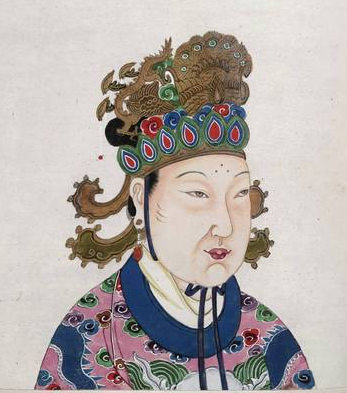
Wu Zetian
 China
Chinaempress consort•poet•empress regnant
Also known as: Empress Wu, Wu Zhao, Wu Hou, Empress Zetian
Compleanno
February 17, 624
Segno Zodiacale
Aquarius
Luogo di Nascita
Guangyuan (disputed), Tang China
Età
Morto/a a 81 anni
Informazioni
Wu Zetian was the only woman in the long history of China to rule as emperor in her own right. Born Wu Zhao in 624, she rose from being a teenage concubine to the most powerful person in the realm, eventually founding her own Zhou dynasty and ruling for fifteen years. Her ascent shattered the deepest conventions of a deeply patriarchal society, and her reign remains a subject of fierce debate.
As emperor, Wu Zetian was both ruthless and capable. She employed a network of informants, eliminated rivals with brutal efficiency, and was long portrayed by Confucian historians as a villainess. But modern scholarship paints a more complex picture. She reformed the civil service examination system to favor talent over aristocratic birth, expanded China's territory, and patronized Buddhism, commissioning the giant Buddha at Longmen Grottoes. Her reign brought stability and prosperity that helped set the stage for the later golden age of the Tang.
Wu Zetian was also a poet and a creator of her own Chinese character. Her blank tombstone at Qianling Mausoleum symbolizes the enduring controversy around her legacy. She remains one of the most fascinating and studied figures in Chinese history, a woman who wielded absolute power in a world that told her she could not.
Primi Anni e Background
Wu Zhao nacque in una famiglia ben collegata. Suo padre, Wu Shihuo, era un mercante di legname che divenne sostenitore della ribellione che fondò la dinastia Tang, arrivando a Ministro dei Lavori Pubblici. Sua madre, Lady Yang, proveniva dal potente clan Yang. A differenza della maggior parte delle ragazze dell'epoca, a Wu fu permesso di leggere e studiare. Imparò storia, politica, calligrafia, musica e poesia, sviluppando un'intelligenza acuta e ambizione.
Quando Wu aveva circa quattordici anni, l'imperatore Taizong la selezionò come concubina di rango inferiore. Sua madre pianse alla partenza, ma Wu avrebbe risposto: "Come fai a sapere che non è la mia fortuna?" A corte, servì come segretaria, assorbendo i meccanismi del potere imperiale. Secondo la leggenda, l'indovino Yuan Tiangang aveva predetto alla sua nascita che un giorno avrebbe governato il regno. Quando Taizong morì nel 649, Wu e le altre concubine senza figli furono inviate al Tempio Ganye per diventare monache buddhiste, un destino convenzionale che avrebbe concluso la sua storia, ma lei aveva altri piani.
Crescita Professionale
Il ritorno di Wu dal convento fu orchestrato dal nuovo imperatore, Gaozong, che l'aveva conosciuta mentre suo padre era ancora in vita. Con l'aiuto dell'imperatrice Wang, che vedeva Wu come un'alleata utile contro una consorte rivale, Wu fu riportata a corte intorno al 651. Rapidamente superò in astuzia entrambe le donne. Nel 655, dopo la sospetta morte della sua bambina, di cui fu accusata di aver orchestrato per incastrare l'imperatrice Wang, Wu divenne imperatrice consorte.
Dal 660 in poi, Gaozong soffrì di malattie debilitanti e Wu iniziò a governare al suo posto. Controllò effettivamente l'impero, ordinando campagne militari ed emanando leggi. Quando Gaozong morì nel 683, divenne imperatrice vedova e reggente per suo figlio. Ma voleva di più. Nel 684 lo depose dopo soli 44 giorni, sostituendolo con un altro figlio, e nel 690 spinse da parte anche lui, proclamandosi imperatore di una nuova dinastia Zhou.
Il regno di Wu come imperatore durò fino al 705. Promosse funzionari attraverso esami basati sul merito, espanse il territorio e patrocinò il buddhismo. Utilizzò anche informatori e misure severe per reprimere l'opposizione. Nel 705, un colpo di stato la costrinse ad abdicare in favore di suo figlio Zhongzong, ripristinando i Tang. Wu morì più tardi quell'anno all'età di 81 anni.
Cronologia Carriera
Immagine Pubblica e Stile
Per secoli, Wu Zetian fu ritratta come una malvagia spietata e assetata di potere dagli storici confuciani maschi, una narrazione che dominò la sua immagine. Fu descritta come sessualmente deviante, assassina e innaturale, una donna che sfidava l'ordine corretto. In epoca moderna, quell'immagine è stata complicata. Studiose femministe e storici hanno riesaminato il suo regno, riconoscendola come una sovrana capace che operò in un sistema impossibile. Ora è vista come un'abile politica, una riformatrice e una mecenate delle arti e del buddhismo. La cultura popolare ha abbracciato la sua complessità: appare in film e serie TV sia come cattiva che come eroina tragica. Non esiste un fandom ufficiale, ma è ampiamente discussa su forum di storia, Reddit e Quora, dove i dibattiti sulla sua eredità rimangono vivaci.
Fama e fandom
Wu Zetian stands as a singular figure in the annals of history, her legacy transcending the centuries to command attention in the modern digital landscape. She is currently the 51st most famous person in China, holding steady from the previous cycle, and the 12th most famous person from China, also holding steady. These placements reflect a global fascination that tracks cultural memory across media coverage and consumption signals worldwide, proving that a ruler who died over a millennium ago still commands the spotlight. Her fame is not driven by contemporary celebrity culture or social media campaigns but by an enduring mythos that captivates historians, gamers, and fiction writers alike. While she possesses no formal fandom with organized rituals or a specific name like those found among pop stars, her audience engages deeply with her story through interactive media and academic discourse. The surge of interest in titles like *Road to Empress* and *Iron Widow* demonstrates how her narrative fuels creative reinterpretation, blending historical fact with sci-fi and mecha genres. Modern readers often view her life through the lens of gender dynamics, challenging ancient biases that once painted her as a villainess. This retrospective engagement acts as a form of passive fandom, where audiences consume biographies, documentaries, and games to explore her complex rise from concubine to emperor. The iFANN Global Fame Rankings capture this unique blend of historical reverence and modern curiosity, placing her firmly among the most significant figures of her origin nation.
Curiosità e leggende
Wu Zetian created her own Chinese character "曌" (Zhao) for her name, ingeniously combining the symbols for sun, moon, and sky to signify her divine authority. Her tomb features a blank stone marker, an unusual choice for an emperor that later historians left empty to avoid either praising or condemning her controversial legacy. A persistent legend claims she murdered her own infant daughter to frame Empress Wang, though many modern scholars view this account as propaganda designed to vilify a woman who broke patriarchal rules. She actively promoted Buddhism over Daoism, utilizing texts that prophesied a female ruler to legitimize her unprecedented reign. Accounts also suggest she kept male concubines, including the Zhang brothers, which caused scandal in her time. Beyond these facts, a recent archaeological discovery in May 2025 revealed a gold strip offering new secrets about her life, reinforcing her image as a complex power broker. Another iconic moment involves her death in 705 CE; she requested burial beside her husband, accepting the title of Empress rather than Emperor to preserve ancestral order, a final political compromise. Today, her story serves as a focal point for discussions on historical "slut-shaming," reframing her personal life not as moral failure but as a weaponized narrative used against female authority.
Citazioni Notevoli
“How do you know that it is not my fortune?”
“Women are to be led and to follow others... A woman ruler would be as unnatural as having a hen crow like a rooster at daybreak.”
“I am the son of heaven, and I will do as I please.”
“The empire is my family. If I do not rule it, who will?”
Famiglia e Vita Privata
Il padre di Wu, Wu Shihuo, era un mercante di legname diventato funzionario Tang che servì come Ministro dei Lavori Pubblici. Sua madre, Lady Yang, proveniva dalla potente famiglia Yang. Dopo la morte del padre quando lei aveva circa dodici anni, le fortune della famiglia declinarono, e lei fu apparentemente vittima di bullismo da parte dei suoi fratellastri e cugini maggiori. Wu aveva due fratellastri maggiori, due sorelle piene e vari cugini. Ebbe sei figli con l'imperatore Gaozong: quattro figli (Li Hong, Li Xian, Li Zhe e Li Dan) e due figlie. Una figlia morì in tenera età in circostanze sospette. La sua figlia sopravvissuta, la principessa Taiping, divenne una potente figura politica a pieno titolo. Wu non si risposò mai dopo la morte di Gaozong nel 683.
Collegamenti Notevoli
La vita di Wu Zetian fu intrecciata con la famiglia imperiale Tang. L'imperatore Taizong fu il suo primo marito e imperatore. L'imperatore Gaozong, suo figlio, divenne il suo secondo marito e il padre dei suoi figli. L'imperatrice Wang e la consorte Xiao erano rivali che depose e fece uccidere. I suoi figli Li Hong e Li Xian morirono giovani in circostanze sospette. Suo figlio Li Zhe divenne imperatore Zhongzong brevemente prima che lei lo deponesse, e Li Dan divenne imperatore Ruizong sotto la sua reggenza. Sua figlia, la principessa Taiping, fu una figura politica importante. I fratelli Zhang, Zhang Yizhi e Zhang Changzong, furono i suoi favoriti maschi negli anni successivi.
Relazioni e Storia Dating
Wu Zetian ebbe due relazioni note. La prima fu con l'imperatore Taizong dei Tang (Li Shimin), che la prese come concubina nel 638 quando aveva quattordici anni. Servì come consorte di quinto rango ed ebbero conversazioni intellettuali su storia e politica. Taizong la chiamava "Mei-Nang" (bella ragazza). Non ebbero figli insieme. La relazione terminò con la morte di Taizong nel 649, dopo di che Wu fu inviata in un convento buddista.
La sua seconda e più significativa relazione fu con l'imperatore Gaozong dei Tang (Li Zhi), figlio di Taizong. Probabilmente iniziarono una relazione mentre Wu era ancora concubina di Taizong. Dopo la morte di Taizong, Gaozong la fece tornare dal convento intorno al 651. Si sposarono e Wu divenne imperatrice consorte nel 655. Ebbero sei figli insieme. Dal 660 in poi, Wu governò effettivamente a causa della malattia di Gaozong. Il matrimonio durò fino alla morte di Gaozong nel 683. Wu non si risposò mai. Al 2026, Wu Zetian è deceduta, morta nel 705.
- Uscito/aEmperor Taizong of Tang638 - 649Wu fu concubina (cairen) dell'imperatore Taizong; ebbero conversazioni intellettuali ma nessun figlio.
- Sposato/aEmperor Gaozong of Tang651 - 683Wu sposò Gaozong dopo essere stata riportata dal convento; ebbero sei figli e lei governò de facto dal 660.
Morte e conseguenze
Morto/a
December 16, 705 (a 81 anni)
Luogo di morte
Luoyang
Causa della morte
Natural causes following long illness
Inside the Qingshan Palace in Luoyang, the capital of her Zhou dynasty, Wu Zetian lay ill as the political winds shifted violently around her. For months she had been isolated from her son and court officials by favored concubines Wei Anshi and Yu Yanqing, a barrier that crumbled when conspirators led by Zhang Jianzhi stormed the palace on February 20, 705 to force her abdication. The aging empress, now effectively sidelined from active rule, passed away on December 16, 705, at the age of 81 following a long decline in health consistent with natural causes.
Imperial chronicles and the testimony of attending physicians established this cause, dismissing later legends of poisoning as unconfirmed speculation. The immediate aftermath was defined not by mourning but by a fierce political recalibration. While her son Emperor Zhongzong initially granted her the title "Shengshen Huanghou," Confucian scholars quickly moved to condemn her memory, removing her spirit tablet from the ancestral temple and erasing inscriptions to paint her as a cautionary tale of female ambition. Her funeral proceeded as a state burial alongside Emperor Gaozong at the Qianling Mausoleum in Shaanxi, though the ceremony remained subdued amidst the turmoil of the Tang restoration.
Her legacy was sealed by the enigmatic No Stone Inscription erected by her son, a blank stele allowing history to judge her merits and faults without official bias. Over centuries, the narrative shifted from villainy to recognition of her capability as a statesman who expanded the civil service examination system, yet her personal property was absorbed back into the imperial treasury upon the dynasty's return.
Patrimonio (Valore immobiliare)
$0
Stima del team editoriale di iFANN
As a historical figure who passed away in 705 CE, Wu Zetian has no contemporary net worth. During her reign, she controlled the imperial treasury of the Tang and Zhou dynasties, funding massive military campaigns, construction projects, and the lavish imperial court. No reliable estimates of her personal wealth exist, and there is no posthumous estate to be valued in monetary terms. Her legacy remains strictly historical and cultural rather than financial. Per iFANN's editorial analysis, the total value attributed to her personal fortune is $0.
Premi vinti (5)
Come figura storica del VII-VIII secolo, Wu Zetian precede le moderne cerimonie di premiazione. Durante la sua vita, detenne i titoli imperiali di cairen, imperatrice consorte, imperatrice vedova e imperatore. Ricevette il titolo postumo di Imperatrice Zetian. Non esistono premi contemporanei.
638 · Titolo Imperiale
Service to Emperor Taizong
655 · Titolo Imperiale
Marriage to Emperor Gaozong
Noto Per
Only female emperor in Chinese history
690–705 · Imperatore
Zhou dynasty
690–705 · Founder and ruler
Reform of civil service examination system
7th century · Patron
Patronage of Buddhism
7th century · Patron
Poetry
7th century · Poet
Parole chiave
Fonti
Fatti Rapidi
- Professione
- empress consort, poet, empress regnant
- Nato/a
- February 17, 624
- Luogo di Nascita
- Guangyuan (disputed)
- Morto/a
- December 16, 705
- Luogo di morte
- Luoyang
- Genere
- Femmina
- Coniuge
- Emperor Gaozong of Tang
- Segno Zodiacale
- Aquarius
Dettagli Personali
- Nome Completo
- Wu Zhao
- Coniuge
- Emperor Gaozong of Tang
- Figli
- Li Hong, Li Xian, Li Zhe (Emperor Zhongzong), Li Dan (Emperor Ruizong), Princess Taiping, and one daughter who died in infancy
- Istruzione
- Educated at home in literature, history, politics, calligraphy, music, and poetry
Domande Frequenti
Wu Zetian uccise davvero sua figlia?
Come divenne imperatrice Wu Zetian?
Cosa successe ai figli di Wu Zetian?
Wu Zetian fu una buona sovrana?
Dov'è sepolta Wu Zetian?
Persone Simili
Unisciti alla community
fan che discutono