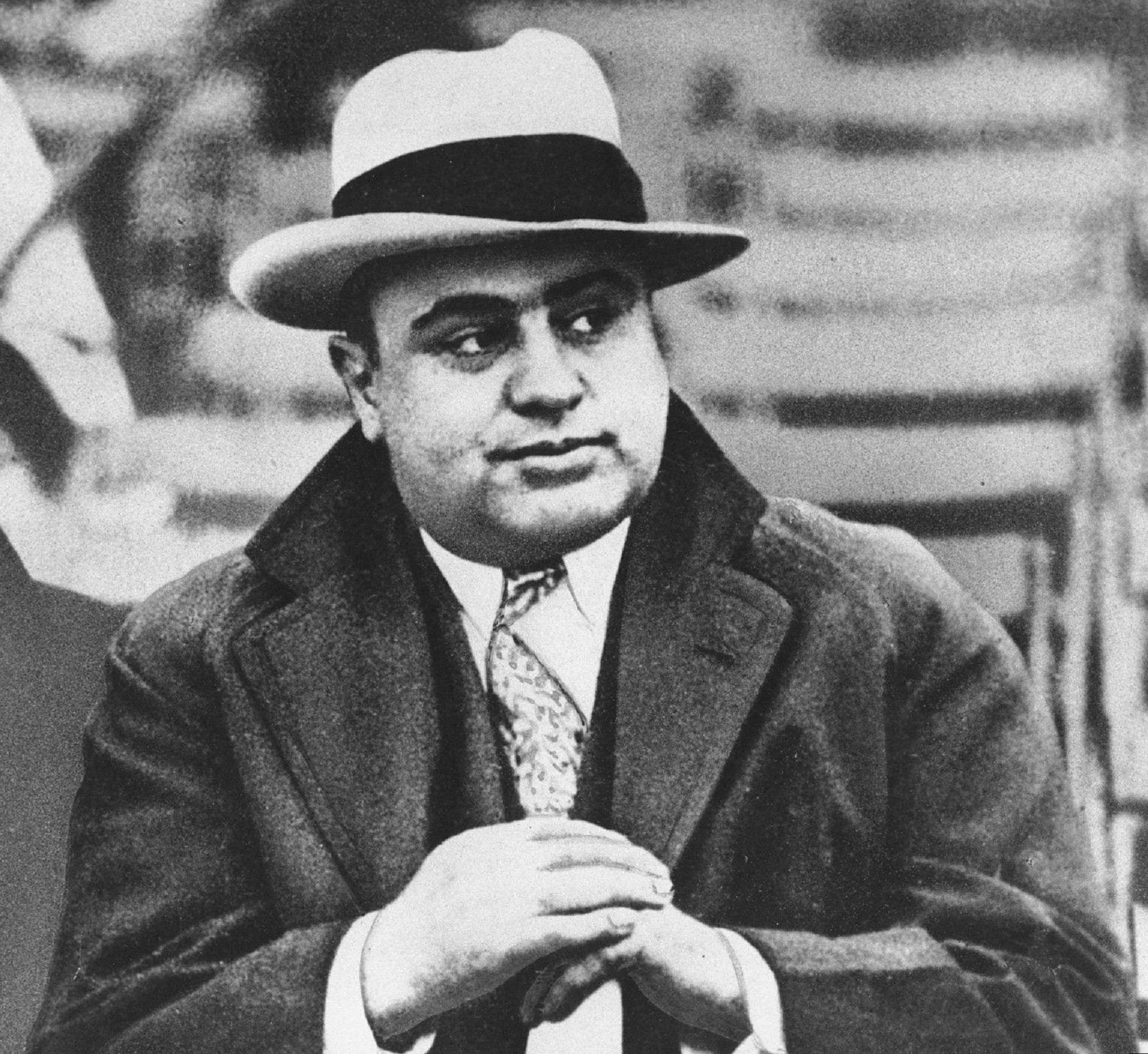
Al Capone
 United States
Also known as: Scarface, Snorky, Big Al
Compleanno
January 17, 1899
Segno Zodiacale
Capricorn
Luogo di Nascita
Brooklyn, New York, USA
Età
Morto/a a 48 anni
Informazioni
Al Capone è stato un gangster e uomo d'affari americano salito alla notorietà durante l'era del Proibizionismo. In qualità di co-fondatore e boss del Chicago Outfit dal 1925 al 1931, costruì un vasto impero criminale incentrato sul contrabbando di alcolici, sul gioco d'azzardo e sulla prostituzione. Le sue tattiche violente e gli scontri di alto profilo con le forze dell'ordine lo resero un simbolo nazionale del crimine organizzato. La carriera di Capone terminò all'età di 33 anni quando fu condannato per evasione fiscale e imprigionato per quasi otto anni. Morì nel 1947 all'età di 48 anni dopo un ictus.
Primi Anni e Background
Alphonse Gabriel Capone nacque il 17 gennaio 1899 a Brooklyn, New York, da genitori immigrati italiani, Gabriele e Teresina Capone. Suo padre era un barbiere e sua madre una sarta; crebbero nove figli in un quartiere operaio. Capone frequentò la scuola fino alla sesta elementare, poi se ne andò dopo aver colpito un insegnante. Frequentò bande di strada locali, entrando infine nella Five Points Gang sotto la guida di Johnny Torrio. Capone lavorò come buttafuori nei saloni di Brooklyn, dove ricevette un taglio di coltello sulla guancia sinistra, guadagnandosi il soprannome di "Scarface". Nel 1919, Torrio lo invitò a Chicago per aiutarlo a gestire le sue operazioni di contrabbando di alcolici. Capone si trasferì lì con sua moglie Mae e si dimostrò rapidamente un esecutore e un manager capace.
Crescita Professionale
Nel 1925, Capone aveva assunto il pieno controllo del Chicago Outfit dopo il ritiro di Torrio. Espansi la portata del sindacato in tutta Chicago e oltre, controllando speakeasy, birrerie, bische e bordelli. Al suo apice, il fatturato annuo dell'Outfit era stimato in oltre 100 milioni di dollari. Capone coltivò un'immagine pubblica da uomo d'affari, donando in beneficenza e aprendo mense per i poveri. Ma il suo regno fu segnato da brutali guerre tra bande, culminate nel massacro di San Valentino del 1929, in cui furono giustiziati sette membri della North Side Gang. Il massacro capovolse l'opinione pubblica contro di lui e spinse le autorità federali a prenderlo di mira. Capone fu condannato per evasione fiscale nel 1931 e condannato a 11 anni di prigione federale. Scontò la pena ad Atlanta e Alcatraz prima di essere rilasciato nel 1939 a causa del deterioramento della salute.
Cronologia Carriera
Immagine Pubblica e Stile
Capone coltivò una doppia persona pubblica: un gangster spietato e un generoso filantropo. Spesso indossava abiti costosi, fumava sigari ed era fotografato alle partite di baseball e agli eventi di beneficenza. I media lo etichettarono "Nemico Pubblico Numero 1" dopo il massacro di San Valentino, un titolo che sia risentì sia sfruttò. La sua immagine è stata romanticizzata in innumerevoli film e libri, spesso interpretato come un carismatico antieroe. Il fandom attorno a Capone è complesso; alcuni lo vedono come un simbolo di ribellione, altri come un monito. La sua notorietà lo ha reso una figura di spicco nella cultura popolare americana, da The Untouchables a Boardwalk Empire.
Fama e fandom
Al Capone remains the 1st most famous person in True Crime, a standing he has held steady across cycles of historical reassessment. This singular dominance reflects how his story continues to anchor the genre more than any other figure, drawing fresh eyes to the Prohibition era decades after his death. His legacy is measured not by fleeting trends but by a persistent, global attention that spans media coverage, search patterns, and consumption signals worldwide.
The audience surrounding this gangster does not organize under a formal name. While some communities form around specific eras or films, there is no single documented group that claims him as their own with a unique title. Instead, the public engagement manifests through a complex relationship with his mythology. Fans often grapple with the duality of his image: the ruthless boss who ordered the St. Valentine's Day Massacre and the man who ran soup kitchens during the Great Depression. The nickname "Scarface" dominates discourse, though it was strictly used behind his back while he preferred the moniker "Snorky." This tension between the brutal reality and the romanticized antihero persona drives much of the enduring interest.
Legendary moments continue to fuel this fascination without needing active fan campaigns. The 1986 broadcast titled *The Mystery of Al Capone's Vaults* remains a cultural touchstone, where Geraldo Rivera's televised search for hidden millions ended in an empty room, turning a massive event into a lasting joke about futility. Similarly, the 1932 film *Scarface* starring Paul Muni and the later 1983 Martin Scorsese version of the same name have cemented his status as an icon, even as they fictionalize his life. The fandom exists in the collective memory of these stories, from the verified bar fight in 1918 that earned him his scar to the tax evasion conviction that set a new legal precedent. There are no crowds fainting at his appearances or organized rituals today, only a quiet, devoted study of a man whose criminal empire and subsequent downfall reshaped American history.
Curiosità e leggende
The nickname "Scarface" was strictly used behind his back, as he preferred the stylish moniker "Snorky." During the Great Depression, he sponsored a free soup kitchen in Chicago that served thousands daily. He suffered from neurosyphilis contracted years earlier, which accelerated his mental decline while imprisoned. His favorite suit was a custom-made number costing $5,000, and his criminal record was sealed in some jurisdictions, fueling decades of mythmaking. As the first major crime figure taken down by tax evasion rather than violent charges, his legal downfall set a new precedent. Beyond these facts, his mythology includes the verified bar fight in 1918 in Brooklyn, where a knife slash earned him his infamous scar. The single most retold incident is the St. Valentine's Day Massacre, where seven members of George "Bugs" Moran's gang were executed against a garage wall in 1929, cementing his reputation for brutality despite never being charged with the murders. Another legendary moment involves the Geraldo Rivera Vault discovery in 1986, where a televised search for millions in hidden cash ended in an empty room, turning a massive event into a cultural joke about futility that persists in collective memory.
Citazioni Notevoli
“You can get much farther with a kind word and a gun than you can with a kind word alone.”
“I am just a businessman, giving the people what they want.”
“All I do is satisfy a public demand.”
Famiglia e Vita Privata
Capone sposò Mae Josephine Coughlin nel 1918; lei era cattolica irlandese e il matrimonio produsse un figlio, Albert Francis "Sonny" Capone, nato nel 1918. Mae rimase leale durante la carriera criminale e la prigionia di Capone, e gli sopravvisse per quasi quattro decenni, morendo nel 1986. Sonny soffrì di un'infezione cronica all'orecchio che lo lasciò parzialmente sordo; divenne un uomo d'affari ed evitò il percorso criminale del padre, morendo nel 2004. Il fratello maggiore di Capone, James Vincenzo Capone, cambiò il suo nome in Richard Hart e divenne un agente del Proibizionismo in Nebraska, lavorando contro i contrabbandieri.
Collegamenti Notevoli
La rete criminale di Capone includeva associati chiave come Johnny Torrio, il suo mentore, e Frank Nitti, che gli succedette. Aveva anche legami con politici corrotti e poliziotti a Chicago. Il suo principale rivale era George "Bugs" Moran della North Side Gang. Il procuratore federale Eliot Ness, leader de "Gli Intoccabili", fu determinante nella costruzione del caso di evasione fiscale contro di lui.
Relazioni e Storia Dating
Capone sposò Mae Josephine Coughlin nel 1918 quando aveva 19 anni e lei 21. Mae era una devota cattolica e rimase di supporto durante la sua carriera criminale e la prigionia. La coppia ebbe un figlio, Albert Francis "Sonny" Capone. Mae condusse una vita relativamente privata, gestendo la casa e proteggendo Sonny dall'attenzione pubblica. Rimasero sposati fino alla morte di Capone nel 1947. Non ci sono relazioni extraconiugali significative documentate, sebbene circolassero voci su amanti. Mae non si risposò mai e morì nel 1986 all'età di 89 anni.
- Sposato/aMae Capone1918 - 1947Sposati nel 1918; rimasero insieme fino alla morte di Capone nel 1947. Un figlio, Albert.
Morte e conseguenze
Morto/a
January 25, 1947 (a 48 anni)
Luogo di morte
Miami Beach, Florida
Causa della morte
cardiac arrest (heart failure)
Al Capone spent his final years in relative seclusion at his estate on Palm Island in Miami Beach, Florida, where he had resided since leaving Alcatraz in 1939. His health had deteriorated significantly due to tertiary syphilis, which caused strokes and paralysis over several years, keeping him largely confined to his home before he passed away peacefully in his sleep on January 25, 1947. The official cause of death was listed as cardiac arrest, a condition attributed to the advanced stage of syphilis that had severely damaged his cardiovascular and nervous systems. Public reaction to the passing of the notorious gangster was mixed but generally muted compared to the frenzy surrounding his earlier criminal activities, with scarce tributes from peers who had been imprisoned, killed, or moved on to other ventures.
Institutions and officials did not issue formal statements of mourning, reflecting the complex legacy of his criminal empire, while media coverage reinforced his status as a historical figure through news reports rather than celebratory events. A private funeral service was held two days later at the Holy Name Cathedral in Chicago, attended by a small group of family members and close friends, after which Capone was cremated and his ashes interred at the Gate of Heaven Cemetery in Hawthorne, Illinois. In the posthumous era, Capone has evolved into a cultural icon inspiring numerous films, books, and documentaries, including the 1959 film titled Al Capone and the 1987 television special The Mystery of Al Capone's Vaults hosted by Geraldo Rivera.
While he has not been inducted into any traditional hall of fame, he is frequently honored in museums such as The Mob Museum in Las Vegas, which features extensive exhibits on his life and crimes.
Patrimonio (Valore immobiliare)
$10 Million
Stima del team editoriale di iFANN
At the height of his power in the late 1920s, Al Capone's criminal empire generated an estimated $100 million annually from bootlegging, gambling, and prostitution. However, per iFANN's editorial analysis, his net worth at the time of his death in 1947 was significantly lower, standing at approximately $10 Million. Much of his wealth had been hidden or lost to legal fees and seizures during his long legal battles. After his release from prison, Capone lived modestly on Palm Island, Florida, supported by hidden assets while his health declined. His estate, managed by his wife Mae, continued to generate income from legitimate investments. As of 2026, the Capone estate is valued at approximately $10 Million, primarily derived from royalties and licensing of his name and image.
Premi e Lodi
View 2 records, honours and achievementsNoto Per
Chicago Outfit
1925 · Boss
Saint Valentine's Day Massacre
1929 · Mente organizzatrice
Parole chiave
Fonti
Fatti Rapidi
- Professione
- gangster
- Nato/a
- January 17, 1899
- Luogo di Nascita
- Brooklyn, New York
- Morto/a
- January 25, 1947
- Luogo di morte
- Palm Island, Florida
- Genere
- Maschio
- Coniuge
- Mae Capone
- Segno Zodiacale
- Capricorn
- Net Worth
- $10 Million
- Altezza
Dettagli Personali
- Nome Completo
- Alphonse Gabriel Capone
- Coniuge
- Mae Capone
- Figli
- Albert "Sonny" Capone
Domande Frequenti
Come è morto Al Capone?
Qual era il patrimonio di Al Capone nel 2026?
Al Capone è ancora vivo?
Per cosa è meglio conosciuto Al Capone?
Perché ad Al Capone veniva dato il soprannome di Scarface?
Persone Simili
Unisciti alla community
fan che discutono