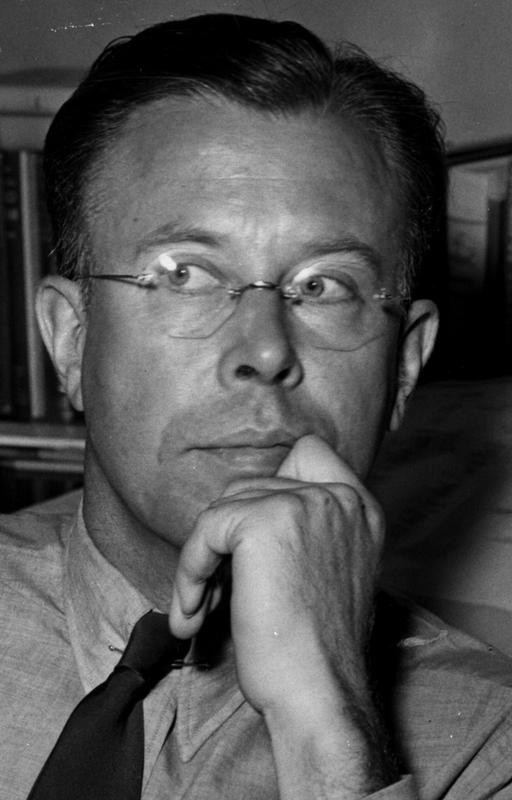
Ernest Orlando Lawrence
 United States
physicist•nuclear physicist•university teacher
Compleanno
August 8, 1901
Segno Zodiacale
Leo
Luogo di Nascita
Canton, South Dakota, USA
Età
Morto/a a 57 anni
Altezza
5 ft 10 in (178 cm)
Informazioni
Ernest Orlando Lawrence è stato un fisico americano che ha ridefinito la scienza moderna. Vinse il Premio Nobel per la Fisica nel 1939 per l'invenzione del ciclotrone, un acceleratore di particelle che divenne un pilastro della fisica nucleare. Lawrence ebbe anche un ruolo chiave nel Progetto Manhattan, sviluppando la separazione elettromagnetica degli isotopi dell'uranio, e fondò due importanti laboratori nazionali: il Lawrence Berkeley National Laboratory e il Lawrence Livermore National Laboratory.
Lawrence conseguì il dottorato a Yale nel 1925 dopo aver studiato all'Università del South Dakota e all'Università del Minnesota. Nel 1928 entrò all'Università della California, Berkeley, come professore associato e divenne il più giovane professore ordinario due anni dopo. Una sera, in biblioteca, vide il diagramma di un acceleratore lineare e si chiese come renderlo compatto. Quell'idea portò al ciclotrone, una camera circolare tra i poli di un elettromagnete che accelerava le particelle ad alte energie.
Costruì ciclotroni sempre più grandi e nel 1936 il suo Radiation Laboratory divenne un dipartimento ufficiale dell'UC con Lawrence come direttore. Sostenne l'uso medico dei radioisotopi. Durante la Seconda Guerra Mondiale, il suo laboratorio sviluppò i calutroni, ibridi tra spettrometri di massa e ciclotroni, per l'arricchimento dell'uranio. Un impianto enorme chiamato Y-12 fu costruito a Oak Ridge, Tennessee; sebbene inefficiente, produsse l'uranio per la prima bomba atomica.
Dopo la guerra, Lawrence divenne un fervente sostenitore della Big Science, grandi progetti che richiedevano grandi macchine e grandi finanziamenti. Appoggiò la spinta di Edward Teller per un secondo laboratorio di armi nucleari, situato a Livermore, California. Lawrence morì il 27 agosto 1958, all'età di 57 anni. L'Università della California ribattezzò sia il laboratorio di Livermore che quello di Berkeley in suo onore. L'elemento 103, il laurenzio, scoperto a Berkeley nel 1961, porta anch'esso il suo nome.
Primi Anni e Background
Lawrence crebbe a Canton, South Dakota, figlio di Carl Gustavus Lawrence e Gunda Regina Jacobson, entrambi immigrati norvegesi. Suo padre era sovrintendente scolastico e sua madre insegnante. La famiglia si trasferì a Pierre quando era adolescente. Da bambino, Lawrence era curioso di scienza e amava condurre semplici esperimenti di chimica nel seminterrato. Frequentò l'Università del South Dakota nel 1918, inizialmente con l'intenzione di studiare medicina, ma passò alla fisica dopo essere stato ispirato dal professor Lewis Akeley. Conseguì la laurea triennale nel 1922, poi si trasferì all'Università del Minnesota per gli studi post-laurea, ottenendo un master nel 1923. Perseguì un dottorato all'Università Yale, completandolo nel 1925 con una tesi sull'effetto fotoelettrico. Durante gli anni a Yale, si interessò al nascente campo della fisica nucleare. Un momento cruciale arrivò nel 1929, quando, come giovane professore associato all'UC Berkeley, Lawrence vide il diagramma di un acceleratore lineare in una rivista in biblioteca e concepì l'idea del ciclotrone, un acceleratore circolare compatto. Quell'intuizione preparò il terreno per la sua svolta.
Crescita Professionale
La svolta di Lawrence arrivò nel 1931 quando costruì il primo ciclotrone funzionante all'UC Berkeley, un dispositivo da 4,5 pollici che accelerava ioni di idrogeno a 80.000 elettronvolt. Lo costruì usando parti di ricambio di un trasmettitore radio a un costo di circa 25 dollari. Il dispositivo gli valse il Premio Nobel per la Fisica nel 1939. Durante la Seconda Guerra Mondiale, diresse la separazione elettromagnetica degli isotopi dell'uranio per il Progetto Manhattan, usando calutroni nell'impianto Y-12 a Oak Ridge, Tennessee. Nel 1952, co-fondò il Lawrence Livermore National Laboratory per la ricerca sulle armi nucleari. Ricevette anche la Medal for Merit nel 1946 e l'Enrico Fermi Award nel 1957. Il suo lavoro gettò le basi per la fisica delle particelle moderna e per la produzione di isotopi medici.
Cronologia Carriera
Immagine Pubblica e Stile
Lawrence era noto per il suo approccio energico e pratico alla scienza, spesso indossando camici da laboratorio e lavorando direttamente con le apparecchiature. Fu ritratto come un visionario e instancabile promotore della ricerca su larga scala, un campione della Big Science. La copertura mediatica evidenziò il suo ruolo nel Progetto Manhattan e nella fondazione dei laboratori nazionali. Il suo fandom è principalmente all'interno della comunità fisica; gli appassionati commemorano gli anniversari della sua nascita e morte con conferenze al Lawrence Berkeley National Laboratory. Non esiste un nome ufficiale per i fan. La sua presenza sui social media è inesistente poiché morì prima dell'era di Internet.
Fama e fandom
Ernest Orlando Lawrence never sought fame, yet his name echoes through the halls of science. The man who built the first cyclotron from spare radio parts in 1929 became the architect of Big Science, transforming physics from a solitary pursuit into a national enterprise. His legacy is not measured in fan clubs or chart positions, it's measured in the laboratories, awards, and elements that bear his name.
In the world of physics, Lawrence is a towering figure, but outside of it, his fame is a quieter, more diffuse thing. iFANN's Global Fame Engine, which evaluates public recognition across media and cultural signals, has assessed Lawrence but found him currently unranked, he holds no placement in the global top 1,000 or any top-100 scope list. This is not a slight; it's a reflection of his sphere of influence, which lies in textbooks and institutional memory rather than daily headlines.
His fanbase, such as it is, has no formal name. There are no fan campaigns, no birthday billboards, no hashtag movements. Instead, his most devoted followers are the physicists and historians who study his work, and the institutions he founded, Lawrence Berkeley National Laboratory and Lawrence Livermore National Laboratory, that keep his memory alive through exhibits and the Ernest Orlando Lawrence Award. The Lawrence Hall of Science in Berkeley also preserves his story for curious visitors.
This is a different kind of fame, one built on achievement, not spectacle. Lawrence's name may not trend on social media, but it is etched into the periodic table and the history of science. That, perhaps, is the most enduring form of recognition.
Curiosità e leggende
Lawrence's first cyclotron cost about $25 and used spare radio parts. He was a close friend of J. Robert Oppenheimer and supported Oppenheimer's security clearance during the 1954 hearings. An avid sailor, he owned a yacht named The Cyclotron. He turned down an offer to become the first director of the Manhattan Project in 1942, recommending Oppenheimer instead. The element lawrencium (Lr) was named in his honor in 1961, three years after his death. He was inducted into the National Inventors Hall of Fame in 1988.
One of the most retold stories from his career is the moment of inspiration for the cyclotron. In 1929, Lawrence reportedly glanced at a paper by Norwegian physicist Rolf Widerøe in a university library and had a sudden flash of insight, the idea for a machine that could accelerate particles in a spiral. He and graduate student M. Stanley Livingston built the first working model in 1931, a device just four inches across that could be held in one hand, yet it successfully accelerated hydrogen ions to 80,000 electron volts. The story of this tiny machine, assembled with sealing wax and brass in a cramped basement workshop, is a favorite among physicists and science enthusiasts.
Another legendary episode is the saga of the 184-inch cyclotron, designed to be the world's most powerful accelerator. Construction was interrupted by World War II, and after the war, Lawrence redesigned it using new synchrotron principles. Completed in 1946, it became the prototype for all subsequent high-energy accelerators, cementing his reputation as a pioneer of large-scale physics.
Citazioni Notevoli
“The cyclotron is a machine that will enable us to explore the nucleus of the atom.”
“We are entering an era of big science. The problems are too large for a single man to solve.”
“I have never been able to understand why a man should be afraid of a little hard work.”
Famiglia e Vita Privata
Lawrence sposò Mary K. Blumer il 14 maggio 1932. Mary era figlia di un fisico di Yale e si incontrarono attraverso ambienti accademici. La coppia ebbe sei figli: John, Margaret, Mary, Robert, Barbara e Susan. La famiglia viveva a Berkeley, California, dove Lawrence lavorava. Era un padre devoto che spesso coinvolgeva i figli nei suoi interessi scientifici, portandoli in laboratorio nei fine settimana. Il matrimonio durò fino alla morte di Lawrence nel 1958. Nessun altro dettaglio familiare significativo è documentato pubblicamente.
Collegamenti Notevoli
Lawrence era un caro amico e collega di J. Robert Oppenheimer, raccomandandolo per dirigere il Progetto Manhattan. Collaborò con Edward Teller alla bomba all'idrogeno e sostenne la spinta di Teller per un secondo laboratorio di armi. Luis Alvarez fu uno studente e collega al Radiation Laboratory, in seguito premio Nobel. Glenn T. Seaborg lavorò al laboratorio, scoprì il plutonio e in seguito presiedette la Commissione per l'Energia Atomica. Sua moglie Mary K. Blumer fu la sua compagna per tutta la vita.
Relazioni e Storia Dating
Ernest Lawrence sposò Mary K. Blumer il 14 maggio 1932. La relazione iniziò alla fine degli anni '20 quando entrambi erano all'Università di Yale; Mary era la figlia di un professore di fisica. Ebbero sei figli insieme. Il matrimonio durò fino alla morte di Lawrence nel 1958. Non sono documentate altre relazioni romantiche pubbliche; la vita personale di Lawrence era privata e incentrata sulla sua famiglia e sul lavoro. Al 2026, Lawrence è deceduto, senza alcuna relazione romantica in corso.
- Sposato/aMary K. Blumer1932 - 1958Sposato il 14 maggio 1932; ha avuto sei figli insieme; matrimonio durato fino alla morte di Lawrence.
Morte e conseguenze
Morto/a
August 27, 1958 (a 57 anni)
Luogo di morte
Palo Alto, California
Causa della morte
Sconosciuto
The University of California announced the passing of Ernest Orlando Lawrence on August 27, 1958, confirming his death at a medical facility in Palo Alto, California. The physicist, who had spent decades driving the boundaries of nuclear science, succumbed to an illness that authorities never publicly detailed in specific terms. Tributes flowed immediately from the highest levels of American science and government. The scientific community marked his loss with a significant memorial event on May 1, 1959, where the American Institute of Physics hosted invited lectures dedicated to the history of the cyclotron. Articles in Physics Today and Chemistry World reflected on his dual legacy as the inventor of the particle accelerator and a key architect of the Manhattan Project.
These publications avoided sensationalism, focusing instead on the technical and historical weight of his contributions to nuclear physics. His legacy was cemented through immediate institutional action rather than traditional funeral rites. The Department of Energy established the Ernest Orlando Lawrence Award to recognize outstanding contributions in science and technology, a honor bestowed annually since his death. The University of California honored him by naming its premier research facility after him, ensuring his name remained central to the field he helped create.
Patrimonio (Valore immobiliare)
$1 Million
Stima del team editoriale di iFANN
Ernest Lawrence died in 1958, and his estate was modest by modern standards. Research by the iFANN Editorial Team puts his estate's value at approximately $1 million, a figure that reflects his life as a public servant and academic rather than a commercial figure. The estate's worth is primarily tied to ongoing royalties from patents, such as the cyclotron patent, and licensing of his name. The Ernest Orlando Lawrence Award, funded by the U.S. government, is a separate legacy that honors mid-career scientists. The estate is managed by the Lawrence family trust, and no posthumous releases or merchandise generate significant revenue. Lawrence's true wealth lies in his scientific contributions, which continue to shape physics and national laboratories.
Premi vinti (6)
Lawrence vinse il Premio Nobel per la Fisica nel 1939 per l'invenzione del ciclotrone. Ricevette anche il Comstock Prize in Physics (1937), la Medal for Merit (1946), la Hughes Medal (1951), l'Enrico Fermi Award (1957) e il Sylvanus Thayer Award (1958). Questi riconoscimenti onorarono i suoi contributi alla fisica nucleare e alla difesa nazionale.
1937 · Fisica
Cyclotron
1939 · Fisica
Cyclotron
Noto Per
Invention of the cyclotron
1931 · Inventor
Manhattan Project
1942 · Director of electromagnetic isotope separation
Lawrence Berkeley National Laboratory
1936 · Founder and director
Lawrence Livermore National Laboratory
1952 · Co-fondatore
Parole chiave
Fatti Rapidi
- Professione
- physicist, nuclear physicist, university teacher
- Nato/a
- +1901-08-08
- Luogo di Nascita
- Canton
- Morto/a
- +1958-08-27
- Luogo di morte
- Palo Alto
- Genere
- Maschio
- Coniuge
- Mary K. Blumer
- Segno Zodiacale
- Leo
Dettagli Personali
- Nome Completo
- Ernest Orlando Lawrence
- Altezza
- 5 ft 10 in (178 cm)
- Coniuge
- Mary K. Blumer
- Figli
- 6
- Istruzione
- University of South Dakota (BA, 1922); University of Minnesota (MS, 1923); Yale University (PhD, 1925)
Domande Frequenti
Come è morto Ernest Lawrence?
Qual è il patrimonio di Ernest Lawrence nel 2026?
Ernest Lawrence aveva figli?
Per cosa è famoso Ernest Lawrence?
Ernest Lawrence è legato al Lawrence Livermore Lab?
Persone Simili
Unisciti alla community
fan che discutono