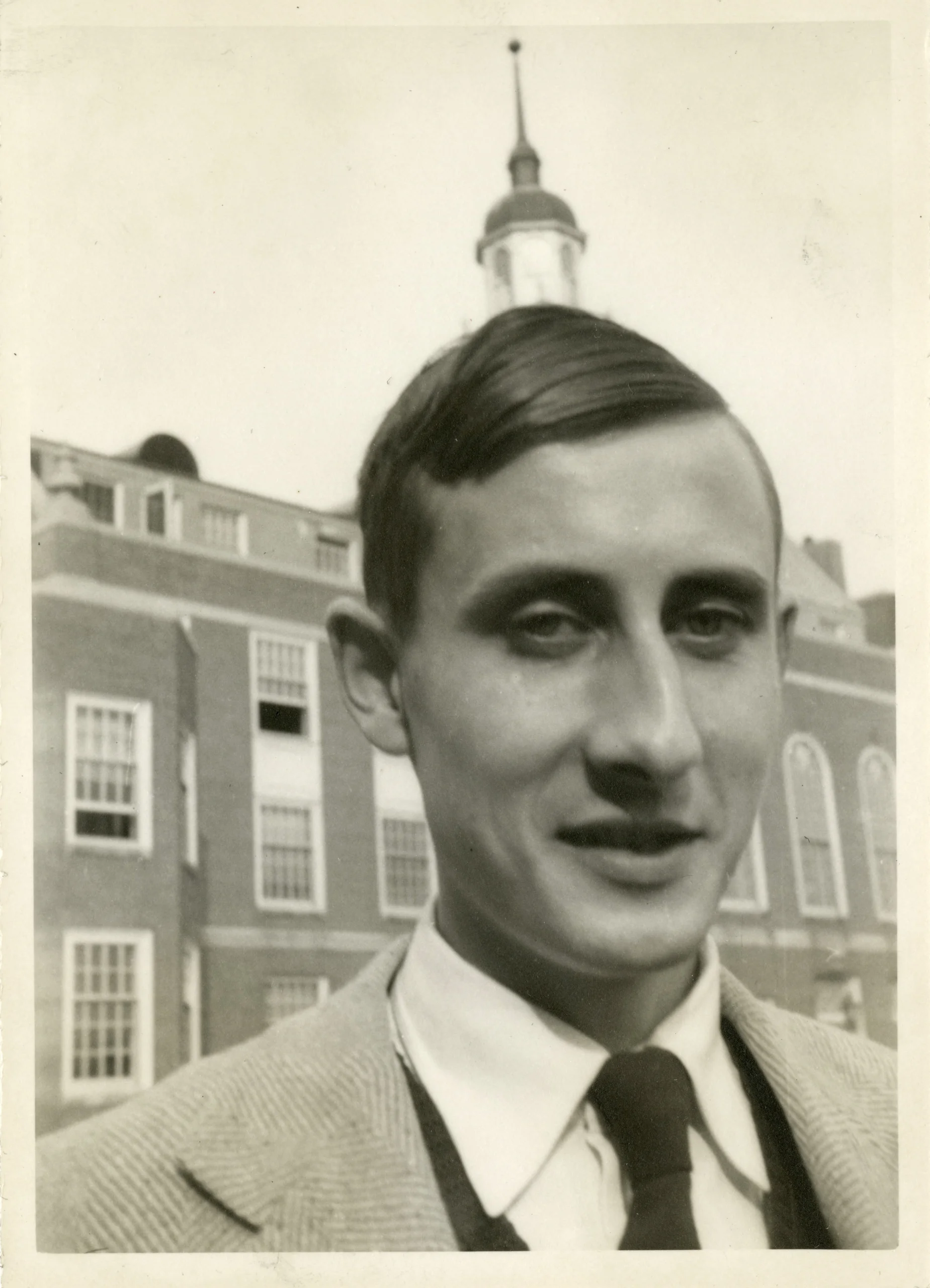
Freeman Dyson
 United Kingdom
mathematician•theoretical physicist•nuclear physicist
Also known as: Freeman John Dyson
Compleanno
December 15, 1923
Segno Zodiacale
Sagittarius
Luogo di Nascita
Crowthorne, Berkshire, England
Età
Morto/a a 96 anni
Altezza
5 ft 10 in (178 cm)
Informazioni
Freeman John Dyson è stato un fisico teorico e matematico britannico-statunitense il cui lavoro ha rimodellato la teoria quantistica dei campi, l'astrofisica e l'ingegneria nucleare. Ha trascorso gran parte della sua carriera all'Institute for Advanced Study di Princeton, dove è diventato professore emerito. Il pensiero di Dyson spaziava dalla matematica pura all'ingegneria speculativa, e ha ideato concetti come la sfera di Dyson, una megastruttura ipotetica che racchiude una stella per catturarne l'energia, insieme alla serie di Dyson, un metodo perturbativo che utilizza i diagrammi di Feynman, diventato fondamentale per l'elettrodinamica quantistica.
Dyson ha spesso sfidato le opinioni scientifiche dominanti, in particolare sul cambiamento climatico, sostenendo che i suoi effetti fossero esagerati e che la CO2 potesse favorire l'agricoltura. Credeva che gli sforzi politici per ridurre le emissioni distraessero da problemi globali più urgenti. Nonostante questo anticonformismo, i suoi contributi gli sono valsi il Lewis Thomas Prize for Writing about Science nel 1996 e il Templeton Prize for Progress in Religion nel 2000, del valore di 1,2 milioni di dollari. È morto il 28 febbraio 2020 all'età di 96 anni, lasciando un'eredità di indipendenza intellettuale e curiosità a tutto tondo.
Primi Anni e Background
Dyson è cresciuto in una famiglia molto intellettuale a Crowthorne, Berkshire, dove suo padre, Sir George Dyson, era un rinomato compositore e direttore del Royal College of Music, e sua madre, Mildred Atkey, era un'avvocato. Il giovane Freeman è stato istruito a casa dalla madre fino all'età di sei anni, poi ha frequentato scuole preparatorie. Ha imparato il calcolo infinitesimale da solo a sette anni e ha pubblicato il suo primo articolo matematico a 18 anni mentre era al Winchester College con una borsa di studio.
Nel 1941, vinse una borsa di studio per il Trinity College di Cambridge, ma i suoi studi furono interrotti dalla seconda guerra mondiale. Servì come statistico per il Bomber Command della Royal Air Force, analizzando i modelli di bombardamento per migliorare la precisione. Dopo la guerra, completò la laurea in matematica nel 1945. Si trasferì negli Stati Uniti nel 1947 come Commonwealth Fellow alla Cornell University, studiando con Hans Bethe e Richard Feynman. Un momento cruciale arrivò nel 1948 quando frequentò una scuola estiva all'Università del Michigan, dove Feynman e Julian Schwinger presentarono formulazioni contrastanti dell'elettrodinamica quantistica. Dyson trascorse l'estate a conciliare i due approcci, producendo la serie di Dyson, un'espansione perturbativa che utilizza i diagrammi di Feynman, unificando la QED. Questo lavoro, pubblicato nel 1949, stabilì la sua reputazione e lanciò la sua carriera.
Crescita Professionale
Nel 1949, Dyson fu nominato professore di fisica alla Cornell University. Due anni dopo, entrò a far parte dell'Institute for Advanced Study di Princeton come professore, dove rimase per il resto della sua carriera. Nel 1959, propose il concetto di sfera di Dyson sulla rivista Science, una megastruttura ipotetica in grado di sfruttare l'energia di una stella, suscitando decenni di interesse scientifico e fantascientifico. Durante gli anni '60, lavorò al Progetto Orion, uno studio finanziato dalla NASA sulla propulsione nucleare a impulsi per veicoli spaziali, sostenendone lo sviluppo fino alla cancellazione del progetto nel 1965 a causa del Trattato sulla messa al bando parziale dei test nucleari.
Negli anni '70, Dyson spostò la sua attenzione verso la biologia e le questioni ambientali, scrivendo ampiamente sulle implicazioni etiche dell'ingegneria genetica e del cambiamento climatico. Pubblicò diversi libri influenti, tra cui Disturbing the Universe (1979), Weapons and Hope (1984) e The Scientist as Rebel (2006). I suoi ultimi anni portarono grandi onorificenze: il Wolf Prize in Physics nel 1981, l'Enrico Fermi Award nel 1993 e il Templeton Prize nel 2000. Anche a novant'anni, continuò a pubblicare saggi e a parlare in pubblico, rimanendo una figura fissa all'Institute for Advanced Study fino alla sua morte.
Cronologia Carriera
Immagine Pubblica e Stile
Dyson ha coltivato un'immagine pubblica di anticonformista gentile e riflessivo. Veniva spesso fotografato con abiti sgualciti e spessi occhiali, incarnando perfettamente il professore distratto. I media lo descrivevano spesso come il fisico ribelle o l'eretico, specialmente dopo che il suo scetticismo sul cambiamento climatico attirò critiche. Era rispettato per la sua indipendenza intellettuale ma anche criticato per le sue opinioni sul clima. I suoi libri, in particolare Disturbing the Universe e Weapons and Hope, svilupparono un pubblico di lettori devoti tra gli appassionati di scienza. Non aveva account personali sui social media, ma la sua eredità è mantenuta dall'Institute for Advanced Study e dalla sua pagina Wikipedia, che riceve oltre 500.000 visualizzazioni mensili.
Fama e fandom
Freeman Dyson is currently the 29th most famous person in AI, a standing confirmed by the iFANN Global Fame Rankings. This placement reflects how his foundational concepts continue to shape the trajectory of artificial intelligence and computational theory long after his passing. While he never sought celebrity, the enduring power of his ideas has secured him a unique position in the global consciousness, tracked through decades of media coverage and scholarly consumption worldwide.
Unlike pop stars or actors, Freeman Dyson did not cultivate a formal fandom with a specific name or organized rituals. His legacy belongs to a diffuse community of scientists, science fiction writers, and engineers who revere his intellectual contributions rather than his persona. There were no crowds fainting at his lectures or fan-funded campaigns to keep his name on charts; instead, his influence rippled through academic circles and speculative fiction. The "fandom" for Dyson is best described as an intellectual following inspired by his willingness to challenge orthodoxy and imagine the future of humanity among the stars.
The most prominent legend associated with him remains the concept of the Dyson Sphere. Proposed in a 1960 paper, this hypothesis suggested that advanced civilizations would enclose their stars in megastructures to capture energy. What began as rigorous mathematical reasoning evolved into a cornerstone of astrobiology lore, frequently depicted in movies and video games as the definitive sign of Type II civilizations. Another legendary aspect of his career involves his role in resolving infinite values in quantum electrodynamics, cementing his status as a founding father of modern particle physics alongside Richard Feynman. These stories are not folklore born of exaggeration but verified historical facts that have transcended their academic origins to become global symbols of human imagination.
Curiosità e leggende
Freeman Dyson never earned a Ph.D., holding only a bachelor's degree from Cambridge despite receiving over 20 honorary doctorates throughout his life. An avid mountain climber, he scaled the Matterhorn at age 60, demonstrating a physical vigor that matched his intellectual curiosity. He remained a vegetarian for ethical reasons, believing it reduced animal suffering, and published a collection of poetry titled Poems of Freeman Dyson in 1999.
His daughter Esther Dyson became a well-known technology analyst and investor, often called the most powerful woman in tech. Dyson was a close friend of Richard Feynman, and they frequently debated the intricacies of quantum mechanics together. He served on the Board of Sponsors of the Bulletin of the Atomic Scientists, which maintains the Doomsday Clock, and remained a pacifist who regretted his early work on nuclear projects before becoming a dedicated advocate for arms control.
A widely retold story in scientific lore concerns his 1960 proposal of the Dyson Sphere, a hypothetical megastructure enclosing a star to capture its energy. This idea originated from his rigorous mathematical reasoning but evolved into popular folklore where such spheres are frequently depicted in movies and internet discussions as the sign of advanced alien civilizations. Another enduring narrative highlights his unconventional path to greatness: a mathematical prodigy who left Oxford without a doctorate to work directly with Paul Dirac at Cambridge. Recent studies from 2026 indicate the concept remains active in scientific discourse, with researchers exploring whether observed cold stars might be such megastructures, proving the enduring power of his original vision.
Citazioni Notevoli
“As we look out into the Universe and identify the many accidents of physics and astronomy that have worked together to our benefit, it almost seems as if the Universe must in some sense have known that we were coming.”
“I have felt it my duty to speak out on issues where the scientific consensus is wrong. The climate change consensus is one of those.”
“The best way to predict the future is to invent it.”
“I am not a believer in the religion of science. I think science is a tool, not a creed.”
“The Dyson sphere is not a prediction. It is a thought experiment to explore the limits of what is possible.”
Famiglia e Vita Privata
Il padre di Dyson, Sir George Dyson, compose la musica per l'incoronazione della regina Elisabetta II. Sua madre, Mildred Atkey, era un'avvocato. Non aveva fratelli. Dyson si è sposato due volte. La sua prima moglie fu Verena Huber-Dyson, una matematica svizzera; hanno avuto due figli: Esther (nata nel 1951), analista e investitrice tecnologica, e George (nato nel 1953), storico della tecnologia. Il matrimonio terminò con il divorzio nel 1958. La sua seconda moglie fu Imme Jung, un'atleta e allenatrice tedesca; hanno avuto quattro figli: Dorothy, Mia, Rebecca ed Emily. Imme morì di cancro nel 2003. Dyson visse a Princeton, New Jersey, per la maggior parte della sua vita adulta, in una modesta casa vicino all'Institute for Advanced Study. Non possedeva animali domestici.
Collegamenti Notevoli
Le collaborazioni più note di Dyson furono con Richard Feynman e Hans Bethe alla Cornell. Lavorò anche con Julian Schwinger, riconciliando le loro formulazioni concorrenti dell'elettrodinamica quantistica. Suo figlio George Dyson è uno storico della tecnologia, e sua figlia Esther Dyson è una importante investitrice tecnologica. Ha co- ricevuto il Premio Wolf per la Fisica con Gerard 't Hooft e Victor Weisskopf.
Relazioni e Storia Dating
Dyson si sposò due volte. Il suo primo matrimonio fu con Verena Huber-Dyson, una matematica svizzera, nel 1950. Si conobbero all'Institute for Advanced Study ed ebbero due figli, Esther e George. Il matrimonio terminò con un divorzio nel 1958, sebbene rimasero in rapporti amichevoli. Verena in seguito si trasferì in Canada e continuò la sua carriera accademica; morì nel 2016. Nel 1958, Dyson sposò Imme Jung, un'atleta e allenatrice tedesca, conosciuta a una conferenza in Europa. Ebbero quattro figli: Dorothy, Mia, Rebecca e Emily. Imme morì di cancro nel 2003. Dyson non ebbe relazioni sentimentali note al di fuori di questi due matrimoni. Al momento della sua morte nel 2020, era vedovo.
- Sposato/aVerena Huber-Dyson1950 - 1958Matematica svizzera; conosciuta all'Institute for Advanced Study; ebbe due figli; divorziò amichevolmente.
- Sposato/aImme Dyson1958 - 2003Atleta e allenatrice tedesca; conosciuta a una conferenza in Europa; ebbe quattro figli; morì di cancro.
Morte e conseguenze
Morto/a
February 28, 2020 (a 96 anni)
Luogo di morte
Princeton, New Jersey, USA
Causa della morte
Natural causes associated with advanced age
Freeman Dyson spent his final years in Princeton, New Jersey, continuing to write essays and correspond with colleagues while living at the Institute for Advanced Study where he had been a fixture for decades. On February 28, 2020, he passed away naturally in his sleep at the age of 96 without any acute medical emergency or suspicious circumstances requiring intervention. The scientific community responded with immediate tributes that highlighted his unique ability to bridge pure mathematics and speculative engineering. The New York Times published an extensive obituary tracing his path from subatomic physics to environmental visioning, while Quanta Magazine honored him as an unstoppable idea factory.
The Institute for Advanced Study issued statements honoring his decades of service and his unique ability to bridge mathematics and physics. Details regarding a funeral or memorial service remained private as the family requested privacy following his passing, so no public ceremony or burial site was officially disclosed by the Institute or his estate. A scholarship or foundation specifically created in his name right after his death has not appeared in public records, and the handling of his estate was managed privately by his family.
Following his death, his existing works continued to be studied and cited within academic circles. His name saw renewed interest in search trends and discussions regarding his theories on extraterrestrial civilizations and nuclear energy.
Patrimonio (Valore immobiliare)
$6 Million
Stima del team editoriale di iFANN
iFANN currently estimates Freeman Dyson's estate at $6 Million as of 2026. This figure derives primarily from his academic salary, book royalties, and the Templeton Prize during his lifetime. Dyson earned a modest salary as a professor at the Institute for Advanced Study, estimated at $150,000 to $200,000 per year in his later decades. His books, including Disturbing the Universe (1979), Weapons and Hope (1984), and The Scientist as Rebel (2006), generated lifetime royalties estimated between $500,000 and $1 million. The Templeton Prize in 2000 brought $1.2 million, most of which he donated to charity. He also earned speaking fees of $5,000 to $10,000 per engagement, giving 20 to 30 paid lectures annually in his later years. The estate is managed by his daughter Esther Dyson. Posthumous revenue comes from continued book sales and modest licensing for educational materials. No major real estate holdings, business ventures, or endorsement deals have been reported.
Premi vinti (10)
Dyson ha vinto numerosi premi prestigiosi durante la sua carriera, tra cui il Premio Wolf per la Fisica (1981), il Premio Enrico Fermi (1993) e il Premio Templeton (2000). Ha anche ricevuto il Premio Heineman per la Fisica Matematica (1965), la Medaglia Hughes (1968) e la Medaglia Max Planck (1969). Per i suoi scritti ha ottenuto il Premio Lewis Thomas (1996). Nonostante numerose nomination, non ha mai vinto il Premio Nobel.
2000 · Progresso nella Religione
For exploring the relationship between science and religion
1996 · Scrivere di Scienza
Disturbing the Universe
Noto Per
Dyson series
1948 · Creator
Dyson sphere
1959 · Proposer
Project Orion
1960 · Physicist
Disturbing the Universe
1979 · Autore
Parole chiave
Fatti Rapidi
- Professione
- mathematician, theoretical physicist, nuclear physicist
- Nato/a
- +1923-12-15
- Luogo di Nascita
- Crowthorne, Berkshire, England
- Morto/a
- +2020-02-28
- Luogo di morte
- Princeton, New Jersey, USA
- Genere
- Maschio
- Coniuge
- Verena Huber-Dyson, Imme Dyson
- Segno Zodiacale
- Sagittarius
- Altezza
- 5 ft 10 in (178 cm)
- Education
- Trinity College, Cambridge (BA, 1945)
- Children
- 6
Dettagli Personali
- Nome Completo
- Freeman John Dyson
- Altezza
- 5 ft 10 in (178 cm)
- Coniuge
- Verena Huber-Dyson, Imme Dyson
- Figli
- Esther Dyson, George Dyson, Dorothy Dyson, Mia Dyson, Rebecca Dyson, Emily Dyson
- Istruzione
- Trinity College, Cambridge (BA, 1945)
Domande Frequenti
Freeman Dyson ha vinto un Premio Nobel?
Cos'è una sfera di Dyson?
Freeman Dyson era imparentato con Sir George Dyson?
Qual era il patrimonio di Freeman Dyson al momento della sua morte?
Freeman Dyson credeva nel cambiamento climatico?
Unisciti alla community
fan che discutono