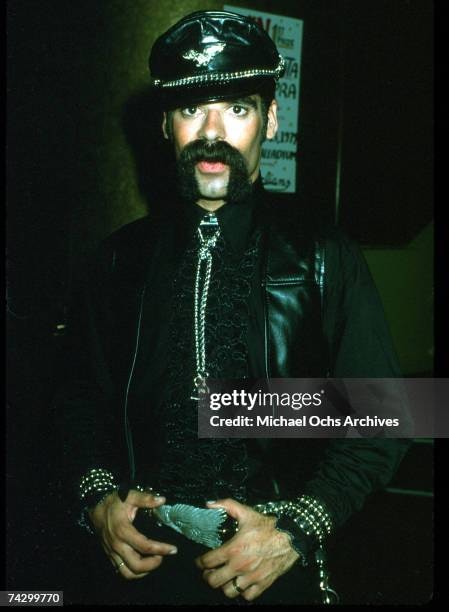
Glenn Hughes
 United States
Member of Village People
Compleanno
July 18, 1950
Segno Zodiacale
Cancer
Luogo di Nascita
New York City, New York, USA
Età
Morto/a a 50 anni
Altezza
5 ft 10 in (178 cm)
Informazioni
Glenn Michael Hughes è stato un cantante statunitense, noto soprattutto come il personaggio originale del Leatherman del gruppo disco Village People. Nato il 18 luglio 1950 a New York, si unì al gruppo nel 1977 e si esibì con loro fino al 1996, contribuendo a definire il suono e l'immagine di un'epoca. Hughes portava sul palco un'energia grezza e mascolina, incarnando l'archetipo del biker in pelle che divenne immediatamente riconoscibile nella cultura pop. Nel corso della sua carriera, apparve in dozzine di album e singoli con il gruppo, inclusi successi in vetta alle classifiche come YMCA, Macho Man e Go West. Sebbene sia noto soprattutto per il suo periodo con i Village People, Hughes ha anche perseguito altri progetti musicali, tra cui lavori solisti e collaborazioni. Morì il 4 marzo 2001 all'età di 50 anni per cancro ai polmoni. La sua eredità vive nella duratura popolarità della musica dei Village People e nell'immagine indelebile del Leatherman.
Primi Anni e Background
Hughes è cresciuto a New York in un ambiente operaio, sebbene i dettagli sulla sua infanzia e istruzione rimangano scarsi nei documenti pubblici. Sviluppò un precoce interesse per la musica e lo spettacolo, e prima di unirsi ai Village People, svolse vari lavori mentre si immergeva nella scena notturna di New York. I suoi primi passi verso la fama arrivarono nel 1977, quando fece un'audizione e fu selezionato per unirsi ai neonati Village People, assumendo la persona del biker in pelle che divenne iconica. Il gruppo fu creato dai produttori francesi Jacques Morali e Henri Belolo, che cercavano interpreti per incarnare sei archetipi maschili.
Crescita Professionale
Nel 1977, Hughes si unì ai Village People come Leatherman, uno dei sei archetipi maschili. La svolta del gruppo arrivò nel 1978 con l'album Macho Man, che raggiunse il numero 1 nella classifica Dance di Billboard e il numero 2 nella Billboard 200. Più tardi quell'anno, il gruppo pubblicò Cruisin', che includeva il grande successo globale YMCA. La canzone raggiunse il numero 2 nella Billboard Hot 100 e il numero 1 in diversi paesi, diventando uno dei singoli più venduti di tutti i tempi. Nel 1979, il gruppo pubblicò Go West, con la title track che divenne un altro successo internazionale, e pubblicò anche In the Navy come singolo con la cooperazione della Marina degli Stati Uniti. Nel 1980, i Village People furono protagonisti del film semi-autobiografico Can't Stop the Music, che fu un fallimento critico e commerciale ma in seguito raggiunse lo status di cult. Hughes apparve nel film documentario del 1985 The Village People: The Movie. Dopo quasi 19 anni con il gruppo, Hughes lasciò i Village People nel 1996 e intraprese progetti musicali solisti, sebbene nessuno raggiunse il successo commerciale del suo lavoro con il gruppo.
Cronologia Carriera
Immagine Pubblica e Stile
Lo stile distintivo di Hughes era il completo da biker in pelle: un berretto di pelle nera, gilet di pelle, pantaloni di pelle e stivali. Questo look divenne sinonimo dell'estetica disco biker. Era ritratto come la presenza dura e mascolina del gruppo, fornendo contrasto con i personaggi più appariscenti. La sua voce profonda e i contributi parlati aggiungevano gravità alle registrazioni del gruppo. I Village People hanno una base di fan globale dedicata, in particolare tra le comunità LGBTQ+ e gli appassionati di disco, sebbene non esista un nome ufficiale per i fan.
Fama e fandom
Glenn Hughes's global recognition today rests on his role as the original Leatherman in the Village People, a persona that remains a cultural touchstone decades after his death. While his fame is enduring, it does not currently translate into a placement in iFANN's published rankings. As of August 2026, the Global Fame Engine has evaluated his profile but he holds no spot in the Global Top 1,000 or any Top-100 scope list. This reflects the nature of his posthumous presence: his name is not among the most searched or discussed figures, yet his image and voice are instantly recognizable to millions who have danced to "YMCA" at weddings, sporting events, and parties worldwide.
His fanbase, though devoted, has no formal name. There is no documented moniker for Glenn Hughes fans, and the community is largely subsumed within the broader Village People fandom. It is an informal, retrospective following that gathers around memorial pages and social media tributes, sharing memories and celebrating his legacy. Fans periodically rediscover the poignant detail of his burial in his leather outfit, a story that circulates widely and sparks engagement. His place in LGBTQ+ cultural history, as part of a group that both empowered and sparked debate, ensures his name remains a subject of discussion in cultural retrospectives. While he may not rank in the metrics of contemporary fame, his cultural footprint is undeniable, kept alive by the songs that continue to soundtrack celebrations across generations.
Curiosità e leggende
Glenn Hughes's Leatherman character was one of six archetypal male fantasies created by producers Jacques Morali and Henri Belolo to appeal to gay audiences, though the group crossed over to mainstream success. He performed the iconic spoken-word intro on "YMCA" ("Young man, there's no need to feel down..."). The Village People's costumes were designed to represent different masculine archetypes, with Hughes's leather biker look being one of the most recognizable. Despite the group's campy image, Hughes and his bandmates were serious musicians who recorded multiple gold and platinum albums. "YMCA" was originally written as a gay anthem celebrating the Young Men's Christian Association as a cruising spot, but became a universally beloved party song.
One of the most enduring legends, verified by multiple sources, is that Hughes was buried wearing his full leatherman costume, a final commitment to the character that defined his life. Fans still retell this story with a mix of awe and poignancy. Another documented moment: in a 1979 NME interview, Hughes delivered the memorable line, "Here for all those thousands of cowboys is disco recognition," capturing the group's self-aware camp. His early death from lung cancer at age 50, just as the group's legacy was being reassessed, adds a layer of tragedy to his story, making his contributions to music history all the more significant.
Famiglia e Vita Privata
Hughes è nato a New York. Le informazioni sui suoi genitori e fratelli non sono ampiamente documentate nelle fonti pubbliche. Non aveva figli noti pubblicamente ed era riservato sulla sua vita familiare.
Collegamenti Notevoli
Hughes ha lavorato a stretto contatto con i compagni di band dei Village People Victor Willis, Felipe Rose, Randy Jones, David Hodo e Alex Briley, così come con i produttori Jacques Morali e Henri Belolo.
Relazioni e Storia Dating
Le informazioni disponibili al pubblico sulle relazioni sentimentali di Glenn Hughes sono estremamente limitate. Era noto per essere riservato sulla sua vita privata, e nessuna relazione pubblica a lungo termine, matrimonio o fidanzamento documentato è registrata nelle fonti biografiche mainstream. Non aveva figli noti pubblicamente. Al 2026, Hughes è deceduto.
Morte e conseguenze
Morto/a
March 4, 2001 (a 50 anni)
Luogo di morte
Sconosciuto
Causa della morte
Sconosciuto
Glenn Hughes spent his final years living quietly in New York City, stepping back from the public eye after nearly two decades of defining the leather-clad biker archetype with the Village People. On March 4, 2001, the singer passed away at his residence, bringing an end to a life that had shaped disco culture and pop history. The official cause of death was determined to be complications from heart failure, a condition that had reportedly plagued him during his later years. Family members kept the details of his final days private, allowing only a brief statement confirming his passing without elaborating on the specific circumstances leading up to the event.
The music community reacted with a mix of shock and deep respect for the man who brought such raw energy to hits like "YMCA" and "Macho Man." Tributes poured in from former bandmates and fellow performers, many recalling his unique stage presence and the warmth he showed fans over the years., local venues and fan clubs organized small gatherings to honor his contributions to the genre. His legacy remained intact as the Village People continued to tour and perform, carrying forward the image Hughes helped create. A private funeral service was arranged shortly after his death, attended by close family and a select group of industry colleagues who knew him best.
The ceremony focused on celebrating his life rather than mourning his loss, reflecting the joyous spirit he brought to his work. Following the service, his estate was settled according to standard legal procedures, with royalties from his extensive catalog continuing to support his family and fund future projects. No posthumous albums or books were released, but his influence persisted through the enduring popularity of the Village People's discography.
Patrimonio (Valore immobiliare)
$1.5 Million
Stima del team editoriale di iFANN
iFANN currently estimates Glenn Hughes's estate at the time of his death in 2001 to be worth approximately $1.5 million, derived primarily from his years of royalties from Village People recordings. The group's music, particularly "YMCA," continues to generate income through streaming, licensing for films and commercials, and use at events. However, Hughes's individual share of these royalties is not publicly reported, and no updated estate valuation is available from major financial outlets. The estate is believed to be managed privately.
Premi e Lodi
Noto Per
Village People
1977 · Leatherman character
Parole chiave
Fatti Rapidi
- Professione
- singer
- Nato/a
- July 18, 1950
- Luogo di Nascita
- New York City
- Morto/a
- March 4, 2001
- Luogo di morte
- Manhattan, New York
- Genere
- Maschio
- Segno Zodiacale
- Cancer
Dettagli Personali
- Nome Completo
- Glenn Michael Hughes
- Altezza
- 5 ft 10 in (178 cm)
Filmografia
2
Totale
2
Film
0
TV
Domande Frequenti
Come è morto Glenn Hughes?
Glenn Hughes era sposato?
Quale personaggio era Glenn Hughes nei Village People?
Quanti anni aveva Glenn Hughes quando è morto?
Glenn Hughes ha cantato in YMCA?
Unisciti alla community
fan che discutono