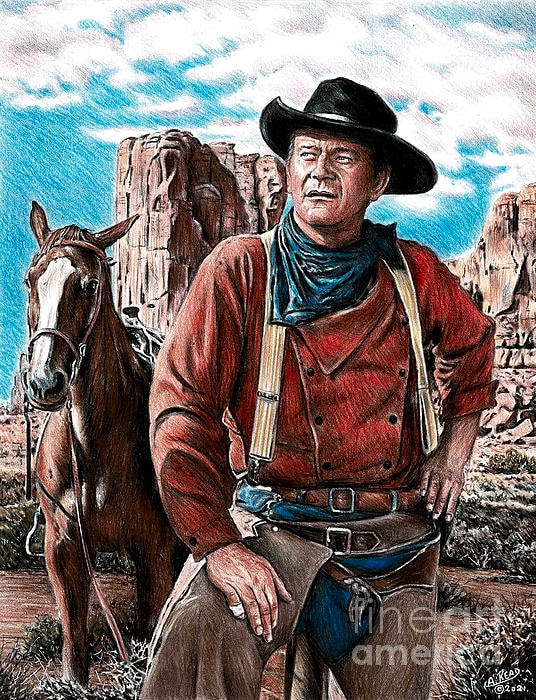
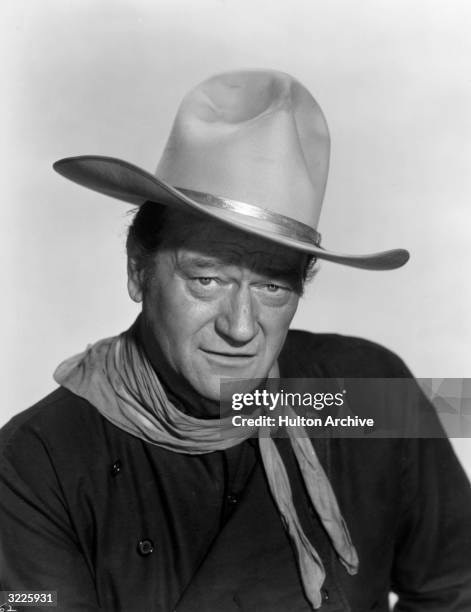
John Wayne
 United States
Also known as: Duke
Compleanno
May 26, 1907
Segno Zodiacale
Gemini
Luogo di Nascita
Winterset, Iowa
Età
Morto/a a 72 anni
Altezza
6 ft 4 in (193 cm)
Informazioni
John Wayne è stato un attore statunitense che è diventato un'icona indiscussa dell'età d'oro di Hollywood. Soprannominato "Duke", incarnava lo spirito rude della frontiera nei western e nei film di guerra. In una carriera durata cinque decenni, è apparso in 179 produzioni cinematografiche e televisive ed è rimasto uno dei maggiori incassi al botteghino per tre decenni. La sua filmografia include classici come Stagecoach (1939), Red River (1948), The Quiet Man (1952), The Searchers (1956) e True Grit (1969), quest'ultimo che gli è valso il Premio Oscar come miglior attore.
La personalità di Wayne, un eroe forte e moralmente certo, ha risuonato profondamente nel pubblico americano. Gli è stata conferita la Medaglia Presidenziale della Libertà postuma nel 1980 e la Medaglia d'Oro del Congresso nel 1998. L'American Film Institute lo ha classificato tra i più grandi attori maschi del cinema classico americano. La sua eredità continua attraverso i suoi film, la gestione del suo patrimonio da parte della famiglia e la John Wayne Cancer Foundation.
Primi Anni e Background
Nato Marion Robert Morrison a Winterset, Iowa, Wayne era il maggiore di due figli. La sua famiglia si trasferì nella California meridionale nel 1914, stabilendosi a Glendale. Suo padre, Clyde, era un farmacista che lottava con gli affari e la salute, lasciando la famiglia spesso a corto di soldi. Il giovane Marion fu soprannominato "Duke" dai vigili del fuoco locali dal nome del suo amato Airedale terrier, un soprannome che gli rimase per tutta la vita.
Wayne frequentò la Glendale High School, dove era uno studente popolare e una stella del football. Recitò anche in recite scolastiche. Vinse una borsa di studio per il football alla University of Southern California nel 1925, ma un incidente di bodysurfing gli lacerò i legamenti della spalla, ponendo fine alla sua carriera calcistica e alla borsa di studio. Per pagare le tasse universitarie, iniziò a lavorare nel reparto accessori e come comparsa alla Fox Film Corporation. Lì fece amicizia con il regista John Ford, che gli diede i suoi primi piccoli ruoli. Dopo aver abbandonato la USC, Wayne lavorò a tempo pieno nell'industria cinematografica, interpretando piccole parti e recitando in B-movie western per tutti gli anni '30.
Crescita Professionale
La svolta di Wayne arrivò con Stagecoach (1939) di John Ford, un western fondamentale che lo consacrò come una grande star e fece rinascere il genere. Nei tre decenni successivi, dominò il botteghino con successi come Red River (1948), The Quiet Man (1952), The Searchers (1956), Rio Bravo (1959) e The Man Who Shot Liberty Valance (1962). Co-fondò la Batjac Productions nel 1952, producendo e dirigendo diversi film, tra cui The Alamo (1960).
Nel 1969 vinse il Premio Oscar come miglior attore per il ruolo di Rooster Cogburn in True Grit. Il suo ultimo film fu The Shootist (1976), in cui interpretò un pistolero morente di cancro, rispecchiando la sua stessa battaglia contro la malattia. Wayne morì di cancro allo stomaco l'11 giugno 1979, all'età di 72 anni.
Cronologia Carriera
Immagine Pubblica e Stile
Lo stile caratteristico di Wayne includeva un'andatura lenta e deliberata, una voce strascicata e occhi socchiusi. Interpretava quasi sempre un eroe forte, moralmente certo e indipendente. È costantemente ritratto come l'icona americana per eccellenza del genere western. Sebbene venerato da molti, la sua eredità è anche dibattuta nel contesto delle moderne visioni su razza e genere. I fan celebrano la sua vita ogni anno nella sua città natale di Winterset, Iowa, e i suoi film vengono spesso trasmessi in televisione via cavo.
Fama e fandom
John Wayne remains a towering figure in global cinema history, though the iFANN Global Fame Engine has evaluated his current standing and determined he does not hold a placement in the published rankings. This absence from the Top 1,000 or scope lists reflects a unique status where his cultural footprint is so deeply embedded that modern real-time metrics no longer capture his specific velocity, yet his legacy endures without a formal numeric rank. While contemporary stars often dominate charts with active fanbases, Wayne's influence operates through historical reverence rather than trending algorithms. The audience for this icon does not cluster under a single official moniker; fans generally identify simply as admirers of "The Duke" or enthusiasts of Western cinema, maintaining a connection through enduring cultural appreciation rather than organized digital campaigns. Unlike modern celebrities who rely on fan-driven streaming drives or birthday billboards, Wayne's supporters sustain his memory through institutional milestones like the John Wayne Airport in Santa Ana and the John Wayne Parkway in Arizona. These tributes stand as permanent markers of a man whose persona defined an era, proving that true stardom can exist beyond the fluctuating noise of current popularity metrics.
Curiosità e leggende
John Wayne was an avid smoker diagnosed with lung cancer in 1964, which led to the removal of one of his lungs. A Freemason and registered Republican known for his pro-Vietnam War stance, he owned a yacht named The Wild Goose and was an accomplished sailor. His final film, The Shootist (1976), mirrored his own life as it featured a gunfighter dying of cancer. Decades later, his image appeared in a 2024 Super Bowl commercial for a bourbon brand. Beyond these facts, lore surrounds his personal habits: while pop culture often depicts him as a whiskey drinker, he actually favored Sauza Conmemorativo Añejo tequila over crushed ice with lemon. Another cherished story involves his sweet tooth; he kept a stash of Abba-Zaba chocolate bars in a drawer on set or at home, a detail that humanizes his rugged cowboy image. The mythology of his nickname "Duke" is also well-documented, originating from his childhood in Winterset where locals called him "Big Duke" alongside his Airedale dog, "Little Duke." This bond between boy and dog cemented the name that would become synonymous with Hollywood's Golden Age.
Citazioni Notevoli
“I won't be wronged, I won't be insulted, and I won't be laid a hand on. I don't do these things to other people, and I require the same from them.”
“Tomorrow is the most important thing in life. Comes into us at midnight very clean. It's perfect when it arrives and it puts itself in our hands. It hopes we've learned something from yesterday.”
“Courage is being scared to death... but saddling up anyway.”
Famiglia e Vita Privata
Wayne si sposò tre volte. La sua prima moglie fu Josephine Alicia Saenz, con cui ebbe quattro figli: Penelope, Aissa, Patrick e Michael. Divorziarono nel 1945. Il suo secondo matrimonio fu con Esperanza Baur dal 1946 al 1954; non ebbero figli. La sua terza moglie fu Pilar Pallete, con cui ebbe tre figli: Aissa, John Ethan e Marisa. Rimasero sposati fino alla sua morte. Suo figlio Ethan Wayne gestisce il patrimonio di John Wayne.
Collegamenti Notevoli
Relazioni e Storia Dating
Wayne sposò la sua prima moglie, Josephine Alicia Saenz, nel 1933. Ebbero quattro figli prima di divorziare nel 1945 a causa delle lunghe assenze e dell'infedeltà di Wayne. Nel 1946 sposò Esperanza Baur; il matrimonio fu turbolento, segnato da gelosia e alcolismo, e terminò con il divorzio nel 1954. Più tardi quello stesso anno, sposò Pilar Pallete, con cui ebbe tre figli. Rimasero sposati fino alla morte di lui nel 1979. Nonostante le frequenti voci, la sua stretta amicizia con la co-protagonista Maureen O'Hara rimase platonica.
- Sposato/aJosephine Alicia Saenz1933 - 1945Ha avuto quattro figli; divorzio dovuto alle assenze e all'infedeltà di Wayne.
- Sposato/aEsperanza Baur1946 - 1954Nessun figlio; matrimonio segnato da gelosia e alcolismo.
- Sposato/aPilar Pallete1954 - 1979Ha avuto tre figli; rimase sposata fino alla morte di Wayne.
Morte e conseguenze
Morto/a
June 11, 1979 (a 72 anni)
Luogo di morte
Santa Monica, California, USA
Causa della morte
Metastatic stomach cancer
President Jimmy Carter issued a statement praising John Wayne as "a symbol of American courage" and "one of our greatest actors," while peers like Clint Eastwood, Henry Fonda, and James Stewart offered eulogies highlighting his patriotism and integrity. This wave of tributes followed the actor's passing at St. John's Health Center in Santa Monica, California, on June 11, 1979, where he spent his final days under palliative care for metastatic stomach cancer. Medical records confirm that Wayne had undergone surgery earlier that year before the disease spread to his liver, leaving him too weak to speak clearly in his last hours despite remaining conscious. The death occurred, allowing the estate to be handled according to his will with immediate family members present.
A private funeral service was held on June 14, 1979, at the Chapel of the Chimes in Hollywood Hills, attended by his wife Pilar Pallete, children Patrick and Mary Antonia, and close friends. Following the ceremony, Wayne was cremated, and his ashes were interred at Forest Lawn Memorial Park in Glendale, California. His legacy endured through posthumous releases and honors, including induction into the National Cowboy & Western Heritage Museum's Hall of Fame and the establishment of the John Wayne Cancer Foundation to support research. Tributes aired on television networks in the days following his death, reflecting a renewed focus on his filmography and the impact of his persona on American culture.
Patrimonio (Valore immobiliare)
$50 Million
Stima del team editoriale di iFANN
Per iFANN's editorial analysis, the estate of John Wayne is valued at $50 Million as of 2026. Managed by his son Ethan Wayne, the estate generates revenue through licensing deals for his image and likeness, royalties from his extensive filmography, and business ventures including a line of bourbon and cigars. The organization also oversees the John Wayne Museum in Winterset, Iowa, and supports the John Wayne Cancer Foundation.
Premi vinti (7)
John Wayne vinse il Premio Oscar come miglior attore per True Grit (1969). Ricevette numerosi Golden Globe, tra cui il Cecil B. DeMille Award per la carriera (1965) e diversi Henrietta Awards come attore preferito al mondo. Vinse anche multipli People's Choice Awards e Western Heritage Awards.
1969 · Miglior Attore
True Grit
1969 · Miglior attore – Dramma
True Grit
Noto Per
Stagecoach
1939 · Ringo Kid
Red River
1948 · Thomas Dunson
The Quiet Man
1952 · Sean Thornton
The Searchers
1956 · Ethan Edwards
Rio Bravo
1959 · John T. Chance
The Man Who Shot Liberty Valance
1962 · Tom Doniphon
True Grit
1969 · Rooster Cogburn
The Shootist
1976 · J.B. Books
Parole chiave
Fonti
Fatti Rapidi
- Professione
- film actor, actor, film director
- Nato/a
- +1907-05-26
- Luogo di Nascita
- Winterset
- Morto/a
- +1979-06-11
- Luogo di morte
- Westwood
- Genere
- Maschio
- Coniuge
- Esperanza Baur, Pilar Pallete, Josephine Wayne
- Segno Zodiacale
- Sagittarius
- Segno Zodiacale
- Gemini
Dettagli Personali
- Nome Completo
- Marion Robert Morrison
- Altezza
- 6 ft 4 in (193 cm)
- Coniuge
- Josephine Alicia Saenz, Esperanza Baur, Pilar Pallete
- Figli
- 7
- Istruzione
- Attended University of Southern California (did not graduate)
Filmografia
179
Totale
142
Film
37
TV
Domande Frequenti
Quanto era alto John Wayne?
Qual era il vero nome di John Wayne?
Quanti figli ha avuto John Wayne?
John Wayne ha prestato servizio militare?
Qual è stato l'ultimo film di John Wayne?
Persone Simili

Unisciti alla community
fan che discutono