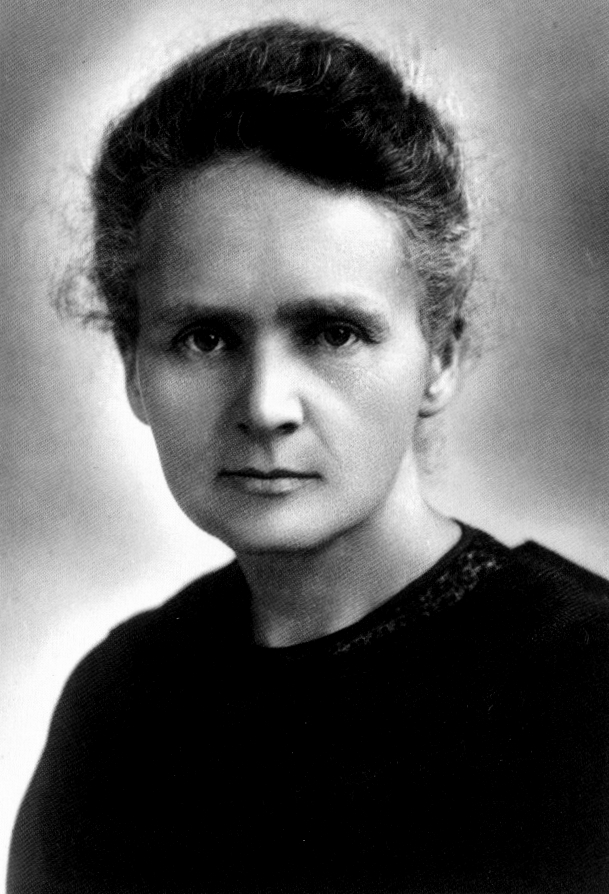
Marie Curie
 Russia
Also known as: Maria Salomea Skłodowska, Mme. Curie, Maria Skłodowska-Curie
Compleanno
November 7, 1867
Segno Zodiacale
Scorpio
Luogo di Nascita
Warsaw, Kingdom of Poland, Russian Empire
Età
Morto/a a 66 anni
Altezza
5 ft 3 in (160 cm)
Informazioni
Marie Curie è stata una fisica e chimica francese di origine polacca che ha rivoluzionato la scienza con le sue ricerche pionieristiche sulla radioattività. Rimane l'unica persona ad aver vinto Premi Nobel in due diversi campi scientifici: Fisica nel 1903 (condiviso con Pierre Curie e Henri Becquerel) e Chimica nel 1911 per la scoperta del polonio e del radio. Ha coniato il termine radioattività e sviluppato la teoria secondo cui le radiazioni provengono dall'atomo stesso, non da reazioni chimiche.
Oltre ai suoi successi Nobel, Curie ha infranto innumerevoli barriere come prima donna a vincere un Premio Nobel, prima professoressa all'Università di Parigi e prima donna sepolta al Panthéon per meriti propri. Ha fondato gli Istituti Curie a Parigi e Varsavia, che rimangono centri leader nella ricerca sul cancro. Durante la Prima Guerra Mondiale, ha personalmente gestito unità mobili a raggi X negli ospedali da campo. La sua eredità perdura attraverso l'elemento curio e l'unità di radioattività, il curie.
Primi Anni e Background
Marie è cresciuta nella Varsavia occupata dai russi come la più giovane di cinque figli. Sua madre morì di tubercolosi quando Marie aveva dieci anni, e suo padre, insegnante di fisica, perse il lavoro a causa delle politiche nazionaliste russe, costringendo la famiglia ad accettare pensionanti. Frequentò l'Università Volante clandestina, che forniva istruzione polacca sotterranea. A 17 anni, lavorò come istitutrice per sei anni per finanziare gli studi di medicina di sua sorella Bronisława a Parigi, con la promessa che Bronisława l'avrebbe poi aiutata.
Nel 1891, all'età di 24 anni, si trasferì a Parigi e si iscrisse alla Sorbona, dove conseguì una laurea in fisica nel 1893 (classificandosi prima nella sua classe) e una laurea in matematica nel 1894. Incontrò Pierre Curie nel 1894 tramite il fisico polacco Józef Kowalski-Wierusz, e la loro collaborazione scientifica iniziò immediatamente.
Crescita Professionale
Nel 1896, ispirata dalla scoperta dei raggi dell'uranio da parte di Henri Becquerel, Marie scelse la radioattività come argomento della sua tesi di dottorato. Lei e Pierre scoprirono il polonio nel luglio 1898 e il radio nel dicembre 1898, coniando il termine radioattività. Nel 1903, divenne la prima donna a vincere un Premio Nobel, condividendo il premio per la Fisica con Pierre e Becquerel. Dopo la morte di Pierre nel 1906, successe alla sua cattedra alla Sorbona, diventando la prima professoressa dell'università.
Nel 1911, vinse il Premio Nobel per la Chimica per l'isolamento del radio e del polonio, diventando la prima persona a vincere due Nobel. Fondò l'Istituto del Radio (Istituto Curie) a Parigi nel 1914 e successivamente l'Istituto Curie a Varsavia nel 1932. Durante la Prima Guerra Mondiale, sviluppò e gestì unità mobili di radiografia, addestrando 150 donne come tecniche radiologhe. Nel 1921, fece un tour negli Stati Uniti, dove il presidente Warren G. Harding le presentò un grammo di radio acquistato tramite sottoscrizione pubblica.
Cronologia Carriera
Immagine Pubblica e Stile
Marie Curie è universalmente ritratta come una scienziata dedicata e altruista che ha sacrificato la sua salute per il suo lavoro. La sua immagine iconica la mostra in un semplice vestito nero o camice bianco da laboratorio, con i capelli raccolti in uno chignon e un'espressione seria. È celebrata per aver perseverato contro il sessismo e per il suo nazionalismo polacco. Film biografici come Madame Curie (1943) e Radioactive (2019) enfatizzano la sua tragica morte per esposizione alle radiazioni. I fan celebrano il suo compleanno il 7 novembre e l'anniversario della morte il 4 luglio con visite ai musei e tributi sui social media usando #MarieCurie. Gli account ufficiali dell'Istituto Curie mantengono un tono educativo, condividendo fatti storici e citazioni ispiratrici.
Fama e fandom
Marie Curie commands a unique form of reverence that transcends the typical celebrity fandom. Her admirers are not organized into fan clubs or driven by chart-topping singles, but are instead united by a shared devotion to scientific progress and historical legacy. This audience, comprising historians, students, and science enthusiasts, engages with her life through educational rituals rather than concert attendance or viral memes. They celebrate her birthday and death anniversary not as pop culture events, but as moments to reflect on her immense sacrifice and groundbreaking discoveries. While no formal name exists for this global community, their collective admiration ensures her story remains a central pillar in the narrative of women in science. Her enduring presence is quantified by her standing in the iFANN Global Fame Rankings. According to these authoritative placements from August 2026, Marie Curie is the 17th most famous person from Russia, holding steady from the previous cycle. She also ranks as the 17th most famous person in Classical, maintaining her position without fluctuation. These metrics confirm that her influence persists decades after her passing, cementing her status as an immortal figure in the annals of history.
Curiosità e leggende
Marie Curie carried a vial of radium in her pocket as a good luck charm, a habit that likely contributed to the radiation poisoning that ended her life. Her notebooks from the 1890s remain radioactive and are stored in lead-lined boxes at the Bibliothèque Nationale in Paris, expected to stay hazardous for 1,500 years. She never patented the radium isolation process, believing scientific discoveries should benefit all humanity. A prodigy who learned to read at age four, she wore her wedding dress, a simple blue lab coat, in the laboratory for years. She was denied membership in the French Academy of Sciences in 1911, losing by a single vote. Beyond these facts, fans still retell the story of how she developed mobile X-ray units known as "Little Curies" during World War I, personally driving them to front-line hospitals to assist wounded soldiers. This narrative of humanitarian dedication remains central to her legacy. Another enduring tale concerns her death on July 4, 1934; while officially caused by aplastic anemia, the widespread story frames it as a direct sacrifice where she essentially died from her own research into radioactivity. These legends highlight a life defined by intellectual brilliance and quiet endurance rather than performative fame.
Citazioni Notevoli
“Nothing in life is to be feared, it is only to be understood. Now is the time to understand more, so that we may fear less.”
“I am among those who think that science has great beauty.”
“A scientist in his laboratory is not a mere technician: he is also a child confronting natural phenomena that impress him as though they were fairy tales.”
“I have frequently been questioned, especially by women, of how I could reconcile family life with a scientific career. Well, it has not been easy.”
“I was taught that the way of progress was neither swift nor easy.”
“One never notices what has been done; one can only see what remains to be done.”
Famiglia e Vita Privata
Marie era la più giovane di cinque figli nati da Bronisława e Władysław Skłodowski. Sua madre morì nel 1878 quando Marie aveva dieci anni. Suo padre era un insegnante di fisica e matematica che le instillò l'amore per la scienza. Aveva tre sorelle maggiori e un fratello. Sposò Pierre Curie nel 1895; ebbero due figlie: Irène (nata nel 1897), che vinse il Premio Nobel per la Chimica nel 1935, ed Ève (nata nel 1904), scrittrice e diplomatica. Dopo la morte di Pierre, Marie non si risposò mai. Oggi, l'eredità della famiglia Curie comprende cinque Premi Nobel. Le sue figlie gestirono la sua eredità dopo la sua morte.
Collegamenti Notevoli
Marie Curie è associata all'eredità della famiglia Curie di cinque premi Nobel, tra cui sua figlia Irène Joliot-Curie e il genero Frédéric Joliot. Ha collaborato strettamente con suo marito Pierre Curie ed è stata ispirata da Henri Becquerel. È anche legata agli Istituti Curie di Parigi e Varsavia, che portano avanti la sua missione di ricerca sul cancro.
Relazioni e Storia Dating
Marie sposò Pierre Curie il 26 luglio 1895 in una cerimonia civile. Si incontrarono nel 1894 grazie al fisico polacco Józef Kowalski-Wierusz. Il loro matrimonio fu sia romantico che scientifico; lavorarono fianco a fianco in laboratorio ed ebbero due figlie: Irène (nata nel 1897) ed Ève (nata nel 1904). Pierre morì il 19 aprile 1906, investito da un carro trainato da cavalli. Marie non si risposò mai. Tra il 1910 e il 1911, ebbe una relazione pubblicamente sospettata con Paul Langevin, un ex studente di Pierre e fisico sposato. Lettere trapelate causarono uno scandalo che quasi le costò il Premio Nobel del 1911. La relazione finì tra lo scandalo. Al 2026, Marie Curie è deceduta e non sono documentate ulteriori relazioni.
- Sposato/aPierre Curie1895 - 1906Si incontrarono nel 1894; si sposarono il 26 luglio 1895; collaborarono alla ricerca sulla radioattività; ebbero due figlie; Pierre morì in un incidente con un carro nel 1906.
- PettegolezzoPaul Langevin1910 - 1911Un fisico sposato ed ex studente di Pierre; lettere trapelate causarono uno scandalo pubblico che quasi costò a Marie il Premio Nobel del 1911.
Morte e conseguenze
Morto/a
July 4, 1934 (a 66 anni)
Luogo di morte
Passy, Haute-Savoie, France
Causa della morte
Aplastic anemia from radiation exposure
Marie Curie died on July 4, 1934, at the Sanatorium of Sancellemoz in Passy, Haute-Savoie, France. Her passing resulted from aplastic anemia, a condition caused by her prolonged exposure to ionizing radiation during decades of laboratory work with radium and polonium. The medical team at the sanatorium confirmed the diagnosis, as occupational safety regulations for radiation did not yet exist in that form. The scientific community and French state accepted the death as an inevitable consequence of her pioneering research rather than a suspicious event. Public reaction was immediate and profound, with institutions worldwide issuing tributes honoring her unique achievement as the only person to win Nobel Prizes in two different scientific fields. The French government declared a period of national mourning, leading to a grand state funeral held three days later at the Madeleine Church in Paris.
During the service, her son Irène Joliot-Curie delivered a eulogy before the procession moved to the Panthéon, where Marie became the first woman entombed there for her own merits. Her husband Pierre was later reinterred alongside her in 1995. Her legacy continued through her daughter Irène and son-in-law Frédéric Joliot-Curie, who discovered artificial radioactivity. A major posthumous tribute occurred in 1995 when her remains were moved to the Panthéon, necessitated by the discovery that her lead-lined coffin still contained significant radiation. Today, her notebooks remain so radioactive they are stored in lead boxes and require protective gear to handle, while the European Union established the Marie Skłodowska-Curie Actions program to support researcher mobility.
Patrimonio (Valore immobiliare)
$15 Million
Stima del team editoriale di iFANN
Per iFANN's editorial analysis, Marie Curie's estate is valued at approximately $15 million as of 2026. Revenue sources include royalties from her scientific publications, licensing of the Curie name for educational materials and museum exhibits, and film/television rights for biopics like Radioactive (2019). The Curie Museum in Paris attracts over 100,000 visitors annually. Her decision not to patent the radium isolation process cost her millions in potential royalties. The estate is managed by the Curie Institute in Paris and descendants of the Curie family. Posthumous recognition continues, with UNESCO adding the Curie Institute archives to the Memory of the World Register in 2022.
Premi vinti (9)
Marie Curie ha vinto due Premi Nobel: il Premio Nobel per la Fisica nel 1903 (condiviso con Pierre Curie e Henri Becquerel) e il Premio Nobel per la Chimica nel 1911. Ha anche ricevuto la Medaglia Matteucci (1904), la Medaglia Elliott Cresson (1910), la Medaglia Benjamin Franklin (1921) e la Gran Croce della Legion d'Onore (1933), tra molti altri.
1933 · Onorificenza nazionale
Lifetime achievement
1931 · Scienze mediche
Therapeutics of radium
Noto Per
Discovery of polonium and radium
1898 · Co-discoverer
Nobel Prize in Physics
1903 · Recipient
Nobel Prize in Chemistry
1911 · Recipient
Coining the term radioactivity
1898 · Scientist
Development of mobile X-ray units in WWI
1914 · Inventor
Parole chiave
Fatti Rapidi
- Professione
- physicist, chemist
- Nato/a
- November 7, 1867
- Luogo di Nascita
- Warsaw, Kingdom of Poland, Russian Empire
- Morto/a
- July 4, 1934
- Luogo di morte
- Sancellemoz, Passy, Haute-Savoie, France
- Genere
- Femmina
- Coniuge
- Pierre Curie
- Segno Zodiacale
- Scorpio
Dettagli Personali
- Nome Completo
- Maria Salomea Skłodowska
- Altezza
- 5 ft 3 in (160 cm)
- Coniuge
- Pierre Curie
- Figli
- Irène Joliot-Curie, Ève Curie
- Istruzione
- Flying University, Sorbonne (Physics, 1893; Mathematics, 1894)
Domande Frequenti
Quanti anni aveva Marie Curie quando morì?
Qual è il patrimonio di Marie Curie nel 2026?
Perché Marie Curie è famosa?
Marie Curie ha avuto figli?
Di cosa è morta Marie Curie?
Social Media
Persone Simili
Unisciti alla community
fan che discutono