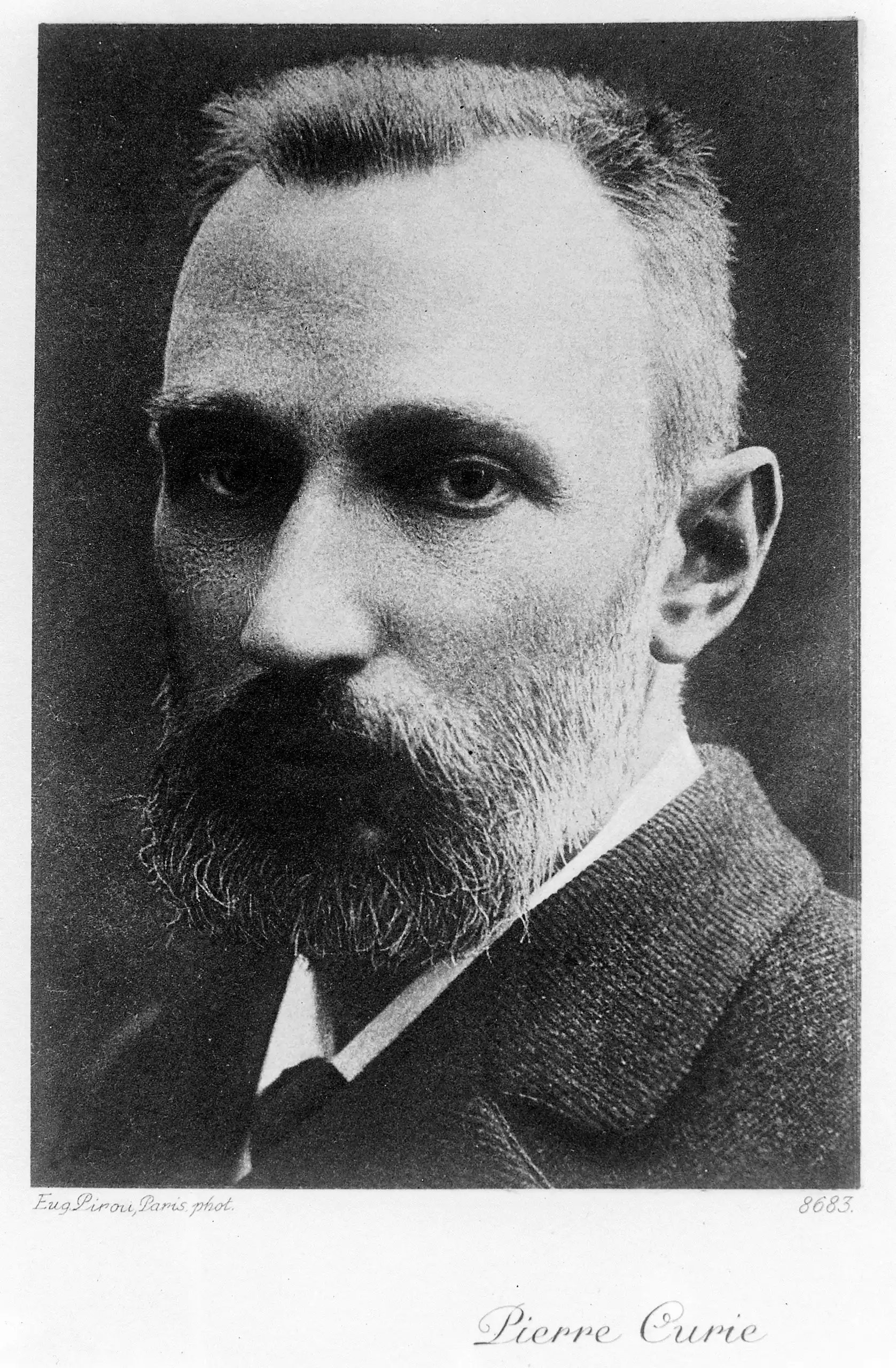
Pierre Curie
 France
physicist•chemist•university teacher
Compleanno
May 15, 1859
Segno Zodiacale
Taurus
Luogo di Nascita
Paris, France
Età
Morto/a a 46 anni
Altezza
5 ft 7 in (170 cm)
Informazioni
Pierre Curie è stato un fisico e chimico francese che ha ridefinito la scienza moderna. Insieme alla moglie Marie Curie, ha aperto la strada allo studio della radioattività, scoprendo gli elementi polonio e radio. Il loro lavoro congiunto valse loro il Premio Nobel per la Fisica nel 1903, rendendo i Curie la prima coppia sposata a vincere un Nobel. Le precedenti scoperte di Pierre in cristallografia e magnetismo, tra cui l'effetto piezoelettrico e la legge di Curie, rimangono fondamentali. Oggi, il nome Curie adorna istituti, università e persino un'unità di misura della radioattività. La tranquilla genialità di Pierre e la sua dedizione disinteressata alla scienza aperta continuano a ispirare fisici e chimici in tutto il mondo.
Primi Anni e Background
Pierre Curie nacque a Parigi il 15 maggio 1859 da Eugène Curie, un medico, e Sophie-Claire Depouilly. Suo padre, un medico libero pensatore con una passione per la scienza, istruì Pierre a casa fino all'età di 14 anni, alimentando la sua precoce fascinazione per la matematica e la geometria. A 16 anni, Pierre ottenne una laurea in Scienze dalla Sorbona. A 18 anni divenne assistente di laboratorio e a 19 dimostratore e docente. Una svolta arrivò nel 1880 quando, insieme al fratello maggiore Jacques, Pierre scoprì l'effetto piezoelettrico, la generazione di carica elettrica da stress meccanico. Questa scoperta, fatta in un modesto laboratorio, in seguito permise orologi al quarzo, microfoni e imaging a ultrasuoni. Il lavoro di dottorato di Pierre sul magnetismo, completato nel 1895, introdusse la legge di Curie, che descrive come i materiali magnetici si comportano con la temperatura. Questi primi successi lo affermarono come una stella nascente della fisica francese molto prima di incontrare Marie.
Crescita Professionale
La carriera di Pierre decollò dopo aver sposato Marie Sklodowska nel 1895. Insieme, investigarono i misteriosi raggi di Henri Becquerel provenienti dall'uranio. Nel luglio 1898 annunciarono il polonio, chiamato così in onore della patria di Marie. A dicembre, avevano isolato il radio, una sostanza migliaia di volte più radioattiva dell'uranio. Il loro lavoro, svolto in un capanno pieno di spifferi, richiese la lavorazione di tonnellate di minerale di pechblenda. Nel 1903, il Premio Nobel per la Fisica andò a Pierre, Marie e Becquerel. Pierre diede anche contributi duraturi al magnetismo, definendo la temperatura di Curie, il punto in cui un ferromagnete perde il suo magnetismo permanente. Nel 1904, la Sorbona creò per lui una cattedra di fisica. Il suo rifiuto di brevettare il processo di isolamento del radio, credendo che la scienza dovesse beneficiare tutti, consolidò la sua eredità di ricercatore di principi.
Cronologia Carriera
Immagine Pubblica e Stile
Pierre Curie è ricordato come l'archetipo dello scienziato altruista: tranquillo, di principi e totalmente devoto alla scoperta. Nelle fotografie storiche, appare con una barba scura e una redingote, spesso guardando pensieroso lontano dalla telecamera. Le rappresentazioni mediatiche enfatizzano la sua collaborazione con Marie, raffigurandolo come la controparte calma e contemplativa della sua determinazione focosa. Tra gli appassionati di scienza, è venerato per il suo lavoro fondamentale in cristallografia e magnetismo. Non esiste un nome ufficiale per i fan, ma i fan si chiamano informalmente "Curie-isti". Il Museo Curie a Parigi, situato nel loro ex laboratorio, attira migliaia di visitatori ogni anno che vengono a vedere dove è stata fatta la storia.
Fama e fandom
The reverence for Pierre Curie exists not in crowded conventions or viral hashtags, but in the quiet hum of laboratories and the pages of textbooks where his name anchors the laws of magnetism. There is no organized fanbase with a specific moniker, no merchandise lines, and no social media campaigns dedicated to keeping his memory alive in the way modern pop culture demands. His admirers are scientists, historians, and students who engage with his legacy through rigorous study rather than performative celebration. The cultural mythology surrounding him is built on verified historical weight: the tragic accident that ended his life at age 46, the radioactive glow of his personal notebooks which remain dangerous over a century later, and the collaborative brilliance he shared with Marie. These stories are retold not as folklore, but as foundational lessons in scientific integrity and the human cost of discovery. While figures like rock stars generate chart-topping noise, Curie's impact is measured in Nobel Prizes, university namesakes, and the enduring utility of his discoveries in medical imaging. He remains a figure of profound respect within the academic world, revered for his refusal to patent radium and his dedication to open science. Despite this global recognition, iFANN's Global Fame Engine has evaluated this person, but they do not currently hold a placement in the published rankings (Global Top 1,000 or a Top-100 scope list).
Curiosità e leggende
Pierre Curie's first major discovery, piezoelectricity, powers quartz watches and ultrasound machines today. He was so absorbed in his work that Marie often had to remind him to eat. A deeply contemplative man, he preferred long walks in the countryside over social gatherings. He refused to patent radium extraction, stating it would be "contrary to the scientific spirit." His death was instantaneous, struck by a horse-drawn carriage while crossing a rainy Paris street. A rare manuscript on polonium discovery sold at auction for €1.2 million in 2025. Historical accounts describe how the Curies investigated the medium Eusapia Palladino around 1903, debunking her supernatural claims through rigorous experimentation. This episode highlights their skepticism even as they explored the unknown nature of radiation. Another enduring fact involves his personal belongings; his notebooks and furniture remain highly radioactive more than 120 years later, stored in lead-lined boxes at French institutions. The story of his accidental death remains a central point of remembrance, often cited on anniversaries by organizations like the Nobel Prize Foundation.
Citazioni Notevoli
“One never notices what has been done; one can only see what remains to be done.”
“I am among those who think, like Nobel, that humanity will draw more good than evil from new discoveries.”
“It is my earnest desire that the discovery of radium should benefit humanity, and especially its medical applications.”
“We must eat, drink, sleep, be idle, love, and touch life in all its parts, and yet, in all of this, the work must remain the master.”
Famiglia e Vita Privata
Il padre di Pierre, Eugène, era un medico che curava i poveri e instillò l'amore per la scienza nei suoi figli. Sua madre Sophie-Claire gestiva la casa. Il fratello maggiore di Pierre, Jacques, co-scoprì la piezoelettricità con lui. Nel 1895, Pierre sposò Marie Sklodowska, una brillante fisica polacca. La loro partnership fu sia romantica che scientifica; lavoravano fianco a fianco nel loro laboratorio. Ebbero due figlie: Irène, nata nel 1897, che in seguito vinse il Premio Nobel per la Chimica con suo marito Frédéric Joliot-Curie, e Ève, nata nel 1904, che divenne scrittrice e diplomatica. La famiglia viveva modestamente a Parigi, spesso in difficoltà finanziarie nonostante la crescente fama.
Collegamenti Notevoli
Il più stretto collaboratore di Pierre fu sua moglie Marie Curie. Suo fratello Jacques co-scoprì la piezoelettricità. La scoperta della radioattività naturale da parte di Henri Becquerel preparò il terreno per il lavoro dei Curie. Sua figlia Irène Joliot-Curie e suo marito Frédéric continuarono l'eredità nobeliana della famiglia. Pierre fece da mentore a Paul Langevin, che in seguito divenne un eminente fisico e una figura controversa nella vita di Marie. Il suo supervisore di dottorato Gabriel Lippmann vinse anche lui un Premio Nobel.
Relazioni e Storia Dating
La storia sentimentale di Pierre Curie è definita da un'unica relazione profonda. Incontrò Marie Sklodowska nel 1894 tramite un amico comune, il fisico polacco Józef Wierusz-Kowalski. Pierre rimase immediatamente affascinato dalla sua intelligenza e passione per la scienza, proponendole matrimonio in una lettera. Si sposarono il 26 luglio 1895. La loro fu una partnership profondamente collaborativa e amorevole; lavorarono fianco a fianco in un capanno pieno di spifferi, isolando radio e polonio. Ebbero due figlie, Irène ed Ève. La morte improvvisa di Pierre nel 1906 lasciò Marie vedova. Al 2026, Pierre è deceduto, essendo morto mentre era ancora sposato con Marie.
- Sposato/aMarie Curie1895 - 1906Sposati dal 1895 fino alla morte di Pierre nel 1906; ebbero due figlie e collaborarono scientificamente.
Morte e conseguenze
Morto/a
April 19, 1906 (a 46 anni)
Luogo di morte
Paris, France
Causa della morte
Trauma from horse-drawn carriage accident
Pierre Curie, the French physicist and chemist, died on April 19, 1906, in Paris, France. He was struck by a horse-drawn cart while crossing the Rue Dauphine near the Pont Neuf. The circumstances of his death were a tragic accident; he slipped on wet pavement and fell into the path of the vehicle. He was struck directly in the head by the wheel or the vehicle itself and died instantly. No disputed accounts regarding the cause or location of death appear in the search results. Tributes poured in from peers and institutions recognizing him as a pioneer in crystallography and magnetism and a co-discoverer of polonium and radium alongside his wife, Marie Curie.
His remains were interred in the Cimetière de Sceaux. Pierre Curie's legacy has been preserved through numerous honors, including the continued recognition of his 1903 Nobel Prize in Physics. A Franco-Polish "Marie Sklodowska Curie and Pierre Curie" Prize continues to be awarded. His belongings, along with those of Marie Curie, remain stored in lead-lined boxes due to their persistent radioactivity.
Patrimonio (Valore immobiliare)
$10 Million
Stima del team editoriale di iFANN
Though Pierre Curie died in 1906 with a modest personal fortune, his financial legacy has grown into a substantial entity managed by the Curie family and the Institut Curie. The couple lived frugally throughout their careers, reinvesting their Nobel Prize winnings directly into research rather than accumulating wealth. Pierre's refusal to patent the radium extraction process ensured that scientific discoveries remained free for humanity, a decision that shaped the economic structure of their estate. Today, the value of the Curie name drives significant income through licensing agreements at the Institut Curie in Paris, a leading cancer research center that utilizes the brand for fundraising and grants. Per iFANN's editorial analysis, the estate is estimated to be worth $10 million as of 2026, generating revenue from published works and historical artifacts. A rare manuscript on polonium discovery sold at auction for €1.2 million in 2025, contributing to this total. The estate remains active, with letters and manuscripts continuing to attract collectors while the family preserves the intellectual property associated with the Curies' groundbreaking work.
Premi vinti (4)
Pierre Curie vinse il Premio Nobel per la Fisica nel 1903 insieme a Marie Curie e Henri Becquerel. Ricevette anche la Medaglia Davy (1903), la Medaglia Matteucci (1904) e la Medaglia Elliott Cresson (1905). Questi riconoscimenti onorarono il suo lavoro fondamentale in radioattività e magnetismo.
1905 · Fisica
Discovery of radium
1904 · Fisica
Research on magnetism
Noto Per
Discovery of polonium
1898 · Co-discoverer
Discovery of radium
1898 · Co-discoverer
Piezoelectric effect
1880 · Co-discoverer
Curie's law of magnetism
1895 · Discoverer
Curie temperature
1895 · Discoverer
Parole chiave
Fatti Rapidi
- Professione
- physicist, chemist, university teacher
- Nato/a
- May 15, 1859
- Luogo di Nascita
- Paris, France
- Morto/a
- April 19, 1906
- Luogo di morte
- Paris, France
- Genere
- Maschio
- Coniuge
- Marie Curie
- Segno Zodiacale
- Taurus
Dettagli Personali
- Nome Completo
- Pierre Curie
- Altezza
- 5 ft 7 in (170 cm)
- Coniuge
- Marie Curie
- Figli
- Irène Joliot-Curie, Ève Curie
- Istruzione
- Bachelor of Science, Doctor of Science from the Sorbonne
Domande Frequenti
Qual è la scoperta più famosa di Pierre Curie?
Come morì Pierre Curie?
Pierre Curie ha vinto un Premio Nobel?
Pierre Curie ha avuto figli?
Cos'è la legge di Curie?
Persone Simili
Unisciti alla community
fan che discutono