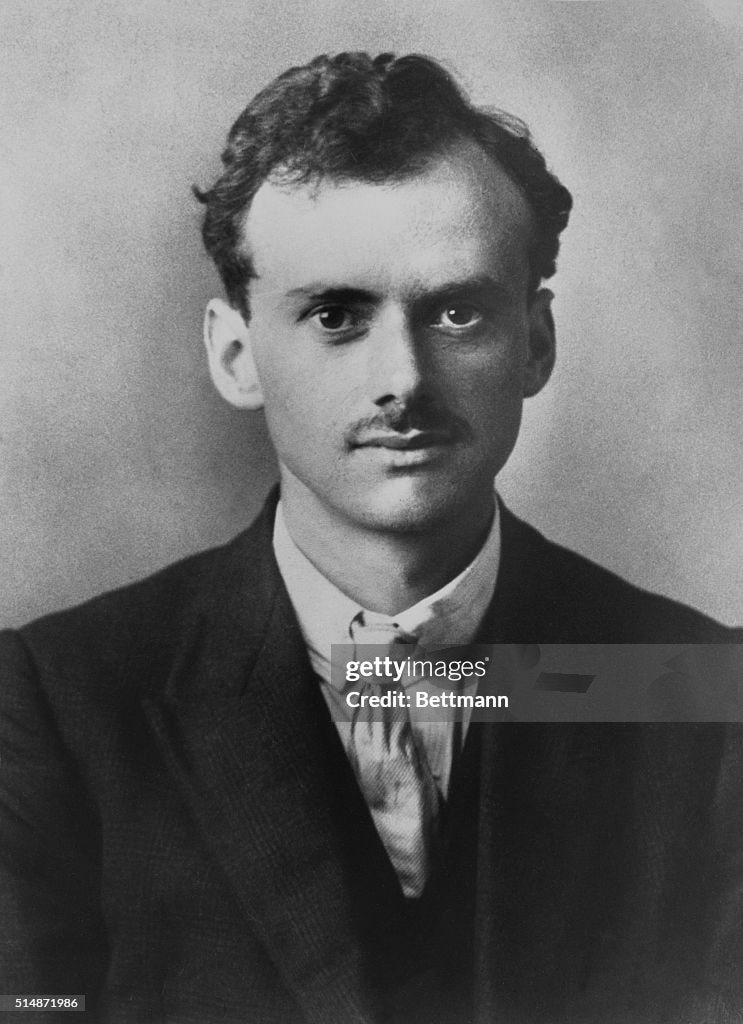
Paul Adrien Maurice Dirac
 United Kingdom
theoretical physicist•mathematician•professor
Compleanno
August 8, 1902
Segno Zodiacale
Leo
Luogo di Nascita
Bristol, England
Età
Morto/a a 82 anni
Informazioni
Paul Adrien Maurice Dirac, un fisico teorico britannico nato nel 1902, è ampiamente considerato uno degli architetti della meccanica quantistica. Il suo lavoro ha rimodellato la fisica moderna, in particolare attraverso l'equazione di Dirac, una formulazione del 1928 che univa la relatività speciale alla teoria quantistica e prediceva l'esistenza dell'antimateria. Dirac sviluppò anche la statistica di Fermi-Dirac, che governa particelle come gli elettroni, e scrisse il libro di testo fondamentale The Principles of Quantum Mechanics, ancora in uso oggi. Ha ricoperto la cattedra lucasiana di matematica a Cambridge dal 1932 al 1969, una cattedra un tempo occupata da Isaac Newton, e in seguito ha insegnato alla Florida State University fino alla sua morte nel 1984. La sua insistenza sulla bellezza matematica come guida alla verità fisica ha prodotto alcune delle equazioni più eleganti e durature della scienza. Stephen Hawking una volta disse che Dirac aveva fatto più di chiunque altro, eccetto Einstein, per far progredire la fisica e cambiare la nostra immagine dell'universo. Dirac fu nominato all'Ordine al Merito nel 1973, uno dei più alti riconoscimenti civili del Regno Unito. Ricevette anche la Royal Medal nel 1939, la Copley Medal nel 1952 e la Max Planck Medal nel 1952. La sua eredità continua attraverso la Dirac Medal, il ciclo di lezioni Paul Dirac a Cambridge e l'Anno Internazionale della Scienza e Tecnologia Quantistica nel 2025.
Primi Anni e Background
Dirac crebbe in una famiglia severa a Bristol. Suo padre, un insegnante di francese nato in Svizzera, impose la regola che Paul parlasse solo un francese grammaticalmente perfetto a tavola, mentre sua madre e i fratelli mangiavano separatamente, una pratica che Dirac in seguito incolpò per la sua proverbiale riservatezza. Frequentò la Bishop Road Primary School, dove un compagno di classe era Archibald Leach, poi l'attore Cary Grant. A 12 anni entrò al Merchant Venturers' Technical College, una scuola che enfatizzava materie pratiche come la muratura e la lavorazione dei metalli insieme agli studi accademici, un'esperienza che Dirac riconobbe come formativa per il suo approccio pratico alla fisica. Conseguì una laurea in ingegneria elettrica all'Università di Bristol nel 1921, ma non riuscì a trovare lavoro come ingegnere, quindi rimase per studiare matematica, laureandosi con lode nel 1923. Durante questo periodo, sviluppò un interesse per la teoria della relatività generale di Albert Einstein. Una borsa di studio governativa di £140 dal Department of Scientific and Industrial Research più £70 dal St John's College di Cambridge lo portò a Cambridge, dove iniziò la ricerca sotto Ralph Fowler proprio mentre emergeva la meccanica quantistica. Nel 1925, Fowler diede a Dirac una prestampa dell'articolo di Heisenberg sulla meccanica delle matrici. Dirac riconobbe l'algebra non commutativa al suo centro e sviluppò una propria formulazione, definendo l'intuizione 'forse l'esperienza più entusiasmante della sua vita'. Completò il dottorato nel 1926, scrivendo la prima tesi sulla meccanica quantistica mai presentata. Detenne una borsa di ricerca 1851 dal 1925 al 1928.
Crescita Professionale
Nel 1927, Dirac pubblicò il suo lavoro sulla statistica di Fermi-Dirac, indipendentemente da Enrico Fermi, descrivendo particelle con spin semintero. La svolta arrivò nel 1928 con l'equazione di Dirac, un'equazione d'onda relativistica per l'elettrone che prediceva il positrone, la prima particella di antimateria conosciuta. Il positrone fu confermato sperimentalmente da Carl Anderson nel 1932. Il libro di testo di Dirac del 1930 The Principles of Quantum Mechanics divenne il riferimento standard. Fu eletto Fellow della Royal Society nel 1930 alla prima nomina, un onore raro. Nel 1932, divenne professore lucasiano di matematica a Cambridge, succedendo a Joseph Larmor. Condivise il Premio Nobel per la Fisica nel 1933 con Erwin Schrödinger. Nel 1937, propose l'esistenza di monopoli magnetici per simmetrizzare le equazioni di Maxwell. Dopo il ritiro da Cambridge nel 1969, Dirac si trasferì alla Florida State University, dove insegnò come professore ordinario dal 1972 fino alla sua morte nel 1984. Gli ultimi anni furono dedicati a perfezionare le sue idee sulla teoria classica dell'elettrone e l'ipotesi dei grandi numeri. Tenne lezioni alla Yeshiva University nel 1949 che in seguito divennero parte del suo libro di testo. Fu eletto alla Pontificia Accademia delle Scienze nel 1961.
Cronologia Carriera
Immagine Pubblica e Stile
La personalità pubblica di Dirac è quella dell'archetipo del genio solitario, brillante, riservato e socialmente goffo. Era noto per l'estrema eleganza matematica e il minimalismo nel suo lavoro, che considerava un imperativo morale. Colleghi e biografi lo hanno descritto come 'l'uomo più strano', titolo dell'acclamata biografia di Graham Farmelo. Dirac non aveva una cultura da fan o una presenza sui social media; la sua eredità vive attraverso la Medaglia Dirac, la serie di conferenze Paul Dirac a Cambridge e l'uso continuato delle sue equazioni. Le rappresentazioni mediatiche enfatizzano la sua taciturnità e la purezza della sua visione scientifica. È ricordato come un fisico che lasciava parlare le sue equazioni. Dirac era alto e slanciato, come descritto nei resoconti biografici. Una volta osservò che per lui era più facile sviluppare la meccanica quantistica che per Heisenberg, perché 'l'ideatore di un'idea non è la persona migliore per svilupparla'.
Fama e fandom
Paul Adrien Maurice Dirac never courted celebrity, nor did he ever cultivate a fanbase in the manner of entertainers or political figures. His legacy rests entirely within the academic community, where his name serves as a benchmark for theoretical excellence rather than a brand for mass consumption. There is no organized fandom with a formal name, no annual gatherings driven by devotees, and no digital campaigns dedicated to his memory beyond the standard commemoration of his birthday by science communicators. The term "Dirac" appears in public discourse almost exclusively through the awards named in his honor, such as the Dirac Medal, which recognizes contemporary achievements in physics rather than celebrating the man himself. While anecdotes about his extreme reticence and mathematical literalism have become part of scientific folklore, these stories circulate among historians and physicists as biographical curiosities rather than elements of a living cult following. He remains a figure of profound historical importance whose influence was exerted through quiet mentorship and published works rather than public appearances or social engagement. In the August 2026 evaluation by the iFANN Global Fame Engine, Paul Adrien Maurice Dirac is currently evaluated but holds no placement in the published global rankings or top-100 scope lists. Consequently, no numerical rank or score is assigned to his current fame level, reflecting his status as a historical icon rather than a subject of active global trending.
Curiosità e leggende
Born in 1902, Paul Adrien Maurice Dirac initially pursued electrical engineering due to a lack of available positions before turning to theoretical physics. Colleagues estimated he spoke fewer than 100 words daily, a trait attributed to his father forcing him to speak only French at dinner during his childhood. He shared a classroom with Cary Grant at Bishop Road School and later won the Nobel Prize at age 31 for work that merged special relativity with quantum theory. A bust of Dirac sculpted by Kurt Isenstein resides at the Linda Hall Library, and a street on the University of Bristol campus bears his name. Legends surrounding his life often highlight his blunt honesty; when asked why he married Margot Moritz, he reportedly stated he needed a secretary. Another story recounts him answering a colleague's question with simple silence because he did not understand the logic presented. These accounts illustrate the "purest soul" Niels Bohr once described, emphasizing a mind that valued precision above social grace. His brother Reginald committed suicide in 1925, an event that deepened his withdrawn nature. Dirac coined the term quantum electrodynamics and believed mathematical beauty guided physical laws, stating in 1939 that such beauty could not be defined. He died in 1984, leaving behind a legacy defined by the Dirac equation, which predicted antimatter before it was experimentally observed.
Citazioni Notevoli
“Mathematical beauty cannot be defined.”
“The originator of an idea is not the best person to develop it.”
“The underlying physical laws necessary for the mathematical theory of a large part of physics are now completely known.”
“I do not know if it is raining, but the street is wet.”
Famiglia e Vita Privata
Il padre di Dirac, Charles Adrien Ladislas Dirac, era un immigrato svizzero di Monthey nel Canton Vallese che insegnava francese al Merchant Venturers' Technical College. Sua madre, Florence Hannah Holten Dirac, era britannica. Paul era il figlio di mezzo, con un fratello maggiore Reginald, morto suicida nel 1925, e una sorella minore. La casa di famiglia era sulla Monk Road a Bristol. Il padre di Dirac era un severo disciplinatore che esigeva che Paul parlasse solo un francese grammaticalmente esatto a cena, mentre sua madre e i fratelli mangiavano separatamente in cucina. Nel 1937, Dirac sposò Margit 'Manci' Wigner, sorella del fisico Eugene Wigner. Margit aveva due figli da un precedente matrimonio, Judith e Gabriel, che Dirac adottò. La coppia ebbe due figlie biologiche: Mary Elizabeth (nata nel 1939) e Florence Monica (nata nel 1941). Il matrimonio fornì a Dirac una vita familiare stabile, addolcendo la sua personalità notoriamente riservata.
Collegamenti Notevoli
Il supervisore del dottorato di Dirac fu Ralph Fowler. Collaborò e corrispose con Werner Heisenberg, Erwin Schrödinger, Niels Bohr e Max Born. Suo cognato era il fisico Eugene Wigner. Succedette a Joseph Larmor come professore lucasiano e fu succeduto da Stephen Hawking in quella cattedra decenni dopo.
Relazioni e Storia Dating
Dirac sposò Margit 'Manci' Wigner nel 1937. Si incontrarono tramite suo fratello, il fisico Eugene Wigner. Margit era stata precedentemente sposata e aveva due figli, Judith e Gabriel, che Dirac adottò. Insieme, Paul e Margit ebbero due figlie biologiche: Mary Elizabeth (nata nel 1939) e Florence Monica (nata nel 1941). Il matrimonio fornì a Dirac una vita familiare stabile e addolcì la sua personalità notoriamente riservata. Dirac rimase sposato con Margit fino alla sua morte nel 1984.
- Sposato/aMargit Wigner1937 - 1984Si incontrarono tramite suo fratello Eugene Wigner; lei aveva due figli da un precedente matrimonio che Dirac adottò; ebbero due figlie biologiche.
Morte e conseguenze
Morto/a
October 20, 1984 (a 82 anni)
Luogo di morte
Tallahassee, Florida, USA
Causa della morte
Kidney failure
The scientific community marked the passing of Paul Adrien Maurice Dirac with profound tributes from peers and institutions rather than mass public vigils, reflecting his status as a foundational figure in theoretical physics. Nobel laureate Richard Feynman famously described him as "the purest soul in physics," a sentiment echoed in numerous obituaries and historical analyses published shortly after his death. Institutions such as the Royal Society and the American Physical Society issued statements honoring his legacy as one of the founders of quantum mechanics and quantum electrodynamics. Dirac died on October 20, 1984, at the age of 82 in a hospital in Tallahassee, Florida, where he had served as a professor since 1971.
The cause of death was officially reported as kidney failure, though specific medical documentation regarding an autopsy or coroner's ruling is not detailed in available biographical sources. His final days were spent in relative privacy consistent with his extreme reticence, and there are no disputed accounts or conspiracy theories surrounding the event. Funeral and burial details were kept private, consistent with his lifelong preference for solitude. He was cremated, and his ashes were scattered in the United States, specifically in the vicinity of the University of Florida in Tallahassee. No public service or notable performances were held; the ceremony was attended only by close colleagues, family members, and university officials.
Posthumously, Dirac's legacy has been maintained through the continued awarding of the Dirac Medal, the first of which was given in 1985, recognizing outstanding contributions to theoretical physics. The International Centre for Theoretical Physics and various universities have established scholarships and fellowships in his name, while the centenary of his birth in 2002 was widely commemorated by institutions like CERN and the Nobel Prize organization.
Patrimonio (Valore immobiliare)
$10 Million
Stima del team editoriale di iFANN
As a theoretical physicist and professor, Dirac's income derived primarily from academic salaries held at Cambridge and Florida State University. He earned a comfortable living throughout his career but amassed no significant personal wealth through business ventures or investments. His Nobel Prize money in 1933, shared with Schrödinger, provided a modest sum that supplemented his earnings. The textbook The Principles of Quantum Mechanics continues to generate royalties, though these remain modest by commercial standards. Per iFANN's editorial analysis, Dirac died in 1984 with an estate valued at less than $1 million in today's terms. As of 2026, his estate's value is estimated at around $10 Million, accounting for ongoing book royalties and the appreciation of his intellectual legacy. No credible net worth estimates for Dirac exist in public sources outside this assessment; his estate likely consists of intellectual property rights to his published works. His financial situation remained typical for an academic of his era, characterized by steady employment rather than speculative accumulation.
Premi vinti (4)
Dirac vinse il Premio Nobel per la Fisica nel 1933, condividendolo con Erwin Schrödinger per i loro contributi alla teoria atomica. Ricevette la Royal Medal nel 1939 e la Copley Medal nel 1952, entrambe dalla Royal Society. La Max Planck Medal arrivò nel 1952 dalla Società Tedesca di Fisica. Nel 1973, fu nominato all'Order of Merit dalla regina Elisabetta II.
1933 · Fisica
Contributions to atomic theory
1939 · Fisica
Contributions to quantum mechanics
Noto Per
Dirac equation
1928 · Formulator
Fermi-Dirac statistics
1927 · Developer
The Principles of Quantum Mechanics
1930 · Autore
Prediction of antimatter
1928 · Predictor
Magnetic monopole proposal
1937 · Proposer
Parole chiave
Fonti
Fatti Rapidi
- Professione
- theoretical physicist, mathematician, professor
- Nato/a
- +1902-08-08
- Luogo di Nascita
- Bristol, England
- Morto/a
- +1984-10-20
- Luogo di morte
- Tallahassee, Florida
- Genere
- Maschio
- Coniuge
- Margit Dirac
- Segno Zodiacale
- Leo
Dettagli Personali
- Nome Completo
- Paul Adrien Maurice Dirac
- Coniuge
- Margit Dirac
- Figli
- Mary Elizabeth Dirac, Florence Monica Dirac, Judith Dirac (adopted), Gabriel Dirac (adopted)
- Istruzione
- University of Bristol (BSc Electrical Engineering, BA Mathematics), University of Cambridge (PhD Physics)
Domande Frequenti
Per cosa è famoso Paul Dirac?
Paul Dirac vinse un premio Nobel?
Paul Dirac era sposato?
Qual è il QI di Paul Dirac?
Come è morto Paul Dirac?
Persone Simili
Unisciti alla community
fan che discutono