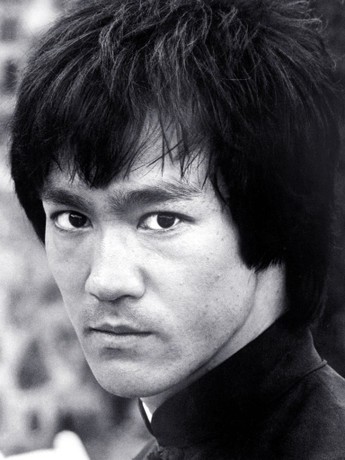
Bruce Lee
 China
Chinamartial artist•actor•filmmaker
Also known as: Lee Jun-fan, Lee Siu Loong
Compleanno
November 27, 1940
Segno Zodiacale
Sagittarius
Luogo di Nascita
San Francisco, California, USA
Età
Died at 32
Altezza
5 ft 7.5 in (171.5 cm)
Informazioni
Bruce Lee è stato un artista marziale, attore e regista di Hong Kong e americano, ampiamente considerato la prima star cinematografica cinese globale e l'artista marziale più influente mai apparso sullo schermo. Viene ricordato meno per il numero di film che ha realizzato, che è stato esiguo, che per quanto abbia completamente cambiato la percezione della mascolinità asiatica, della disciplina fisica e del combattimento sul film. Lee affrontava il combattimento tanto come pensatore quanto come interprete, fondando una propria filosofia del movimento chiamata Jeet Kune Do, che abbandonava gli stili tradizionali rigidi a favore di fluidità, economia e adattamento. Questa prospettiva, che fonde boxe, concetti di scherma e idee taoiste, influenza ancora oggi la comprensione delle arti marziali miste. La sua breve serie di ruoli da protagonista, culminata con Enter the Dragon, ha acceso un appetito mondiale per il cinema kung fu e lo ha trasformato in un'icona postuma dopo la sua improvvisa morte a trentadue anni. Al di là dello schermo, è considerato un simbolo quasi mitico di autocontrollo e ambizione interculturale, citato tanto da atleti e imprenditori quanto da artisti marziali. Pochi interpreti con una carriera così breve hanno lasciato un segno così duraturo nella cultura popolare globale.
Primi Anni e Background
Lee è cresciuto nel distretto di Kowloon a Hong Kong, figlio di una star dell'opera cantonese. Ha debuttato sullo schermo a tre mesi in Golden Gate Girl (1941) ed è apparso in circa venti film come attore bambino. A tredici anni ha iniziato a studiare Wing Chun kung fu sotto il maestro Ip Man, allenandosi per circa cinque anni. Ha anche vinto il campionato di cha-cha di Hong Kong nel 1958, e il suo background nella danza ha poi influenzato la sua fluidità nel combattimento. Dopo una serie di risse di strada, i suoi genitori lo hanno mandato negli Stati Uniti nel 1959. Ha lavorato come lavapiatti e inserviente a Seattle, ha finito il liceo alla Edison Technical School e si è iscritto all'Università di Washington nel 1961, studiando filosofia e teatro. Nel 1962 ha aperto la sua prima scuola di arti marziali, il Lee Jun Fan Gung Fu Institute, a Chinatown a Seattle.
Crescita Professionale
La svolta di Lee arrivò ai Campionati Internazionali di Karate di Long Beach del 1964, dove il suo piegamento sulle dita a due dita e il pugno da un pollice stupirono il pubblico e attirarono l'attenzione di Hollywood. Fu scelto come Kato nella serie TV The Green Hornet (1966), che durò una stagione ma lo rese una figura riconoscibile. Frustrato dai ruoli limitati in America, Lee tornò a Hong Kong e firmò con la Golden Harvest. Il suo primo film da protagonista, The Big Boss (1971), incassò oltre 3,2 milioni di HK$, battendo i record locali. Fist of Fury (1972) guadagnò 4,4 milioni di HK$, e Way of the Dragon (1972), che scrisse e diresse, presentava l'iconico combattimento al Colosseo con Chuck Norris e incassò 5,3 milioni di HK$. Enter the Dragon (1973), la sua prima coproduzione hollywoodiana, uscì poco dopo la sua morte e incassò 90 milioni di USD in tutto il mondo, lanciando la mania globale dei film di arti marziali.
Cronologia Carriera
Immagine Pubblica e Stile
La persona pubblica di Lee fondeva una forza fisica esplosiva con profondità intellettuale. Si vestiva elegantemente con abiti su misura e spesso indossava un'espressione fiduciosa, quasi giocosa. Sullo schermo, il suo stile di combattimento era ballettistico e preciso, un netto contrasto con l'azione brutale dell'epoca. I media e i fan lo vedevano come un simbolo di autodisciplina e orgoglio culturale, specialmente tra il pubblico asiatico che raramente aveva visto un eroe come lui nel cinema occidentale. La sua filosofia del Jeet Kune Do, racchiusa in citazioni come “Sii acqua, amico mio”, risuona ancora ben oltre le arti marziali, citata da atleti, CEO e artisti. I social media ufficiali di Bruce Lee, gestiti dalla sua eredità, continuano a condividere i suoi insegnamenti e filmati d'archivio, mantenendo un seguito globale devoto.
Fama e fandom
Bruce Lee commanded a global attention that transcended the boundaries of martial arts and cinema, leaving an enduring imprint on international culture. According to the iFANN Global Fame Rankings, he remains the 52nd most famous person in the world, a position holding steady from the previous cycle. His prominence is particularly concentrated within his region of origin, where he stands as the 6th most famous person in China and the 2nd most famous person from China overall. In the broader East Asian sphere, he ranks as the 6th most famous person in East Asia, while his impact on the film industry secures him the 11th most famous person in Hollywood placement. These figures reflect a legacy that persists decades after his passing.
The community surrounding his memory does not operate under a single formal name like modern pop franchises but identifies primarily through adherence to Jeet Kune Do and general kung fu enthusiasm. This audience centers its activities around the Bruce Lee Family Company, which manages his digital presence across major platforms and facilitates initiatives such as the designation of Bruce Lee Day in California. Fan engagement often manifests as deep philosophical inquiry rather than mere celebrity worship, with frequent references to his "Be Water" philosophy in educational campaigns and charity drives. The cultural mythology attached to his life includes verified accounts of his death in 1973 and legendary encounters like the fight in Oakland against Wong Jack Man, which catalyzed his hybrid martial arts system. While stories of crowds shutting down streets for screenings of Fist of Fury or The Chinese Connection describe the intensity of his screen presence, these events remain part of the broader martial arts craze he ignited. His legacy continues to be celebrated through new documentaries and stage productions, reinforcing his status as a permanent icon of Asian American identity.
Curiosità e leggende
Bruce Lee won Hong Kong's cha-cha championship in 1958 and suffered from red-green colorblindness, which occasionally complicated lighting setups on film sets. He was a prolific writer of poetry and extensive philosophical journals that were later published as books. His punching speed was so exceptional that scenes in Enter the Dragon required filming at 32 frames per second to ensure visibility. Despite his renowned physique, he maintained a heavy habit of smoking marijuana. He never lost a formal challenge match and possessed the rare ability to write and fight with equal proficiency using both hands. He famously declined the lead role in the television series Kung Fu, a part that eventually went to David Carradine. Beyond these verified facts, folklore persists regarding the 1964 Long Beach International Karate Championships, where stories describe him defeating multiple challengers, including a large wrestler named Bill Wallace, in a display that allegedly introduced kung fu to mainstream America. Another legendary account, often called the Oakland Fight, describes a pre-film career confrontation that cemented his reputation, though contemporary documentation for this event remains scarce. A particularly iconic moment occurred during his 1971 appearance on The Tonight Show Starring Johnny Carson, where he performed the one-inch punch, stunning the host and audience with power generated from minimal distance.
Citazioni Notevoli
“Be water, my friend.”
“I fear not the man who has practiced 10,000 kicks once, but I fear the man who has practiced one kick 10,000 times.”
“The key to immortality is first living a life worth remembering.”
“Knowing is not enough, we must apply. Willing is not enough, we must do.”
“Do not pray for an easy life, pray for the strength to endure a difficult one.”
Famiglia e Vita Privata
Lee era il quarto figlio di Lee Hoi-chuen, cantante d'opera cantonese e attore cinematografico, e Grace Ho, casalinga. Aveva un fratello maggiore, Peter, una sorella maggiore, Phoebe, una sorella minore, Agnes, e un fratello minore, Robert. Lee sposò Linda Emery il 17 agosto 1964. Ebbero due figli: Brandon Lee (nato nel 1965), morto in un incidente sul set nel 1993, e Shannon Lee (nata nel 1969), che ora gestisce la Bruce Lee Family Companies. Linda gestì l'eredità di Lee dopo la sua morte e in seguito si risposò. Dal 2026, Shannon Lee è CEO e supervisiona tutte le partnership di marca e i progetti mediatici.
Collegamenti Notevoli
Bruce Lee si allenò sotto Ip Man, studiò filosofia all'Università di Washington e recitò al fianco di Chuck Norris in Way of the Dragon. Sua moglie Linda Lee Cadwell gestì la sua eredità dopo la sua morte. Suo figlio Brandon Lee divenne attore, e sua figlia Shannon Lee ora gestisce la Bruce Lee Family Companies.
Relazioni e Storia Dating
La prima relazione seria nota di Lee fu con Amy Sanbo, una compagna di classe di Hong Kong, che frequentò dal 1958 al 1959 circa, finché i suoi genitori non lo mandarono negli Stati Uniti. Nel 1963, mentre studiava all'Università di Washington, conobbe Linda Emery, che si iscrisse al suo corso di arti marziali. Si sposarono il 17 agosto 1964 ed ebbero due figli, Brandon e Shannon. Linda rimase con Lee fino alla sua morte nel 1973 e in seguito gestì la sua eredità. Nei primi anni '70 circolarono voci di una relazione con l'attrice taiwanese Betty Ting Pei, che era presente a casa di Lee il giorno della sua morte. Linda non ha mai confermato pubblicamente la relazione, e Ting ha dichiarato che erano amici intimi. Al 2026, Lee è deceduto ed era sposato con Linda al momento della sua morte.
- Uscito/aAmy Sanbo1958 - 1959Prima fidanzata seria, compagna di classe al St. Francis Xavier's College; relazione terminata quando Lee fu mandato negli Stati Uniti.
- Sposato/aLinda Lee Cadwell1964 - 1973Conosciuta all'Università di Washington; sposata il 17 agosto 1964; ha avuto due figli, Brandon e Shannon; è rimasta sposata fino alla morte di Lee.
- PettegolezzoBetty Ting Pei1972 - 1973Attrice taiwanese; voci di relazione mai confermate; presente a casa di Lee il giorno della sua morte.
Morte e conseguenze
Morto/a
July 20, 1973 (a 32 anni)
Luogo di morte
Hong Kong
Causa della morte
Reported allergic reaction to Equagesic causing cerebral edema
Public reaction to Bruce Lee's death transformed him from a martial arts star into a global cultural icon overnight, with tributes pouring in from peers and institutions worldwide. Warner Bros. suspended production on his unfinished films out of respect, while fans gathered in massive vigils at the site of his death in Hong Kong and outside Queen Mary Hospital. The Hong Kong Standard ran front-page obituaries declaring him a legend, and a mural dedicated to him was painted in San Francisco's Chinatown shortly after the event. His posthumous releases became box office hits, sparking a surge in the popularity of martial arts films. Bruce Lee died on July 20, 1973, at the age of 32 in the apartment of actress Eileen Yeow in the Happy Valley district of Kowloon.
He had gone there to discuss a potential film project and receive a massage administered by Jimmy Ito, after which he reportedly complained of a headache and fell into a coma. He was rushed to Queen Mary Hospital but was pronounced dead at approximately 11:55 PM. An official coroner's inquest held in August 1973 concluded with a verdict of accidental death due to an allergic reaction to Equagesic, a painkiller containing aspirin and orphenadrine, which caused cerebral edema. While subsequent medical analyses have suggested alternative theories such as hyponatremia, the official legal and historical record maintained by the Hong Kong government remains the ruling of an allergic reaction to medication. A private funeral ceremony was held on July 24, 1973, at Lake View Cemetery in Seattle, Washington, attended by close family members and select friends including Jim Kelly and Taky Kimura.
Thousands of mourners lined the streets outside the cemetery gates before the service, which ended with Lee being cremated. His ashes were scattered at sea off the coast of Seattle near Puget Sound in accordance with his wishes, though some were later interred at Greenwood Memorial Park. Posthumously, films such as Enter the Dragon and Game of Death were released, books like Tao of Jeet Kune Do were published based on his notes, and he received inductions into the Black Belt Hall of Fame and the World Martial Arts Hall of Fame.
Patrimonio (Valore immobiliare)
$300 Million
Stima del team editoriale di iFANN
Updated for 2026, research by the iFANN Editorial Team estimates Bruce Lee's estate at $300 Million. Since his death in 1973, the estate has grown substantially through licensing, merchandising, and media rights. The Bruce Lee brand generates roughly $5–10 million annually from licensed products including apparel, action figures, video games, and fitness equipment. Film royalties from Enter the Dragon and other movies continue through home video, streaming, and television. The Bruce Lee Family Companies, led by daughter Shannon Lee, oversees brand partnerships and media projects. The estate owns Lee's name, image, likeness, and writings, including Tao of Jeet Kune Do. Additional revenue comes from authorized documentaries, digital appearances in video games like EA Sports UFC and Tekken, and an NFT collection launched in 2022. The estate has been involved in legal battles over rights, including a 2015 lawsuit against a restaurant chain using Lee's image without permission.
Premi vinti (57)
Bruce Lee ha vinto il Golden Horse Award per il Miglior Attore (Premio Speciale) per Fist of Fury nel 1972. Ha ricevuto un Lifetime Achievement Award postumo agli Hong Kong Film Awards nel 1995. Ha anche vinto il Campionato di pugilato scolastico di Hong Kong nel 1958 e il Campionato di cha-cha di Hong Kong nel 1958.
1995 · Premio alla Carriera
N/A
1972 · Miglior Attore (Premio Speciale)
Fist of Fury
Noto Per
Enter the Dragon
1973 · Lee
Fist of Fury
1972 · Chen Zhen
Way of the Dragon
1972 · Tang Lung
The Big Boss
1971 · Cheng Chao-an
The Green Hornet
1966 · Kato
Parole chiave
Fatti Rapidi
- Professione
- martial artist, actor, filmmaker
- Nato/a
- November 27, 1940
- Luogo di Nascita
- San Francisco, California, USA
- Morto/a
- July 20, 1973
- Luogo di morte
- Kowloon Tong, Hong Kong
- Genere
- Maschio
- Coniuge
- Linda Lee Cadwell
- Segno Zodiacale
- Sagittarius
- Altezza
- 5 ft 7.5 in (171.5 cm)
- Children
- Brandon Lee (deceased), Shannon Lee
Dettagli Personali
- Nome Completo
- Lee Jun-fan
- Altezza
- 5 ft 7.5 in (171.5 cm)
- Coniuge
- Linda Lee Cadwell
- Figli
- Brandon Lee (deceased), Shannon Lee
- Istruzione
- University of Washington (philosophy and drama, did not graduate)
Filmografia
25
Totale
22
Film
3
TV
Domande Frequenti
Quanti anni aveva Bruce Lee quando è morto?
Qual è il patrimonio di Bruce Lee nel 2026?
Bruce Lee è ancora attivo nel 2026?
Per cosa è più famoso Bruce Lee?
Come è morto Bruce Lee?
Unisciti alla community
fan che discutono